Quick Answer
CoCr powder is a cobalt-chromium alloy powder used in additive manufacturing, thermal processing, and precision powder metallurgy where high strength, wear resistance, corrosion resistance, and biocompatibility are required. In industrial practice, CoCr powder is especially important for medical implants, dental frameworks, aerospace hot-end parts, and tooling because it combines good mechanical performance with stable behavior at elevated temperatures. Most commercial grades are supplied as spherical metal powder with tightly controlled chemistry, low oxygen, and process-specific particle size distributions for laser powder bed fusion, electron beam processes, directed energy deposition, or related routes.
When buyers evaluate CoCr powder, the key variables are not just cobalt and chromium content. They also need to review carbon level, molybdenum or tungsten additions, particle morphology, powder cleanliness, flowability, and the intended process window. A powder optimized for implant-grade laser powder bed fusion may differ meaningfully from a CoCr feedstock intended for dental production or hardfacing repair, even if both are marketed under the broader cobalt-chromium label.
What Is CoCr powder?
CoCr powder refers to cobalt-chromium alloy powder, usually with additional elements such as molybdenum, tungsten, silicon, manganese, iron, or carbon depending on the target standard and process. The alloy family is valued because cobalt provides a strong matrix, chromium improves oxidation and corrosion resistance, and elements such as molybdenum can enhance pitting resistance and strength. In powder form, the material is widely used in advanced manufacturing environments that require consistent flow, repeatable melting, and reliable final-part properties.
In additive manufacturing, CoCr powder is commonly associated with CoCrMo alloys used in medical and dental applications, although other cobalt-chromium compositions are also relevant in aerospace, energy, and wear-resistant surface engineering. The term “CoCr powder” is therefore a commercial umbrella rather than one single universal chemistry. Engineers should always check the actual grade designation and certificate data before treating two cobalt-chromium powders as interchangeable.
Why CoCr powder remains important in AM
CoCr powder occupies a distinctive place in metal AM because it balances strength, hardness, corrosion resistance, and thermal stability better than many general stainless grades. It is also one of the few metal powder families that can serve both regulated biomedical applications and high-temperature industrial use cases, depending on composition and qualification route. That broad usefulness helps explain why CoCr remains a standard feedstock in hospitals, dental labs, aerospace supply chains, and research centers.
In metal additive manufacturing, cobalt-chromium is often selected when designers need a combination of wear resistance, corrosion resistance, and dimensional reliability rather than the lightest possible alloy.
Another reason CoCr powder matters is its compatibility with fine-feature production. Laser-based systems can build thin lattices, custom implant geometries, and intricate dental substructures from the same basic material family, provided the powder quality and processing window are tightly controlled. That makes CoCr especially relevant where design freedom and functional performance need to coexist.
CoCr powder versus other metal powder families
Compared with many austenitic stainless powders, CoCr typically offers higher hardness and better high-temperature strength, though it may be more difficult to machine in the final condition. Compared with titanium alloys, CoCr is denser and less attractive where lightweighting dominates, but it is often favored for wear-critical or polished biomedical surfaces. For buyers comparing adjacent material families, stainless steel powder solutions and titanium alloy powder options are often reviewed alongside cobalt-chromium because the final material decision is closely tied to load case, corrosion environment, and regulatory pathway.
Chemical Composition and Material Grade
CoCr powder is sold in several related alloy families, and not every grade is intended for the same use. The most familiar commercial composition is cobalt-chromium-molybdenum, especially in medical and dental sectors, but cobalt-chromium-tungsten and higher-carbon wear alloys also exist. Because of this variation, procurement documents should state the grade clearly rather than using “CoCr powder” as the only specification term.
The presence and control of minor elements matter significantly. Carbon affects carbide formation and hardness, molybdenum influences corrosion resistance, silicon and manganese can affect processing behavior, and oxygen must be kept low to support powder quality and final-part consistency. In regulated sectors, these details are usually tied to material standards, internal qualification documents, or customer drawings.
Typical CoCr powder grades
The table below summarizes representative chemistry windows and grade relationships used in the market. Values are typical industry ranges for orientation and should be confirmed against the specific supplier certificate and end-use standard.
| Material designation | Co (wt%) | Cr (wt%) | Mo/W (wt%) | C (wt%) | Other/notes | Typical grade cross-reference |
|---|---|---|---|---|---|---|
| CoCrMo for implants | Balance | 26.0–30.0 | Mo 5.0–7.0 | ≤ 0.35 | Low Ni, controlled Fe and Mn | Commonly aligned with ASTM F75 / ISO 5832-4 family |
| CoCrMo for AM | Balance | 27.0–30.0 | Mo 5.0–7.0 | 0.03–0.25 typical | Optimized for spherical powder use | Often specified to supplier AM grade derived from implant alloy chemistry |
| CoCrW dental alloy | Balance | 24.0–29.0 | W 7.0–10.0 | ≤ 0.35 | Dental and prosthetic use | Often tied to dental alloy specifications and internal lab standards |
| High-carbon CoCr wear alloy | Balance | 25.0–32.0 | Mo or W variable | 0.8–2.5 typical | Hardfacing and wear service | Usually governed by proprietary or application-specific grade references |
For terminology and process alignment, many technical teams use ISO/ASTM 52900 additive manufacturing terminology when building internal documentation across engineering, QA, and procurement. For broader cobalt-chromium materials background, ASM International materials guidance is frequently consulted during grade comparison and failure analysis. These references support shared language, but in purchasing practice the actual acceptance criteria still need to be written into the order.
Standards context and naming limits
One common source of confusion is that wrought, cast, and powder grades do not always map perfectly to one another. A CoCrMo chemistry associated with cast implant standards may serve as a reference point for powder production, but the powder itself must still be qualified for PSD, oxygen, morphology, and AM process compatibility. That means a familiar alloy name does not automatically guarantee identical powder performance from supplier to supplier.
Another important point is that the phrase CoCr powder can cover both biomedical and industrial grades. Medical buyers may emphasize biocompatibility, trace element control, and documentation rigor, while industrial users may prioritize hardness, temperature capability, or erosion resistance. The chemistry window alone rarely captures those downstream differences.
Technical Specifications
The physical characteristics of CoCr powder strongly influence machine behavior and final-part quality. In powder bed fusion, the combination of particle size distribution, sphericity, apparent density, and oxygen level affects recoating, layer uniformity, absorptivity, and defect formation. In directed energy deposition or cladding, those same properties influence feed consistency, melt-pool stability, and dilution control.
CoCr powder particle size by process
Different process families need different size cuts. Fine spherical powder is often preferred for laser powder bed fusion, while coarser distributions may be more appropriate for DED or laser cladding. Powder that is too fine can increase oxidation risk and dustiness, while powder that is too coarse may reduce packing uniformity or impair melting efficiency.
Typical physical properties
The table below shows representative physical targets for spherical CoCr powder supplied for advanced manufacturing. These values are typical and not universal specification limits.
| Process-oriented powder cut | PSD range | Apparent density | Tap density | Hall flow | Oxygen content | Sphericity |
|---|---|---|---|---|---|---|
| Fine LPBF grade | 15–45 µm | 4.3–5.0 g/cm³ | 5.0–5.8 g/cm³ | 14–22 s/50 g | typically ≤ 0.10 wt% | typically ≥ 0.95 |
| Standard LPBF grade | 15–53 µm | 4.4–5.1 g/cm³ | 5.1–5.9 g/cm³ | 13–21 s/50 g | typically ≤ 0.10 wt% | typically ≥ 0.95 |
| EBM / coarse AM grade | 45–105 µm | 4.5–5.2 g/cm³ | 5.2–6.0 g/cm³ | 12–20 s/50 g | typically ≤ 0.08 wt% | typically ≥ 0.94 |
| DED / cladding grade | 53–150 µm | 4.6–5.3 g/cm³ | 5.3–6.1 g/cm³ | 12–19 s/50 g | typically ≤ 0.08 wt% | typically ≥ 0.94 |
A high-quality CoCr powder lot should exhibit narrow lot-to-lot variation, limited satellites, good flow through standard funnels or feeders, and low internal porosity. These characteristics are important because poor powder consistency can lead to porosity, lack-of-fusion defects, rough surface finish, or unstable build conditions. In AM production, powder consistency is often as important as nominal alloy chemistry.
Morphology, cleanliness, and reuse behavior
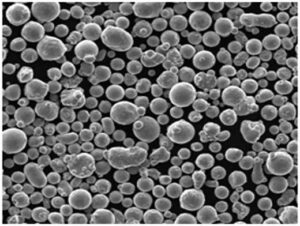
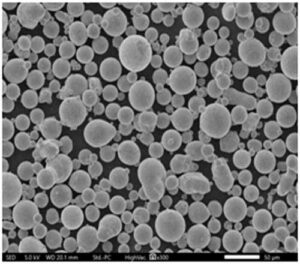
Spherical morphology is preferred because it improves spreadability and packing behavior in recoated powder layers. Low oxide and controlled fines content help reduce smoke, spatter, and irregular melt-pool behavior in laser systems. For shops that reuse powder, the initial cleanliness of virgin feedstock is especially relevant because every reuse cycle increases the importance of careful powder handling and screening discipline.
CoCr powder is also frequently evaluated alongside nickel or stainless systems when companies build multi-material AM workflows. Facilities that already qualify nickel-based powder grades often apply similar incoming-inspection logic to CoCr, but the parameter window and final metallurgical response can be quite different because cobalt-chromium melts and solidifies differently from nickel superalloys.
Applications Across Industries
CoCr powder is one of the few metal powder families with strong positions in both biomedical and industrial markets. In medicine and dentistry, it supports patient-specific parts, implant components, and dental restorations. In industrial settings, it is used for high-temperature parts, wear-resistant features, and geometries where corrosion resistance and hardness are needed together.
Where CoCr powder is used most often
Medical device manufacturing is one of the best-known uses of CoCr powder, especially for orthopedic and spinal applications that need strength, corrosion resistance, and proven cobalt-chromium biocompatibility frameworks. Dental production is another major market because CoCr alloys can be processed into crowns, bridges, partial denture frameworks, and custom restorations with fine resolution. Aerospace and energy applications generally focus more on wear, heat resistance, and dimensional stability than on biocompatibility.
| Industry | Typical part | Service need | AM/PM process | Why CoCr is used |
|---|---|---|---|---|
| Orthopedic medical | Knee parts, hip components, spinal devices | Strength, wear, corrosion resistance | LPBF, PM | Supports demanding biomedical performance requirements |
| Dental | Crowns, bridges, removable partial frameworks | Precision, polishability, corrosion resistance | LPBF, casting-assisted digital workflows | Delivers fine detail and durable oral-service behavior |
| Aerospace | Small hot-section hardware, wear-prone features | Thermal stability and oxidation resistance | LPBF, DED | Handles elevated temperature better than many stainless grades |
| Tooling and industrial wear | Valve seats, cutting edges, hard-facing features | Abrasion, galling, corrosion resistance | DED, cladding, PM | Provides durable surfaces in severe operating conditions |
CoCr powder in medical and dental production
In biomedical manufacturing, powder quality is linked directly to traceability, documentation, and reproducibility. Implant and dental customers are not merely buying a chemistry window; they are buying a validated feedstock that supports known machine parameters, post-processing routes, and finished-part testing plans. That is why medical CoCr powder typically sits within stricter quality systems than general industrial grades.
Dental users also care about surface finish, fine feature accuracy, and consistency across repeated small batches. Thin structures, fitting tolerances, and polishing response can all be affected by powder morphology and laser absorptivity. For these reasons, dental labs often rely on narrowly defined CoCr powder specifications rather than broad commodity descriptions.
Manufacturing and Quality Assurance
Most modern CoCr powder for AM is produced by atomization routes designed to create spherical particles with controlled chemistry and acceptable impurity levels. Gas atomization is common because it supports commercial-scale powder production with good morphology and size classification. In some cases, vacuum melting and inert handling steps are emphasized to limit contamination and improve control over oxygen and trace elements.
Production route and powder outcome
The production route matters because morphology, internal porosity, and chemical cleanliness all influence downstream process stability. Some routes prioritize output and scalability, while others emphasize purity and premium particle shape. Buyers should therefore ask not only for chemistry and PSD but also for the manufacturing route used to create the powder lot.
| Production route | Typical strengths | Typical limitations | Common morphology outcome | Suitable CoCr use case |
|---|---|---|---|---|
| GA | Good scalability, wide availability, balanced cost | Satellite control depends on process tuning | Spherical to near-spherical | General AM and industrial production |
| PREP | Very high sphericity and smooth particles | Higher cost and more limited supply flexibility | Highly spherical | Premium feedstock for demanding flow and spreadability |
| VIGA | Strong atmosphere control and good cleanliness | More complex equipment and cost profile | Spherical with good purity | High-spec AM powder requiring tight chemistry control |
| Water-atomized or irregular routes | Lower cost for some PM uses | Poor flow and lower spreadability for AM | Irregular or mixed | Less suitable for high-end powder bed processes |
Quality assurance checkpoints
A serious CoCr powder QA plan should verify chemical composition, PSD, morphology, apparent density, tap density, flow behavior, oxygen level, and packaging integrity. More advanced release packages may also include SEM images, trace element analysis, moisture information, and retained sample policy. These controls matter because even a technically correct chemistry can underperform if powder shape, fines fraction, or oxidation state drift outside the qualified process window.
CoCr feedstock intended for regulated or high-value applications should also have strong traceability. That includes batch number control, certificate consistency, and documented handling from melting through sieving and packaging. In the most disciplined supply chains, incoming powder inspection is connected directly to machine qualification, reuse rules, and final-part validation protocols.
CoCr powder and downstream reliability
Powder quality alone does not determine final performance, but it creates the foundation for stable builds. Laser parameters, recoating conditions, support strategy, heat treatment, HIP, and surface finishing all affect the finished part. Even so, traceability at the powder stage is critical because root-cause analysis often begins with the original batch data when a part fails inspection or service expectations.
Why Choose Truer as Your Supplier
Selecting a CoCr powder supplier is usually about capability as much as product availability. Buyers want confidence that the supplier understands spherical powder production, AM processing logic, and the documentation demands of industrial qualification. A supplier engaged in both powder technology and broader additive manufacturing infrastructure can often support more technically informed discussions around feedstock selection.
Shanghai Truer Technology participates in additive manufacturing through powder making equipment, powder supply, and application-oriented support connected to SLM, SEBM, DED, laser cladding, powder metallurgy, MIM, HIP, and spraying routes. Its broader cobalt material capability can be seen in its cobalt alloy powder portfolio, while company background is summarized in the Truer company overview. This broader ecosystem can be useful when customers need to compare CoCr powder with other metal powder families or align a feedstock choice with a specific production route.
For technical purchasing, the most relevant supplier traits are clear specifications, consistent lot control, realistic process matching, and responsive support during sampling or qualification. Those factors matter more than generic claims, especially when CoCr powder is being introduced into a validated AM workflow or a regulated documentation environment.
Ordering Guide and Support
Ordering CoCr powder should start with the process and application. Buyers should define whether the powder is for LPBF, EBM, DED, dental production, implant work, tooling, or repair. They should also state the target PSD, grade designation, desired packaging format, and the level of documentation needed for incoming inspection.
The commercial phase should separate laboratory trials from routine production orders. Many problems in powder sourcing occur when a trial-grade order is assumed to represent a locked production-grade specification. It is better to clarify sampling policy, retained sample arrangements, and certificate expectations before machine qualification begins.
| Packaging format | MOQ tier | Typical lead time | Sample policy | Common use case |
|---|---|---|---|---|
| 1 kg bottle | Trial / R&D | 1–2 weeks if standard stock exists | Paid sample often available | Initial parameter development |
| 5 kg sealed can | Pilot build qualification | 2–4 weeks | Sample may come from same lot as production order | Machine and coupon validation |
| 15 kg drum | Small production batch | 3–5 weeks | Retained sample by agreement | Dental or industrial recurring jobs |
| 25 kg drum | Routine industrial supply | 4–8 weeks | Full lot documentation typically expected | Ongoing AM production programs |
When placing the purchase order, request chemistry limits, PSD report, oxygen value, morphology expectation, recommended storage conditions, packaging atmosphere if applicable, and the certificate format. If support is needed for quoting, sampling, or documentation coordination, teams can use the technical inquiry contact page to align requirements before release.
Our Company
Shanghai Truer Technology Co., Ltd was established in 2009 and created its additive manufacturing business in 2019. The company focuses on integrating 3D printing powder making equipment and services with metal powders to support engineering applications of additive manufacturing. Its core technologies include selective electron beam melting equipment, plasma rotating electrode process powder making equipment, and gas atomization in relevant powder applications. The powder portfolio includes TiNi, TiTa, TiAl, TiNbZr, CoCrMo, and broader nickel-based, cobalt-based, titanium-based, copper-based, aluminum-based, and stainless steel spherical metal powders for processes such as SLM, SEBM, DED, laser cladding, powder metallurgy, MIM, HIP, cold or hot spraying, welding, and coating across industries including 3C electronics, hand tools, remote control cars, medical, aerospace, and nuclear power.
FAQ
Q1. What is CoCr powder mainly used for?
CoCr powder is mainly used for additive manufacturing and powder-based fabrication of medical, dental, aerospace, and wear-resistant parts. Its value comes from the combination of strength, hardness, corrosion resistance, and good elevated-temperature behavior.
Q2. Is CoCr powder the same as CoCrMo powder?
Not always. CoCrMo is one important subset of the broader CoCr powder family, especially in biomedical applications, but cobalt-chromium powders can also contain tungsten or have different carbon levels depending on the intended use. Buyers should always verify the full chemistry and standard reference.
Q3. What particle size is best for CoCr powder in 3D printing?
That depends on the process. Laser powder bed fusion commonly uses fine spherical cuts such as 15–45 µm or 15–53 µm, while DED and cladding often require coarser fractions. The correct choice depends on feeder design, energy source, and target feature size.
Q4. Why is CoCr powder popular for medical and dental applications?
CoCr powder is widely used in those sectors because cobalt-chromium alloys offer high strength, corrosion resistance, and a long history of biomedical and dental use in suitable grades. The material also supports precise geometries and good surface finishing after additive manufacturing and post-processing.
Q5. How does CoCr powder compare with titanium powder?
CoCr is generally denser and often harder than titanium alloys, with stronger wear performance in many cases. Titanium is usually preferred when low weight is critical, while CoCr is often chosen for wear resistance, rigidity, and certain biomedical or dental performance requirements.
Q6. What should I ask a supplier before ordering CoCr powder?
Ask for the exact grade, chemistry limits, PSD, oxygen content, morphology description, certificate format, packaging details, and intended process compatibility. It is also wise to confirm lot traceability, sample policy, and whether the powder has experience in the same AM route you plan to use.