Quick Answer
H13 tool steel powder is a hot-work chromium-molybdenum-vanadium steel powder engineered for additive manufacturing, powder metallurgy, and related thermal processes. It is widely chosen for tooling because it combines high hardness after heat treatment, good thermal fatigue resistance, and reliable toughness under cyclic heating and cooling. For 3D printing applications, H13 tool steel powder is especially valuable when engineers need conformal-cooled molds, die inserts, wear-resistant tooling, or repair builds that must survive repeated thermal shock better than many general-purpose steels.
What Is H13 tool steel powder?
H13 tool steel powder is the powder-form version of the well-known H13 hot-work tool steel grade. In wrought-bar and forged-tooling markets, H13 has long been used for die casting dies, extrusion tooling, hot stamping tools, and plastic injection mold components that operate under a mix of heat, pressure, and abrasion. In powder form, the same alloy family becomes suitable for laser powder bed fusion, directed energy deposition, metal injection molding, HIP-based consolidation, laser cladding, and spray-related processes.
H13 Tool Steel Powder as a Hot-Work Alloy
The alloy sits in the hot-work tool steel category because it is designed to retain hardness and structural stability at elevated service temperatures. Its chromium content supports hardenability and oxidation resistance, while molybdenum and vanadium help control softening, temper resistance, and carbide behavior during demanding thermal cycles. That combination is why H13 tool steel powder is often preferred over simpler martensitic steels for tooling that repeatedly contacts hot metal or experiences local thermal spikes.
Why the Powder Form Matters
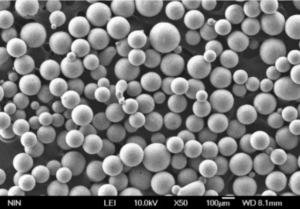
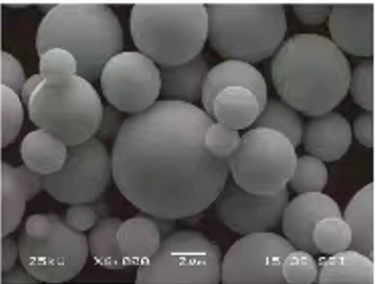
Powder is not simply bar stock in smaller pieces. For additive manufacturing, the feedstock must have controlled chemistry, narrow particle size distribution, repeatable flow, and a mostly spherical morphology so the material can spread or feed consistently. In practical terms, H13 tool steel powder enables shapes that are difficult, costly, or impossible to machine conventionally, especially internal cooling channels, lattice-backed inserts, and repair geometries that would otherwise require complete tool replacement.
H13 Compared With Other Tool Steels
Within tool steels, H13 is often compared with H11, D2, and maraging grades. H11 generally offers somewhat better toughness but slightly lower hot hardness, D2 is more wear-focused than heat-shock-focused, and maraging steels are easier to print but serve a different strength-toughness-hardness balance. The reason H13 tool steel powder remains relevant is that it occupies a practical middle ground: it resists thermal cracking better than many cold-work grades while still reaching high hardness after heat treatment.
H13 in the Language of Additive Manufacturing
In the AM market, H13 is usually discussed as a spherical metal powder for selective laser melting, laser powder bed fusion, direct energy deposition, or cladding. Industry process terminology is commonly aligned with ISO/ASTM 52900 terminology, which distinguishes powder bed fusion, directed energy deposition, and other categories in a standardized way. That matters because the same H13 tool steel powder can be appropriate for several routes, but the required size cut and acceptance criteria are not identical across those routes.
Chemical Composition and Material Grade
The chemistry of H13 is stable enough to be globally recognizable, but suppliers still need to define acceptable ranges carefully because powder performance depends on both nominal composition and tight control of residuals. Carbon, chromium, molybdenum, vanadium, and silicon provide the core metallurgical behavior. Small shifts in those ranges affect hardenability, temper resistance, carbide population, and the response to post-build heat treatment.
Typical H13 Tool Steel Powder Chemistry
The nominal composition of H13 is widely standardized across tool steel systems, although local designation systems use different names. In North American terminology, H13 appears under AISI and ASTM usage; in European practice, buyers often use 1.2344 or X40CrMoV5-1; in China, 4Cr5MoSiV1 is the most familiar comparison grade.
| Item | Typical wt% | H13 / Equivalent Grade Reference | Notes |
|---|---|---|---|
| C | 0.32–0.45 | AISI H13 / ASTM A681 H13 | Controls hardness and martensitic response |
| Cr | 4.75–5.50 | DIN 1.2344 / X40CrMoV5-1 | Supports hardenability and hot-strength retention |
| Mo | 1.10–1.75 | ISO 4957 hot-work tool steel family | Improves temper resistance and red hardness |
| V | 0.80–1.20 | GB 4Cr5MoSiV1 | Refines carbide structure and wear resistance |
| Si | 0.80–1.20 | JIS SKD61 / common market equivalent | Assists hot-work performance and oxidation behavior |
The best way to read the table is as a compositional framework rather than a standalone qualification document. Powder procurement often adds limits for manganese, phosphorus, sulfur, nickel, copper, and oxygen because these affect cleanliness, cracking risk, and final properties. For background on the conventional grade identity, the H13 steel grade overview is a useful starting point.
Grade Cross-Reference in Global Supply Chains
When engineers request H13 tool steel powder, they may receive documents using AISI H13, ASTM A681 H13, DIN 1.2344, X40CrMoV5-1, SKD61, or 4Cr5MoSiV1. These designations are close enough to create broad market familiarity, but they should not be treated as automatic one-to-one proof of interchangeability for every powder-based process. The chemistry band may align while powder shape, PSD, gas content, and heat-treatment expectations differ.
Why Composition Alone Is Not Enough
A material can be nominally “H13” and still perform poorly in additive manufacturing if the oxygen level is too high, satellites are excessive, or the particle size distribution is misaligned with the machine. That is why serious AM programs specify both alloy grade and feedstock characteristics. In H13 tool steel powder, the powder condition is often just as important as the alloy label itself.
Carbides, Heat Treatment, and Service Behavior
H13 is fundamentally a secondary-hardening hot-work tool steel. After printing or consolidation, the alloy is usually stress relieved, hardened, and tempered to produce the hardness and toughness balance required for service. The vanadium-rich and chromium-rich carbide system helps wear resistance, while the tempered martensitic matrix supports dimensional stability and resistance to thermal checking in real tooling environments.
Technical Specifications
Technical specifications for H13 tool steel powder depend heavily on process route. Fine cuts are used in laser powder bed systems, mid-range cuts are common for directed energy deposition, and coarser cuts can serve cladding, thermal spray, or some powder metallurgy routes. Because H13 is a steel rather than a nickel superalloy or titanium alloy, it generally offers more forgiving powder handling, but print quality still depends on tight PSD control, flow behavior, and low contamination.
Typical H13 Tool Steel Powder Specifications
| Powder Class | Typical PSD Range | Apparent Density | Tap Density | Hall Flow | Oxygen Content | Sphericity |
|---|---|---|---|---|---|---|
| Fine LPBF grade | 15–45 µm | 4.0–4.6 g/cm³ | 4.8–5.6 g/cm³ | 18–28 s/50 g | ≤0.10 wt% typical | High, typically ≥0.90 |
| Standard PBF grade | 15–53 µm | 4.1–4.8 g/cm³ | 5.0–5.8 g/cm³ | 17–27 s/50 g | ≤0.10 wt% typical | Spherical, low satellite level typical |
| DED / cladding grade | 45–105 µm | 4.3–5.0 g/cm³ | 5.3–6.0 g/cm³ | 14–24 s/50 g | ≤0.08 wt% typical | Free-flowing spherical powder typical |
| Coarse PM / spray grade | 53–150 µm | 4.4–5.2 g/cm³ | 5.5–6.2 g/cm³ | 13–22 s/50 g | ≤0.08 wt% typical | Spherical to near-spherical typical |
These are representative industrial values rather than a single universal specification sheet. Actual acceptance limits for H13 tool steel powder vary with machine brand, recoater type, nozzle design, layer thickness, and whether the customer is optimizing for feature resolution, productivity, or recycled-powder stability.
Spherical Powder and Recoating Stability
Spherical powder morphology matters because a tool steel powder that spreads evenly creates more uniform layers and more predictable laser interaction. Irregular particles, satellites, or excessive fines can increase spatter, disturb packing, and raise the risk of lack-of-fusion defects. In high-productivity mold insert work, stable recoating is often a more important practical metric than nominal chemistry alone.
Choosing the Right PSD for H13 Additive Manufacturing Powder
A fine 15–45 µm cut may support thin layers and detailed cooling-channel geometries, but it can also raise handling sensitivity and reduce yield. A 45–105 µm cut is more typical for deposition or cladding, where feed reliability matters more than ultra-fine detail. Engineers should therefore choose H13 tool steel powder by process window, not by assuming one size range is best for every machine.
Apparent Density, Tap Density, and Packing Behavior
Apparent density indicates how the loose powder packs before vibration, while tap density shows how it settles under mechanical tapping. In additive manufacturing, the difference between the two offers a practical signal of compressibility and packing behavior. A narrow and consistent gap often helps keep layer-to-layer behavior stable during serial production.
Oxygen, Moisture, and Storage
H13 tool steel powder is less reactive than titanium but still sensitive to poor storage discipline. Moisture pickup, repeated exposure to air, and mixed-lot reuse can gradually change flow and surface condition. For production tooling, sealed packaging, controlled opening practice, and traceable powder reuse rules are standard risk-control measures.
Mechanical Outcomes After Heat Treatment
Printed H13 usually reaches its target service condition only after an appropriate thermal cycle. Depending on build condition and required end use, the sequence may include stress relief, austenitizing, quenching or controlled cooling, and double tempering. The final hardness commonly falls in the mid-40s to low-50s HRC range for tooling inserts, though exact targets depend on wear versus toughness requirements and section thickness.
Applications Across Industries
H13 tool steel powder is used where heat, pressure, wear, and dimensional accuracy must coexist. Its best use cases are not generic structural parts but thermally stressed production tools, localized rebuilds, and wear-resistant inserts with internal geometry. In those environments, additive manufacturing often improves performance not by changing the alloy, but by changing the cooling architecture and repair economics.
Typical Applications for H13 Tool Steel Powder
| Industry | Typical Part | AM / PM Process | Why It Is Used |
|---|---|---|---|
| Die casting | Core pins, die inserts, shot-sleeve-adjacent tooling | LPBF, DED, laser cladding | Handles thermal cycling and supports conformal cooling |
| Plastic injection molding | Mold inserts, gate inserts, vented tooling | LPBF, PM-HIP | Balances hardness, polishability, and heat management |
| Hot forming and extrusion | Hot-work dies, trim tools, extrusion segments | DED, PM, cladding | Resists softening and thermal fatigue under repeated heat load |
| Repair and remanufacturing | Damaged die edges, worn tool surfaces, localized rebuild zones | Laser cladding, DED | Restores high-value tooling without full replacement |
Die Casting and Hot-Work Tooling
The strongest application case for H13 tool steel powder is die casting and other hot-work tooling environments. These tools see repeated contact with molten or hot material, then rapid cooling, which drives thermal fatigue and crack initiation. Additive manufacturing allows conformal cooling channels to be placed closer to the tool face, helping reduce hot spots and cycle time while keeping the H13 service behavior familiar to toolmakers.
Injection Mold Inserts With Conformal Cooling
For plastics tooling, H13 may be selected when higher wear resistance and temperature capability are needed than standard mold steels provide. Conformal cooling is the real AM advantage here: it can improve thermal control in complex cavities, deep ribs, and gate zones that are difficult to cool with straight-drilled channels. In many projects, H13 tool steel powder is chosen not because it is exotic, but because it lets a proven alloy work in a more efficient geometry.
Repair, Surface Restoration, and Hybrid Builds
Not every application requires a fully printed tool. DED and cladding routes allow H13 tool steel powder to rebuild damaged edges, add wear-resistant features, or restore dimensional losses on expensive dies. This can extend service life significantly, particularly when failure is localized rather than through the full body of the tool.
In production tooling, geometry-driven cooling gains often matter as much as alloy selection.
H13 Versus Alternative Powder Families
If corrosion resistance is the main requirement rather than hot hardness, stainless steel powder grades may be the more sensible option. If the part operates at far higher temperatures than tool steels can sustain, engineers often transition toward nickel-based powder systems. Where lower weight and fast thermal response are critical, some tooling users also compare H13 with aluminum alloy powder options for prototype tooling, though the service envelope is very different.
Manufacturing and Quality Assurance
Most H13 tool steel powder for additive manufacturing is produced by gas atomization, often under inert or vacuum-assisted conditions. The main goals are spherical particle shape, low oxygen pickup, controlled solidification, and consistent size classification. Because H13 is widely used in tooling qualification, buyers usually care as much about repeatability from lot to lot as they do about the absolute best numbers on any single batch.
Typical QA Framework for H13 Tool Steel Powder
| QA Test | Instrument / Method | Typical Acceptance Focus | Why It Matters |
|---|---|---|---|
| Chemical composition | ICP-OES, combustion analysis | Major alloying elements within agreed H13 range | Confirms grade identity and heat-treatment response |
| Particle size distribution | Laser diffraction plus sieve verification | D10, D50, D90 within ordered size window | Controls spreadability and nozzle or recoater behavior |
| Morphology inspection | SEM and image analysis | High sphericity, limited satellites, low agglomeration | Supports consistent powder-bed quality |
| Flow and density | Hall flowmeter, apparent and tap density tests | Stable handling from lot to lot | Screens usability in serial production |
| Gas and contamination checks | Oxygen/nitrogen analysis, sampling control | Low contamination and controlled storage condition | Protects print consistency and mechanical properties |
A useful reference point for AM powder characterization is the NIST AM powder metrology program, which outlines why particle size, morphology, and flow all influence build quality. Even in a forgiving alloy family, measurable feedstock variation can change porosity, surface finish, and cracking behavior in the final part.
Gas Atomization and Powder Quality
H13 tool steel powder is commonly manufactured by inert gas atomization because the process can provide commercial-scale output with good sphericity and efficient classification. PREP is more often associated with reactive alloys such as titanium, but it remains useful as a benchmark when discussing very high sphericity. In steel powders, the practical quality discussion usually centers on gas purity, nozzle design, atomization conditions, and post-atomization sieving.
Powder-Bed Behavior and Build Consistency
A powder lot with excessive fines may show worse flow and higher oxygen, while a lot with too many oversized particles can interfere with layer thickness control. These issues become visible as rough recoating, inconsistent packing, or local lack-of-fusion defects. H13 tool steel powder therefore needs a quality plan that links powder measurements to actual machine behavior rather than treating the certificate as sufficient by itself.
Heat-Treatment Validation
For tooling applications, quality assurance does not stop when the powder passes inspection. The printed part must also demonstrate the expected response to stress relief, hardening, tempering, and, where necessary, machining or polishing. Buyers who skip heat-treatment validation often discover that “printable” and “production-ready” are not the same condition.
Standards Context for H13 Powder
There is no single global AM-only standard that fully defines every commercial aspect of H13 powder purchasing. Instead, users often combine traditional tool steel references such as ASTM A681 tool steel specification with internal powder requirements and process qualification rules. That hybrid documentation approach is common in industrial AM because the end-use process matters as much as the nominal alloy identity.
Why Choose Truer as Your Supplier
For H13 tool steel powder, supplier selection should be based on technical fit, process understanding, and documentation discipline. Tooling users need a powder source that can align particle size range, morphology, packaging, and downstream process intent rather than simply offering a nominal H13 chemistry.
Truer’s published capabilities are relevant in that context because the company works across powder-making equipment, spherical powder supply, and metal additive manufacturing processes. Buyers comparing H13 against adjacent metal systems can also review Truer’s broader industrial powder material profile to understand the company’s scope in spherical metal powders, equipment, and application support. For RFQs, process-specific communication is often more important than generic catalog language, which is why many buyers begin through the technical contact channel when discussing PSD, packaging, or qualification requirements.
Ordering Guide and Support
Ordering H13 tool steel powder efficiently starts with a complete technical description of the job. A request should specify the intended process, the target particle size cut, whether virgin-only or recycled-blend powder is acceptable, and which documents are required with each lot. For tooling programs, it also helps to define the desired end hardness, heat-treatment route, and whether the powder will be used for prototype inserts, production tools, or repair deposition.
Typical Ordering Framework
| Packaging | MOQ Tier | Lead Time | Sample Policy |
|---|---|---|---|
| 100–250 g sealed bottle | Lab screening | 1–2 weeks typical | Paid sample for chemistry and PSD review |
| 500 g to 1 kg inert-packed can | Early process development | 2–3 weeks typical | Suitable for coupon builds and flow testing |
| 5 kg vacuum or argon-protected pack | Pilot production | 3–5 weeks typical | Common for machine and heat-treatment qualification |
| 20 kg+ industrial lot packaging | Repeating demand | 4–8 weeks typical | Retained sample and documentation usually agreed in advance |
These are representative commercial ranges, not mandatory market rules. Lead time depends on whether the customer wants an existing stock cut, a custom sieve fraction, enhanced documentation, or a pilot lot with tighter morphology review.
Information Buyers Should Include
A well-structured RFQ for H13 tool steel powder should include process type, machine model, desired PSD, target oxygen range if relevant, preferred packaging, and expected annual volume. If the project is qualification-driven, the buyer should also request retained samples, lot traceability, and consistency data across multiple batches. That level of detail reduces the chance of receiving powder that looks acceptable on paper but does not fit the intended process window.
Samples, Trials, and Validation
Initial samples are typically used for chemistry confirmation, particle size analysis, and a short build or deposition trial. For powder bed fusion, the next step usually includes density cubes, surface-finish assessment, microstructure review, hardness checks, and heat-treatment trials. For cladding or DED, deposition geometry, dilution, crack inspection, and hardness distribution become equally important.
Our Company
Shanghai Truer Technology Co., Ltd. was established in 2009 and created its additive manufacturing business in 2019. The company focuses on integrating 3D printing powder-making equipment and services with metal powders for engineering applications. Its core technologies include Selective Electron Beam Melting equipment, Plasma Rotating Electrode Process powder-making equipment, and gas atomization-related capability. The company’s powder portfolio includes TiNi, TiTa, TiAl, TiNbZr, CoCrMo, and spherical nickel-based, cobalt-based, titanium-based, copper-based, aluminum-based, and stainless steel powders for use in SLM, SEBM, DED, laser cladding, powder metallurgy, MIM, HIP, cold or hot spraying, welding, and coating across industries including 3C electronics, hand tools, remote control cars, medical, aerospace, and nuclear power.
FAQ
Q1. Is H13 tool steel powder good for laser powder bed fusion?
Yes, H13 tool steel powder is widely used in laser powder bed fusion for tooling inserts, conformal cooling designs, and wear-critical components. Its suitability depends on proper powder morphology, controlled PSD, and a validated heat-treatment route after printing.
Q2. What hardness can printed H13 tool steel powder parts reach?
After appropriate post-processing, printed H13 parts commonly reach tooling hardness in the mid-40s to low-50s HRC range. The exact result depends on build density, thermal history, tempering practice, section size, and the target balance between wear resistance and toughness.
Q3. What particle size is typical for H13 tool steel powder in AM?
For powder bed fusion, common cuts are 15–45 µm and 15–53 µm. Directed energy deposition and cladding more often use coarser fractions such as 45–105 µm, because feed stability matters more than fine feature resolution.
Q4. Is H13 tool steel powder better than maraging steel powder for tooling?
Not universally. H13 is often preferred when hot hardness and thermal fatigue resistance matter, while maraging steel can be easier to print and machine in some toolmaking workflows. The right choice depends on service temperature, hardness target, and whether the tool sees severe cyclic heating.
Q5. Can H13 tool steel powder be used for die repair?
Yes, H13 tool steel powder is commonly used in DED and laser cladding for repairing worn die edges, rebuilding localized damage, and restoring high-value tooling. Success depends on substrate compatibility, dilution control, preheat strategy, and post-repair heat treatment.
Q6. What documents should buyers request with each powder lot?
Buyers should request chemistry results, particle size distribution, flow and density data, and contamination or gas-content information where relevant. For qualification work, it is also wise to request morphology images, packaging details, retained sample policy, and lot traceability.