Quick Answer
high-sphericity CM247LC powder is a spherical nickel-based superalloy powder derived from the CM247LC grade and optimized for consistent flow, dense powder-bed packing, and stable melting behavior in metal additive manufacturing. It is chosen for 3D printing applications because higher particle roundness generally supports smoother recoating, narrower variation in layer quality, and more repeatable process development in SLM and EBM. For demanding hot-section parts, that combination can reduce feedstock-related variability while helping engineers target density, microstructural control, and elevated-temperature performance.
What Is high-sphericity CM247LC powder?
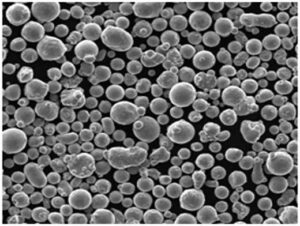
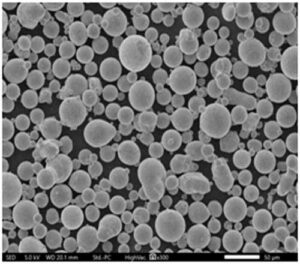
High-sphericity CM247LC powder is the additive manufacturing form of CM247LC, a nickel-base superalloy developed for elevated-temperature structural service. In powder terms, “high-sphericity” refers to a particle population with a strong tendency toward near-spherical morphology, limited irregular particles, low satellite attachment, and a surface condition suited to predictable flow and packing. The concept matters because AM powder performance is shaped not only by chemistry, but also by how each particle behaves during spreading, melting, and reuse.
CM247LC belongs to the broader family of precipitation-strengthened nickel superalloys. These alloys rely heavily on gamma-prime formation to retain strength at temperatures that exceed the practical limits of stainless steels, aluminum alloys, and many lower-alloy nickel materials. That makes CM247LC relevant to hot gas path development, turbine-adjacent hardware, thermal test structures, and advanced research builds where temperature capability is more important than easy printability.
The “LC” suffix is commonly understood as low carbon relative to earlier members of the 247 alloy family. That compositional tuning was intended to balance castability and high-temperature property development, particularly where creep resistance and oxidation behavior are priorities. In powder-based manufacturing, the same alloy is attractive because it offers a route to geometries that are difficult to produce by casting alone, including internal channels, lattice-supported features, and low-volume development hardware.
Why Sphericity Matters in CM247LC AM Powder
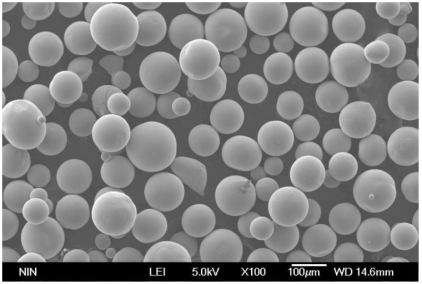
For metal AM, particle shape influences nearly every early-stage process step. Highly spherical powder tends to spread more evenly, flow through hoppers and dosing systems with fewer interruptions, and pack more consistently in the powder bed. These benefits become more important in a demanding alloy such as CM247LC, where the process window can already be narrow due to cracking sensitivity and complex thermal behavior.
That does not mean sphericity solves every problem. A spherical powder can still have chemistry issues, inclusions, or internal voids. Still, when comparing powders of the same alloy and similar cleanliness, higher sphericity is usually associated with fewer recoating disturbances and more uniform layer formation. In practice, that helps process engineers separate machine-parameter effects from feedstock-shape effects.
CM247LC Compared with More Common AM Alloys
Many AM users are more familiar with alloys such as Inconel 718, 316L, CoCrMo, or Ti-6Al-4V. CM247LC sits in a more specialized category. It is selected less for ease of qualification and more for its high-temperature capability, especially under creep and oxidation loads.
That distinction changes the powder conversation. In easy-printing alloys, modest variation in powder morphology may be tolerated without major consequences. In CM247LC, however, particle shape quality can have a stronger influence on development efficiency, because the alloy itself offers less margin for process instability. A batch of spherical AM powder with good spreadability is therefore not just a convenience; it can become a meaningful control variable.
Why the Market Uses Morphology Terms Like “High-Sphericity”
Unlike formal alloy names, morphology descriptors are functional rather than metallurgical classifications. Buyers use terms such as high-sphericity, low-satellite, narrow-PSD, or hollow-free to communicate the physical behavior they want from the powder. Those descriptors are especially useful in procurement because two powders with the same nominal chemistry may perform differently on the machine if particle morphology differs significantly.
For this reason, experienced users typically specify alloy, chemistry range, PSD, oxygen, morphology expectations, and end process together. The powder name alone does not capture enough detail for a high-value superalloy program.
Why CM247LC Remains Important
CM247LC persists because heat remains one of the hardest engineering constraints to defeat. Designers still need materials that can withstand long thermal exposure, cyclic heating, and severe mechanical stress. A nickel superalloy overview from ASM International helps frame where turbine-class alloys fit within the broader landscape of high-temperature materials.
Additive manufacturing adds another layer of interest by enabling shapes that conventional casting and machining handle less efficiently. When engineers want both geometry freedom and strong thermal capability, high-sphericity CM247LC powder becomes a logical candidate for trials, especially in aerospace and energy programs.
In high-temperature metal AM, powder morphology is not a cosmetic detail; it is part of the process window.
Chemical Composition and Material Grade
CM247LC chemistry is built around a nickel matrix strengthened by substantial alloying additions. Chromium supports oxidation and corrosion resistance, cobalt influences matrix behavior, tungsten and tantalum contribute refractory strengthening, while aluminum and titanium promote gamma-prime precipitation. Smaller additions such as hafnium, boron, carbon, zirconium, and molybdenum affect grain-boundary stability, carbide behavior, and elevated-temperature response.
For procurement, the important point is that high-sphericity CM247LC powder is still CM247LC first. The morphology descriptor does not replace the alloy grade. Buyers should therefore request chemistry control and grade traceability alongside particle-shape requirements, especially when the powder is intended for SLM, EBM, DED, or HIP-based near-net-shape routes.
| Element / Grade Reference | Typical wt% | Common Nominal Range | ASTM / AMS / GB / ISO / DIN Cross-Reference Notes |
|---|---|---|---|
| Ni | Balance | Balance | Proprietary nickel-base superalloy chemistry generally ordered by CM247LC designation rather than a single globally harmonized AM powder grade |
| Cr | 8.0–8.5 | about 8.1 | No exact one-line ASTM/AMS/ISO powder equivalent commonly used across all CM247LC supply chains |
| Co | 9.0–10.0 | about 9.2 | Identified by alloy composition agreement and internal material specification |
| W | 9.0–10.0 | about 9.5 | Refractory strengthening addition central to high-temperature service |
| Ta | 3.0–3.5 | about 3.2 | Major gamma-prime former; closely monitored in batch qualification |
| Al | 5.4–5.8 | about 5.6 | Supports precipitation strengthening and thermal capability |
| Hf | 1.2–1.6 | about 1.4 | Important for grain-boundary-related behavior and cast-derived alloy performance |
| Ti / Mo | Ti 0.6–0.9; Mo 0.4–0.7 | Ti about 0.7; Mo about 0.5 | Secondary strengthening additions usually controlled by agreed chemistry range |
| C / B / Zr | C 0.05–0.10; B about 0.015; Zr about 0.015 | tightly controlled | Typically managed through purchase specification rather than a universal powder standard mapping |
Composition Control in high-sphericity CM247LC powder
CM247LC is not forgiving of broad compositional drift. Small shifts in aluminum, titanium, tantalum, or carbon can influence gamma-prime volume fraction, segregation tendencies, and post-build heat-treatment response. Because the alloy is already challenging in AM, chemistry discipline is essential before morphology benefits can be fully realized.
High-sphericity CM247LC powder therefore needs a dual-control mindset: alloy chemistry must be correct, and physical particle quality must be consistent. Neglecting either one can weaken process repeatability.
Grade Identity vs. Powder Specification
Unlike commodity powders, CM247LC is often purchased through a custom or semi-custom material specification. The alloy identity is usually defined by nominal composition, while the powder specification adds PSD, oxygen, apparent density, tap density, Hall flow, and morphology requirements. This distinction is important because a chemistry certificate alone does not tell the user whether the powder is appropriate for AM.
For general terminology, the ISO/ASTM 52900 additive manufacturing terminology provides a common vocabulary for AM processes and feedstocks. For test frameworks, users frequently review the ASTM additive manufacturing standards catalog when building internal specifications for metal powders.
Why Morphology and Chemistry Must Be Evaluated Together
A rounder particle population can improve handling, but it does not compensate for the wrong alloy balance. Conversely, a chemically correct powder that contains too many irregulars, satellites, or elongated particles may create avoidable spreadability issues. In a high-value superalloy program, those two dimensions of quality must be treated as equal partners.
That is why material qualification teams increasingly review SEM images and morphology metrics alongside elemental analysis. They are trying to understand not just what the powder is made of, but how it will behave in the machine.
Technical Specifications
Technical specifications for high-sphericity CM247LC powder should always be linked to the manufacturing route. Finer cuts are common for SLM and some research-scale powder-bed fusion work, while coarser cuts may be appropriate for EBM, DED, laser cladding, or HIP-related powder applications. The most useful specification is not the most restrictive one; it is the one that matches layer thickness, energy input, and handling method.
In practice, premium CM247LC feedstock is described using a combination of PSD, density metrics, flow, oxygen, and morphology indicators. Sphericity is particularly important because it acts as a proxy for how the powder will spread and pack, but it should be interpreted with the other values rather than in isolation.
| PSD Range | Typical Process Fit | Apparent Density (g/cm³) | Tap Density (g/cm³) | Hall Flow (s/50 g) | Oxygen Content (wt%) | Sphericity |
|---|---|---|---|---|---|---|
| 15–45 µm | Fine-feature SLM builds | 4.8–5.3 | 5.3–5.9 | 13–19 | 0.01–0.05 typical | 0.95–0.98 typical |
| 15–53 µm | General PBF-LB process development | 4.9–5.4 | 5.4–6.0 | 12–18 | 0.01–0.05 typical | 0.95–0.98 typical |
| 20–63 µm | Broader laser powder-bed trials | 4.9–5.4 | 5.4–6.0 | 12–18 | 0.01–0.05 typical | 0.95–0.98 typical |
| 45–105 µm | DED or coarser-feed applications | 5.0–5.6 | 5.6–6.2 | 11–17 | 0.01–0.04 typical | 0.96–0.99 typical |
| 53–150 µm | Spray, HIP, and specialized deposition routes | 5.0–5.7 | 5.7–6.3 | 11–16 | 0.01–0.04 typical | 0.96–0.99 typical |
Particle Size Distribution for CM247LC 3D Printing Powder
Particle size distribution governs how many particles fit into a layer, how smoothly the bed is recoated, and how efficiently energy couples into the powder. Narrower and finer distributions are often preferred for detail-rich SLM work, but excessively fine powder can also increase handling sensitivity and oxygen pickup risk. The ideal range depends on the machine strategy rather than on the alloy alone.
For high-sphericity CM247LC powder, PSD and morphology interact closely. A well-rounded 15–53 µm cut can behave very differently from a similarly sized lot that contains more irregular fragments or satellite-rich particles.
Density and Flow Characteristics
Apparent density and tap density help estimate how the powder packs before and during processing. Hall flow gives a practical indication of how the powder moves through standardized geometry, which can correlate with hopper feeding and recoater response. These are simple tests, but they remain useful because they quickly reveal whether a batch behaves like a premium AM feedstock.
Still, engineers should avoid overinterpreting one number. A powder can have acceptable Hall flow and still spread less uniformly if its shape distribution is inconsistent. That is why morphology imaging remains essential.
Oxygen, Surface Condition, and Reuse
Oxygen content is a routine control metric for nickel superalloy powders, especially when the powder may be recycled through multiple build cycles. Surface oxides influence wetting and melt-pool behavior, and in a superalloy with limited processing margin, those changes can affect the stability of parameter development. High-sphericity powder is most valuable when matched with disciplined storage, sieving, and reuse procedures.
The same logic applies to satellite formation and fractured fines. Even if the starting lot is highly spherical, repeated handling can gradually alter the powder population. Users should track how the recycled fraction changes over time rather than assuming incoming quality remains unchanged in the machine loop.
Why Sphericity Improves Powder-Bed Consistency
Rounder particles roll and rearrange more efficiently during powder spreading. This typically reduces drag effects at the recoater edge and lowers the chance of localized bed disruption. For CM247LC, that smoother layer formation helps process engineers evaluate cracking, density, and microstructure with less noise from feedstock irregularity.
A broader NIST perspective on metal AM measurements reinforces the importance of powder metrology in achieving repeatable additive manufacturing. Sphericity is only one parameter, but it is a very influential one.
Applications Across Industries
High-sphericity CM247LC powder is not a general-purpose metal powder. It is mainly used where high-temperature mechanical performance justifies the cost and complexity of a nickel superalloy feedstock. The powder’s morphology advantage becomes valuable in sectors where build consistency, geometric freedom, and thermal capability are all important at the same time.
In many programs, the alloy is not the final production material on day one. It often enters the workflow as a development tool for coupons, parameter matrices, rig hardware, and prototype geometries. Once a stable process path is established, the same powder may support pre-production or limited-run parts.
| Industry | Typical Part | Main Performance Driver | AM / PM Process |
|---|---|---|---|
| Aerospace propulsion | Vane segments, shrouds, hot-zone demonstrators | Creep resistance and oxidation performance | SLM / EBM / HIP |
| Industrial gas turbines | Combustor-area hardware, inserts, trial nozzles | Elevated-temperature stability | SLM / DED / laser cladding |
| Energy research | Thermal coupons, lattice studies, exposure rigs | Materials screening under heat and cycling | SLM / EBM / PM |
| Repair and refurbishment | Feature rebuilds and local restoration zones | Controlled deposition in high-value components | DED / cladding |
| Academic and national labs | Crack studies, heat-treatment trials, microstructure mapping | Understanding AM behavior of 247-series alloys | SLM / EBM |
| Specialty industrial tooling | Furnace fixtures and hot-test support parts | Thermal endurance beyond common tooling alloys | SLM / HIP / PM |
Aerospace Uses of high-sphericity CM247LC powder
Aerospace remains the clearest fit because turbine hardware continues to demand alloys that keep their strength under sustained heat. High-sphericity CM247LC powder helps by supporting cleaner recoating and more uniform powder-bed preparation in geometries where internal passages, wall thickness transitions, and low-volume design iterations are common. That makes it relevant for prototype and development work in hot-section environments.
The alloy is particularly attractive when engineers need to explore designs that are difficult to cast, machine, or braze as assemblies. AM opens those design spaces, while high-sphericity feedstock reduces one layer of variability.
Energy and Industrial Turbomachinery
Gas turbines and related industrial systems often require materials that survive both temperature and time. In this context, CM247LC can be used for component trials, repair qualification, hot-gas test hardware, and process demonstration parts. The powder’s morphology quality matters because the economic value lies in repeatable engineering data, not just in producing a one-off shape.
Repair, Hybrid Manufacturing, and Deposition
Not every use case involves full powder-bed fusion. Some programs use CM247LC powder in directed energy deposition or cladding-style restoration. In those routes, consistent particle shape supports steady feeding and bead formation, which can improve geometric control and reduce interruptions in the deposition stream.
When Another Powder Family May Be Better
CM247LC is not automatically the best choice for every nickel application. Users focused on broader printability may prefer a wider nickel alloy powder range with more established AM process windows. If low density is the primary design target, a titanium alloy powder portfolio may align better with the part requirements.
Likewise, if the operating environment is dominated by corrosion rather than extreme heat, a stainless steel powder catalog may offer simpler qualification and lower total cost. Material selection should be driven by the service envelope and process maturity, not by alloy complexity alone.
Manufacturing and Quality Assurance
The route used to make CM247LC powder has a direct effect on particle shape, satellite population, surface texture, and lot consistency. Gas atomization is the most common industrial route for nickel superalloy AM powders, but PREP and VIGA-type controlled-melt approaches also matter depending on target quality and scale. For a high-sphericity requirement, the process route should be matched to a realistic QA plan rather than treated as a guarantee by itself.
For end users, the real question is simple: can the supplier repeatedly deliver a particle population that meets the morphology and cleanliness requirements of the intended process? That answer requires evidence. Sphericity claims should be supported by SEM review, image analysis, density and flow tests, and documented lot-release criteria.
| Route or QA Check | Main Advantage | Main Limitation | Typical Acceptance Focus |
|---|---|---|---|
| Gas Atomization (GA) | Broad commercial scalability and flexible PSD control | Satellite formation and morphology spread must be managed carefully | Sphericity, PSD, oxygen, satellite content |
| PREP | Very clean, round particle formation with excellent morphology | Lower throughput and higher cost per kilogram | High roundness, low satellites, smooth feeding behavior |
| VIGA-type controlled-melt route | Strong control of melting atmosphere and chemistry | More complex equipment chain | Composition precision, cleanliness, repeatable powder morphology |
| SEM morphology review | Direct visual evidence of particle roundness and satellites | Surface-focused unless paired with other tests | Roundness, elongation, fines, agglomerates |
| Image-analysis sphericity measurement | Quantifies particle shape distribution across samples | Method and threshold definition must be clear | Mean sphericity and outlier control |
| Hall flow and density tests | Practical production checks for handling behavior | Indirect measures of morphology quality | Flow consistency and packing repeatability |
GA vs. PREP vs. VIGA for high-sphericity CM247LC powder
Gas atomization remains the most practical option for many production environments because it can provide high-quality spherical powder at useful scale. With good control, it can achieve morphology appropriate for demanding AM use. However, powder users should still examine satellite content and shape distribution rather than assuming all atomized powder is equivalent.
PREP is often associated with very high particle roundness and low contamination, especially for premium spherical powders. Its trade-off is cost and output scale. VIGA-type controlled-melt systems can strengthen upstream atmosphere and composition control before atomization, which supports consistency in complex superalloys.
How Sphericity Should Be Verified
A supplier’s SEM gallery is helpful, but visual examples alone are not enough. High-sphericity CM247LC powder should ideally be supported by quantified image analysis, representative sampling, and routine lot-release tests. The goal is to confirm not just that some particles are round, but that the bulk powder population is consistently suitable for the intended AM route.
This is especially important if the powder will be qualified on more than one machine platform. Minor morphology differences that seem unimportant in a simple coupon test can become relevant in long builds, thin walls, or aggressive recoating conditions.
Why QA Is Critical for CM247LC
CM247LC is already a complex AM alloy because of its high gamma-prime content and cracking tendency. That means feedstock inconsistency can waste time quickly during parameter development. A well-characterized, high-flowability powder reduces one source of uncertainty and helps teams focus on the real process challenges of the alloy.
Quality assurance therefore should not be viewed as paperwork alone. In this material class, it is an engineering control tool.
Why Choose Truer as Your Supplier
For a powder such as high-sphericity CM247LC, supplier selection is fundamentally a technical decision. Buyers usually need to understand the powder-making route, morphology expectations, documentation depth, and compatibility with SLM, SEBM, DED, cladding, or related downstream processes. Those requirements are more demanding than for a commodity powder because the alloy itself already narrows the process window.
Shanghai Truer Technology is relevant here because its AM activity combines powder-making equipment knowledge with supply of spherical metal powders across multiple alloy families and end-use processes. A neutral overview in the Truer company background gives context for its work in powder technologies, including PREP, GA, and SEBM-related capabilities. For a user evaluating CM247LC, that matters because powder morphology, process route, and equipment understanding are closely linked in practical qualification work.
Ordering Guide and Support
Ordering high-sphericity CM247LC powder should start with a clear technical brief. Buyers should specify the intended process, target PSD, expected morphology level, preferred packaging format, and any requested release tests. That is especially important for CM247LC because “CM247LC powder” by itself does not tell the supplier enough about whether the end use is SLM, EBM, DED, cladding, HIP, or comparative research.
Lead time and MOQ also depend on whether the requirement is a small evaluation lot or a recurring engineering batch. Many teams begin with a sample quantity to check spreadability, density, and crack tendency before moving to larger qualification orders. That staged approach is often more efficient than ordering production-scale volume before the process window is proven.
| Packaging Format | Typical MOQ Tier | Typical Lead Time | Sample Policy |
|---|---|---|---|
| 250 g bottle | Feasibility screening | 1–2 weeks if sample material is available | Paid evaluation sample or project-based release |
| 500 g bottle | Early parameter development | 1–3 weeks typical | Common for powder-bed trials and initial microscopy |
| 1 kg bottle | Extended coupon and recycle studies | 2–4 weeks typical | Usually supplied with baseline powder test report |
| 5 kg sealed can | Pilot qualification batch | 3–5 weeks typical | Retained sample can be agreed for traceability |
| 10 kg+ supply lot | Pre-production or recurring engineering work | 4–8 weeks typical | Larger release commonly follows sample approval |
What to Include in a Purchase Inquiry
A strong inquiry should list alloy designation, PSD range, process type, desired morphology emphasis, documentation expectations, and whether recycled powder blending is part of the user’s workflow. If high sphericity is a critical acceptance feature, it is wise to state how it should be assessed rather than relying on a generic marketing term.
It is also useful to clarify whether the project is exploratory R&D, formal qualification, or recurring industrial supply. Those categories often require different release documentation and sample-retention practices.
Samples, Documentation, and Technical Communication
The most efficient route is usually phased evaluation: incoming powder check, machine trial, metallography, then scaled-up ordering. This approach allows the buyer to confirm that the powder behavior aligns with the intended machine and geometry set before volume commitments increase. For quotation requests or technical coordination, the powder supply contact page is the appropriate starting point.
Our Company
Shanghai Truer Technology Co., Ltd. was established in 2009 and created its additive manufacturing business in 2019. The company works on integrating 3D printing powder-making equipment and services with high-quality 3D printing powders for engineering applications of additive manufacturing. Its core technologies include Selective Electron Beam Melting equipment, Plasma Rotating Electrode Process powder-making equipment, and gas atomization relevant to spherical metal powder production. The company’s portfolio includes TiNi, TiTa, TiAl, TiNbZr, and CoCrMo, along with nickel-based, cobalt-based, titanium-based, copper-based, aluminum-based, and stainless steel spherical metal powders. It also participates in a joint innovation center for metal 3D printing with laboratories and industry experts, and supports SLM, SEBM, DED, laser cladding, powder metallurgy, MIM, HIP, cold and hot spraying, welding, and coating for industries including 3C electronics, hand tools, remote control cars, medical, aerospace, and nuclear power.
FAQ
Q1. What does high-sphericity CM247LC powder mean in practical terms?
It means the powder contains a high proportion of near-spherical particles with limited irregulars and relatively low satellite attachment. In practice, this usually improves flow, spreading, and packing compared with less spherical powder of the same alloy. The benefit is process stability rather than a change in nominal chemistry.
Q2. Is high-sphericity CM247LC powder better for SLM or EBM?
It can benefit both, but the value often shows up differently. In SLM, smoother recoating and more uniform thin layers are especially important, while in EBM the powder still benefits from consistent handling and bed formation under elevated build conditions. The better choice depends on geometry, machine strategy, and thermal management requirements.
Q3. Does higher sphericity guarantee better part density?
No, not by itself. Part density also depends on chemistry, oxygen, internal particle soundness, machine parameters, layer thickness, and post-processing. Higher sphericity helps by reducing one major feedstock variable, but it is not a substitute for full process optimization.
Q4. What particle sizes are common for high-sphericity CM247LC powder?
For powder-bed fusion, 15–45 µm and 15–53 µm are common commercial targets, while coarser cuts such as 45–105 µm may be used for DED or related processes. The right PSD should match the intended machine, layer thickness, and powder delivery method. A finer cut is not automatically better if it does not fit the process window.
Q5. How should buyers verify a high-sphericity claim?
They should request SEM morphology images, image-analysis data if available, PSD results, flow and density measurements, and basic chemistry and oxygen reports. For critical applications, it is also wise to review how the supplier samples lots and defines acceptable shape outliers. A clear acceptance method is more useful than a vague descriptive label.
Q6. Is high-sphericity CM247LC powder used only in aerospace?
No. Aerospace is a major application area, but the powder is also relevant to industrial gas turbines, repair programs, energy research, and specialized thermal tooling. The common thread is the need for a high-temperature superalloy combined with controlled powder behavior in AM or related powder-based processes.