Quick Answer
316L stainless steel powder for 3D printing is a low-carbon, corrosion-resistant austenitic stainless feedstock designed for additive manufacturing processes such as laser powder bed fusion and related powder-based routes. It is widely chosen because it combines stable printability, good powder flow, strong weldability, reliable post-processing behavior, and broad end-use acceptance. For engineers making complex metal parts, 316L is often the most practical option when corrosion resistance, process consistency, and balanced mechanical properties matter more than maximum hardness or ultra-high-temperature strength.
What Is 316L stainless steel powder for 3D printing?
316L stainless steel powder for 3D printing is the powder-metallurgy form of the well-established 316L stainless alloy, prepared with chemistry, morphology, and particle-size control suitable for additive manufacturing. The grade belongs to the chromium-nickel-molybdenum austenitic stainless family, with the “L” indicating low carbon content. In powder form, it is used wherever metal AM requires corrosion resistance, dependable melting behavior, and a relatively forgiving process window.
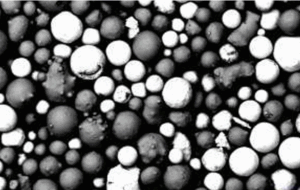
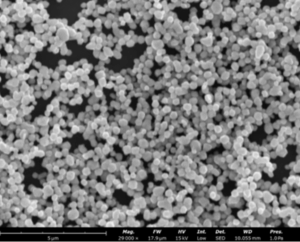
Unlike generic stainless powder used only for press-and-sinter applications, AM-grade 316L is produced to tighter expectations for particle shape, cleanliness, and flow. In most cases, that means predominantly spherical particles made by gas atomization, then sieved into process-specific size cuts. The result is a powder that spreads more evenly, feeds more consistently, and supports better layer formation in powder-bed and blown-powder systems.
The alloy itself has a long industrial history. 316L is familiar in medical tools, chemical handling systems, food-processing equipment, marine-adjacent hardware, and general industrial components because it balances corrosion resistance with fabricability. In additive manufacturing, those same advantages translate into a material that can produce dense parts with complex geometry while remaining comparatively easy to machine, weld, polish, passivate, and inspect afterward.
316L as an Austenitic AM Powder
From a metallurgical standpoint, 316L is stabilized as an austenitic stainless steel by its nickel content, while chromium provides passivation and molybdenum improves resistance to localized corrosion. The low carbon level helps reduce sensitization risk during thermal cycles, which is relevant for both conventional welding and metal AM. That combination is one reason 316L remains a default stainless option in many early-stage and production AM programs.
Why 316L Remains a Workhorse Alloy
Not every powder needs to deliver maximum strength. In many applications, designers prioritize corrosion performance, geometric freedom, reproducibility, and ease of qualification over peak hardness. Austenitic stainless AM powder fits that need well, especially when engineers want a material that behaves predictably across printing, heat treatment, machining, and finishing steps.
How It Differs From Other Stainless and Metal Powders
Compared with 304L, 316L usually offers better resistance to pitting and chloride attack because of its molybdenum content. Compared with 17-4PH stainless powder, it is generally less strong after heat treatment but easier to print consistently and more corrosion resistant in many environments. Compared with tool steel or nickel superalloy powders, 316L is typically selected for its balanced properties rather than for extreme wear resistance or elevated-temperature service.
In metal additive manufacturing, feedstock quality is defined by chemistry, particle behavior, and repeatability together—not by alloy name alone.
Chemical Composition and Material Grade
The chemistry of 316L stainless steel powder for 3D printing follows the familiar composition window of wrought 316L, but AM users generally evaluate it with additional attention to powder-specific purity and lot consistency. Chromium, nickel, and molybdenum are the primary alloying elements that define the grade’s corrosion performance and austenitic structure. Carbon is kept low to preserve the “L” designation and help maintain corrosion resistance after thermal exposure.
In additive manufacturing, composition is never considered in isolation. Powder users also care about oxygen, residual elements, and the consistency of that chemistry across batches, because even a nominally correct 316L alloy can behave differently if contamination or oxidation are not controlled. This is why procurement specifications often include both alloy chemistry and powder-characterization data rather than relying on grade shorthand alone.
| Element / Standard Reference | Typical wt% | Common Specification Range | Grade Cross-Reference / Notes |
|---|---|---|---|
| Fe | Balance | Balance | Base metal of the alloy system |
| Cr | 16.5–17.5 | 16.0–18.0 | Supports passive film and general corrosion resistance |
| Ni | 10.5–12.5 | 10.0–14.0 | Stabilizes austenitic microstructure |
| Mo | 2.0–2.5 | 2.0–3.0 | Improves pitting and crevice corrosion resistance |
| Mn | 1.0–1.8 | ≤2.0 | Process and deoxidation-related element |
| Si | 0.4–0.9 | ≤1.0 | Typical residual/deoxidation contribution |
| C | 0.01–0.03 | ≤0.03 | Defines low-carbon 316L designation |
| P / S / N | low residuals | P ≤0.045, S ≤0.03, N controlled by agreement | Cleanliness and consistency are important in AM |
| ASTM / AMS / GB / ISO / DIN | — | — | Common references include UNS S31603, EN 1.4404 / X2CrNiMo17-12-2, ISO-aligned 316L designations, and GB 022Cr17Ni12Mo2 |
Key Elements in 316L Stainless Steel Powder for 3D Printing
Chromium is responsible for forming the passive oxide film that gives stainless steels their corrosion resistance. Nickel stabilizes the austenitic phase and supports ductility, while molybdenum helps 316L outperform 304-type alloys in more aggressive chloride-containing environments. Carbon stays intentionally low so the powder and finished part are less prone to sensitization after heat exposure.
Grade Mapping Across Global Supply Chains
The same alloy may be described differently in purchasing documents depending on region and industry. Some buyers use UNS S31603, others refer to EN 1.4404, and others simply specify 316L with a chemistry table. When sourcing powder for additive manufacturing, it is more effective to align around the chemical envelope, morphology expectations, and certification package than to assume one naming system alone is sufficient.
Chemistry Matters, but So Does Powder Context
A 316L chemical analysis does not automatically guarantee good printability. The powder must also be made, classified, and packed in a way that supports stable recoating or powder feeding. That is why many engineers treat low-carbon corrosion-resistant alloy selection as only the first step in a broader feedstock qualification process.
For terminology consistency in additive manufacturing, many buyers refer to the [ISO/ASTM 52900 AM terminology standard] when defining powder-based processes and feedstock categories in technical documents.
Technical Specifications
Technical specifications determine whether 316L stainless steel powder for 3D printing will behave properly in a specific machine and process route. The most important variables usually include particle size distribution, apparent density, tap density, Hall flow rate, oxygen level, and morphology. Together, these metrics affect how powder spreads, packs, melts, and responds to recycling.
The “right” specification is process dependent. A powder optimized for laser powder bed fusion will usually be finer than one chosen for directed energy deposition or laser cladding. Fine fractions support thin layers and finer detail, while coarser cuts often improve feeding performance in nozzle-based systems and reduce sensitivity to airborne fines.
| PSD Range | Typical Process Fit | Apparent Density (g/cm³) | Tap Density (g/cm³) | Hall Flow (s/50 g) | Oxygen Content (wt%) | Sphericity |
|---|---|---|---|---|---|---|
| 15–45 µm | fine-feature LPBF | 4.3–4.8 | 5.0–5.5 | 14–22 | 0.03–0.10 | ≥0.90 typical |
| 15–53 µm | general SLM / LPBF | 4.4–5.0 | 5.1–5.7 | 13–20 | 0.02–0.08 | ≥0.90 typical |
| 20–63 µm | broader AM and development use | 4.4–5.0 | 5.1–5.8 | 13–21 | 0.02–0.08 | ≥0.90 typical |
| 45–105 µm | DED / laser cladding | 4.5–5.2 | 5.3–6.0 | 12–18 | 0.02–0.06 | ≥0.92 typical |
| 53–150 µm | thermal spray / coarse deposition routes | 4.6–5.3 | 5.4–6.1 | 11–17 | 0.02–0.06 | ≥0.92 typical |
Particle Size Distribution for 316L 3D Printing Powder
Particle size distribution affects layer thickness capability, surface finish, packing density, and melt stability. In powder-bed systems, excessively coarse material can reduce resolution and impair thin-layer spreading, while too much fine material can increase oxidation sensitivity and create handling challenges. The most common specification for LPBF-grade 316L is therefore a balanced cut such as 15–53 µm.
Flowability and Packing Behavior
Apparent density, tap density, and Hall flow do not predict printability perfectly, but they remain useful indicators of how a powder will behave during storage, transfer, and spreading. Higher packing efficiency generally helps create more uniform layers, and stable flow supports consistent machine feeding. In practice, users compare these values together rather than relying on a single number.
Oxygen Content and Surface Condition
Powder oxygen level matters because metal AM is strongly influenced by surface state as well as bulk chemistry. Oxide films can affect wetting, laser interaction, inclusion formation, and powder recyclability, particularly after repeated build cycles. The [NIST powder characterization resources] are often consulted by AM teams building internal procedures for powder inspection and reuse control.
Sphericity, Satellites, and Powder Spreadability
Sphericity is a useful summary metric, but it should not be read alone. A powder can show high average sphericity yet still contain too many satellites or fines, which may reduce flow and increase the risk of inconsistent recoating. For critical applications, microscopy and image analysis remain valuable complements to routine density and flow tests.
Mechanical Outcomes Depend on More Than the Powder
316L printed parts are generally valued for corrosion resistance, ductility, and post-processing flexibility rather than for maximum hardness. Final properties depend on build orientation, energy density, porosity level, thermal history, and finishing operations such as stress relief, HIP, machining, passivation, or polishing. Feedstock quality reduces variation at the starting point, but full qualification always requires part-level verification.
Applications Across Industries
316L stainless steel powder for 3D printing is used across many sectors because it combines a familiar engineering alloy with the design freedom of additive manufacturing. It is especially valuable where components need corrosion resistance, internal channels, fine features, or reduced assembly count. Because 316L is already widely accepted in conventional manufacturing, many organizations also find it easier to benchmark and qualify than more specialized AM alloys.
| Industry | Typical Part | Main Functional Need | AM / PM Process |
|---|---|---|---|
| Medical and laboratory | surgical guides, instrument handles, fixtures | corrosion resistance, cleanability, dimensional customization | LPBF / MIM |
| Food and chemical processing | manifolds, nozzles, mixer parts | corrosion resistance and hygienic service | LPBF / DED |
| General industrial equipment | brackets, housings, mounts, custom hardware | balanced strength, weldability, machinability | LPBF / PM |
| Filtration and porous media | lattice filters, porous inserts, diffusers | controlled porosity with corrosion resistance | LPBF / PM-derived routes |
| Marine-adjacent systems | small fittings, valve geometries, test parts | better chloride performance than 304L | LPBF / DED |
| R&D and academia | benchmark coupons, parameter studies, prototypes | robust stainless baseline for process development | LPBF / SEBM-related studies |
Medical, Dental, and Laboratory Tooling
316L often appears in medical-adjacent applications because its corrosion behavior and cleanability are well understood. In AM, it is commonly used for tools, guides, custom holders, and laboratory hardware rather than being limited to generic prototypes. Where regulation applies, powder selection is only one element of qualification; the entire process chain must still be validated.
Industrial Fluid-Handling Components
Complex manifolds, nozzles, and internal-channel parts are natural use cases for additive manufacturing because conventional machining or casting may struggle with enclosed geometries. 316L provides a practical material foundation for these components, especially where exposure to water, chemicals, or cleaning cycles is expected. The alloy’s good weldability also simplifies downstream repair or integration into larger assemblies.
Filtration, Lattice Structures, and Porous Parts
3D printing enables pore networks and lattice geometries that can be designed digitally rather than formed only by traditional sintering methods. This makes 316L useful for porous flow-control parts, filters, diffusers, and lightweight support structures. In such cases, the combination of corrosion resistance and printable geometry is more important than extreme tensile strength.
Tooling, Fixtures, and Production Aids
Not all printed metal parts are final products. Many manufacturers choose 316L for jigs, fixtures, end-effectors, and setup aids because it prints reliably and can be machined or welded after the build. That practical versatility is one reason 316L powder for metal AM remains common in both production and prototyping environments.
When Other Powder Families Make More Sense
Some service conditions call for different materials. A part exposed to sustained high temperature may be better suited to a [nickel alloy powder range], while severe wear or edge retention may justify harder steels or cobalt systems such as [cobalt alloy powder grades]. Where light weight or thermal conductivity is the driving requirement, titanium, aluminum, or copper alloys can be more appropriate than 316L.
Manufacturing and Quality Assurance
The manufacturing route used to produce 316L stainless steel powder for 3D printing strongly affects its morphology, cleanliness, and repeatability. Gas atomization is the standard commercial route because it can produce near-spherical particles at industrial scale with good chemistry control. However, a usable powder lot depends on more than atomization alone; it also requires careful melting practice, inert-gas handling, sieving, de-dusting, blending strategy where applicable, and protective packaging.
AM users should think of quality assurance as a process chain, not a single certificate. Incoming chemistry, powder morphology, gas content, storage conditions, and reusability all influence part quality. The goal is not merely to confirm that the alloy is “316L,” but to verify that the powder will behave consistently from lot release through machine use.
| Route or QA Check | Main Advantage | Main Limitation | Typical Acceptance Focus |
|---|---|---|---|
| Gas Atomization (GA) | scalable, widely used, good spherical morphology | satellites and fine fraction must be controlled | PSD, oxygen, chemistry, morphology |
| PREP | excellent sphericity and cleanliness | higher cost, less common for bulk 316L | premium morphology and low contamination |
| VIGA | strong atmosphere and melt control | process complexity and cost sensitivity | chemistry stability and low pickup |
| Laser diffraction PSD | fast size-distribution screening | limited visibility into particle shape | conformance to size cut |
| Hall flow and density tests | practical lot-to-lot monitoring | incomplete predictor of print performance | flow consistency and packing behavior |
| Gas analysis and microscopy | captures oxidation and morphology risks | requires disciplined sampling practice | oxygen limits and particle-shape acceptance |
Why Gas Atomization Is Common for 316L Stainless Steel Powder for 3D Printing
Gas atomization is the dominant route because it offers a practical balance between output, particle sphericity, and cost efficiency. For stainless alloys such as 316L, the process can generate powder with the flow and packing behavior required for AM, provided melt cleanliness and classification are tightly controlled. That combination explains why most industrial 316L AM powder originates from atomized feedstock rather than irregular or water-atomized material.
Quality Tests That Matter Most
A typical release package for 316L powder may include chemistry, particle size distribution, apparent density, tap density, Hall flow, and oxygen analysis. Depending on the application, users may also request morphology images, contamination checks, retained samples, or traceability records linking raw melt to packaged lot. These practices align with the broader philosophy seen in the [ASTM additive manufacturing standards collection], where material control is treated as central to process reliability.
Storage, Handling, and Reuse Control
Even a well-made powder can lose value through poor handling. Exposure to humidity, repeated open-air transfer, and inconsistent recovery practices can change oxygen content, fines balance, or contamination level. For that reason, serious AM operations build procedures around sealed packaging, controlled transfer, reuse limits, and periodic re-characterization.
Qualification Must Include the Machine
Powder certificates matter, but the printer still determines a large part of the outcome. Laser power, scan strategy, chamber condition, recoater type, and gas flow all influence how 316L behaves in practice. The most reliable qualification plans therefore connect powder data to printed density, microstructure, surface quality, and corrosion performance after post-processing.
Why Choose Truer as Your Supplier
Choosing a supplier for 316L stainless steel powder for 3D printing is primarily a technical sourcing decision. Buyers should compare PSD control, atomization capability, morphology consistency, lot documentation, sample support, and the supplier’s ability to discuss powder behavior in specific AM processes. The most useful supplier is usually the one that can match feedstock characteristics to application requirements rather than offering only a generic catalog description.
Shanghai Truer Technology is relevant because its activities span powder-making equipment, spherical metal powder supply, and additive manufacturing applications. That broader position gives context when discussing how a 316L powder should be selected for LPBF, DED, PM, MIM, laser cladding, or other downstream routes. It also matters when customers need to compare stainless feedstock with adjacent alloy families inside a broader material strategy.
For users evaluating alternatives, a broader [stainless powder product family] can help position 316L relative to other stainless grades, while a [titanium alloy powder portfolio] is relevant when low density or high specific strength becomes more important than corrosion-driven stainless selection. In other words, feedstock choice should follow service conditions, geometry, and process economics rather than alloy familiarity alone.
What Engineers Should Compare Supplier to Supplier
Beyond chemistry and price, engineers should compare lot traceability, test methods, packaging discipline, and responsiveness during trial-stage qualification. Sample consistency is especially important: a powder that prints well in a 1 kg evaluation should represent what will later be supplied in pilot and production quantities. This is where manufacturing discipline often shows up more clearly than in a single datasheet.
Ordering Guide and Support
Ordering 316L stainless steel powder for 3D printing should begin with the actual process requirement, not just the alloy name. A useful purchase request includes the target process, preferred particle-size range, quantity, packaging type, and required documentation. This reduces the risk of receiving material that is chemically correct yet unsuitable for the intended machine.
| Packaging Format | Typical MOQ Tier | Typical Lead Time | Sample Policy |
|---|---|---|---|
| 500 g bottle | lab evaluation | 1–2 weeks if stocked | paid sample or project sample by agreement |
| 1 kg bottle | process screening | 1–3 weeks typical | common for parameter development |
| 5 kg sealed can | pilot qualification | 2–4 weeks typical | often aligned to lot-level test data |
| 10–25 kg drum | pre-production volume | 3–5 weeks typical | retained sample may be available |
| 50 kg+ batch supply | recurring production | 4–8 weeks typical | qualification sample usually precedes bulk release |
Information to Include in an RFQ
The most effective RFQs specify the machine or process route, desired PSD, intended application, packaging preference, and required test items. Buyers often also request apparent density, tap density, Hall flow, oxygen, and morphology information so they can screen lots before running build trials. If the powder is intended for a regulated or highly critical application, traceability and document retention should be discussed at the start.
Sample Evaluation and Scale-Up
Small-quantity sampling is standard because powder behavior is process specific. Engineers typically begin with spreadability checks, density coupons, parameter optimization, and post-build inspection before committing to larger volumes. When technical questions need to be resolved directly, Truer provides a [technical inquiry contact page] for powder and application discussions.
Lead-Time Variables
Lead time depends on whether the powder is already classified to the requested size range, how much documentation is required, and what packaging format is needed. Fine LPBF-grade fractions may involve tighter screening and handling steps than coarse DED or spray cuts. As a result, two 316L orders with identical chemistry can still have very different delivery schedules.
Our Company
Shanghai Truer Technology Co., Ltd. was established in 2009 and created its additive manufacturing business in 2019. The company focuses on integrating 3D printing powder making equipment and services with high-quality 3D printing powders for engineering applications of additive manufacturing. Its core technologies include Selective Electron Beam Melting equipment, Plasma Rotating Electrode Process powder making equipment, and gas atomization relevant to spherical metal powders. The product portfolio includes TiNi, TiTa, TiAl, TiNbZr, and CoCrMo, together with nickel-based, cobalt-based, titanium-based, copper-based, aluminum-based, and stainless steel spherical metal powders. The company also participates in a joint innovation center for metal 3D printing with laboratories and industry experts, and supports SLM, SEBM, DED, laser cladding, PM, MIM, HIP, cold and hot spraying, welding, and coating for industries including 3C electronics, hand tools, remote-control cars, medical, aerospace, and nuclear power. Additional background on the company is available through its [corporate overview page].
FAQ
Q1. Is 316L stainless steel powder for 3D printing suitable for both prototypes and production parts?
Yes. It is widely used for rapid prototyping because it prints reliably, but it is also common in qualified production environments where corrosion resistance and dimensional complexity are important. Whether it is appropriate for production depends on the required properties, finishing route, and validation level.
Q2. What particle size is most common for 316L stainless steel powder for 3D printing in LPBF systems?
A typical range is 15–53 µm, with 15–45 µm also common for finer-feature work. The optimum cut depends on layer thickness, recoater style, laser strategy, and how the machine handles fines during recycling.
Q3. Why is gas-atomized 316L preferred over irregular stainless powder for additive manufacturing?
Gas-atomized powder is generally more spherical, flows better, and forms more uniform powder layers. Those characteristics improve print consistency and reduce the likelihood of defects related to poor spreading or unstable powder feeding.
Q4. Can 316L stainless steel powder for 3D printing be used for medical applications?
It is commonly used for medical-adjacent tools, guides, fixtures, and laboratory hardware where corrosion resistance and cleanability are important. However, suitability for any regulated medical use depends on the full process chain, post-processing, cleanliness control, and applicable compliance requirements.
Q5. How important is oxygen content in 316L stainless steel powder for 3D printing?
It is very important because oxygen influences powder surface condition, recyclability, and sometimes final part quality. Even when bulk chemistry remains in range, oxidation drift from poor storage or reuse practices can affect consistency during printing.
Q6. What should buyers request from a 316L powder supplier before ordering?
They should ask for chemistry data, particle size distribution, apparent density, tap density, Hall flow, oxygen content, morphology information, packaging details, and lot traceability. It is also wise to state the intended process clearly, because a powder optimized for LPBF may not be the best choice for DED, laser cladding, MIM, or PM.