Quick Answer
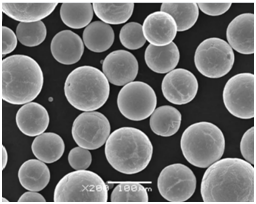
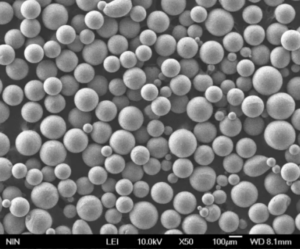
High-sphericity Inconel 718 powder is a spherical nickel-based superalloy feedstock engineered for powder-bed fusion, directed energy deposition, and related metal AM processes. It is widely chosen for 3D printing because the alloy combines high strength, corrosion resistance, and useful elevated-temperature performance, while high sphericity improves flowability, powder spreading, and packing consistency. That combination helps manufacturers achieve stable builds, high density, and repeatable part quality in aerospace, energy, medical tooling, and industrial applications.
What Is high-sphericity Inconel 718 powder?
High-sphericity Inconel 718 powder is the additive-manufacturing form of alloy 718, a precipitation-hardenable nickel-chromium superalloy known for its strong mechanical performance and broad processing window. The phrase “high-sphericity” refers to particle shape rather than chemical composition alone. In practice, it means the powder contains a high proportion of near-perfect spherical particles with minimal irregular fragments, satellites, or elongated particles that might interfere with consistent handling and melting.
Inconel 718 occupies a distinctive place within the nickel superalloy family. It was developed for applications requiring strength, oxidation resistance, and corrosion resistance at temperatures beyond the practical limits of many stainless steels. Over time, it became one of the most important engineering alloys for aerospace engines, gas turbines, energy systems, and high-reliability hardware because it offers a favorable balance between performance and manufacturability.
Why particle sphericity matters in additive manufacturing powder
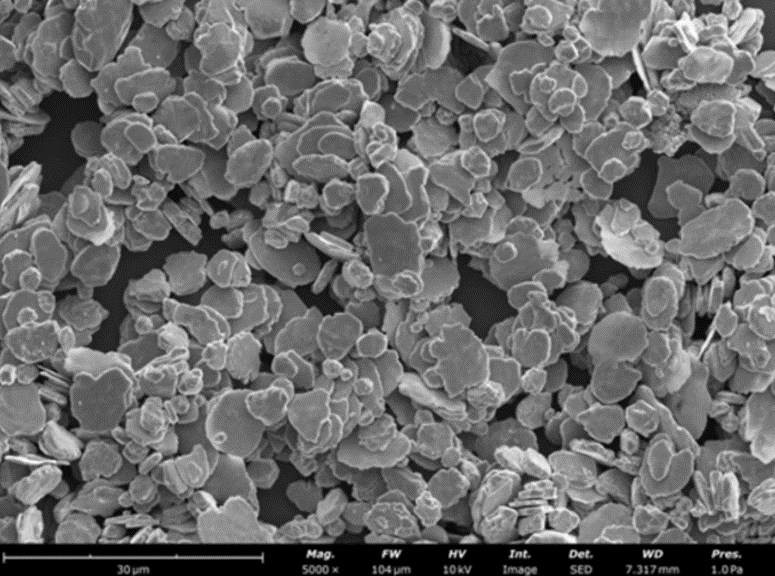
Particle shape is not a cosmetic detail. In metal AM, powders must move smoothly through hoppers, spread into thin layers, and pack with sufficient uniformity to support stable melting behavior. When a powder has high sphericity, inter-particle friction usually drops, flow becomes more predictable, and the powder bed tends to form more evenly.
That matters most in laser powder bed fusion and electron beam powder bed systems, where recoating uniformity directly affects layer quality. It also matters in feeder-based processes such as DED and laser cladding, where irregular particles can reduce feeding consistency. For this reason, powder morphology is often as important as nominal alloy chemistry when qualifying AM feedstock.
How Inconel 718 differs from related AM alloys
Compared with stainless steels, Inconel 718 generally offers much higher high-temperature strength and better resistance to thermal degradation. Compared with many titanium alloys, it is denser and heavier, but it performs much better in hot sections and aggressive corrosive environments. Compared with some more advanced nickel superalloys, 718 is often considered more forgiving in manufacturing, which is one reason it has become such a frequent starting point in superalloy AM development.
The alloy is strengthened primarily by age-hardening rather than by simple solid-solution effects alone. That gives users an important post-processing lever: after printing, suitable solution and aging treatments can significantly improve final mechanical properties. As a result, high-sphericity Inconel 718 powder is not just a feedstock for making near-net-shape parts; it is part of a broader metallurgical route that includes printing, stress relief, HIP when needed, machining, and heat treatment.
Why the market emphasizes “high-sphericity” rather than just “718 powder”
Not all Inconel 718 powders behave the same way in production. Two powders can have similar chemistry yet perform differently because of differences in particle roundness, satellite content, internal porosity, gas pickup, fines distribution, and contamination level. The term high-sphericity therefore signals a quality focus tied directly to AM performance.
For buyers reviewing a broader nickel alloy powder range, this distinction is important. A powder qualified for conventional powder metallurgy is not automatically ideal for high-precision AM, and a premium AM powder is usually characterized by a tighter focus on shape, cleanliness, and lot-to-lot consistency.
Chemical Composition and Material Grade
The performance of Inconel 718 starts with its chemistry. High sphericity improves handling and deposition behavior, but the alloy’s strength, age-hardening response, and corrosion resistance still come from the established 718 composition window. For that reason, technical buyers typically review chemistry and morphology together rather than treating them as separate concerns.
Typical composition and grade cross-reference
| Element / Grade Item | Typical wt.% | Metallurgical Role | Grade / Standard Cross-Reference |
|---|---|---|---|
| Nickel (Ni) | 50.0–55.0 | Matrix stability, heat and corrosion resistance | UNS N07718 |
| Chromium (Cr) | 17.0–21.0 | Oxidation and corrosion resistance | Common 718 chemistry window |
| Iron (Fe) | Balance | Matrix constituent | Common 718 chemistry window |
| Niobium + Tantalum (Nb+Ta) | 4.75–5.50 | Main precipitation-strengthening contributor | Common 718 chemistry window |
| Molybdenum (Mo) | 2.80–3.30 | Solid-solution strengthening | Common 718 chemistry window |
| Titanium (Ti) | 0.65–1.15 | Supports precipitation hardening | Common 718 chemistry window |
| Aluminum (Al) | 0.20–0.80 | Contributes to age-hardening phases | Common 718 chemistry window |
| Cobalt (Co) | ≤1.0 typical | Controlled residual / minor constituent | Supplier data-sheet dependent |
| Carbon (C) | ≤0.08 | Carbide control | Chemistry limit |
| Manganese (Mn) | ≤0.35 | Residual element control | Chemistry limit |
| Silicon (Si) | ≤0.35 | Residual element control | Chemistry limit |
| Sulfur (S) | ≤0.015 | Impurity control | Chemistry limit |
| Phosphorus (P) | ≤0.015 | Impurity control | Chemistry limit |
| ASTM family reference | — | Alloy identity and materials procurement context | ASTM material standards portal |
| AMS reference | — | Aerospace purchasing context | Buyer specification dependent |
| GB / ISO / DIN reference | — | Cross-reference by project or region | Qualification-specific equivalence |
The composition table above reflects the widely accepted chemistry range associated with alloy 718. In purchasing practice, powder certificates may cite a UNS designation, an aerospace drawing note, or a supplier-specific material specification. The critical point is that the chemistry window must support the intended heat-treatment response and final performance requirements.
Chemistry and strengthening mechanism
The most important strengthening elements in Inconel 718 are niobium, titanium, and aluminum, which help form the precipitates responsible for the alloy’s characteristic mechanical performance after aging. Chromium contributes oxidation and corrosion resistance, while molybdenum adds solid-solution strengthening. Nickel provides the base matrix that allows the alloy to remain stable at temperatures that would challenge many other engineering materials.
This chemistry is one reason 718 remains so common in AM. It offers a robust property set without the severe crack sensitivity associated with some other high-performance nickel alloys. That balance between strength and processability is central to its long-standing industrial relevance.
Grade language in powder procurement
In real-world sourcing, material grade rarely stops at the alloy name. Buyers often specify acceptable oxygen and nitrogen levels, morphology thresholds, particle size distribution, packaging atmosphere, and test methods. For metal AM, the usable definition of the material is therefore broader than the nominal chemistry.
To keep terminology aligned across engineering and procurement teams, many organizations reference ISO/ASTM additive manufacturing terminology when describing feedstock and process categories. That shared vocabulary helps avoid ambiguity when discussing powder bed fusion, DED, reuse policy, and acceptance criteria.
Technical Specifications
Technical specifications define whether a high-sphericity Inconel 718 powder is suitable for a given machine and application. The same alloy can behave quite differently depending on particle size distribution, apparent density, tap density, oxygen content, and flow. In practice, the best specification is always process-specific.
Typical technical specifications for high-sphericity Inconel 718 powder
| Parameter | 15–53 µm | 45–105 µm | 53–150 µm | Typical Notes |
|---|---|---|---|---|
| Typical process use | LPBF / SLM | DED / laser cladding | DED / thermal spray / larger-track deposition | Selected by machine and layer strategy |
| D10 | 15–18 µm | 45–52 µm | 53–60 µm | Laser diffraction typical |
| D50 | 28–34 µm | 68–78 µm | 88–102 µm | Median size typical |
| D90 | 48–53 µm | 98–105 µm | 142–150 µm | Upper cut controlled |
| Apparent density | 4.3–4.8 g/cm³ | 4.5–4.9 g/cm³ | 4.6–5.0 g/cm³ | PSD-dependent |
| Tap density | 4.9–5.4 g/cm³ | 5.0–5.6 g/cm³ | 5.1–5.7 g/cm³ | Indicates packing response |
| Hall flow | 12–18 s/50 g | 11–17 s/50 g | 10–16 s/50 g | Typical for spherical superalloy powder |
| Oxygen content | ≤0.03 wt.% typical | ≤0.03 wt.% typical | ≤0.035 wt.% typical | Final limit by agreement |
| Nitrogen content | ≤0.02 wt.% typical | ≤0.02 wt.% typical | ≤0.02 wt.% typical | Low gas pickup preferred |
| Sphericity | ≥0.95 typical | ≥0.95 typical | ≥0.95 typical | Image-analysis value typical |
| Satellite content | Very low typical | Low to very low typical | Low typical | Impacts flow and spreading |
| Packaging condition | Dry, sealed, inert protected | Dry, sealed, inert protected | Dry, sealed, inert protected | Important for storage stability |
These values are representative of premium AM-grade superalloy powder rather than universal fixed limits. Acceptance windows may become tighter when the powder is intended for aerospace qualification, thin-wall parts, or demanding powder reuse programs.
High-sphericity Inconel 718 powder for SLM and LPBF
Fine particle fractions are typically used in laser powder bed fusion because the process depends on thin, uniform layers and consistent optical energy absorption. In that environment, a narrow PSD combined with high sphericity can improve recoating quality and reduce local packing anomalies. The result is often more stable melting and a lower risk of lack-of-fusion defects driven by powder irregularity.
However, finer powder is not automatically better in every case. Excessive fines can reduce flowability, increase dusting, and alter oxygen pickup sensitivity during handling. That is why machine-specific optimization matters as much as the nominal particle-size label.
Spherical powder performance in DED and cladding
Coarser size distributions are more common in DED, laser cladding, and some spray-based uses. In these processes, feeder consistency and particle trajectory are critical, and spherical particles generally travel more predictably through the powder stream. High-sphericity Inconel 718 powder can therefore support steadier mass flow and more uniform deposition behavior.
In deposition processes, the cost of poor powder quality is often visible in the bead geometry itself. Irregular feeding may produce unstable track width, inconsistent catchment efficiency, or variable dilution. That is why morphology remains relevant even when the process does not use a traditional powder bed.
Flowability, density, and oxygen control
Apparent density and tap density help describe how the powder packs before melting. Better packing is not a guarantee of better final density, but it often contributes to more predictable layer formation and more stable feeding behavior. Hall flow gives an additional practical indicator of whether the powder can move reliably through standard handling steps.
Oxygen control is equally important. Even a highly spherical powder can cause downstream problems if the oxygen level drifts too high during manufacture, packaging, or reuse. For this reason, low oxygen and stable flow are core quality markers for Inconel 718 AM feedstock.
Applications Across Industries
High-sphericity Inconel 718 powder is used where designers need a combination of heat resistance, corrosion resistance, mechanical strength, and manufacturing flexibility. The alloy’s established service history helps engineers justify qualification effort, while the powder’s spherical morphology supports more stable AM processing. This makes it relevant across both new-build and repair-oriented manufacturing models.
Typical applications by industry
| Industry | Typical Part | AM / PM Process | Why 718 Powder Is Selected |
|---|---|---|---|
| Aerospace | Engine brackets, manifolds, combustor-adjacent hardware | SLM, SEBM, DED | High strength, oxidation resistance, design freedom |
| Energy and power | Turbine support parts, burner components, repair features | DED, laser cladding, PM | Elevated-temperature capability and refurbishment value |
| Oil and gas | Corrosion-resistant valves, downhole features, specialty fittings | SLM, PM | Strength plus chemical resistance |
| Medical tooling | Surgical tools, fixtures, specialty non-implant hardware | SLM | Durability, sterilization tolerance, precision geometry |
| Automotive and motorsport | Turbo-related parts, heat-resistant fixtures, prototypes | SLM, DED | Thermal durability and rapid iteration |
| General industry | Tooling inserts, nozzles, jigs, wear-and-heat exposed parts | SLM, PM, cladding | Good balance of performance and manufacturability |
Aerospace remains the most visible application area because Inconel 718 already has deep legacy use in high-performance hardware. AM extends that relevance by enabling lighter geometries, internal channels, consolidated assemblies, and shorter development cycles for difficult-to-machine components.
Aerospace and energy applications for high-sphericity Inconel 718 powder
In aerospace, the material is frequently considered for non-combustor hot-zone components, structural engine-adjacent parts, brackets, ducts, and manifolds where strength and oxidation resistance must coexist with complex geometry. A high-sphericity powder is especially valuable during qualification because it reduces one source of process variability before machine parameters are finalized.
Energy-sector use includes burner hardware, power-generation support components, and DED-based repair. In repair scenarios, powder consistency is not just a quality issue; it can affect restoration efficiency and geometry control on expensive parts that would otherwise be scrapped or extensively machined.
Industrial, medical tooling, and cross-alloy selection
Outside aerospace, Inconel 718 competes with several other powder families. Stainless powders may be sufficient when corrosion matters more than heat resistance; titanium may be preferred when weight reduction dominates; cobalt systems may be selected for wear-driven applications; and copper alloys may win when thermal conductivity is the main priority. A comparison with stainless steel powder options often helps clarify whether 718 is truly required or simply familiar.
That selection logic is important because alloy over-specification increases cost and can complicate processing. The best material choice is not always the strongest alloy, but the one whose property profile matches the actual service condition most efficiently.
In metal AM, the right powder is the one that matches the process window and the service environment at the same time.
Why high-sphericity powder supports application reliability
For demanding industries, part performance begins before the laser or electron beam turns on. Powder that spreads inconsistently or feeds erratically creates instability that no post-process can fully erase. That is why high-sphericity spherical powder supports better build repeatability even when the chemistry is already correct.
In quality-critical sectors, this matters operationally as much as technically. Fewer powder-related anomalies can mean fewer interrupted builds, less screening loss, and a more predictable qualification path.
Manufacturing and Quality Assurance
The manufacturing route influences the shape, cleanliness, and internal quality of Inconel 718 powder. High-sphericity products are typically associated with carefully controlled atomization or plasma-based routes designed to reduce irregular particles and satellites. Yet route alone is not enough; the powder still requires rigorous inspection before release.
GA vs. PREP vs. VIGA for spherical Inconel 718 powder
| Powder Route | Typical Particle Shape | Satellite Level | Relative Cleanliness | Main Use Consideration |
|---|---|---|---|---|
| GA | Spherical to near-spherical | Low to moderate typical | Good | Widely used, scalable, cost-efficient |
| PREP | Highly spherical | Very low typical | Very high | Premium morphology and low contamination risk |
| VIGA | Highly spherical | Low typical | Very good | Inert melting plus atomization control |
| Plasma atomization / specialty routes | Highly spherical | Low typical | High | Niche premium powder production |
| Reprocessed or blended feedstock | Variable | Variable | Depends on control | Requires strict incoming QA |
GA remains the most common commercial route for many metal powders because it balances quality and scale effectively. PREP is often emphasized when users want very high sphericity and low satellite content, while VIGA is associated with strong atmosphere control and good overall cleanliness. The right route depends on cost targets, qualification demands, and process sensitivity.
Quality tests that matter most
A serious QA program for Inconel 718 AM powder includes chemical composition, particle size distribution, apparent density, tap density, Hall flow, gas content, and morphology review. Particle imaging, SEM inspection, and cross-sectional analysis may also be used when customers require closer scrutiny of satellites, internal porosity, or irregular fractions. The best quality plans match the test set to the intended process rather than treating all powder uses as identical.
Powder characterization should also cover packaging integrity and traceability. Once released, the powder should remain protected from moisture pickup and uncontrolled atmosphere exposure. Incoming inspection at the user site is especially important for fine LPBF fractions.
Lot control, contamination risk, and reuse strategy
Even premium powder changes over time if reuse is not controlled. Thermal cycling in the machine, exposure during sieving, and accumulation of condensate or spatter can shift the effective quality of a powder lot. That is why many users set reuse limits or require periodic requalification rather than assuming the powder remains unchanged.
A measurement-focused approach helps. Resources from NIST materials science programs are frequently relevant when organizations build internal frameworks for metrology, repeatability, and process validation. In production, traceability from melt source to packaged lot is often just as important as the headline chemistry.
Process knowledge and supplier capability
Powder quality is best understood by suppliers that know how the material will actually be used. Organizations active in nickel, cobalt, titanium, copper, and aluminum feedstocks often see more clearly how particle-size selection, morphology, and packaging affect end processes. A broad cobalt alloy powder catalog can be useful in this context because it highlights how powder requirements shift when the property target changes from heat resistance to wear resistance or biomedical performance.
Why Choose Truer as Your Supplier
Choosing a supplier for high-sphericity Inconel 718 powder is ultimately a question of process fit, quality discipline, and manufacturing understanding. For AM users, the most useful supplier is not simply the one offering a nominal alloy grade, but the one that understands how powder characteristics influence SLM, SEBM, DED, laser cladding, PM, and related downstream routes.
Within that context, Truer is relevant because its operating scope includes PREP powder-making equipment, gas atomization, and additive-manufacturing process awareness rather than powder trading alone. That matters when a project involves customized PSD windows, morphology expectations, or questions about how a given powder should map to a specific build platform. A concise Truer company profile provides context for that equipment-and-powder integration model.
Another practical factor is portfolio breadth. Buyers comparing Inconel 718 with titanium, cobalt, copper, aluminum, or stainless alternatives often benefit from working with a supplier that can discuss the trade-offs among those families. In engineering terms, application-matched powder selection usually matters more than catalog breadth alone, but breadth can still support better technical comparison at the RFQ stage.
Ordering Guide and Support
Ordering high-sphericity Inconel 718 powder efficiently requires more than asking for “718 powder.” Buyers should define the AM or PM process, preferred PSD, target standards, required documentation, application type, and expected order volume. That information determines whether the powder supplied is suitable for lab trials, qualification builds, or routine production.
Typical ordering and support framework
| Packaging Format | MOQ Tier | Typical Lead Time | Sample Policy |
|---|---|---|---|
| 250 g sample bottle | Evaluation lot | 1–2 weeks typical if screened fraction is available | Paid sample available |
| 500 g sealed bottle | Lab-scale development | 1–3 weeks typical | COA summary by request |
| 1 kg inert-protected bottle | Parameter development | 2–3 weeks typical | Same-lot follow-up possible |
| 5 kg sealed can | Qualification batch | 2–4 weeks typical | Additional test data by agreement |
| 10 kg sealed drum | Pilot production | 3–5 weeks typical | Retained sample can be arranged |
| 25 kg export drum | Production scheduling | 4–6 weeks typical | Full lot traceability package typical |
Lead time depends on whether the required PSD is already available, whether rescreening is needed, and how extensive the inspection package must be. For critical programs, it is often better to qualify a defined lot directly instead of mixing material from different campaigns or reorder windows.
Information buyers should provide in an RFQ
A useful RFQ typically includes machine type, process route, target particle-size range, oxygen limit, annual demand estimate, and any special packaging or traceability requirements. Buyers should also state whether the powder is intended for research, qualification, or serial production because that changes the expected documentation depth.
If the material will be used in a regulated or customer-audited project, that should be identified early. Doing so helps align sampling policy, retained-lot practice, and certificate expectations before the order is released.
Technical support and inquiry handling
Most procurement delays happen when the end process is not defined. A supplier cannot reliably recommend the right sieve cut or packaging method without knowing whether the powder is intended for LPBF, SEBM, DED, or PM. For that reason, the most efficient pathway is usually a direct technical discussion through the powder inquiry contact page.
Our Company
Shanghai Truer Technology Co., Ltd. was established in 2009 and created its additive manufacturing business in 2019. The company integrates 3D printing powder-making equipment and services with metal powders for engineering applications of additive manufacturing. Its core technologies include Selective Electron Beam Melting equipment and Plasma Rotating Electrode Process powder-making equipment, with gas atomization also referenced in relation to powder production. The powder portfolio includes TiNi, TiTa, TiAl, TiNbZr, CoCrMo, and nickel-based, cobalt-based, titanium-based, copper-based, aluminum-based, and stainless steel spherical metal powders. The company also participates in a joint innovation center for metal 3D printing with laboratories and experts, and serves end processes including SLM, SEBM, DED, laser cladding, PM, MIM, HIP, cold or hot spraying, and welding or coating for industries such as 3C electronics, hand tools, remote-control cars, medical, aerospace, and nuclear power.
FAQ
Q1. What does “high-sphericity” mean for Inconel 718 powder?
It means the powder contains a high proportion of round, near-spherical particles with relatively low levels of irregular particles and satellites. In AM, that usually translates into better flow, more uniform spreading, and more stable powder feeding.
Q2. Is high-sphericity Inconel 718 powder better for SLM than standard spherical powder?
Often yes, especially when the build is sensitive to recoating quality and packing consistency. The benefit is not just shape itself, but the way that shape supports a more repeatable powder bed and fewer flow-related disturbances.
Q3. What particle size range is most common for high-sphericity Inconel 718 powder?
For LPBF or SLM, 15–53 µm is one of the most common ranges. For DED and cladding, coarser cuts such as 45–105 µm or 53–150 µm are more typical because feeder behavior and particle trajectory become more important.
Q4. Does Inconel 718 powder need heat treatment after additive manufacturing?
Yes, in most engineering applications it does. The alloy is precipitation hardenable, so stress relief, solution treatment, and aging are commonly used to obtain the target microstructure and final mechanical properties.
Q5. How should high-sphericity Inconel 718 powder be stored?
It should be stored in sealed, dry, inert-protected packaging and handled in a clean, humidity-controlled environment. Once opened, exposure time should be minimized, and any reuse strategy should include sieving, contamination control, and lot tracking.
Q6. Is high-sphericity Inconel 718 powder suitable for aerospace applications?
Yes, it is widely considered suitable for aerospace development and production when the full process chain is properly qualified. The alloy’s established performance profile, combined with stable AM powder behavior, makes it a strong candidate for engine-adjacent and high-reliability components.