Hızlı Cevap
7075 alüminyum alaşımlı toz is a spherical Al-Zn-Mg-Cu feedstock (nominal 5.6% Zn, 2.5% Mg, 1.6% Cu, balance Al) that brings the strongest of the standard wrought aluminium alloys into powder bed fusion, powder metallurgy, and thermal spray processes. Its performance profile in LPBF is best described as high-reward, high-discipline: properly processed and T6 heat treated, printed 7075 parts reach tensile strength of 500-570 MPa, roughly double AlSi10Mg, at a density of only 2.81 g/cm3; but the alloy’s wide freezing range (477-635 deg C) and low silicon content make it the most crack-prone of the common printable aluminium alloys, so successful production requires build plate preheat of 150-200 deg C, carefully developed parameters (typically 300-370 W, 800-1200 mm/s, 30-40 micron layers), and in many cases nanoparticle-inoculated powder variants that refine grain structure and suppress hot tearing. Powder specifications should demand 15-53 micron PSD with D50 near 35 microns, sphericity above 92%, oxygen below 0.08 wt%, and zinc-magnesium chemistry verified per batch because both elements vaporize preferentially during atomization and printing. Buyers should treat 7075 as a premium structural material for applications that genuinely need 500+ MPa class aluminium, and should confirm supplier experience with crack-sensitive aluminium grades before committing to production volumes.
What Is 7075 Aluminium Alloy Powder and Its Material Benefits
7075 alüminyum alaşımlı toz is the powder form of the alloy that defined high-strength aluminium for aerospace. Standardized as AA7075, EN AW-7075, and AlZn5.5MgCu, it belongs to the 7xxx series where zinc is the principal alloying element, supported by magnesium and copper to create the precipitation-hardening system responsible for the highest strength levels available in conventional aluminium metallurgy. In wrought T6 temper it has served for decades in aircraft structures, from wing spars to fuselage frames, wherever the strength-to-weight requirement approaches steel’s at one-third the density.
Şu ailenin içinde alüminyum alaşımlı tozlar offered for additive manufacturing, 7075 sits at the performance frontier. The default AM aluminium alloys, AlSi10Mg and AlSi7Mg, are casting-derived compositions chosen for printability; 7075 is a wrought-derived composition chosen for strength. This heritage cut both ways historically: early LPBF attempts on 7075 produced severe solidification cracking, and the alloy became the canonical example of a “non-weldable” aluminium in powder bed fusion. Process development over the past decade, high-temperature preheat, refined scan strategies, and particularly nanoparticle inoculation of the powder, has moved 7075 from unprintable to production-capable, and it now serves structural applications where AlSi10Mg’s 330 MPa ceiling is disqualifying.
The material benefits that drive demand for 7075 powder include:
- The highest strength of any standard aluminium powder: T6 tensile strength of 500-570 MPa, approaching titanium Ti6Al4V on a specific-strength basis at a fraction of the cost.
- Excellent specific strength and stiffness: the reference material for weight-critical structural design in aerospace, motorsport, and defense.
- Good fatigue performance: long wrought heritage in cyclic-loaded airframe structure.
- İşlenebilirlik: post-machined surfaces finish cleanly to tight tolerance, suiting hybrid print-then-machine workflows.
- Established engineering data: decades of wrought service history ease qualification arguments for printed derivatives.
Buyers should balance these benefits against the alloy’s documented limitations, moderate corrosion resistance versus 6xxx alloys, stress corrosion susceptibility in T6 (mitigated by T73 over-aging at some strength cost), and the processing discipline its crack sensitivity demands.
Kimyasal Bileşim Genel Bakış: Elementlerin İşlevlerine İlişkin Referans
The 7075 chemistry is the most heavily alloyed of the common aluminium structural grades, and each of its four active elements contributes to, or threatens, both strength and printability.
Chemical Composition of 7075
| Element | Min (%) | Max (%) | Rol |
|---|---|---|---|
| Tungsten hazırlamayı etkili bir şekilde gerçekleştirmek için özel araçlar ve ekipmanlar gereklidir. Bunlar şunları içerir: | 5.1 | 6.1 | Primary strengthening element; forms MgZn2 precipitates during aging |
| Magnezyum (Mg) | 2.1 | 2.9 | Combines with Zn to form the eta-phase precipitation system |
| Bakır (Cu) | 1.2 | 2.0 | Raises strength and precipitation response; reduces corrosion resistance |
| Krom (Cr) | 0.18 | 0.28 | Grain structure control; improves stress corrosion resistance |
| Silisyum (Si) | – | 0.40 | Impurity; low level preserves toughness but aids nothing in printing |
| Demir (Fe) | – | 0.50 | Kirlilik; kırılgan intermetalik fazların oluşmasını önlemek amacıyla sınırlandırılmıştır |
| Manganez (Mn) | – | 0.30 | Impurity control; minor grain refinement |
| Titanyum (Ti) | – | 0.20 | Ergitme uygulamasında tahıl inceltici |
| Alüminyum (Al) | Denge | Denge | Temel matris |
Zinc at 5.1-6.1% anchors the strengthening system. During solution treatment around 465-480 deg C, zinc and magnesium dissolve into the matrix; during aging (T6: typically 120 deg C), they precipitate as fine eta-prime (MgZn2) phases that raise yield strength to around 500 MPa. Zinc also defines the alloy’s processing hazards: it widens the freezing range dramatically and its vapor pressure causes selective evaporation in the LPBF melt pool, so printed parts routinely run several tenths of a percent lower in zinc than the feed powder. Reputable powder producers aim chemistry toward the upper specification half to compensate, and buyers should verify both powder and printed-part chemistry during qualification.
Magnesium at 2.1-2.9% partners with zinc in the precipitation sequence and shares its vaporization behavior, magnifying the composition-shift issue during printing. The Zn:Mg ratio on the certificate is a more informative quality indicator than either element alone.
Copper at 1.2-2.0% accelerates and strengthens the precipitation response and improves elevated-temperature performance, at the cost of the alloy’s two acknowledged weaknesses: reduced general corrosion resistance versus 6xxx alloys, and increased hot cracking susceptibility during solidification. Copper-rich grain boundary films are a principal driver of 7075’s LPBF crack sensitivity, which is why inoculated powder variants target grain refinement to backfill incipient cracks with remaining liquid.
Chromium at 0.18-0.28% controls recrystallization and grain structure during wrought processing and improves stress corrosion cracking resistance, the reason 7075-T73 exists as the SCC-resistant over-aged temper.
Bu near-absence of silicon (0.40% maximum) is the fundamental printability fact: silicon is the element that makes AlSi10Mg and AlSi7Mg forgiving in LPBF, and 7075 essentially lacks it. Everything in the alloy’s powder bed fusion process design, preheat, parameters, inoculation, exists to compensate for that single compositional reality.
Tasarım için Fiziksel ve Mekanik Özelliklere İlişkin Referans Verileri
Design values for 7075 depend on temper, with T6 the strength peak and T73 the stress-corrosion-resistant trade. Values below reflect room-temperature testing of T6 material; well-processed LPBF parts after full heat treatment achieve the same ranges.
Anahtar Özellikler
| Mülkiyet | Değer | Birim |
|---|---|---|
| Yoğunluk | 2.81 | g/cm3 |
| Erime aralığı | 477-635 | °C |
| Isıl iletkenlik (T6) | 130 | W/m*K |
| Elektriksel iletkenlik | 33 | % IACS |
| Termal genleşme katsayısı | 23.5 | um/m*K |
| Elastik modülü | 71.7 | GPa |
| Çekme mukavemeti (T6) | 500-570 | MPa |
| Akma mukavemeti (T6) | 430-505 | MPa |
| Elongation (T6) | 7-11 | % |
| Sertlik (T6) | 150 | HB |
| Fatigue strength (10^7 cycles) | 160-200 | MPa |
Bu strength-density combination is the design headline. At 500-570 MPa tensile and 2.81 g/cm3, T6 7075 offers specific strength comparable to Ti6Al4V at roughly one-fifth the material cost per kilogram, the fundamental reason it dominates weight-critical structure where titanium’s temperature capability is not required. Elastic modulus of 71.7 GPa, aluminium-typical, means stiffness-driven designs gain nothing from the high strength, so 7075 earns its premium specifically in strength-limited sections.
Bu melting range of 477-635 deg C is the widest among common structural aluminium alloys and the root cause of its LPBF behavior. A 158-degree freezing interval means solidifying melt pools spend an extended period in the vulnerable semi-solid state where thermal contraction tears liquid films apart, the hot cracking mechanism. Process countermeasures all attack this interval from different sides: preheat reduces thermal gradients and contraction stress, refined parameters shrink the melt pool and its stress field, and nanoparticle inoculants (typically TiB2, TiC, or Zr-based particles blended into the powder at fractions of a percent) nucleate fine equiaxed grains whose intergranular liquid channels remain open and backfill tears as they form.
Thermal conductivity of 130 W/m*K in T6 is the alloy’s main non-mechanical limitation: roughly 20-25% below 6061 and AlSi7Mg, it disqualifies 7075 from thermal-management-first applications, and in LPBF it contributes to steep thermal gradients that preheat strategies must manage.
Temper selection deserves design attention. T6 maximizes strength but carries stress corrosion cracking susceptibility in thick sections under sustained tensile stress, particularly in humid or marine environments; T73 over-aging sacrifices roughly 10-15% of strength for near-immunity to SCC and better fracture toughness. Aerospace practice defaults to T73-type tempers for primary structure, and printed-part qualification programs should specify temper explicitly rather than defaulting to peak strength.
Specifications PSD Tolerances and Available Grade Options List
7075 powder is supplied in standard and inoculated variants, with specification discipline reflecting the alloy’s processing sensitivity.
Mevcut Teknik Özellikler
| Parametre | Standart/Değer |
|---|---|
| LPBF / SLM için PSD | 15-53 um (D10 ~20, D50 ~35, D90 ~54) |
| DED için PSD | 45–106 um |
| Basın ve sinterleme yöntemiyle üretilen PM için PSD | 45–150 µm |
| Küresellik | >= 92% |
| Salon akış hızı | <= 50 saniye/50 gram |
| Görünür yoğunluk | >= 1.35 g/cm3 |
| Musluk yoğunluğu | >= 1.60 g/cm3 |
| Oksijen içeriği | <= 0,08 wt% (premium <= 0,05 wt%) |
| Kimya referansı | AA7075 / EN AW-7075 |
| Inoculated variants | TiB2 / TiC / Zr nanoparticle additions (0.1-1%) |
| Paketleme | Vakumla kapatılmış veya argonla doldurulmuş, 5-25 kg |
Bu 15-53 mikron LPBF kesimi follows aluminium industry convention, with fines below 15 microns limited to under 10%. For 7075 specifically, distribution consistency matters beyond the usual flow arguments: in crack-sensitive alloys, layer thickness uniformity directly affects thermal gradient uniformity, so batch-to-batch D50 stability deserves explicit attention in reorder specifications.
Inoculated grade options represent the material’s most important supply decision. Three commercial approaches exist:
- Standard 7075 powder, printable with high preheat and developed parameters, lowest cost, suitable where the buyer owns parameter development capability.
- Nanoparticle-inoculated 7075, mechanically blended or coated with TiB2, TiC, or similar grain-refining particles, dramatically widening the process window and enabling crack-free printing at conventional parameters, at a meaningful price premium.
- Modified-chemistry variants, with adjusted Zn/Mg ratios or minor additions (Zr, Sc) to improve as-solidified grain structure, produced as custom atomization campaigns.
Buyers without in-house LPBF development resources should default to inoculated material; the powder premium is small against the cost of failed parameter campaigns.
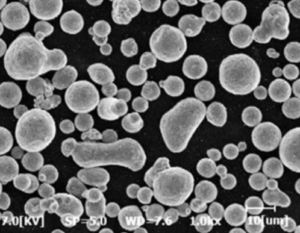
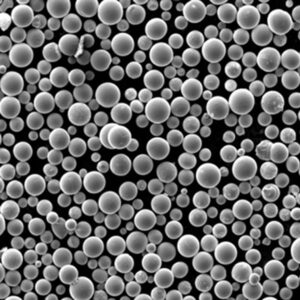
Toplu sertifikalandırma should include full chemistry by ICP-OES with zinc and magnesium reported to two decimals, oxygen by inert gas fusion, PSD by laser diffraction per ISO 13320, Hall flow per ASTM B213, and SEM morphology imaging. For inoculated variants, certificates should additionally document inoculant type, content, and distribution verification, since inoculant agglomeration defeats the grain-refining mechanism. Powder reuse discipline for 7075 follows aluminium practice with tighter limits: zinc and magnesium depletion plus oxygen rise across cycles directly attacks both printability and aged strength, so oxygen and Zn trend lines should govern refresh ratios rather than cycle counts.
Üretim Süreci: Atomizasyon, Eleme ve Isıl İşlem
7075 powder is produced by inert gas atomization, with melt practice dominated by one challenge: keeping zinc and magnesium in the melt and in the powder.
Erime uses induction furnaces under inert cover gas, charged with primary aluminium and master alloys. Both zinc and magnesium vaporize readily at aluminium superheat temperatures, so furnace practice minimizes hold time, adds the volatile elements late, and compensates for losses through charge calculation verified by pre-pour analysis. Chemistry landing in the upper half of the Zn and Mg windows is deliberate practice for AM-grade 7075, offsetting the further evaporation that occurs in the customer’s melt pool.
Gaz atomizasyonu (GA) disintegrates the melt in high-pressure argon or nitrogen jets. Argon is preferred for premium LPBF grades; nitrogen serves standard material. The sealed tower environment limits oxygen pickup to 0.04-0.08 wt% in well-run campaigns, and rapid droplet solidification produces the fine, supersaturated microstructure that responds well to subsequent aging.
Tarama ve sınıflandırma cut the as-atomized distribution into commercial ranges under inert, explosion-rated conditions, mandatory for fine aluminium alloy powders, followed by blending, certification, and vacuum or argon packaging with desiccant.
Isıl işlem executes at the parts manufacturer and completes the alloy’s value chain. The standard cycle for printed or sintered 7075:
- Solution treatment at 465-480 deg C for 1-2 hours, dissolving the Zn-Mg-Cu phases. Temperature control is critical: the solution window sits close to the eutectic melting onset, and overshoot causes incipient melting visible as porosity and property collapse.
- Water quench to retain the supersaturated condition.
- Artificial aging, T6 at approximately 120 deg C for 24 hours for peak strength, or T73 two-stage over-aging for stress corrosion resistance.
- İsteğe bağlı sıcak izostatik presleme (HIP) before solution treatment for fatigue-critical parts, closing residual porosity at around 480-500 deg C and 100 MPa argon.
Suppliers with integrated process capability, including in-house PREP toz üretim teknolojisi for speciality alloy fractions, can support customers beyond the powder itself: advising on inoculated variant selection, oxygen limits, and heat treatment windows that make crack-free, specification-strength 7075 parts reproducible.
Applications by Industry Aerospace Medical and Energy Sectors
7075 powder applications concentrate where aluminium’s weight and titanium’s cost both fail the business case, leaving 500 MPa class aluminium as the answer. Representative uses are summarized below and on the supplier’s uygulamalar sayfa.
Sektörlere Göre Tipik Uygulamalar
| Endüstri | Temsili Parçalar | Why 7075 Powder |
|---|---|---|
| Havacılık ve Uzay | Brackets, fittings, ribs, UAV structural frames | Highest Al strength-to-weight, heritage data |
| Defense and UAVs | Airframe structures, weapon system components | Strength at minimum mass, rapid iteration |
| Motorsport | Suspension uprights, structural nodes, transmission cases | 500+ MPa strength, machinability |
| Tıbbi cihazlar | Surgical robot arms, instrument frames, mobility equipment | Stiff, light, strong structural parts |
| Enerji | Drone inspection platform structures, actuator housings | Lightweight strength for aerial systems |
| Endüstriyel robotik | High-speed arm segments, end effectors | Moving mass reduction |
Havacılık ve savunma anchor demand. Printed 7075 brackets, fittings, and UAV primary structure exploit strength levels AlSi10Mg cannot reach, enabling genuine structural consolidation, multi-piece assemblies printed as single 500 MPa class parts. UAV and loitering munition airframes are a particularly natural fit: low volumes, extreme weight sensitivity, complex load-optimized geometries, and procurement economics that reject titanium. Qualification programs lean on the alloy’s vast wrought data heritage, and T73 temper selection follows standard airframe SCC practice.
Motorsport and performance automotive use 7075 for suspension uprights, structural nodes, and transmission components where loads are known, extreme, and strength-limited. The alloy’s machinability supports the hybrid workflow standard in racing: print near-net, machine bearing seats and interfaces to tolerance, T6 or T73, inspect, race.
Medical and rehabilitation technology represents a smaller but growing segment: surgical robot structural arms and high-end mobility equipment use the alloy’s strength-to-weight for moving structures where every gram of distal mass costs motor torque and control bandwidth. These are mechanical, not implant, applications, biocompatibility is not in play, and the selection logic is purely structural.
Energy and industrial robotics apply the same physics: drone-based inspection platforms and high-speed robot arms benefit from moving-mass reduction, where 7075’s specific strength beats both AlSi10Mg (too weak for the same section) and titanium (too expensive for the volume).
Across these sectors the decision rule is consistent: when the design is strength-limited, weight-critical, and cost-constrained, and when corrosion exposure is manageable through temper selection and surface treatment, 7075 powder delivers what no other printable aluminium can.
Benzer Malzemelerle Karşılaştırma ve Temel Özellik Farkları
7075’s alternatives split into the printable aluminium family it outstrengthens and the scandium alloy that outperforms it at a price.
7075 vs Similar Aluminium AM Alloys
| Mülkiyet | 7075 | 6061 | AlSi10Mg | Scalmalloy |
|---|---|---|---|---|
| Başlıca alaşım elementleri | Zn, Mg, Cu | Mg, Si, Cu | Si, Mg | Mg, Sc, Zr |
| Çekme mukavemeti (T6/yaşlandırılmış, MPa) | 500-570 | ~310 | 320-340 | 480-520 |
| Uzama (T6, %) | 7-11 | 8-12 | 4-7 | 10-14 |
| Yoğunluk (g/cm³) | 2.81 | 2.70 | 2.68 | 2.67 |
| LPBF baskı uygunluğu | Difficult (crack-prone) | Orta düzeyde | Mükemmel | İyi |
| Isı iletkenliği (W/m*K) | ~130 | ~167 | 120-150 | 130-150 |
| Korozyon direnci | Moderate (T73 improved) | Mükemmel | İyi | Çok iyi |
| Yorgunluk performansı | Çok iyi | İyi | Orta düzeyde | Mükemmel |
| Göreceli toz maliyeti | Orta-yüksek | Düşük | Düşük | Çok yüksek |
6061 is the general-purpose alternative: dramatically easier to print, better conductivity, better corrosion resistance, and cheap, but capped near 310 MPa. Parts designed in 6061 need roughly 70% more section area than 7075 for the same strength-limited load, which erases its advantages wherever mass matters.
AlSi10Mg is the printability champion and the correct default for geometry-driven parts without high structural demand. Its 330 MPa ceiling and modest fatigue performance simply exclude it from the load cases where 7075 earns its premium.
Scalmalloy matches 7075’s strength with better ductility, fatigue, corrosion resistance, and, critically, far easier printing thanks to its Sc-Zr grain refinement built into the chemistry. It is the better material on almost every axis except the two that decide most procurements: powder cost (several times higher) and supply base. Programs with performance-first budgets choose Scalmalloy; programs balancing performance and cost choose inoculated 7075.
The selection rule: AlSi10Mg for geometry-driven parts, 6061 for conductivity and weld-integration needs, Scalmalloy where budget allows performance-first optimization, and 7075 where 500 MPa class aluminium strength must be achieved at mainstream material cost, accepting the process discipline its crack sensitivity requires.
Şirketimiz
Shanghai Truer Technology Co, Ltd Çin merkezli bir katmanlı üretim tedarikçisi olup, PREP toz üretim ekipmanları ile yüksek kaliteli küresel metal tozlarını bir arada sunmaktadır. 2009 yılında kurulan şirket, hem gaz atomizasyonu (GA) ve nikel alaşımları, titanyum alaşımları, alüminyum alaşımları, paslanmaz çelikler, kobalt alaşımları, bakır alaşımları, yüksek entropili alaşımlar ve özel malzemeler alanlarında PREP üretim kapasiteleri.
For high-strength aluminium feedstock, Truer supplies 7075, 6061, 2024, AlSi7Mg, AlSi10Mg, and related grades in LPBF, DED, and powder metallurgy cuts, with chemistry targeted to compensate for zinc and magnesium evaporation during printing. Inoculated 7075 variants for improved LPBF process windows are available as custom campaign products, and every batch ships with a certificate of analysis covering full chemistry to two decimals, oxygen content, PSD by laser diffraction, Hall flow, apparent density, and SEM morphology on request.
The company also provides custom alloy development, small-batch prototyping quantities, and scale production for aerospace, defense, motorsport, and industrial customers. A joint innovation center for metal 3D printing, operated with leading research institutions, supports parameter development and heat treatment optimization for crack-sensitive aluminium alloys, including preheat strategy and inoculation evaluation for 7075 LPBF programs.
For inquiries about 7075 aluminium alloy powder specifications, inoculated variants, or sampling, ekiple iletişime geçin hedef PSD, oksijen sınırı ve yıllık hacim tahmini ile birlikte.
SSS
Q1: What is the typical particle size distribution for 7075 aluminium powder? A: The standard LPBF cut is 15-53 microns with D50 near 35 microns, DED uses 45-106 microns, and press-and-sinter grades are available at 45-150 microns. Batch-to-batch D50 consistency is particularly important for this crack-sensitive alloy.
Q2: Can 7075 powder be used in both SLM and DED systems? A: Yes, with the PSD matched to the process, but LPBF use requires disciplined process design: 150-200 deg C build plate preheat, developed scan parameters, and preferably nanoparticle-inoculated powder to suppress hot cracking. DED with its slower cooling and higher heat input is somewhat more forgiving.
Q3: What certifications does 7075 powder come with? A: Standard supply includes a certificate of analysis with full chemistry against AA7075 with zinc and magnesium to two decimals, oxygen content, PSD by laser diffraction, Hall flow, and apparent density. Inoculated variants include inoculant type and content documentation, and SEM morphology reports are available on request.
Q4: What is the MOQ for ordering 7075 powder? A: Sample quantities of 5-10 kg are available for parameter development. Production orders typically start at 25-50 kg, with inoculated variants and custom chemistries requiring minimum campaign quantities.
Q5: Can the composition of 7075 powder be customized? A: Yes. Zinc and magnesium can be targeted in the upper specification half to offset printing losses, nanoparticle inoculation variants are available, and Zr or Sc-modified derivatives can be produced as custom atomization campaigns with a minimum quantity commitment.
Q6: What is the typical lead time for 7075 powder orders? A: Standard cuts are usually available from stock or within 1-2 weeks. Inoculated variants and custom chemistries typically require 4-8 weeks depending on campaign scheduling and certification scope.