Kurzantwort
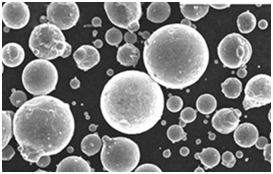
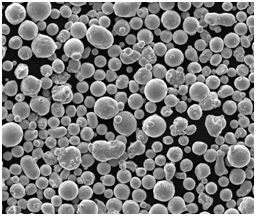
FeNi50-Weichmagnetpulver ist ein kugelförmiges Ausgangsmaterial aus einer Eisen-Nickel-Legierung, das etwa 50% Nickel enthält, der Rest ist Eisen. Es ordnet sich in der Mitte der Fe-Ni-Familie der weichmagnetischen Werkstoffe zwischen dem in der Ausdehnung angepassten FeNi42 und den Permalloys mit extrem hoher Permeabilität (78-80% Nickel) ein. Es bietet das beste Preis-Leistungs-Verhältnis hinsichtlich der magnetischen Eigenschaften innerhalb dieser Familie: eine Sättigungsflussdichte von 1,5–1,6 T, etwa doppelt so hoch wie die von Permalloy mit hohem Nickelgehalt, kombiniert mit einer Anfangspermeabilität von 4.000–10.000 und einer Koerzitivkraft unter 10 A/m nach ordnungsgemäßem Wasserstoffglühen. Für Einkäufer aus den Bereichen Pulvermetallurgie, additive Fertigung und Metallspritzguss sind die entscheidenden Beschaffungsparameter ein Nickelgehalt im Bereich von 49–51% (bzw. 47–49% für die Variante Alloy 48), ein Sauerstoffgehalt unter 0,05 Gew.-%, eine auf den Prozess abgestimmte Partikelgrößenverteilung (15–53 Mikrometer für LPBF, 45–106 Mikrometer für EBM und DED, Partikelgrößen unter 38 Mikrometer für MIM), eine Sphärizität von über 92 TP3T sowie eine dokumentierte Chargenzusammensetzung mit Interstitialanalyse. Die endgültigen magnetischen Eigenschaften entwickeln sich erst nach dem Glühen bei 1000–1100 °C in trockenem Wasserstoff oder im Hochvakuum, sodass die Sauerstoffspezifikation und die Pulverreinheit direkt die Qualität des Fertigteils bestimmen. FeNi50 ist die Standardwahl für Relaiskerne, magnetische Abschirmungen, Sensorkerben und Messwandlerkomponenten, bei denen die Induktionspegel die Belastbarkeit von Permalloy übersteigen und die Permeabilitätsanforderungen die Leistungsfähigkeit von Siliziumstahl übertreffen.
Was ist FeNi50-Weichmagnetpulver und welche Vorteile bietet dieses Material?
FeNi50-Weichmagnetpulver gehört zur Familie der weichmagnetischen Nickel-Eisen-Legierungen, einer Zusammensetzungsreihe, deren magnetisches Verhalten sich kontinuierlich und vorhersehbar mit dem Nickelgehalt ändert. Mit einem Nickelgehalt von 50% befindet sich die Legierung an einem optimalen Punkt im Fe-Ni-Phasendiagramm: Der Nickelgehalt ist hoch genug, um echte weichmagnetische Eigenschaften mit hoher Permeabilität und niedriger Koerzitivfeldstärke zu entwickeln, und gleichzeitig ist der Eisengehalt hoch genug, um eine Sättigungsflussdichte von 1,5–1,6 T beizubehalten, das Doppelte der Sättigungsflussdichte der 80%-Nickel-Permalloys. In geschmiedeter Form ist diese Legierungsfamilie als Legierung 48 (47-49% Ni, DIN 1.3922) und verwandte 50%-Nickel-Sorten standardisiert, die seit Jahrzehnten in Relaisspulen, Transformatorlamellen und magnetischen Abschirmungen zum Einsatz kommen.
Im Rahmen von weichmagnetische Pulver FeNi50, das für die Pulvermetallurgie und die additive Fertigung angeboten wird, nimmt die Position eines universell einsetzbaren Hochleistungswerkstoffs ein. Das darunter liegende FeNi42 opfert magnetische Eigenschaften zugunsten einer angepassten Wärmeausdehnung; das darüber liegende FeNi80-Permalloy opfert die Flussdichte zugunsten einer maximalen Permeabilität. FeNi50 maximiert keine der beiden Eigenschaften, optimiert jedoch deren Kombination – genau das, was die meisten elektromagnetischen Komponenten benötigen.
Zu den materiellen Vorteilen, die die Nachfrage nach FeNi50-Pulver ankurbeln, gehören:
- Hohe Sättigungsflussdichte bei einer Legierung mit hoher Permeabilität: 1,5–1,6 T ermöglicht bei gleicher Induktionsstärke kleinere Kernquerschnitte als Permalloy.
- Hohe Permeabilität und geringe Koerzitivkraft: Eine Anfangspermeabilität von 4.000–10.000 und eine Koerzitivkraft unter 10 A/m nach dem Glühen minimieren die Hystereseverluste und den Magnetisierungsstrom.
- Geringe Magnetostriktion: Die nahezu nullige Magnetostriktion in diesem Zusammensetzungsbereich verringert die Rausch- und Spannungsempfindlichkeit in den Kernen und der Abschirmung.
- Curie-Temperatur bei etwa 500 °C: Eignet sich für den Einsatz in Umgebungen mit hohen Temperaturen, in denen Ferrite versagen.
- Hervorragende Duktilität und Verarbeitbarkeit: Die einphasige fcc-Struktur lässt sich sauber sintern, drucken und bearbeiten.
In Pulverform lassen sich mit diesen Eigenschaften Geometrien realisieren, die mit Laminaten und maschinell bearbeiteten Kernen nicht erreichbar sind: dreidimensionale Flusswege, integrierte Abschirmungsstrukturen, Net-Shape-Formen Metall-Spritzguss (MIM) Millionen von Sensorkernen sowie gedruckte magnetische Bauteile mit topologieoptimierten Flussführungen. Durch die Pulvermetallurgie entfallen zudem die mechanischen Spannungen, die beim Stanzen in den Lamellen entstehen, sodass die magnetischen Eigenschaften des geglühten Ausgangsmaterials im fertigen Bauteil erhalten bleiben.
Normen für die chemische Zusammensetzung und Beschreibung des Verwendungszwecks der Elemente
Die chemische Zusammensetzung von FeNi50 sieht auf dem Papier einfach aus – im Wesentlichen Nickel und Eisen –, doch die magnetischen Eigenschaften reagieren äußerst empfindlich auf den Nickelanteil und auf Spurenverunreinigungen, die magnetische Domänenwände fixieren. Daher gelten für die Pulverspezifikationen engere Toleranzen als für allgemeine technische Legierungen.
Chemische Zusammensetzung von FeNi50
| Element | Min (%) | Max (%) | Rolle |
|---|---|---|---|
| Nickel (Ni) | 49.0 | 51.0 | Definiert Permeabilität, Sättigung, Curie-Punkt und Magnetostriktion |
| Eisen (Fe) | Waage | Waage | Ferromagnetischer Kern; Hauptfaktor für die Sättigungsflussdichte |
| Manganese (Mn) | – | 0.50 | Entsauerungsmittel in der Schmelzpraxis; verbessert die Warmumformbarkeit |
| Silizium (Si) | – | 0.30 | Desoxidationsmittel; erhöht den elektrischen spezifischen Widerstand geringfügig |
| Kohlenstoff (C) | – | 0.03 | Verunreinigung; interstitielle Verunreinigung, die die Permeabilität verringert und die Koerzitivkraft erhöht |
| Phosphor (P) | – | 0.02 | Verunreinigung; Korngrenzenversprödung |
| Schwefel (S) | – | 0.02 | Verunreinigung; Sulfideinschlüsse fixieren Domänenwände |
| Sauerstoff (O, Pulver) | – | 0.05 | Zwischenraumpulver; muss gering gehalten werden, um die magnetische Weichheit zu gewährleisten |
Nickel Der Gehalt ist entscheidend. Der Wechsel von 42%-Nickel zu 50%-Nickel erhöht die Anfangspermeabilität um etwa das Dreifache und halbiert die Koerzitivkraft, während die Sättigungsflussdichte nahezu konstant bei 1,5–1,6 T bleibt; Ein weiterer Wechsel hin zu 78–80%-Nickel vervielfacht die Permeabilität um eine weitere Größenordnung, lässt die Sättigungsflussdichte jedoch auf 0,75–0,8 T absinken. Der Bereich von 49–51% stellt somit den technischen Kompromiss dar, und Analysezertifikate sollten den Nickelgehalt auf zwei Dezimalstellen genau angeben, da bereits eine Abweichung von einem Prozent die glühpermeabilität messbar verändert. Die Zusammensetzung liegt zudem nahe am Nullpunkt der Magnetostriktion des Fe-Ni-Systems, weshalb FeNi50-Kerne geräuscharm laufen und mechanische Beanspruchungen besser vertragen als Eisen- oder Siliziumstahl.
Eisen sorgt für das hohe magnetische Moment, das die Sättigungsflussdichte auf einem nutzbaren Niveau hält. Sein Anteil ist der Grund dafür, dass FeNi50 Permalloy in allen Anwendungen übertrifft, in denen der Kern eine tatsächliche Induktion und nicht nur eine Kleinsignalmagnetisierung aufweist.
Kohlenstoff, Schwefel, Phosphor und Sauerstoff sind die magnetischen Störstoffe. Interstitieller Kohlenstoff sowie Oxid- oder Sulfideinschlüsse behindern die Bewegung der Domänenwände, was sich unmittelbar in einer höheren Koerzitivkraft, einer geringeren Permeabilität und erhöhten Hystereseverlusten niederschlägt. Bei der Pulverherstellung ist Sauerstoff das größte Problem: Jedes Partikel trägt durch die Zerstäubung Oberflächenoxid auf, und ein Gesamtsauerstoffgehalt von über 0,05 Gew.-% verschlechtert die Leistung von Sinter- und Druckteilen messbar, selbst nach einer Wasserstoffglühung. Aus diesem Grund wird hochwertiges FeNi50-Pulver mit Argon zerstäubt, unter Inertgas gehandhabt und in versiegelten, feuchtigkeitsundurchlässigen Behältern verpackt – und aus diesem Grund verdient der Sauerstoffwert auf dem Zertifikat dieselbe genaue Prüfung wie der Nickelgehalt.
Mangan und Silizium sind Rückstände aus dem Entoxidierungsprozess und innerhalb der Spezifikationsgrenzen unbedenklich; Silizium trägt sogar zu einer geringfügigen Verbesserung des spezifischen Widerstands bei, was bei Wechselstromanwendungen von Vorteil ist.
Physikalische und mechanische Eigenschaften bei Normtemperatur
Das Datenblatt zu FeNi50 umfasst magnetische, thermische und mechanische Eigenschaften, die alle drei für Pulverabnehmer von Bedeutung sind, die Kerne, Abschirmungen und strukturelle Magnetkomponenten konstruieren. Die nachstehenden Werte beziehen sich auf den geglühten Zustand bei 20–25 °C, also den für den magnetischen Einsatz relevanten Zustand.
Wichtige Eigenschaften
| Eigentum | Wert | Einheit |
|---|---|---|
| Dichte | 8.25 | g/cm3 |
| Schmelzbereich | 1440-1450 | °C |
| Curie Temperature | ~500 | °C |
| Sättigungsflussdichte (Bs) | 1.5-1.6 | T |
| Zwangskraft (geglüht) | < 10 | A/m |
| Anfängliche Durchlässigkeit | 4000-10000 | – |
| Maximale Durchlässigkeit | 30000-60000 | – |
| Elektrischer Widerstand | 0.45-0.50 | uOhm*m |
| CTE (20–300 °C) | 8-9 | x10⁻⁶/K |
| Wärmeleitfähigkeit | 17-20 | W/m*K |
| Elastizitätsmodul | 160 | GPa |
| Zugfestigkeit (geglüht) | 540-590 | MPa |
| Streckgrenze (geglüht) | 200-260 | MPa |
| Dehnung | 30-35 | % |
| Härte (geglüht) | 120-140 | HV |
Die Satz magnetischer Eigenschaften bestimmt die Marktposition der Legierung. Die Sättigungsinduktion von 1,5–1,6 T entspricht dem Arbeitsinduktionsbereich von Siliziumstahl, während die Permeabilität von 4.000–10.000 den kornorientierten Siliziumstahl im niedrigen und mittleren Induktionsbereich übertrifft und etwa eine Größenordnung über der von Ferriten liegt. Diese Kombination bedeutet, dass FeNi50-Kerne Netzfrequenz-Magnetfluss wie ein Eisenkern leiten können und gleichzeitig auf kleine Signale wie ein Präzisionsmagnetmaterial reagieren. Aus diesem Grund dominiert die Legierung den Einsatz in Messwandlern, Magnetverstärkern und Erdschlusssensorkernen.
Elektrischer spezifischer Widerstand von 0,45–0,50 uOhm*m, was etwa dem Dreifachen des Wertes von reinem Eisen entspricht, begrenzt die Wirbelstromverluste im Wechselstrombetrieb, obwohl die Verluste bei Netzfrequenzen in massiven Kernen immer noch höher sind als bei laminierten Strukturen; pulvermetallurgische Bauteile gleichen dies durch eine Konstruktion aus isolierten Partikeln oder dünnwandige, gedruckte Geometrien aus. Die Curie-Temperatur bei etwa 500 °C bietet einen komfortablen Spielraum für den Einsatz bei erhöhten Temperaturen, bei denen MnZn-Ferrite mit Curie-Punkten von 200–300 °C nicht einsetzbar sind.
Mechanisch, da die geglühte Legierung weich und duktil ist und keine Härtungsumwandlung durchläuft, stammt die gesamte Festigkeit aus der Kaltverformung, wodurch gleichzeitig die magnetische Weichheit zerstört wird. Fertige magnetische Bauteile werden daher stets vollständig geglüht eingesetzt, und das Nachglühen bei gedruckten oder gesinterten Bauteilen erfüllt einen doppelten Zweck: Spannungsabbau und magnetische Entwicklung. Konstrukteure sollten beachten, dass die Wärmeausdehnung von 8–9 × 10⁻⁶/K, eher gewöhnlich als abgestimmt, was FeNi50 von FeNi42 bei allen Anwendungen mit Glas- oder Keramikdichtungen unterscheidet; bei rein magnetischen Anwendungen stellt die Ausdehnung selten eine konstruktive Einschränkung dar.
Dichte von 8,25 g/cm³ Dies ist für Pulverkäufer von praktischer Bedeutung, die bei der Angebotserstellung für Fertigungsprozesse oder beim MIM-Rohstoffverbrauch zwischen Masse, Schichtvolumen und Stückzahl umrechnen müssen.
Liste der Toleranzen bei der Korngrößenverteilung und der verfügbaren Lieferqualitäten
FeNi50-Pulver ist im Handel in prozessgerechten Fraktionen erhältlich, die jeweils definierte Toleranzen hinsichtlich Verteilung, Morphologie und Gehalt an Zwischengitteratomen aufweisen.
Verfügbare Spezifikationen
| Parameter | Standard/Wert |
|---|---|
| PSD für LPBF / SLM | 15–53 µm (D10 ~20, D50 ~34, D90 ~53) |
| PSD für EBM / DED | 45–106 µm |
| PSD für MIM | 0–22 µm oder 0–38 µm |
| PSD für Press-and-Sinter-PM | 45–150 µm |
| PSD für das thermische Spritzen | 15–45 µm |
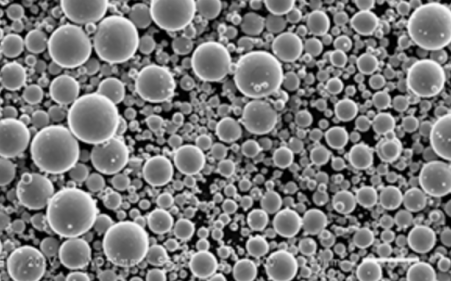
| Sphärizität | >= 92% (gaszerstäubt) |
| Durchflussmenge im Hall-Kanal | <= 18 s/50 g |
| Scheinbare Dichte | >= 4,4 g/cm³ |
| Zapfstellendichte | >= 5,0 g/cm³ |
| Sauerstoffgehalt | <= 0,05 Gew.-% (Premium <= 0,03 Gew.-%) |
| Chemie | Ni 49-51% (Variante der Legierung 48: 47-49%) |
| Verpackung | Vakuumversiegelte oder mit Argon gefüllte Fässer mit Feuchtigkeitsbarriere |
Für Selektives Laserschmelzen (SLM) Bei diesen Plattformen ist die Korngröße von 15–53 Mikrometer Standard, wobei der Anteil an Feinanteilen unter 15 Mikrometer auf unter 10% begrenzt ist. Die hohe Dichte von FeNi50 verleiht dem Pulver ein ausgezeichnetes Fließ- und Verteilungsverhalten und ermöglicht so dünne Schichten von 20–30 Mikrometer für hochauflösende Magnetkerngeometrien. Das LPBF-Verfahren für Fe-Ni-Weichmagnetwerkstoffe ist ein ausgereifter Produktionsweg für geformte Polstücke, integrierte Sensorgehäuse und Prototypen elektromagnetischer Komponenten, bei denen die Bearbeitung von Schmiedestangen zu Spannungen und Verschnitt führen würde.
Für Elektronenstrahlschmelzen (EBM) Bei der gezielten Energieabgabe fließt die 45–106-Mikrometer-Fraktion bei erhöhten Vorwärmtemperaturen zuverlässig, und die EBM-Vakuumumgebung bietet den zusätzlichen Vorteil, dass die Oxidation während des Aufbaus unterdrückt wird – ein bedeutender Vorteil für eine Sorte, deren Wert von der Reinheit der Zwischenräume abhängt.
MIM- und Press-Sinter-Sorten bieten das größte Tonnagepotenzial. MIM-Schnitte unter 38 Mikrometer mit hohem Feststoffanteil dienen der Herstellung kleiner Sensorkerne, Relaisanker und Abschirmkomponenten in Automobil-Stückzahlen, während gröberes 45–150-Mikrometer-Press- und Sinterpulver für größere weichmagnetische Verbund- und Strukturteile verwendet wird. Bei allen Sinterverfahren ist die Sauerstoffspezifikation ausschlaggebend für die Qualität: Das Sintern in trockenem Wasserstoff reduziert Oberflächenoxide, doch der im Material enthaltene Sauerstoffgehalt über 0,05 Gew.-% kann nicht vollständig entfernt werden, und jeder Punkt Rest-Sauerstoff geht zu Lasten der Permeabilität.
Chargenzertifizierung sollten eine Laserbeugungs-Partikelgrößenverteilung (PSD) gemäß ISO 13320, eine Nickelanalyse mittels ICP-OES mit Angabe auf zwei Dezimalstellen, eine Sauerstoff-Stickstoff-Bestimmung mittels Inertgasfusion, eine Hall-Flow-Messung gemäß ASTM B213 sowie eine morphologische SEM-Bildgebung umfassen. Da magnetische Eigenschaften an losem Pulver nicht gemessen werden können, sollten Qualifizierungschargen für kritische Programme gesinterte oder gedruckte Testringe umfassen, deren Permeabilität und Koerzitivkraft nach dem Standardglühen gemessen werden – eine Vorgehensweise, die in Kaufverträgen ausdrücklich festgelegt werden sollte.
Herstellungsprozess: Zerstäubungsprüfung und Wärmebehandlung
Bei der Herstellung von FeNi50-Pulver steht die Inertgaszerstäubung unter Argon im Mittelpunkt, wobei die Prozesskette auf ein Ziel ausgerichtet ist: die Lieferung von Pulver, das so rein ist, dass die Endglühbehandlung beim Kunden die volle magnetische Leistungsfähigkeit entfalten kann.
Schmelzen Es werden Vakuum-Induktionsöfen mit elektrolytischem Eisen und 99,9%+ Kathoden-Nickel als Chargen verwendet. Die Kohlenstoffkontrolle ist von entscheidender Bedeutung; beim Induktionsschmelzen auf feuerfesten Auskleidungen besteht die Gefahr einer Kohlenstoffaufnahme, die der Höchstwert von 0,03% nicht auffangen kann. Daher wenden erfahrene Hersteller kohlenstoffarme Verfahren mit abgedeckten Schmelzen und Analysen vor dem Gießen an. Der angestrebte Nickelgehalt im Bereich von 49–51% wird durch Berechnung der Charge und Zugabe von Trimmstoffen erreicht und vor dem Abgießen überprüft.
Gaszerstäubung (GA) Verwendet für diese Güte hochreines Argon als Zerstäubungsgas. Die bei Stählen kostengünstige Stickstoffzerstäubung wird vermieden, da sich Stickstoff in Fe-Ni-Schmelzen löst und Nitride bildet, die Domänenwände fixieren; Argon ist vollständig inert und beschränkt die Zwischenraumkapazität des Pulvers ausschließlich auf Sauerstoff. Die überhitzte Schmelze fließt durch eine Keramikdüse in konvergierende Argonstrahlen, die Tröpfchen werden kugelförmig und erstarren im geschlossenen Turm; bei gut durchgeführten Produktionsläufen werden Sauerstoffgehalte von 0,02–0,04 Gew.-% bei einer Kugeligkeit von 92–95 % erreicht.
Prüfung und Klassifizierung Die atomisierte Verteilung wird durch mehrstufiges Ultraschallsieben und Luftklassierung unter Inertgasatmosphäre auf handelsübliche Bereiche eingestuft. Die Chargen werden hinsichtlich ihrer chemischen Zusammensetzung und der Homogenität der Partikelgrößenverteilung gemischt, beprobt und zertifiziert, bevor sie in vakuumversiegelte oder mit Argon nachgefüllte Feuchtigkeitsschutzbehälter mit Trockenmittel verpackt werden.
Wärmebehandlung wird zwar beim Teilehersteller durchgeführt, sollte aber in jedem Beschaffungsgespräch berücksichtigt werden, da die Pulverqualität und die Wirksamkeit der Glühbehandlung miteinander zusammenhängen. Der Standardzyklus für FeNi50-Teile:
- Bei 1000–1100 °C in trockenem Wasserstoff (Taupunkt unter -40 °C) oder im Hochvakuum glühen 2–4 Stunden lang, um Restspannungen abzubauen, die Kristallkörner wachsen zu lassen und es dem Wasserstoff zu ermöglichen, Oberflächenoxide zu reduzieren und Kohlenstoff zu binden.
- Kontrollierte Abkühlung im Temperaturbereich von 400 bis 600 °C, in dem die Ni₃Fe-Ordnungsreaktion stattfindet; die Abkühlgeschwindigkeit bestimmt hier das Gleichgewicht zwischen Permeabilität und Koerzitivfeldstärke.
- Optional Magnetfeldglühen für Square-Loop- oder Flat-Loop-Regelung in Spezialanwendungen mit Kerntechnik.
Lieferanten mit umfassender Prozesskompetenz, einschließlich eigener PREP-Pulverherstellungstechnologie Bei groben, satellitenfreien Fraktionen können wir Empfehlungen zu den Sauerstoffgrenzwerten und der Partikelreinheit geben, mit denen diese Glühbehandlung die in der Spezifikation geforderte Permeabilität erreicht, anstatt es den Kunden zu überlassen, bei der Endprüfung versteckte Probleme aufzudecken.
Anwendungen nach Branchen: Medizin, Luft- und Raumfahrt sowie Energieerzeugung
FeNi50-Pulver kommt in Anwendungen zum Einsatz, die eine wirklich hohe magnetische Permeabilität bei praktischen Induktionswerten erfordern, und zwar in den Bereichen Elektronik, Energietechnik, Luft- und Raumfahrt sowie Medizin. Typische Anwendungsbeispiele sind im Folgenden sowie auf der Website des Anbieters zusammengefasst. Anwendungen seite.
Typische Anwendungsbereiche nach Branche
| Industrie | Typische Teile | Warum FeNi50-Pulver? |
|---|---|---|
| Stromerzeugung und -verteilung | Kerne für Messwandler, Kerne für Magnetverstärker, Relaiskerne | Hohe Permeabilität bei einer Induktion von 1,5 T |
| Fahrzeugelektronik | Stromsensorkerne, ABS-/Motorpositionssensor-Bauteile, Aktuatoranker | Wirtschaftlichkeit von MIM-Fertigung in Net-Shape-Technologie bei Großserienproduktion |
| Luft- und Raumfahrt | Sensorhalterungen, Abschirmgehäuse, Magnetkomponenten | Stabile Leistung über den gesamten Temperaturbereich, Curie-Temperatur 500 °C |
| Medizinische | Komponenten für Bildsensoren, Abschirmungen für Messgeräte, Aktuator-Kerne | Familie hochpermeabler, biokompatibler Nickellegierungen |
| Industrieelektronik | Kerne für Fehlerstromschutzschalter, Schütz-Teile, EMI-Abschirmung | Geringe Koerzitivkraft, Kleinsignalempfindlichkeit |
| Telekommunikation | Filterkerne, induktive Bauteile | Stabile Durchlässigkeit, geringer Verlust |
Stromerzeugung und -verteilung ist der historische Kernmarkt. Instrumenten- und Stromwandlerkerne müssen die Primärstromverläufe originalgetreu wiedergeben, was eine hohe Permeabilität bei der Betriebsinduktion sowie eine geringe Hysterese erfordert – genau das Profil von FeNi50. Magnetverstärker- und Sättigungsdrosselkerne nutzen die Varianten der quadratischen B-H-Kurve der Legierung, während Relaiskerne deren niedrige Koerzitivkraft für ein sauberes Schaltverhalten nutzen.
Fahrzeugelektronik ist das am schnellsten wachsende Segment, angetrieben durch die Elektrifizierung von Fahrzeugen. Jeder Stromsensor in einem Batteriepack, einem Wechselrichter und einem Ladesystem benötigt einen weichmagnetischen Kern; MIM-gefertigte FeNi50-Kerne bieten die Empfindlichkeit und Temperaturstabilität (Curie-Temperatur 500 °C gegenüber 200–300 °C bei Ferrit), die für den Einsatz im Motorraum und in der Leistungselektronik erforderlich sind – und das bei Stückzahlen von mehreren Millionen Teilen pro Jahr, bei denen Pulververfahren die einzige wirtschaftliche Lösung für die Geometrie darstellen.
Luft- und Raumfahrt Anwendungen nutzen die Temperaturstabilität und die Abschirmung: Sensorhalterungen und Magnetkomponenten, die ihre Kalibrierung auch bei starken Temperaturschwankungen beibehalten müssen, sowie Abschirmgehäuse für magnetisch empfindliche Avionikgeräte, bei denen die Kombination aus Permeabilität und einer Abschirmleistung von 1,5 T vor der Sättigung bei FeNi50 in kompakten Querschnitten besser abschneidet als bei Permalloy.
Medizinische Geräte die Legierung in Komponenten für Bildsensoren und zur Abschirmung von Geräten einsetzen und Industrieelektronik Es wird in den Kernen von Fehlerstromschutzschaltern verwendet, jener Sicherheitsvorrichtung, die Leckströme im Milliamperebereich erkennen muss – wofür genau die geringe Koerzitivkraft und die hohe Anfangspermeabilität erforderlich sind, die FeNi50 nach ordnungsgemäßem Glühen aufweist.
In all diesen Märkten folgt die Beschaffungslogik einem einheitlichen Muster: Ingenieure entscheiden sich für FeNi50, wenn das Bauteil wie ein Eisenkern echte magnetische Flussdichte übertragen und wie ein Präzisionswerkstoff kleine Felder erfassen muss und wenn sich die Geometrie durch Pulvermetallurgie oder Druckverfahren kostengünstiger herstellen lässt als durch laminierte oder bearbeitete Alternativen.
Vergleich mit anderen Güten und alternativen Legierungssystemen
Bei der Auswahl weichmagnetischer Werkstoffe wird FeNi50 mit seinen Fe-Ni-Verwandten sowie mit den eisenbasierten Alternativen verglichen, die in Bezug auf Kosten und Leistung in einem ähnlichen Bereich liegen.
FeNi50 im Vergleich zu alternativen weichmagnetischen Legierungen
| Eigentum | FeNi50 | FeNi42 | FeNi80 (Permalloy) | FeSi 3% (Siliziumstahl) | FeCo50 |
|---|---|---|---|---|---|
| Sättigungsflussdichte (T) | 1.5-1.6 | 1.4-1.5 | 0.75-0.8 | 2.0 | 2.3-2.4 |
| Anfängliche Durchlässigkeit | 4000-10000 | 2000-5000 | 50000-100000+ | 1000-2000 | 1000-3000 |
| Zwangskraft (A/m) | < 10 | < 20 | < 2 | 30-60 | 40-80 |
| Elektrischer spezifischer Widerstand (uOhm*m) | 0.45-0.50 | 0.70 | 0.55 | 0.48 | 0.25 |
| Curie-Temperatur (°C) | ~500 | ~420 | ~450 | ~750 | ~980 |
| Glas-/Keramikabdichtung | Nein | Ja | Nein | Nein | Nein |
| Magnetostriktion | Nahe Null | Niedrig | Null (78% Ni) | Hoch | Hoch |
| Relative Materialkosten | Mittel | Mittel | Hoch | Niedrig | Sehr hoch |
FeNi42 liegt eine Stufe darunter: etwas geringere Sättigung, halbe Permeabilität, doppelte Koerzitivkraft und ein entscheidender Vorteil – eine an Glas und Keramik angepasste Wärmeausdehnung. Wo ein Bauteil eine Dichtung gegenüber Glas bilden muss, ist FeNi42 unverzichtbar; wo es rein um magnetische Eigenschaften geht, übertrifft FeNi50 es bei ähnlichen Kosten in jeder magnetischen Achse.
FeNi80-Permalloy liegt hinsichtlich der Permeabilität eine Stufe darüber und hinsichtlich der Flusskapazität eine Stufe darunter. Was die Nullfeldempfindlichkeit, die magnetische Abschirmung gegen schwache Felder und die minimale Hysterese betrifft, ist Permalloy unschlagbar; doch aufgrund seiner Sättigungsinduktion von 0,75–0,8 T sind die Kerne bereits bei der halben Arbeitsinduktion von FeNi50 gesättigt, was bei Leistungsanwendungen eine Verdopplung der erforderlichen Querschnitte erfordert. Für Abschirmgehäuse bei schwachen Feldern wird Permalloy verwendet; bei Messwandlern und Sensorkernen, die eine tatsächliche Induktion führen, kommt FeNi50 zum Einsatz.
FeSi-Siliziumstahl ist der Kostenanker: höhere Sättigung, deutlich geringere Kosten, aber eine um eine Größenordnung geringere Permeabilität und mechanische Sprödigkeit in Pulverform. Bei großen Leistungstransformatoren ist es unersetzlich; bei kleinen Präzisionskernen, bei denen die Permeabilität pro Volumeneinheit entscheidend ist, ist der Aufpreis für FeNi50 gerechtfertigt.
FeCo50 liegt der Sättigungsgrenzwert bei 2,3–2,4 T für Flugzeuggeneratoren und Aktuatoren mit minimalem Volumen, wobei die Kosten um ein Vielfaches höher sind und die Permeabilität deutlich geringer ist.
Die Auswahlregel lässt sich klar zusammenfassen: FeSi für kostengünstige Großstromversorgung, FeNi50 für Präzisionskerne bei nutzbarer Induktion, Permalloy für die Abschirmung bei schwachen Feldern, FeNi42 für glasversiegelte Magnetbauteile und FeCo50, wenn ein minimales Volumen maximale Kosten rechtfertigt.
Unser Unternehmen
Shanghai Truer Technology Co. Ltd. ist ein in China ansässiger Anbieter von Lösungen für die additive Fertigung, der PREP-Pulverherstellungsanlagen und hochwertige kugelförmige Metallpulver aus einer Hand anbietet. Das 2009 gegründete Unternehmen bietet sowohl Gaszerstäubung (GA) sowie PREP-Fertigungskapazitäten für Nickellegierungen, Titanlegierungen, Aluminiumlegierungen, rostfreie Stähle, Kobaltlegierungen, Kupferlegierungen, Hochentropie-Legierungen und Spezialwerkstoffe.
Im Bereich der weichmagnetischen Werkstoffe liefert Truer FeNi50, FeNi42, FeCo50, Permalloy und verwandte Legierungen als kugelförmige Pulver mit Partikelgrößenverteilungen, die auf LPBF-, EBM-, DED-, MIM-, thermische Spritz- sowie Press- und Sinterverfahren abgestimmt sind. Weichmagnetische Sorten werden unter hochreinem Argon zerstäubt, um den Sauerstoffgehalt auf einem sehr niedrigen Niveau zu halten. Jede Charge wird mit einem Analysezertifikat ausgeliefert, das den Nickelgehalt auf zwei Dezimalstellen genau, die Sauerstoff- und Interstitialanalyse, die Partikelgrößenverteilung (PSD) mittels Laserdiffraktion, den Hall-Flow-Wert, die Schüttdichte sowie auf Anfrage die SEM-Morphologie umfasst.
Über die Standardgüten hinaus bietet das Unternehmen die Entwicklung maßgeschneiderter Legierungen an, darunter Legierungen mit engerem Nickelbereich und Varianten der Legierung 48, sowie die Herstellung von Prototypen in kleinen Stückzahlen und die Serienfertigung für Kunden aus den Bereichen Energie, Automobil, Luft- und Raumfahrt sowie Medizin. Ein gemeinsames Innovationszentrum für den 3D-Metalldruck, das in Zusammenarbeit mit führenden Forschungseinrichtungen betrieben wird, unterstützt Kunden bei der Qualifizierung gedruckter magnetischer Bauteile oder der Entwicklung von Glühverfahren für neue Pulverchargen.
Bei Fragen zu den Spezifikationen des weichmagnetischen FeNi50-Pulvers, zu Musteranforderungen oder zu kundenspezifischen Zusammensetzungen, Wenden Sie sich an das Team mit Ihrem PSD-Zielwert, dem Sauerstoffgrenzwert und der geschätzten Jahresmenge.
FAQ
Frage 1: Wie sieht die typische Partikelgrößenverteilung von weichmagnetischem FeNi50-Pulver aus? A: Die Standard-Korngröße bei LPBF liegt bei 15–53 Mikrometer, bei EBM und DED bei 45–106 Mikrometer. Für MIM-Sorten werden feine Körnungen von 0–22 oder 0–38 Mikrometer verwendet, beim Press-and-Sinter-Verfahren liegen die Werte bei 45–150 Mikrometer, und für thermische Spritzverfahren sind Körnungen von 15–45 Mikrometer erhältlich.
Frage 2: Kann FeNi50-Pulver sowohl in SLM- als auch in EBM-Systemen verwendet werden? A: Ja, wobei die PSD auf die jeweilige Plattform abgestimmt sein muss: 15–53 Mikrometer für SLM/LPBF und 45–106 Mikrometer für EBM. Die Vakuumatmosphäre bei EBM ist für diese Sorte von Vorteil, da sie die Oxidation während des Aufbaus begrenzt; Bauteile aus beiden Verfahren erfordern zudem eine abschließende Wasserstoff- oder Vakuumglühbehandlung, um ihre vollen magnetischen Eigenschaften zu entfalten.
Frage 3: Über welche Zertifizierungen verfügt FeNi50-Pulver? A: Die Standardlieferung umfasst ein Analysezertifikat mit Angabe des Nickelgehalts auf zwei Dezimalstellen genau, des Sauerstoff-Stickstoff-Gehalts mittels Inertgasfusion, der Partikelgrößenverteilung (PSD) mittels Laserbeugung, des Hall-Durchflusses sowie der Schüttdichte. Für Qualifizierungsprogramme stehen Berichte zur SEM-Morphologie, zur Rückverfolgbarkeit der Chargen sowie magnetische Daten von geglühten Testringen zur Verfügung.
Frage 4: Wie hoch ist die Mindestbestellmenge für FeNi50-Pulver? A: Für die Prozessentwicklung und die magnetische Qualifizierung stehen Mustermengen von 5–10 kg zur Verfügung. Serienaufträge beginnen in der Regel bei 25–50 kg, wobei ab Mengen von über 100 kg Preisvorteile gewährt werden.
Frage 5: Kann die Zusammensetzung des FeNi50-Pulvers individuell angepasst werden? A: Ja. Der Nickelbereich kann innerhalb von 49–51% eingegrenzt werden, die Variante „Alloy 48“ (47–49% Ni) ist verfügbar, und benachbarte Zusammensetzungen wie FeNi42 oder FeNi55 können auf derselben Zerstäubungsplattform mit einer minimalen Produktionsmenge hergestellt werden.
Frage 6: Wie lang ist die übliche Lieferzeit für FeNi50-Pulverbestellungen? A: Standardzuschnitte sind in der Regel ab Lager lieferbar oder innerhalb von 1–2 Wochen erhältlich. Sonderzusammensetzungen und große Kampagnenmengen erfordern in der Regel 3–6 Wochen, abhängig von der Planung der Schmelz- und Zerstäubungsprozesse.