Kurzantwort
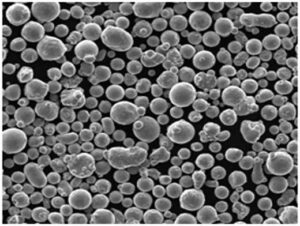
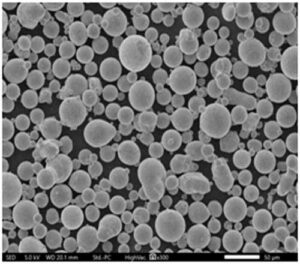
Spherical pure Co powder is gas-atomized or PREP-produced elemental cobalt powder at 99.8-99.95 percent purity, supplied as free-flowing spherical particles in fractions from sub-25 um for MIM to 45-106 um for thermal spray and additive routes. Cobalt’s value lies in its combination of properties no common alternative matches: ferromagnetism with a Curie temperature of 1115 C, an HCP-to-FCC allotropic transition near 450 C, excellent high-temperature strength retention, and outstanding wetting and bonding behavior toward carbides and diamond. These characteristics make spherical cobalt powder the binder of choice for cemented carbides and diamond tools produced by powder-bed and MIM routes, a feedstock for wear-resistant thermal spray coatings, and a base material for magnetic, catalyst, and battery applications where morphology-controlled powder improves processing consistency over traditional irregular cobalt powder.
| Eigentum | Wert |
|---|---|
| Material | Elemental cobalt, 99.8-99.95% purity |
| Dichte | 8.90 g/cm3 |
| Schmelzpunkt | 1495 C |
| Curie Temperature | 1115 C |
| Allotropic Transition (HCP-FCC) | ~450 C |
| Typical Powder Size (MIM) | 0-25 um |
| Typical Powder Size (spray/AM) | 15-45 um, 45-106 um |
| Sphärizität | >= 0.90 (GA) |
| Wesentlicher Vorteil | Magnetic, thermal, and wetting properties in flowable spherical form |
What Is Spherical Pure Co Powder and Its Key Characteristics
Spherical pure Co powder gehört zur Reines Metallpulver family and is elemental cobalt converted to spherical particles by atomization rather than the chemical reduction that produces conventional irregular cobalt powder. The morphological upgrade is the point of the product: spherical particles flow predictably through hoppers, feeders, and recoaters, pack to higher and more uniform density, and dose consistently in automated blending, which matters in every process from MIM feedstock formulation to thermal spray feeding.
The underlying material characteristics that drive cobalt demand include:
- Ferromagnetism with exceptional thermal stability. Cobalt is one of only three ferromagnetic elements at room temperature, and its Curie temperature of 1115 C is the highest of the three, sustaining magnetic function where iron-based materials would lose theirs.
- Allotropic versatility. The transition from hexagonal close-packed to face-centered cubic structure near 450 C governs the alloy’s ductility and transformation-toughening behavior, and it is exploited in wear alloys and in the ductile-phase toughening of cobalt-bonded carbides.
- Outstanding wetting of hard phases. Molten cobalt wets tungsten carbide and diamond better than any practical alternative metal, which is why it remains the standard binder in cemented carbides and diamond tools after eight decades.
- High-temperature strength retention. Cobalt maintains useful strength to 1000 C and above, forming the base of the Stellite and cobalt-superalloy families.
- Catalytic and electrochemical activity. Cobalt surfaces catalyze Fischer-Tropsch, hydrogenation, and oxygen-evolution reactions, and cobalt compounds are central to lithium-ion cathode chemistry.
The designation in procurement is straightforward but the sourcing context is not: cobalt production is geographically concentrated, with the majority of mined supply originating in the Democratic Republic of Congo and refining concentrated in China and Finland, so buyers typically qualify at least two sources and agree price-adjustment mechanisms linked to published cobalt metal indices rather than fixed long-term prices.
Against these strengths stand two honest constraints: cobalt’s price and supply-chain concentration make it among the most cost-volatile base metals, and fine cobalt powder requires handling controls because inhalation of cobalt particulates is a recognized occupational health concern. Both are manageable, and both should appear in any serious procurement assessment.
Übersicht über die chemische Zusammensetzung mit Angaben zu den Funktionen der Elemente
For an elemental powder, the composition specification is a purity statement, with the impurity profile determining suitability for each application class.
Chemical Composition of Spherical Pure Co Powder
| Element | Typical (wt%) | Max (wt%) | Rolle |
|---|---|---|---|
| Co | 99.8-99.95 | – | Functional base; purity level set by grade |
| Ni | 0.02-0.15 | 0.20 | Most common residual from refining; slight FCC stabilization |
| Fe | 0.01-0.10 | 0.15 | Refining residual; affects magnetic properties at high levels |
| Cu | – | 0.05 | Refining residual; controlled for electronic applications |
| Pb | – | 0.005 | Toxic-element limit; strict in medical and battery grades |
| Cd | – | 0.001 | Toxic-element limit; strict in regulated applications |
| C | – | 0.03 | Surface and refining residual; carbide former in hot processing |
| S | – | 0.005 | Embrittlement and hot-shortness control |
| O | – | 0.30 | Powder-quality limit; surface oxide affects sintering and wetting |
The purity levels map onto application classes in a practical way. The 99.8 percent standard grade serves cemented carbide binders, diamond tools, and thermal spray, where trace nickel and iron are functionally harmless. The 99.9 to 99.95 percent grades serve battery, catalyst, magnetic, and electronic applications, where impurity elements shift electrochemical and magnetic behavior. Medical-adjacent uses add strict limits on lead, cadmium, and other toxic elements, documented lot by lot.
Oxygen deserves separate attention because it behaves differently from the metallic residuals. A thin surface oxide forms on any cobalt powder in air, and while moderate levels are tolerated in carbide bonding, excessive oxide impairs the wetting that is cobalt’s core function. Certificates should report oxygen per lot, and storage in sealed, dry, preferably inert conditions keeps the figure stable between production and use. Partially used containers should be resealed under argon promptly, and powder that has been exposed to humid air for extended periods should be requalified before use in wetting-critical applications.
Physikalische und mechanische Eigenschaften: Dichte, Festigkeit, Härte
The data below characterize elemental cobalt in its reference wrought and powder-consolidated conditions at standard test temperature (23 +/- 5 C).
Wichtige Eigenschaften
| Eigentum | Wert | Einheit |
|---|---|---|
| Dichte | 8.90 | g/cm3 |
| Schmelzpunkt | 1495 | C |
| Allotropic Transition (HCP-FCC) | ~450 | C |
| Curie Temperature | 1115 | C |
| Wärmeleitfähigkeit (RT) | 100 | W/m·K |
| Elektrischer Widerstand | 0.062 | uOhm.m |
| Young’s modulus | 200-210 | GPa |
| Streckgrenze (geglüht) | 250-350 | MPa |
| Zugfestigkeit (geglüht) | 700-900 | MPa |
| Dehnung (geglüht) | 15-30 | % |
| Härte (geglüht) | 120-180 | HV |
| Sättigungsmagnetisierung | ~1.6 | T |
The mechanical profile combines respectable strength with unusual thermal stability: cobalt retains a larger fraction of its room-temperature strength at 800-1000 C than iron or nickel, which is the property behind its role as the base of high-temperature wear alloys. The HCP-to-FCC transition influences processing directly, since working and sintering across the transition temperature changes ductility and can be used deliberately to condition the microstructure.
The magnetic figure of roughly 1.6 T saturation, second only to iron among the elements, combines with the exceptional Curie temperature to make cobalt irreplaceable in high-temperature magnetic alloys such as FeCo systems, and cobalt additions are the standard route to raising the temperature capability of permanent magnets. Thermal and electrical conductivity are moderate, reflecting cobalt’s position as a functional rather than conductive metal in most applications.
The allotropic transition deserves an additional practical note for powder users. During sintering and hot consolidation, cobalt passes through the 450 C transition twice, and the associated volume and ductility changes influence densification behavior and the development of the fine, faulted microstructure that gives cobalt-bonded carbides their characteristic toughness. Process profiles for cobalt-containing systems are therefore typically designed with the transition in mind, including controlled cooling rates through the transformation range.
Liste der Toleranzen bei der Korngrößenverteilung und der verfügbaren Lieferqualitäten
Spherical cobalt powder is supplied in process-matched fractions with certified size-distribution tolerances, in contrast to the sub-micron to few-micron irregular powder of the traditional carbide industry.
Verfügbare Spezifikationen
| Parameter | Standard/Wert |
|---|---|
| Partikelgrößenverteilung (MIM) | 0-25 um, with D90 <= 25 um |
| Partikelgrößenverteilung (LPBF) | 15–45 µm |
| Partikelgrößenverteilung (Thermospritzen) | 20-75 um or 45-106 um |
| Particle Size Distribution (press-sinter routes) | 0–45 µm |
| Sphärizität | >= 0.90 (GA), higher grades on request |
| Scheinbare Dichte | >= 4.5 g/cm3 typical |
| Zapfstellendichte | >= 5.2 g/cm3 typical |
| Durchflussmenge in der Halle | <= 15 s/50g typical |
| Sauerstoffgehalt | <= 0.30 wt% per lot |
| Purity Options | 99.8%, 99.9%, 99.95% by grade |
| PSD-Toleranz | D10/D50/D90 certified on every lot |
| Verpackung | Vacuum-sealed, argon-flushed, 1-50 kg per container |
The flow and density figures are where spherical powder earns its premium over conventional cobalt powder: Hall flow under 15 s/50g versus essentially non-flowing irregular powder, and tap density above 5.2 g/cm3, which raises green density and reduces sintering shrinkage scatter in MIM and press-sinter routes. For thermal spray, the narrow, spherical cut feeds smoothly through powder feeders and produces more uniform coatings with less overspray.
Buyers should note that the traditional cemented carbide industry intentionally uses sub-micron irregular cobalt for maximum sintering activity, so spherical powder serves the growing share of carbide and diamond-tool production that runs through MIM, additive, and spraying routes rather than replacing the classical powder in conventional press-sinter lines. Workplace handling follows standard metal-powder practice with local exhaust ventilation and respiratory protection for open operations, reflecting cobalt’s occupational exposure limits in most jurisdictions.
Herstellungsprozess: Zerstäubungsprüfung und Wärmebehandlung
Production begins with refined cobalt cathode or high-purity cobalt feedstock melted under vacuum or controlled atmosphere, with melt practice controlled to preserve the purity level of the starting material. The melt is converted by Gaszerstäubung (GA) under argon, producing spherical droplets that solidify in flight with minimal contamination. For the highest purity and cleanliness requirements, PREP offers crucible-free production with the lowest achievable inclusion and oxygen levels.
The post-atomization sequence determines the final product quality:
- Klassifizierung by sieving and air separation isolates the specified size fractions and removes satellites and fines outside the target window.
- Oberflächenbehandlung under controlled reducing atmosphere adjusts the surface oxide level to the specified value where required.
- Überprüfung von Durchfluss und Dichte confirms Hall flow rate, apparent density, and tap density against the agreed release specification.
- Chemische Analyse by ICP-OES and inert gas fusion certifies purity, metallic residuals, oxygen, and carbon content on every production lot.
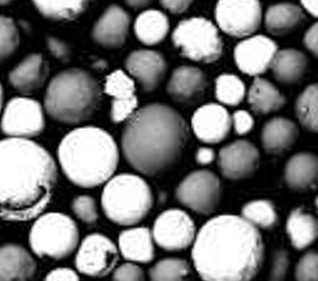
- Morphologische Prüfung by SEM verifies sphericity, satellite content, and overall surface condition.
- Inertverpackung in argon-flushed, vacuum-sealed containers with desiccant protects the powder through long-term storage and international transport.
Heat treatment enters the picture mainly at the user’s consolidation step: sintering of cobalt-bound components runs under hydrogen or vacuum, where surface oxides reduce in situ and the cobalt develops its bonding function. For powder buyers, the practical quality checks are purity conformity, oxygen level, and the flow data, and lot-level certification of all three should be standard in any supply agreement.
Anwendungen nach Branchen: Automobilindustrie, Elektronik und Luftfahrt
Spherical cobalt powder serves industries that exploit its magnetic, bonding, and high-temperature character. Sector context is available on the Anwendungen seite.
Cemented carbide and tooling. MIM-produced carbide components, additive-manufactured wear parts, and spray-formed tool preforms use spherical cobalt as the binder phase, where flowable powder enables the automated feeding and uniform packing these routes require. The growing MIM share of small carbide components such as dental burs, nozzles, and micro-tools is a direct demand driver, and the uniform binder distribution achievable with spherical powder improves the consistency of transverse rupture strength across production batches.
Diamond tools. Metal-bond diamond segments for stone and construction cutting increasingly use pre-alloyed and spherical cobalt-based matrix powders, where consistent particle behavior improves bond uniformity and segment life. Cobalt’s unmatched diamond wetting keeps it at the center of this application despite substitution pressure, and the wear-rate balance it provides, eroding fast enough to expose fresh diamond but slowly enough to hold it securely, has yet to be replicated by alternative bond systems at equivalent cost.
Thermal spray and surface engineering. Cobalt-based and cobalt-containing spray powders for wear coatings on valve seats, turbine components, and agricultural machinery use spherical feedstock for stable feeder performance, and pure cobalt serves as a ductile matrix component in carbide-cobalt spray blends where coating toughness must balance abrasion resistance.
Electronics, magnetic materials, and batteries. Magnetic alloy production, FeCo high-flux material feedstock, catalyst manufacture, and battery precursor synthesis consume high-purity grades, where the spherical form improves dosing accuracy and reaction consistency in chemical processing. Oxygen-evolution and hydrogenation catalysts based on cobalt are an expanding research and production area tied to green hydrogen development.
Aviation and automotive. Beyond carbide tooling, cobalt appears in MIM-produced small components for fuel systems and sensors, in additive repair of Legierungspulver auf Kobaltbasis wear surfaces, and in research programs developing cobalt-containing high-entropy and magnetic alloys, where pure cobalt powder serves as the base material for custom compositions.
Across these industries, a structural trend shapes demand: substitution pressure from nickel- and iron-based alternatives is strongest in cost-sensitive carbide and battery applications, while high-performance tooling, high-temperature magnetics, and precision MIM continue to specify cobalt because substitutes measurably underperform. Buyers planning multi-year programs commonly lock supply through framework agreements with price-index mechanisms rather than attempting to time the cobalt market, a lesson learned from the price spikes of previous cycles.
Vergleich mit alternativen Werkstoffen und Tabelle mit Leistungsdaten
Selection around pure cobalt powder typically benchmarks it against nickel and iron powders as alternative binders and magnetic materials, and against pre-alloyed cobalt-chromium powders where corrosion resistance is required.
Pure Co Powder vs Alternative Metal Powders
| Eigentum | Pure Co (spherical) | Reines Ni | Pure Fe | CoCr Pre-alloyed |
|---|---|---|---|---|
| Dichte (g/cm³) | 8.90 | 8.90 | 7.87 | 8.3-8.6 |
| Melting Point (C) | 1495 | 1455 | 1538 | 1350-1450 |
| Curie Temperature (C) | 1115 | 358 | 770 | Variiert |
| Saturation Magnetization (T) | ~1.6 | ~0.6 | ~2.2 | Unter |
| Carbide/Diamond Wetting | Ausgezeichnet | Mäßig | Schlecht | Ausgezeichnet |
| High-Temp Strength Retention | Ausgezeichnet | Mäßig | Schlecht | Ausgezeichnet |
| Korrosionsbeständigkeit | Mäßig | Gut | Schlecht | Ausgezeichnet |
| Relative Kosten | Hoch | Mittel | Niedrig | Hoch |
Against nickel, cobalt wins decisively on magnetic thermal stability, carbide wetting, and high-temperature strength, while nickel offers better general corrosion resistance at lower cost. Against iron, cobalt concedes saturation magnetization and cost but wins everything at elevated temperature, and the two combine in FeCo alloys that hold the induction record. Against pre-alloyed CoCr grades, pure cobalt is the feedstock choice when the buyer intends to formulate custom compositions or needs the element’s specific chemical behavior, while the pre-alloys serve direct consolidation into corrosion-resistant parts.
The selection rule is functional: where cobalt’s wetting, magnetic thermal stability, or high-temperature strength is the requirement, no substitute fully replaces it, and substitution programs in carbides and magnets have consistently confirmed that partial replacement trades away measurable performance. Where substitution does succeed, it is typically in applications that used cobalt by tradition rather than by necessity, and a candid review of whether the component actually exploits a cobalt-specific property is worthwhile before committing to the premium.
Unser Unternehmen
Shanghai Truer Technology Co. Ltd. ist ein in China ansässiger Anbieter von Lösungen für die additive Fertigung, der PREP-Pulverherstellungsanlagen und hochwertige kugelförmige Metallpulver aus einer Hand anbietet. Das 2009 gegründete Unternehmen bietet sowohl Gaszerstäubung (GA) und PREP Fertigungskapazitäten für Nickellegierungen, Titanlegierungen, Aluminiumlegierungen, rostfreie Stähle, Kobaltlegierungen, Kupferlegierungen, Hochentropie-Legierungen und Spezialwerkstoffe.
Truer bietet Dienstleistungen in den Bereichen Entwicklung maßgeschneiderter Legierungen, Prototypenfertigung in Kleinserien sowie Serienproduktion für Branchen wie Luft- und Raumfahrt, medizinische Implantate, Öl und Gas sowie die Automobilindustrie an. Das Unternehmen betreibt in Zusammenarbeit mit führenden Forschungseinrichtungen ein gemeinsames Innovationszentrum für den 3D-Metalldruck.
For inquiries about spherical pure Co powder or other metal powder requirements, Wenden Sie sich an das Team.
FAQ
Q1: What is the typical particle size distribution for spherical pure Co powder? A: MIM uses fine cuts with D90 at or below 25 um, LPBF uses 15-45 um, and thermal spray uses 20-75 um or 45-106 um fractions. All grades are spherical with certified D10, D50, and D90 data referenced to each production lot, unlike the irregular sub-micron cobalt of traditional carbide production.
Q2: Can pure Co powder be used in LPBF additive manufacturing? A: Yes, the spherical morphology is specifically suited to powder-bed and blown-powder processes. Pure cobalt is more often used as a binder component in carbide-containing builds or as feedstock for custom alloy development than printed as a standalone structural material, where cobalt-chromium alloys are the more common and better-performing choice.
Q3: What certifications does spherical Co powder come with? A: Every lot ships with a certificate of analysis covering purity, metallic residuals, oxygen and carbon content, PSD data, flow rate, and apparent density. Battery and electronic grades add expanded trace-metal panels, and medical-adjacent grades add toxic-element certification.
Q4: What is the MOQ for ordering spherical pure Co powder? A: Standard purity grades are available from 1-5 kg for development work and process trials. Production volumes ship in 25-50 kg argon-flushed, vacuum-sealed containers, with pricing linked to cobalt metal markets and quoted with validity windows reflecting that volatility.
Q5: Can the purity and size distribution be customized? A: Yes. Purity from 99.8 to 99.95 percent and custom size cuts within the atomization capability are available, and tight nickel or iron limits can be specified for magnetic and electronic applications. Custom requirements are typically run as dedicated small campaigns with full traceability from feedstock to finished powder.
Q6: What is the typical lead time for spherical Co powder orders? A: Standard grades in stock fractions usually ship within one to two weeks of order confirmation. High-purity grades and custom size distributions typically require four to six weeks including atomization scheduling, classification, and the full certification package.