Kurzantwort
Gas atomized spherical pure copper powder is a high-conductivity metal powder made by atomizing molten copper into near-spherical particles for additive manufacturing, powder metallurgy, and related powder-fed processes. It is chosen for 3D printing when a part needs excellent electrical conductivity, high thermal conductivity, and efficient heat transfer in a geometry that is difficult to machine conventionally. In practice, it is most valuable for heat exchangers, inductors, electrodes, RF parts, and thermal management components where conductivity matters more than high structural strength.
What Is gas atomized spherical pure copper powder?
Gas atomized spherical pure copper powder is the powder-form feedstock version of high-purity copper designed for modern manufacturing methods that depend on controlled particle flow, tight chemistry, and reproducible consolidation behavior. Unlike electrolytic copper powder or irregularly crushed copper powder, this material is engineered to behave predictably in processes where powder must spread in thin layers, flow through hoppers, or feed consistently into a melt pool. The phrase combines three key ideas: gas atomized, spherical, and pure copper, each of which has direct implications for process performance.
“Gas atomized” refers to the production route. Molten copper is disintegrated by high-velocity inert gas into droplets that rapidly solidify into powder. That route is widely used for advanced metal feedstocks because it can produce controlled particle-size distributions and relatively clean powder with a morphology suitable for additive manufacturing and high-end powder metallurgy.
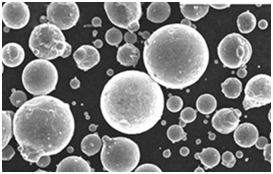
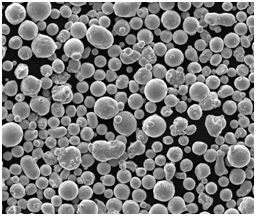
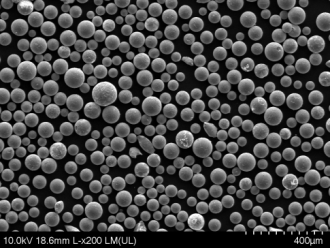
“Spherical” refers to particle shape, which is not a cosmetic detail. For metal AM, spherical morphology usually improves flowability, apparent density, spreadability, and powder-bed uniformity. Those characteristics are especially important with copper because the material’s thermal behavior already makes process control challenging. A poorly flowing copper powder can worsen build stability before laser or electron beam parameters are even considered.
“Pure copper” distinguishes the material from copper alloys such as CuCrZr, bronze, brass, or CuNi systems. Pure copper is selected when conductivity is the primary material driver. Engineers use it when they want to move heat or electricity as efficiently as possible, rather than maximize hardness, wear resistance, or precipitation strengthening. That places it in a distinct application space within the broader copper alloy powder catalog.
The historical importance of pure copper helps explain why this powder matters. Copper has been an engineering metal for thousands of years because of its conductivity and formability, but conventional shaping routes impose geometric limits. Additive manufacturing changes that equation by enabling internal channels, lattice-based cooling designs, and integrated conductive features that would be difficult or uneconomic to machine from wrought stock. Gas atomized spherical pure copper powder exists because designers increasingly need copper’s intrinsic properties in more complex shapes.
From a materials-engineering perspective, copper is both attractive and demanding. It reflects a large portion of infrared laser energy and rapidly conducts heat away from the melt zone, which can complicate laser-based processing. That challenge is one reason powder quality becomes so important. Chemistry, oxygen level, PSD, and morphology all affect whether the process window is broad enough for repeatable builds. In other words, pure copper’s end-use value is obvious, but achieving that value depends heavily on feedstock discipline.
Industry terminology around AM powder is also more precise than many buyers expect. A part described simply as “copper printed” says little about whether it was made from commercially pure copper powder, a chromium-zirconium copper alloy, or another conductive copper-based material. It also says nothing about whether the feedstock was optimized for SLM, EBM, DED, MIM, or thermal spraying. Definitions published in ISO/ASTM 52900 additive manufacturing terminology are useful because they separate the alloy identity from the process category, helping buyers write clearer specifications.
Chemical Composition and Material Grade
Pure copper powder is usually specified by purity level, impurity limits, and application-specific restrictions rather than by an alloy recipe in the same sense used for superalloys or precipitation-hardening systems. Even so, the chemistry still matters enormously. For conductive copper parts, small changes in oxygen, phosphorus, sulfur, iron, or other residual elements can influence conductivity, ductility, sintering behavior, and overall process reliability.
For that reason, buyers should not treat “pure copper” as a complete specification. One supplier may offer oxygen-bearing copper suitable for a broad PM application, while another may provide very low oxygen spherical powder intended for laser processing or premium thermal applications. The purchasing document should therefore define not only copper purity, but also the intended process, acceptable impurity levels, and the supporting test methods.
Pure Copper Chemistry in AM Powder Supply
In commercial powder practice, pure copper usually means a Cu content around 99.5% or higher, often higher still for advanced AM grades. Oxygen is one of the most watched parameters because it influences oxide content, conductivity, and powder-surface behavior. Hydrogen-sensitive downstream environments may also require tighter control of oxygen-bearing species depending on the process chain and final application.
Grade Cross-Reference and Material Naming
Cross-referencing pure copper powder across standards is less straightforward than many buyers assume. Some standards were written for wrought or cast copper products rather than spherical AM feedstock, so a supplier may reference a chemistry family while documenting powder-specific physical properties separately. That is normal practice, provided the distinction is explicit and traceable.
| Element or Grade Item | Typical Composition or Reference | ASTM Context | AMS Context | GB Context | ISO / DIN Context |
|---|---|---|---|---|---|
| Kupfer (Cu) | ≥ 99.5 wt% typical; premium lots often higher | Commercially pure copper chemistry reference | Buyer-specific if aerospace documentation is needed | Comparable pure copper designation practice | Cu-ETP / Cu purity family context |
| Sauerstoff (O) | Low, controlled; application-dependent | Powder-specific reporting preferred | May be buyer-defined | May be buyer-defined | Important for conductivity and AM behavior |
| Silber (Ag) | Trace, residual typical | Usually minor residual | Same | Same | Often reported within trace chemistry |
| Eisen (Fe) | Low residual typical | Controlled impurity | Same | Same | Conductivity-sensitive impurity |
| Schwefel (S) | Very low residual typical | Controlled impurity | Same | Same | Important for cleanliness |
| Blei (Pb) | Very low residual typical | Controlled impurity | Same | Same | Restricted in many applications |
| Bismuth (Bi) | Very low residual typical | Controlled impurity | Same | Same | Embrittlement-sensitive residual |
| Arsenic / Antimony | Very low residual typical | Controlled impurity | Same | Same | Usually reported in trace analysis |
| Material designation | Pure copper / Cu powder / spherical Cu powder | Chemistry family, not full AM spec | Documentation per order | Comparable copper naming | Wrought equivalence only partial |
The main takeaway is that standards equivalence helps with naming, but not with complete feedstock qualification. A buyer sourcing gas atomized spherical pure copper powder for laser powder bed fusion must still verify PSD, flow, apparent density, oxygen, and morphology. A chemistry match alone does not guarantee the powder will spread or melt consistently.
This is why technically mature purchasing teams often create internal powder specifications that combine grade identity with process-specific limits. Those documents may cite standards organizations such as ASTM materials and standards information for terminology support, while reserving the operational details for the company’s own qualification logic. That hybrid approach is common because pure copper feedstock performance depends as much on powder engineering as on nominal purity.
Technische Daten
Technical specifications for gas atomized spherical pure copper powder are centered on how the powder behaves during handling and consolidation. In additive manufacturing, a chemically clean powder can still fail if it bridges in the hopper, recoats unevenly, or contains an excess of satellites and ultrafines. For pure copper, those risks deserve extra attention because thermal conductivity and reflectivity already narrow the process window in many laser systems.
Particle Size Distribution for Copper AM Powder
Particle size distribution is one of the first variables to define because it determines how the powder spreads, packs, and absorbs energy. Fine fractions are often preferred for laser powder bed fusion because thinner layers and tighter melt control are easier to achieve with appropriately classified powder. Coarser ranges are more suitable for DED, thermal spray, and some PM routes where feed consistency matters more than ultra-thin layering.
Flowability, Density, and Oxygen Control
Flowability is usually assessed using Hall flow or related methods, but the number means little unless the PSD and morphology are known at the same time. Apparent density and tap density give additional insight into how the powder packs before and during processing. Oxygen content remains especially important in pure copper because oxide films can influence conductivity and consolidation behavior.
Sphericity and Surface Condition
Sphericity affects nearly every stage of powder handling. Near-spherical powder usually spreads more evenly, traps less interparticle friction, and provides more stable packing than irregular material. Surface condition also matters because adhered satellites, oxide-rich fines, or moisture exposure can alter apparent process stability from one lot to the next.
| Specification Item | Fine AM Grade | Standard AM Grade | Coarse Process Grade | Anmerkungen |
|---|---|---|---|---|
| Partikelgrößenverteilung | 15–45 µm typical | 15–53 µm typical | 45–105 µm or 53–150 µm typical | Selected by machine and process |
| Scheinbare Dichte | 4.2–5.0 g/cm³ typical | 4.5–5.3 g/cm³ typical | 4.8–5.6 g/cm³ typical | Influenced by PSD and satellite content |
| Zapfstellendichte | 5.0–5.8 g/cm³ typical | 5.2–6.1 g/cm³ typical | 5.5–6.4 g/cm³ typical | Indicates packing response |
| Hallströmung | 12–24 s/50 g typical | 10–20 s/50 g typical | 8–18 s/50 g typical | Coarser powder usually flows faster |
| Sauerstoffgehalt | Low, tightly controlled typical | Low, tightly controlled typical | Low, tightly controlled typical | Limit depends on conductivity target |
| Sphärizität | High, near-spherical typical | High, near-spherical typical | High, near-spherical typical | Usually verified by microscopy or image analysis |
These values are best interpreted as representative commercial ranges rather than universal acceptance limits. Different instruments, operator technique, and sampling practices can affect the measured numbers. For that reason, serious qualification work depends on consistent test methods across all lots being compared.
When engineers compare copper powder with other AM feedstocks, they often focus first on part function. If a design needs thermal conductivity, copper may outperform stainless or nickel grades by a wide margin. If the environment instead demands oxidation resistance at elevated temperature, a nickel superalloy powder range may be more suitable even though conductivity is lower.
The most important technical point is that electrical and thermal conductivity do not come from purity alone. They depend on the entire powder condition, including oxygen level, contamination control, and post-processing strategy. In other words, the conductivity advantage of pure copper only becomes real when the feedstock is engineered and handled correctly.
Applications Across Industries
Gas atomized spherical pure copper powder is most valuable in applications where conductivity, heat transfer, or electromagnetic performance is central to part function. That puts it in a different design category from structural steels, titanium alloys, or even precipitation-hardened copper alloys. Engineers choose it when the geometry must support energy transfer rather than merely bear static load.
Thermal Management and Heat Exchangers
Thermal management is one of the strongest application spaces for pure copper powder. Additive manufacturing can produce conformal cooling channels, thin-walled heat spreaders, and compact heat exchanger structures that use copper’s thermal conductivity more effectively than conventional drilled or brazed assemblies. This is especially relevant in high-power electronics, energy devices, and mold tooling inserts where heat removal limits system performance.
Electrical Components and Conductive Hardware
Pure copper powder also supports parts such as busbar-adjacent components, current-carrying connectors, inductors, electrodes, and RF hardware. In these cases, conductivity and geometric freedom must be balanced carefully. AM does not replace every traditional copper-forming route, but it becomes attractive when the design includes internal pathways, integrated features, or low-volume customization.
Industrial Tooling, Research, and Specialty Production
In industrial settings, copper AM powder can be used for electrode tooling, thermal inserts, brazing-related hardware, and specialty PM parts. Research institutions also use it to study high-conductivity AM process windows, especially with green-laser and electron-beam systems. The material is therefore important both as a production feedstock and as a development platform for next-generation conductive part design.
| Industrie | Typical Part | Main Material Driver | AM / PM Process |
|---|---|---|---|
| Elektronik | Heat sinks, RF components, conductive housings | Elektrische und thermische Leitfähigkeit | LPBF, DED |
| Werkzeuge und Gussformen | Conformal cooling inserts, thermal cores | Fast heat extraction | LPBF, PM |
| Energy Systems | Heat exchangers, current-carrying parts | Thermal transfer efficiency | LPBF, DED, PM |
| Luft- und Raumfahrt | Thermal management hardware, antenna-related parts | Weight-conscious conductivity | LPBF, EBM, DED |
| Industrielle Fertigung | Electrodes, induction parts, custom conductive tooling | Complex geometry with conductivity | PM, LPBF |
| Research and Labs | Coupons, benchmark geometries, process studies | AM process development | LPBF, EBM |
Pure copper is not automatically the best copper-based material for every additive project. Alloys such as CuCrZr are often selected when mechanical strength and conductivity must be balanced in a harsher structural environment. Likewise, when wear resistance dominates, a cobalt or steel system may be the more rational choice despite a large conductivity penalty.
A useful selection workflow compares function first, material family second. If the part’s purpose is to transfer heat, carry current, or shape electromagnetic fields, pure copper deserves early consideration. If it mainly needs corrosion resistance, high strength, or fatigue durability, the buyer may need to review a broader stainless steel powder selection or another alloy family before finalizing the design.
Manufacturing and Quality Assurance
The quality of gas atomized spherical pure copper powder is determined by the combined discipline of melting, atomization, classification, testing, packaging, and storage. Copper is highly sensitive to oxidation during high-temperature processing, so atmosphere control and handling practice are not secondary details. They are fundamental parts of the product specification.
Gas Atomization of Spherical Copper Powder
In gas atomization, molten copper is poured through an atomization zone where inert gas disintegrates the melt stream into droplets. Those droplets solidify rapidly while falling through the atomization tower or chamber, producing powder particles that are later collected, sieved, and classified. The route is favored for copper AM powder because it offers a practical path to high sphericity and scalable production.
Why PREP and VIGA Still Matter in Comparison
Even when pure copper powder is primarily supplied by gas atomization, buyers frequently compare GA with other premium powder routes. PREP is known for producing highly spherical particles with low satellite content, while VIGA emphasizes chemistry and cleanliness control through vacuum induction melting before gas atomization. These routes matter because they help buyers understand why two “spherical copper powders” can differ significantly in price, morphology, and release documentation.
QA Testing and Lot Acceptance
A strong QA plan begins with chemistry and oxygen verification, then extends to PSD, morphology, density, flow, and packaging inspection. For critical programs, suppliers may also retain reference samples, provide SEM images, or document inert packaging conditions. Lot acceptance should always reflect the final process route, since a DED powder and an LPBF powder may require very different practical limits.
In copper AM, powder quality often determines whether conductivity can be engineered into a complex shape at all.
| Attribut | Gas Atomization (GA) | VIGA | PREP | Warum es wichtig ist |
|---|---|---|---|---|
| Typical particle shape | Spherical with some satellites possible | Spherical with higher melt cleanliness control | Very spherical, low satellites typical | Affects recoating and feeding |
| Commercial throughput | Hoch | Mittel bis hoch | Lower for mainstream volume | Influences availability and scaling |
| Atmosphere control | Inert gas standard | Vacuum melt plus inert atomization | Highly controlled premium route | Supports low contamination |
| PSD flexibility | Broad and practical | Broad with strong control | Controlled, often premium-focused | Must match the target process |
| Relative cost position | Usually most economical | Mid to premium | Premium | Important for procurement decisions |
| Common use logic | General AM, PM, spray supply | Higher-control lots | Morphology-critical premium use | Route should fit risk level |
Quality assurance does not end at the factory gate. Copper powder can pick up risk during repacking, storage, and repeated opening cycles, especially in humid environments. That is why experienced buyers ask about container type, inert sealing practice, and the supplier’s recommendations for powder reuse and storage after opening.
Technical references can help structure internal review. NIST materials measurement resources are useful for thinking about traceability and test discipline, while ASM International materials guidance helps frame the metallurgical logic behind copper and copper-alloy processing. Those sources do not qualify a supplier by themselves, but they improve the rigor of the buyer’s qualification checklist.
Why Choose Truer as Your Supplier
Selecting a supplier for gas atomized spherical pure copper powder is less about marketing language and more about process fit. Buyers need to know whether the supplier can deliver the required particle-size range, powder morphology, test documentation, and packaging discipline for the exact AM or PM route being qualified. That requirement becomes more important with pure copper because the application usually depends on conductivity, which leaves less room for powder inconsistency.
Truer is relevant in this context because its AM work connects powder production understanding with end-use process knowledge. Its technical scope includes gas atomization, PREP powder-making equipment, and Selective Electron Beam Melting equipment, together with involvement in processes such as SLM, SEBM, DED, laser cladding, PM, MIM, HIP, and spraying. For buyers, that means discussions about copper powder can be framed around how the feedstock will actually be used, not just how it is labeled.
A second practical consideration is portfolio breadth. Teams evaluating pure copper often compare it with copper alloys, titanium, nickel alloys, stainless steel, or cobalt systems before final material selection. That broader context is useful because thermal conductivity, corrosion resistance, strength, and cost rarely point to the same answer. Truer’s wider materials background is outlined in its metal AM company profile, which places copper feedstock within a larger engineering powder ecosystem.
From a procurement standpoint, the decisive issue is usually lot-to-lot consistency. Can the supplier reproduce the same PSD window, similar morphology, and comparable physical-property data across repeat orders? That question matters more than any single headline purity number, especially once pilot builds move into production control.
Ordering Guide and Support
Ordering gas atomized spherical pure copper powder starts with defining the intended manufacturing route. A request for quotation should identify whether the powder is for LPBF, EBM, DED, PM, MIM, or spraying, because each route may favor a different size cut and handling approach. The buyer should also state whether conductivity, density, surface finish, or thermal transfer is the dominant performance target.
RFQ Details That Improve Supplier Response
A useful RFQ includes the desired particle-size distribution, annual volume estimate, destination, certificate requirements, and packaging preference. It should also state whether the powder is needed for screening, formal qualification, or serial production. That information helps the supplier propose an appropriate lot size and testing scope instead of offering a generic copper powder grade.
Sampling, Pilot Lots, and Repeat Orders
Sample material is appropriate for initial print parameter development and basic flow evaluation, but pilot lots are usually needed before any meaningful process freeze. Copper projects often reveal scale-up issues only after multiple builds, especially where oxidation control or powder reuse is involved. A disciplined progression from sample to pilot to repeat order is therefore more valuable than jumping directly to high-volume purchasing.
Packaging and Documentation
Packaging should match both the reactivity sensitivity and the project scale. Fine AM-grade copper powder is commonly supplied in sealed bottles or drums with traceable labeling, while larger PM or spray-oriented quantities may use bulk containers. Documentation typically includes chemistry, PSD, and core physical properties, with optional reports depending on customer requirements.
| Verpackungsformat | Typical MOQ Tier | Typical Lead Time | Sample Policy |
|---|---|---|---|
| 500 g bottle | Lab-scale evaluation | 1–3 weeks typical if available | Paid sample often possible |
| 1 kg bottle | Feasibility testing | 1–3 weeks typical | Traceable sample lot preferred |
| 5 kg bottle | Extended process development | 2–4 weeks typical | Commonly supplied with standard test data |
| 10 kg bottle | Pilot build program | 2–5 weeks typical | Suitable for repeatability trials |
| 25 kg drum | Routine procurement | 3–6 weeks typical | Lot reservation may be discussed |
Lead time varies according to inventory, sieving requirements, test scope, and export packaging needs. Requests for additional oxygen testing, SEM morphology evidence, or a narrower-than-standard PSD window can extend preparation time. For sample requests, data-sheet review, or order-specific technical discussion, buyers can use the powder supply contact page to define the application clearly before procurement.
Unser Unternehmen
Shanghai Truer Technology Co., Ltd. was established in 2009 and created its additive manufacturing business in 2019. The company focuses on integrating 3D printing powder-making equipment and services with metal powders for engineering applications of additive manufacturing. Its core technologies include Selective Electron Beam Melting equipment, Plasma Rotating Electrode Process powder-making equipment, and gas atomization. The company supplies TiNi, TiTa, TiAl, TiNbZr, CoCrMo, and nickel-based, cobalt-based, titanium-based, copper-based, aluminum-based, and stainless steel spherical metal powders for SLM, SEBM, DED, laser cladding, powder metallurgy, MIM, HIP, cold and hot spraying, welding, and coating in sectors including 3C electronics, hand tools, remote control cars, medical, aerospace, and nuclear power.
FAQ
Q1. Is gas atomized spherical pure copper powder good for metal 3D printing?
Yes, especially when the part requires high thermal or electrical conductivity. However, copper is more demanding to process than many steels because it reflects laser energy and conducts heat away quickly. That means powder quality and machine parameter development are both critical.
Q2. What particle sizes are common for gas atomized spherical pure copper powder?
For laser powder bed fusion, (15\text{–}45\ \mu m) and (15\text{–}53\ \mu m) are common commercial ranges. Coarser fractions such as (45\text{–}105\ \mu m) or (53\text{–}150\ \mu m) are often used for DED, spraying, or broader PM applications. The correct range depends on the feeding or recoating method.
Q3. Why is spherical pure copper powder preferred over irregular copper powder?
Spherical powder usually flows more consistently, packs more efficiently, and spreads more uniformly in powder-bed processes. Those handling advantages improve process stability and reduce variability between layers. In copper AM, that stability is especially valuable because the melt process is already challenging.
Q4. What is the difference between pure copper powder and CuCrZr powder?
Pure copper is selected primarily for maximum conductivity, while CuCrZr is typically chosen when conductivity must be balanced with higher strength and better mechanical robustness. The better option depends on whether the application is dominated by heat transfer, current carrying, or structural loading. They serve overlapping but not identical roles.
Q5. Does oxygen content matter in gas atomized spherical pure copper powder?
Yes, it matters significantly because oxygen is tied to oxide content, conductivity, and consolidation behavior. Even when the overall copper purity is high, excessive oxygen can complicate processing and reduce end-use performance. Buyers should therefore ask for oxygen reporting, not just total Cu content.
Q6. What should buyers request when sourcing gas atomized spherical pure copper powder?
At minimum, they should request chemistry, PSD, lot identification, and the main physical-property data such as apparent density, tap density, and flow. For more demanding applications, they should also ask for oxygen levels, morphology evidence, and packaging details. That combination supports conductivity-driven qualification and more reliable repeat purchasing.