Kurzantwort
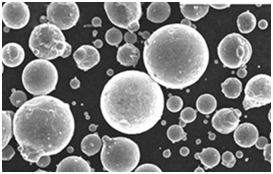
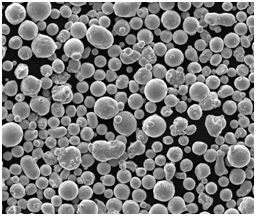
Gas atomized copper powder is a spherical metal feedstock produced by disintegrating molten copper with high-pressure gas, creating particles that flow well and pack efficiently. For additive manufacturing parts, it is chosen because it combines high thermal and electrical conductivity with good spreadability, controlled particle size, and relatively stable build behavior in laser and electron-beam powder-bed systems. It is especially valuable for heat exchangers, electrical components, induction tooling, and other geometries where conventional machining struggles with internal channels or complex thermal features.
What Is gas atomized copper powder?
Gas atomized copper powder belongs to the broader family of spherical nonferrous metal powders used in additive manufacturing, powder metallurgy, thermal spray, and advanced joining processes. In practical terms, it is copper that has been melted and then atomized into fine droplets by inert gas jets; those droplets solidify into mostly round particles before being collected, classified, and tested.
The importance of copper powder in AM comes from the material’s intrinsic properties rather than just its shape. Copper has long been used where heat and current must move quickly, but conventional fabrication can be restrictive when a design requires lattice structures, conformal cooling, thin-wall internal passages, or integrated thermal management. A spherical copper feedstock allows those functions to be built directly into the part, aligning with the definitions used in additive manufacturing terminology from ISO and ASTM.
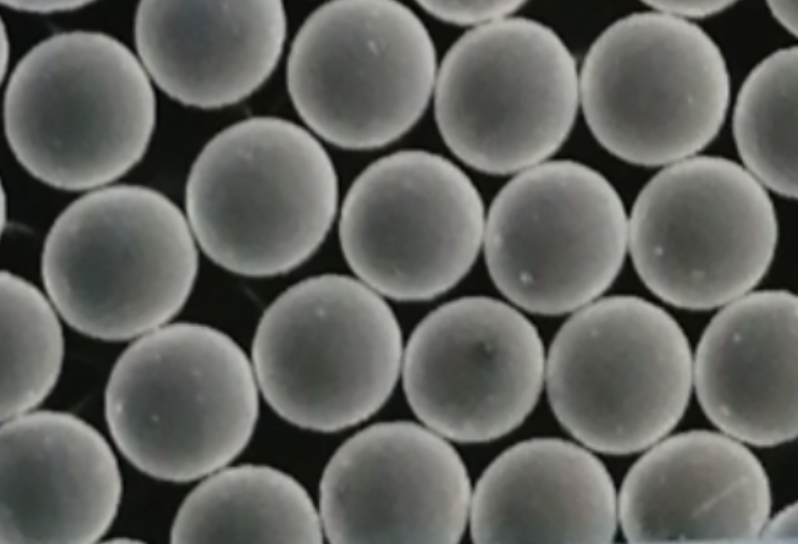
Compared with water-atomized copper powder, gas-atomized material typically offers cleaner surfaces, better morphology, narrower size control, and lower contamination. Those differences matter because recoating and layer uniformity depend strongly on particle shape and friction. In most powder-bed workflows, high sphericity is not a cosmetic feature; it directly affects powder flow, layer density, and the repeatability of printed parts.
Copper powders may be sold as commercially pure grades, oxygen-free grades, deoxidized grades, or precipitation-hardenable copper alloys such as CuCrZr and CuNiSi variants. Pure copper is usually selected when conductivity is the priority, while copper alloys are often chosen when users need a better balance of strength, softening resistance, and processability. A broader copper-based powder selection is therefore useful when a project starts with a functional requirement instead of a single alloy name.
Historically, copper was considered challenging for laser powder-bed fusion because of its reflectivity and thermal conductivity. That difficulty did not eliminate demand; it simply shifted focus toward improved laser wavelengths, parameter optimization, atmosphere control, and tighter powder specification. The result is that gas atomized copper powder is now relevant not only to prototyping, but also to industrial serial production of thermal and electrical parts.
In copper AM, powder quality is not a background variable; it is a first-order process input that influences spreading, energy coupling, porosity, and final conductivity.
How gas atomized copper powder differs from related copper feedstocks
A useful way to distinguish copper powders is by intended process. Powder for metal injection molding may tolerate a different shape profile than powder for laser powder-bed fusion. Likewise, a feedstock for cold spray or hot isostatic pressing may use coarser fractions than material intended for thin AM layers. Because of that, the same nominal chemistry can appear in several powder cuts and still behave very differently on the production floor.
Another distinction is purity versus alloy design. Pure copper delivers excellent conductivity but can be softer and more difficult to process robustly in some build windows. Alloyed copper grades may sacrifice some conductivity while improving strength, crack resistance, or elevated-temperature performance. Buyers should therefore treat “copper powder” as a category, not a single universal product.
Chemical Composition and Material Grade
Chemical specification for gas atomized copper powder is usually defined by the end use: conductivity-led applications favor very high copper purity, while structural thermal parts may accept alloying additions. In procurement documents, it is common to reference a wrought copper designation as a chemistry benchmark, then add powder-specific limits for oxygen, flowability, particle size, and morphology.
The table below summarizes typical chemistry windows and common grade cross-references used in industry discussions. These should be treated as representative references rather than a substitute for a purchaser-approved material specification.
| Powder Type / Reference Grade | Cu (wt%) | Key Residual or Alloy Elements (wt%) | Typical Oxygen Condition | Common Cross-Reference / Equivalent |
|---|---|---|---|---|
| Commercially pure Cu, ETP-type | ≥ 99.7 | Ag balance, impurities controlled | Low to moderate, application-specific | Similar chemistry concept to ASTM/UNS C11000, EN CW004A, DIN E-Cu57 |
| Oxygen-free Cu | ≥ 99.95 | Very low total impurities | Very low oxygen, often tightly limited | Similar chemistry concept to ASTM/UNS C10100 or C10200, DIN OF-Cu, ISO oxygen-free copper references |
| Deoxidized high-phosphorus Cu | balance | P typically low controlled addition | Oxygen reduced through deoxidation | Similar chemistry concept to ASTM/UNS C12200, EN CW024A |
| CuCrZr alloy powder | balance | Cr and Zr controlled alloy additions | Low oxygen target for AM | Often aligned by purchaser specification to aerospace or AM copper-alloy chemistry sheets |
| Custom AM copper grade | purchaser-defined | Fe, Pb, S, Bi and other trace elements controlled | Defined per process route | ASTM / AMS / GB / ISO / DIN mapping may be partial, with powder annex added by supplier and user |
Purity matters, but not in isolation
For copper AM, chemistry alone never tells the full story. Two powders can both be “high-purity copper” and still print differently if their oxygen levels, satellite content, or particle-size tails are different. This is why many buyers request chemistry certificates together with particle characterization and flow data.
Oxygen deserves special attention. Excess oxide can reduce conductivity, alter laser absorptivity, and complicate sintering or remelting behavior. In demanding applications, oxygen control is part of the functional specification, not just a laboratory detail.
Grade selection by use case
Commercially pure copper is commonly preferred for electrical contacts, induction components, RF hardware, and heat-transfer structures. Oxygen-free variants become especially relevant where the design target includes maximum conductivity, vacuum compatibility, brazing performance, or minimized embrittlement risk.
Alloyed copper powders enter the discussion when higher hardness, dimensional stability, or better elevated-temperature strength is required. That is why copper is often evaluated alongside nickel-alloy powder families and other engineering feedstocks during material down-selection for thermal or corrosive environments.
Technische Daten
Technical specifications for gas atomized copper powder usually combine chemistry, size range, morphology, density, and flow performance. AM users tend to focus on the interaction of these variables rather than on any single test result. For example, a fine powder may provide better surface finish, but it can also increase oxygen sensitivity and alter spreading behavior.
One of the most important controls is the distribution window itself. A tight particle size distribution helps stabilize layer thickness and improve consistency from job to job. Classification strategy is therefore not only about meeting a mesh range; it is about tuning the powder to a process, machine, and part family.
| Typical Grade / Use | PSD Range (µm) | Scheinbare Dichte (g/cm³) | Tap Density (g/cm³) | Hall Flow (s/50 g) | Sauerstoffgehalt | Sphericity / Morphology |
|---|---|---|---|---|---|---|
| Fine AM powder for L-PBF | 15–53 | 4.5–5.2 | 5.0–5.8 | 16–24 | typically low, purchaser-defined | Highly spherical, low satellites |
| Standard AM powder for L-PBF / binder jet trials | 20–63 | 4.6–5.3 | 5.1–5.9 | 15–23 | typically low, purchaser-defined | Spherical, controlled fines |
| Coarser fraction for DED / cladding | 45–105 | 4.7–5.4 | 5.2–6.0 | 14–22 | moderate to low, application-specific | Spherical to near-spherical |
| Coarse PM / spray fraction | 53–150 | 4.8–5.5 | 5.3–6.1 | 13–21 | application-specific | Spherical, broader distribution |
| Custom user-defined cut | per drawing | per specification | per specification | per specification | per specification | per specification |
Typical particle size choices for copper AM powder
For laser powder-bed fusion, 15–53 µm and 20–63 µm are common commercial cuts because they balance spreadability and packing against dust handling and oxidation concerns. Some users prefer a slightly coarser top size if the machine recoater and layer strategy can accommodate it.
Directed energy deposition and laser cladding typically shift upward toward 45–105 µm or similar ranges. These coarser particles are better suited to powder feeding through nozzles, where ultra-fine fractions may reduce feed stability or increase oxidation risk.
Why density and flow numbers matter
Apparent density and tap density are indirect indicators of how efficiently particles pack before and during processing. A higher and more stable density profile can support better layer uniformity, although it must be interpreted together with morphology and particle-size analysis.
Hall flow provides a practical shop-floor measure of powder movement, but it should never be used alone to qualify AM powder. Copper can show acceptable flow while still containing too many satellites, excessive fines, or chemistry drift that later affects printed conductivity. Many users therefore combine Hall flow with sieve or laser diffraction analysis, image-based shape analysis, and oxygen measurement.
Typical standards behind the numbers
Test methods are commonly selected from established powder-metallurgy practice. Buyers often reference particle-size methods aligned with ASTM powder particle-size testing resources and may also compare process language against powder metallurgy atomization background. The specific method set should match the intended manufacturing route, because acceptance criteria for PM, MIM, and AM are not always interchangeable.
Applications Across Industries
The commercial value of gas atomized copper powder comes from where copper’s physical properties solve a functional problem. The most visible driver is thermal management, but electrical and electromagnetic applications are equally important. When a part requires internal channels, topology optimization, low assembly count, or part consolidation, copper powder becomes strategically interesting.
| Industrie | Typical Part | Performance Objective | AM / PM Process |
|---|---|---|---|
| Aerospace and space | Combustion chamber liners, heat sinks, RF components | High heat flux management, conductivity, weight reduction through geometry | L-PBF, EBM for selected alloys, DED |
| Electronics and 3C | Heat spreaders, connector components, shielding features | Thermal dissipation, current carrying, compact integration | L-PBF, binder jet with sintering, PM |
| Tooling and molds | Conformal-cooled inserts, induction tooling | Faster thermal cycling, reduced hot spots, shorter cycle time | L-PBF, DED, HIP-assisted routes |
| Energie und Leistung | Busbar-adjacent structures, cooling plates, fusion or nuclear auxiliary parts | Electrical efficiency, temperature control, design integration | L-PBF, PM, cladding |
| Automobilindustrie und Motorsport | Motor cooling parts, inverter heat exchangers, specialized conductors | Compact cooling, lightweight assemblies, performance packaging | L-PBF, DED |
| Medical and scientific equipment | Imaging hardware, thermal blocks, specialty fixtures | Stable heat transfer, custom geometry, low-volume precision manufacture | L-PBF, PM |
Thermal management is the main adoption driver
Copper excels where heat must be moved rapidly away from a source. That makes gas atomized copper powder highly relevant for cold plates, heat exchangers, and inserts with conformal passages that cannot be drilled conventionally. In tooling, better thermal control can improve cycle time consistency and reduce localized overheating.
Electrical functionality creates a second major use case
Electrical components often have shape constraints that conventional strip or bar stock cannot solve efficiently. AM allows current-carrying or shielding functions to be integrated into complex housings, sensor assemblies, or compact devices. This is especially attractive where the geometry is customized or the production volume is moderate rather than mass-market.
Where copper powder competes with other AM materials
Copper is not automatically the best choice for every thermal part. Aluminum powders can be attractive when weight matters more than ultimate conductivity, while nickel or cobalt alloys dominate at high temperature or under severe corrosion. In mixed-material feasibility studies, aluminum powder options for lightweight components und cobalt alloy powder grades for wear-critical service are often reviewed alongside copper to find the right performance envelope.
Manufacturing and Quality Assurance
The production route for copper powder strongly influences how it behaves in downstream processing. In gas atomization, molten copper is typically poured through a tundish or nozzle and fragmented by high-pressure inert gas. The droplets cool rapidly, forming a population of particles that is then sieved or air-classified into target size ranges.
For copper, atmosphere management is especially important because oxidation can erase the benefits of high-purity chemistry. Melt cleanliness, crucible practice, gas purity, collection design, and post-atomization handling all affect the final powder. Even excellent atomization hardware cannot compensate for weak environmental control.
Process route comparison for spherical copper feedstock
Although gas atomization is the most common route for copper AM powder, buyers sometimes compare it with other spherical-powder methods. The right choice depends on alloy family, target size, purity needs, and commercial scale.
| Powder-Making Route | Typical Strengths | Typical Limitations | Best-Fit Use Cases | Relative Cost / Throughput |
|---|---|---|---|---|
| Gas Atomization (GA) | Scalable, versatile, suitable for many Cu and Cu-alloy grades, good commercial PSD control | Oxidation control must be managed carefully; satellites may require tighter classification | General AM, PM, spray, cladding copper powders | Balanced cost, high industrial throughput |
| PREP | Very high cleanliness and spherical morphology, low contamination from consumable electrode route | Higher equipment and feedstock cost; not ideal for every copper business case | Premium spherical powders, demanding specialty alloys | Higher cost, lower flexibility by alloy form |
| VIGA | Good atmosphere control and integrated melting/atomization, suitable for high-quality spherical powder | Higher capital complexity; productivity depends on setup | High-purity specialty powder programs | Medium to high cost |
| Wasserzerstäubung | Lower cost and high productivity for some PM uses | Irregular particle shape, higher oxidation, weaker flow for AM recoating | Conventional PM parts rather than high-end powder-bed AM | Lower cost, very high throughput |
| Plasma Atomization / related plasma routes | Very spherical powder and fine cleanliness for specific metals | Typically less common for pure copper economics | Specialty premium applications | Hohe Kosten |
Key quality-control checkpoints
A robust QA plan normally begins at raw-material intake and ends at packaged lot release. Powder producers track chemistry, oxygen or interstitials, particle-size distribution, density, morphology, and flowability, then verify that those results remain within the release window agreed with the buyer.
For AM applications, image-based morphology can be as informative as a single flow number. Satellite particles, elongated shapes, or excessive fines may not trigger a chemistry alarm, but they can still disrupt layer formation. That is why sophisticated users increasingly ask for multiple complementary metrics rather than one pass/fail certificate.
Powder qualification is application-specific
There is no single universal acceptance limit for every copper AM job. A heat exchanger printed on a green laser platform may accept a different powder window than a cold-spray repair process or a MIM feedstock program. Good suppliers therefore qualify not only the powder, but also the interface between powder and process.
Why Choose Truer as Your Supplier
Supplier choice in metal powder is usually less about catalog breadth than about process understanding. For gas atomized copper powder, the practical question is whether the supplier can connect chemistry, morphology, size control, and downstream process needs without treating them as isolated data points.
Truer’s manufacturing context is relevant here because the company works across powder production equipment, additive manufacturing equipment, and application-facing services. That combined perspective is useful when customers need a powder matched to SLM, SEBM, DED, laser cladding, PM, MIM, HIP, or spraying instead of a generic material sold without process context.
From a technical buyer’s perspective, the main value is lot-to-lot consistency backed by powder-making know-how and testing discipline. Copper projects often move from sample evaluation to machine tuning and then to scale-up; that progression is smoother when morphology, packaging practice, and documentation remain stable between lots.
In mixed-material programs, users may also compare copper against stainless and titanium options before freezing a design. A broader titanium powder product portfolio or complementary powder range can help procurement teams standardize supplier qualification across multiple alloys rather than requalifying a new source for each metal.
Ordering Guide and Support
Ordering gas atomized copper powder should start with the application, not just the chemistry. The most useful purchase orders specify intended process, machine type, preferred PSD, oxygen target, packaging format, and any standards that govern incoming inspection. That information helps avoid the common problem of receiving a chemically correct powder that is operationally unsuitable.
Many technical buyers also request a staged supply path: evaluation sample, pilot lot, then production lot. This sequence is sensible for copper because machine parameter development can be sensitive to particle-size edges and atmosphere handling. For new designs, it is worth documenting re-use policy and powder refresh ratio before full-rate purchasing begins.
| Verpackungsformat | Typical MOQ Tier | Typical Lead Time | Sample Policy | Anmerkungen |
|---|---|---|---|---|
| 500 g bottle | R&D / screening | 1–2 weeks if stock-classified | Small paid sample or qualification sample by project review | Common for initial parameter studies |
| 1 kg bottle | R&D / early prototype | 1-3 Wochen | Usually available for first-stage evaluation | Often used for coupon builds and conductivity testing |
| 5 kg vacuum-sealed unit | Pilot builds | 2–4 weeks | May follow successful small-sample review | Helps check consistency over several builds |
| 10–25 kg sealed drum | Pre-production / production | 3–6 weeks depending on specification | Normally after qualification | Preferred for controlled lot release |
| Custom industrial packing | Volume production | project-based | Not typically a sample format | May include desiccant, inert packing, and custom labeling |
Information to provide when requesting a quote
At minimum, buyers should provide target grade, PSD range, planned process, annual volume, and whether the application is conductivity-critical. If the part is for aerospace, medical, nuclear, or another controlled field, the supplier should also know documentation expectations early.
Requesting support during the pre-order stage is usually more efficient than correcting a misaligned powder later. A direct line through the technical inquiry contact page is helpful when the requirement includes unusual PSD splits, custom packaging, or process-specific acceptance criteria.
Unser Unternehmen
Shanghai Truer Technology Co., Ltd. was established in 2009 and created its additive manufacturing business in 2019. The company focuses on integrating 3D printing powder-making equipment and services with metal powders for engineering applications of additive manufacturing. Its core technologies include Selective Electron Beam Melting equipment, Plasma Rotating Electrode Process powder-making equipment, and gas atomization capabilities. The powder portfolio includes TiNi, TiTa, TiAl, TiNbZr, CoCrMo, as well as spherical nickel-based, cobalt-based, titanium-based, copper-based, aluminum-based, and stainless steel powders for processes such as SLM, SEBM, DED, laser cladding, PM, MIM, HIP, cold or hot spraying, welding, and coating. Additional company background is available in the Truer company profile.
FAQ
Q1. Is gas atomized copper powder better than water atomized copper powder for 3D printing?
Yes, in most powder-bed AM cases it is. Gas atomized copper powder is typically more spherical, cleaner, and more flowable, which improves layer spreading and packing. Water-atomized copper is often more economical for conventional powder metallurgy, but its irregular morphology usually makes it less suitable for high-performance AM recoating.
Q2. What particle size is best for gas atomized copper powder in laser powder-bed fusion?
A common starting range is 15–53 µm or 20–63 µm, but the ideal cut depends on the machine, laser wavelength, recoater type, and target layer thickness. Finer powder can help surface finish and thin layers, while slightly coarser distributions may improve handling and reduce oxidation sensitivity. Final selection should be validated with build coupons and density testing.
Q3. Why is oxygen content important in copper AM powder?
Oxygen can influence conductivity, surface chemistry, and melt behavior during printing or sintering. If oxygen is too high, the resulting part may lose performance even when the nominal copper content is high. That is why oxygen limits are often specified separately from bulk chemistry in copper powder purchase documents.
Q4. Can gas atomized copper powder be used only for additive manufacturing?
No. It is also used in powder metallurgy, metal injection molding, thermal spray, laser cladding, and other advanced manufacturing routes. The same base chemistry may be offered in different PSD cuts and packaging formats depending on the intended process.
Q5. Does pure copper powder always outperform copper alloys in AM parts?
Not always. Pure copper usually provides the best conductivity, but copper alloys can offer better strength, wear resistance, or elevated-temperature stability. The better choice depends on whether the part is primarily thermal, electrical, structural, or multifunctional.
Q6. What should buyers ask for when qualifying a new gas atomized copper powder supplier?
They should ask for chemistry, oxygen level, PSD data, density, Hall flow, morphology evidence, packaging details, and lot traceability. It is also useful to review how the supplier defines acceptance criteria for the intended process rather than relying on generic powder data alone. For critical applications, a staged sample-to-production qualification plan is the most practical approach.