Respuesta rápida
CM247LC PREP, polvo esférico Es un polvo de superaleación de níquel con alto contenido en gamma-prime, producido mediante el proceso de electrodo giratorio de plasma, que ofrece la resistencia a la fluencia de la aleación CM247LC para álabes fundidos en forma de polvo ultralimpio y sin crisol, destinado a la fabricación aditiva y al prensado isostático en caliente. Con un contenido de gamma prime de aproximadamente entre el 65 % y el 70 % en volumen, la aleación soporta temperaturas de servicio de entre 1000 y 1050 °C y ofrece una vida útil frente a la rotura por fluencia comparable a la del material fundido por solidificación direccional. El proceso de producción PREP proporciona una esfericidad superior a 0,95, un contenido de oxígeno igual o inferior a 150 ppm y prácticamente ninguna inclusión cerámica, lo que convierte a este polvo en la opción de primera calidad para la reparación de álabes de turbina, componentes de la sección caliente y piezas giratorias de alta integridad, en las que la limpieza del polvo determina directamente el comportamiento frente a la fatiga.
| Propiedad | Valor |
|---|---|
| Sistema de aleación | Superaleación gamma-prime a base de níquel (calidad para álabes fundidos) |
| Fracción Gamma Prime | 65-70 vol% |
| Densidad | 8,54 g/cm³ |
| Tamaño típico de las partículas | 45-106 µm (HIP/EBM), 53-150 µm (DED) |
| Esfericidad (PREP) | >= 0,95 |
| Contenido de oxígeno | <= 150 ppm |
| Temperatura máxima de servicio | 1000-1050 °C |
| Ventaja clave | Resistencia a la fluencia propia de las cuchillas, con la pureza del polvo sin crisol |
¿Qué es el polvo esférico CM247LC PREP y cuáles son las ventajas de este material?
CM247LC PREP, polvo esférico pertenece a la polvos a base de níquel y es la variante obtenida mediante metalurgia de polvos del CM247LC, un derivado con bajo contenido en carbono de la superaleación fundida MAR-M247, desarrollada originalmente para álabes de turbina de solidificación direccional y monocristalinos. Se ha conservado deliberadamente la composición química de la aleación fundida: una matriz de níquel reforzada por una proporción muy elevada de Ni3(Al,Ti,Ta) gamma prime ordenado, además de elementos pesados en solución sólida, como el tungsteno y el tantalio, y un conjunto de elementos en los límites de grano compuesto por hafnio, carbono, boro y circonio.
La diferencia fundamental radica en cómo se elabora el polvo. El proceso de electrodo giratorio de plasma (PREP) funde la punta de una barra giratoria de aleación mediante un arco de plasma y expulsa las gotas por centrifugación hacia una cámara inerte. Dado que ningún crisol ni boquilla de cerámica entra en contacto con el material fundido, el polvo evita las inclusiones cerámicas que limitan la vida útil a la fatiga en el polvo de superaleaciones atomizado por gas, y la absorción de oxígeno se mantiene en niveles excepcionalmente bajos.
En el ámbito de la ingeniería de la sección caliente, esta combinación ofrece ventajas concretas:
- Capacidad térmica propia de las cuchillas. La aleación conserva una resistencia útil hasta los 1000-1050 °C, aproximadamente 300 °C por encima del límite máximo práctico del Inconel 718, lo que la sitúa entre las aleaciones de níquel imprimibles más resistentes que existen.
- Excelente comportamiento frente a la fluencia y la rotura. El elevado contenido en gamma prima, junto con el endurecimiento por solución sólida de W y Ta, proporciona una larga vida útil frente a la rotura bajo cargas sostenidas a altas temperaturas, lo que constituye el criterio de diseño principal para los componentes de las turbinas.
- Limpieza superior del polvo. Las partículas PREP están prácticamente libres de escoria e inclusiones refractarias, lo que aumenta el límite de fatiga del material consolidado y depositado mediante HIP.
- Excelente uniformidad microestructural. La solidificación rápida sin crisol produce patrones de microsegregación homogéneos que responden de forma predecible a los tratamientos térmicos de homogeneización y envejecimiento.
- Compatibilidad de los productos de reparación y los aditivos. Este polvo se utiliza ampliamente en los procesos de deposición por electrodeposición (DED) y recubrimiento por láser para reconstruir puntas de álabes y paletas desgastadas, en los que es imprescindible que la composición química coincida con la de la aleación de fundición de base.
Es importante señalar que la CM247LC es una aleación de clase no soldable: su elevado contenido en Al y Ti la hace propensa a la solidificación y a la formación de grietas por envejecimiento bajo tensión en la fusión en lecho de polvo. Por lo tanto, se procesa principalmente mediante consolidación HIP, reparación DED, fusión por haz de electrones con precalentamiento elevado y pulverización térmica, en lugar de mediante LPBF convencional, una distinción que los compradores deben tener en cuenta a la hora de planificar un programa de fabricación aditiva. La selección del proceso, la estrategia de precalentamiento de la pieza y el tratamiento térmico posterior a la fabricación deben acordarse con el proveedor del polvo antes de que comience una campaña de cualificación, ya que los rangos de parámetros desarrollados para superaleaciones soldables no son aplicables a este material.
Detalles sobre la composición química y aportaciones de los elementos de aleación
La composición del CM247LC es una combinación cuidadosamente equilibrada en la que aproximadamente la mitad del contenido de aleación favorece la formación de gamma prime y el resto regula la resistencia de la solución sólida, la formación de carburos y la resistencia a la oxidación. El bajo nivel de carbono, en comparación con el MAR-M247, mejora la fundibilidad y la ductilidad, al tiempo que mantiene el refuerzo de los carburos en los límites de grano.
Composición química del CM247LC
| Elemento | Mín. (wt%) | Max (wt%) | Papel |
|---|---|---|---|
| Ni | Saldo | Saldo | Matriz gamma de la FCC que engloba todas las fases de fortalecimiento |
| Cr | 7.8 | 8.4 | Resistencia a la oxidación y a la corrosión en caliente gracias a la capa de Cr₂O₃ |
| Co | 9.0 | 9.5 | Aumenta el contenido de gamma prime solvus; mejora la resistencia a la fluencia y la estabilidad microestructural |
| Mes | 0.4 | 0.6 | Reforzante de solución sólida; se distribuye en la matriz gamma |
| W | 9.2 | 9.8 | Reforzante potente en forma de solución sólida; ralentiza la fluencia provocada por la difusión |
| Ejército de reserva | 3.0 | 3.4 | Potente formador de gamma prime; aumenta la resistencia a altas temperaturas y la estabilidad |
| Alabama | 5.4 | 5.8 | Formador primario de gamma-prime; genera una capa protectora de Al₂O₃ a temperatura elevada |
| Ti | 0.6 | 0.8 | Formador de gamma prima; se incorpora a Ni₃(Al,Ti,Ta) |
| Hf | 1.2 | 1.6 | Refuerzo de los límites de grano; forma carburos MC estables; mejora la fundibilidad |
| C | 0.05 | 0.09 | Forma carburos de tipo MC y M23C6 que fijan los límites de grano |
| B | 0.010 | 0.020 | Cohesión entre los límites de grano; mejora la ductilidad a la rotura |
| Zr | 0.005 | 0.015 | Fortalecimiento de los límites de grano; elimina el azufre |
| O | – | 0.015 | Límite de calidad del polvo; se mantiene al mínimo gracias a la fusión PREP sin crisol |
Hay tres características de esta composición química que merecen la atención del comprador. En primer lugar, el contenido combinado de Al y Ti, de aproximadamente el 6,2-6,6 % en peso, es lo que clasifica a la aleación como difícil de soldar y determina la precaución en la selección del proceso descrita anteriormente. En segundo lugar, el contenido de hafnio, superior al 1 % en peso, es inusual entre las superaleaciones imprimibles y resulta fundamental para la ductilidad a la fluencia transversal de la aleación en su forma policristalina. En tercer lugar, la capacidad del polvo PREP de mantener el oxígeno por debajo de 150 ppm preserva el bajo contenido de inclusiones que exigen las aplicaciones de esta aleación en las que la fatiga es un factor crítico, algo que las aleaciones convencionales atomización por gas (GA) condiciones con niveles de oxígeno más elevados, aunque aún dentro de unos límites.
Referencia a la ficha técnica completa de propiedades físicas y mecánicas
Los datos que figuran a continuación recogen los valores típicos del CM247LC consolidado mediante HIP y sometido a tratamiento térmico, junto con los valores de referencia de la solidificación direccional en bruto, cuando procede. Las propiedades reales dependen del método de consolidación, del tratamiento térmico y de la orientación de la prueba, por lo que los datos específicos de cada lote deben consultarse siempre en el certificado de análisis del proveedor.
Propiedades clave
| Propiedad | Valor | Unidad |
|---|---|---|
| Densidad | 8.54 | g/cm3 |
| Intervalo de fusión | 1245-1370 | C |
| Gamma Prime Solvus | ~1230 | C |
| Conductividad térmica (RT) | ~10.5 | W/m·K |
| Coeficiente de expansión térmica (20-1000 °C) | 16-18 x 10-6 | /K |
| Módulo de Young (RT) | ~205 | GPa |
| Límite elástico (RT, tratado térmicamente) | 850-950 | MPa |
| Resistencia a la tracción (RT, tratado térmicamente) | 1000-1100 | MPa |
| Alargamiento (RT) | 4-8 | % |
| Límite elástico (870 C) | 650-750 | MPa |
| Rotura por tensión (980 °C / 200 MPa) | >50 | h |
| Dureza (tras el tratamiento térmico) | 380-440 | HV |
| Temperatura máxima de servicio | 1000-1050 | C |
El perfil de propiedades muestra por qué esta aleación se sitúa en la categoría más alta de los materiales de níquel imprimibles. Su resistencia a temperatura ambiente supera ligeramente a la del Inconel 718, pero la ventaja decisiva se aprecia por encima de los 800 °C, donde la elevada proporción de gamma prima mantiene el límite elástico y la resistencia a la fluencia mucho después de que las aleaciones endurecidas por precipitación, como la 718, hayan envejecido en exceso y se hayan ablandado.
La ductilidad es la contrapartida correspondiente. Un alargamiento del 4-8 % es habitual en una aleación de clase «blade», y resulta adecuado para componentes de la sección caliente diseñados para resistir la fluencia y la fatiga de bajo ciclo, más que una deformación plástica importante. La combinación de hafnio y carbono en los límites de grano es la responsable específica de mantener una ductilidad a la rotura aceptable tras una exposición prolongada a altas temperaturas.
Para los usuarios de AM, el solvus de gamma prime en torno a los 1230 °C define el intervalo de tratamiento térmico: el tratamiento de solubilización debe acercarse a esta temperatura para homogeneizar la microestructura tal y como ha quedado tras la consolidación, seguido de un envejecimiento controlado para precipitar la gamma prime secundaria fina que proporciona la resistencia final.
Lista de especificaciones, tolerancias y opciones de calidades disponibles en formato PSD
El polvo CM247LC PREP se suministra en fracciones de tamaño adaptadas a los procesos HIP, DED, EBM y de pulverización, con tolerancias de morfología y limpieza más estrictas que las de sus equivalentes atomizados por gas.
Especificaciones disponibles
| Parámetro | Estándar/Valor |
|---|---|
| Distribución del tamaño de las partículas (HIP/EBM) | 45-106 µm |
| Distribución del tamaño de las partículas (DED/recubrimiento) | 53-150 µm, 75-180 µm |
| Distribución del tamaño de las partículas (proyección térmica) | 20-75 µm |
| Esfericidad | >= 0,95 |
| Densidad aparente | >= 4,8 g/cm³ |
| Densidad del grifo | >= 5,3 g/cm³ |
| Caudal del conducto | <= 14 s/50 g |
| Contenido de oxígeno | <= 150 ppm |
| Contenido de nitrógeno | <= 100 ppm |
| Porcentaje de partículas huecas | Muy bajo (solidificación centrífuga) |
| Contenido de inclusiones cerámicas | Prácticamente nulo (sin crisol) |
| Opciones de grado | CM247LC estándar; grado superior con bajo contenido en oxígeno; variantes Hf/B modificadas bajo pedido |
| Embalaje | Sellado al vacío, con inyección de argón, de 5 a 50 kg |
| Composición personalizada | Disponible bajo pedido |
El polvo PREP se caracteriza por tener una distribución más estrecha y de grano más grueso que el polvo GA, con relativamente pocas partículas por debajo de los 20 µm. Esto supone una ventaja para los procesos DED y HIP, en los que un polvo grueso, altamente esférico y de flujo libre mejora la estabilidad de la alimentación y la densidad de compactación; sin embargo, significa que los usuarios de LPBF que busquen fracciones de 15-45 µm deben consultar el rendimiento y el precio con el proveedor, ya que las fracciones finas representan una proporción menor de la producción de PREP.
Todos los lotes se entregan con certificación completa de análisis químicos, PSD, flujo y morfología, y los grados de alta calidad pueden suministrarse con un control adicional mediante tomografía computarizada de rayos X para detectar partículas huecas y una inspección reforzada de inclusiones para aplicaciones en piezas giratorias.
Métodos de producción: proceso de atomización y acondicionamiento del polvo
La producción del CM247LC mediante el proceso PREP comienza con una barra de aleación fundida y refinada por inducción al vacío, que gira a alta velocidad dentro de una cámara de gas inerte mientras un arco de plasma funde su extremo. La fuerza centrífuga expulsa gotas fundidas que se esferoidizan y se solidifican en vuelo sin entrar en contacto con ningún material del crisol, la boquilla o las paredes de la cámara. Este mecanismo es el origen de las dos cualidades distintivas del polvo: una contaminación cerámica prácticamente nula y una absorción de oxígeno limitada a unos pocos cientos de partes por millón o menos.
En el caso de una superaleación altamente aleada como la CM247LC, la fundición sin crisol reviste una importancia especial. El aluminio, el titanio y el hafnio son elementos reactivos con los refractarios de óxido, por lo que la fusión por contacto introduce inevitablemente inclusiones y agota localmente estos elementos; el proceso PREP evita ambos tipos de fallo y proporciona un polvo cuya composición química se ajusta muy bien a la de la barra de partida.
El acondicionamiento del polvo tras su recogida sigue una secuencia controlada:
- Clasificación Mediante el tamizado y la separación por aire se aíslan las fracciones del tamaño deseado y se eliminan las partículas finas.
- Verificación del caudal y la densidad comprueba el flujo de Hall, la densidad aparente y la densidad de apisonamiento según las especificaciones del lote.
- Análisis químico completo Mediante ICP-OES y fusión con gas inerte se verifican los doce elementos controlados, además de O y N, en cada lote.
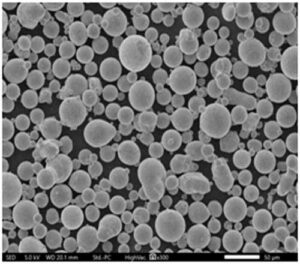
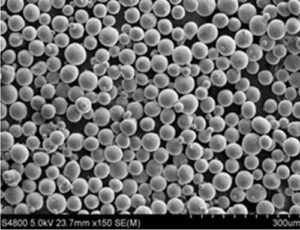
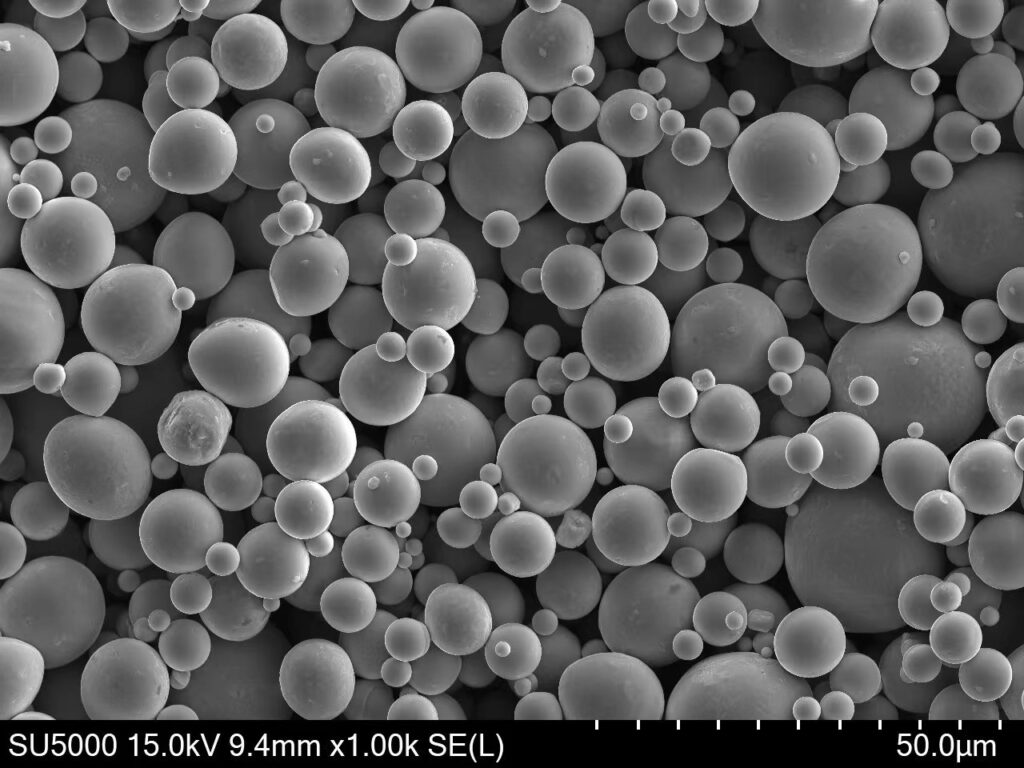
- Morfología e inspección de superficies El análisis mediante SEM confirma la esfericidad, los niveles de satélites y la ausencia de óxidos superficiales.
- Control de calidad interno mediante sección transversal metalográfica o tomografía computarizada por rayos X se cuantifican las partículas huecas.
- Envasado al vacío y con argón El desecante protege el polvo de la humedad y la oxidación durante el almacenamiento y el transporte.
El tratamiento térmico tras la consolidación sigue la práctica establecida para la aleación fundida: una etapa de solubilización cercana al solvus de gamma prime para disolver las fases segregadas y el gamma prime eutéctico, seguida de una o más etapas de envejecimiento que precipitan el gamma prime secundario fino responsable de la resistencia final. Los compradores que consoliden el polvo mediante HIP deben confirmar con el proveedor si el ciclo recomendado difiere de la especificación de la aleación fundida, ya que la microestructura más fina resultante de la atomización puede responder a temperaturas de solubilización ligeramente más bajas y a tiempos de mantenimiento más cortos.
Siempre que los programas lo permitan, el CM247LC fabricado por GA ofrece una alternativa más económica con cortes más finos disponibles; en la polvos GA página. En el caso de las piezas giratorias HIP, la reparación de álabes y los programas de homologación en los que el contenido de inclusiones está limitado por contrato, la especificación PREP sigue siendo la especificación por defecto.
Aplicaciones por sectores: aeroespacial, médico y energético
El polvo esférico CM247LC PREP se utiliza en un conjunto específico de aplicaciones de gran valor en las que la resistencia a las altas temperaturas y la limpieza justifican el coste elevado de este polvo. Se puede consultar el contexto sectorial en la aplicaciones página.
Secciones calientes de turbinas aeroespaciales. La aplicación principal es la fabricación y reparación de álabes y paletas de turbina. El recubrimiento por DED y láser con polvo CM247LC, de composición química compatible, permite reconstruir las puntas de las palas desgastadas y los segmentos de álabes dañados en componentes de solidificación direccional y monocristalinos, restaurando la geometría a una fracción del coste de sustitución. El polvo consolidado mediante HIP también permite fabricar componentes de la sección caliente con forma casi definitiva, como segmentos de sellado y sustitutos de pequeñas piezas estructurales fundidas.
Turbinas de gas industriales y energía. Las turbinas de generación de energía funcionan a temperaturas de combustión similares a las de los motores aeronáuticos, pero con intervalos de revisión mucho más largos, lo que favorece el uso de componentes de metalurgia de polvos HIP con un comportamiento frente a la fluencia equivalente al de las piezas fundidas. Los componentes de la cámara de combustión, las piezas de transición y las cubiertas de las turbinas son áreas de cualificación activas, y los grados de polvo para pulverización térmica se utilizan como capas de unión y recubrimientos resistentes a la oxidación.
Turbocompresores y maquinaria rotativa. Las ruedas de turbina de los turbocompresores de alto rendimiento funcionan al límite de temperatura de las superaleaciones fundidas, y el CM247LC consolidado mediante HIP ofrece una vía para obtener ruedas con microestructuras más finas y homogéneas que las que permite la fundición. El bajo contenido en inclusiones del polvo PREP resulta decisivo en este caso, ya que las ruedas de los turbocompresores son piezas giratorias sometidas a fatiga.
Médica y odontológica (de urgencias). Aunque las superaleaciones de níquel no son materiales para implantes, el sector de los instrumentos médicos y odontológicos utiliza aleaciones de níquel de alta temperatura para matrices de forja en caliente, y hay programas de investigación que están evaluando el polvo de superaleación PREP para equipos destinados a entornos estériles expuestos a ciclos repetidos de esterilización a alta temperatura. La pureza del polvo PREP, obtenida sin crisol, respalda la documentación sobre limpieza que exigen estos sectores regulados.
Programas de investigación y formación. La aleación CM247LC figura entre las aleaciones con alto contenido en gamma-prime más estudiadas en la literatura sobre fabricación aditiva, ya que marca el límite de la imprimibilidad de los sistemas de níquel endurecidos por precipitación. Las universidades y los fabricantes de motores solicitan el polvo PREP específicamente para desarrollar estrategias de mitigación de grietas, reparaciones graduales y ventanas de procesamiento a alta temperatura mediante EBM, lo que lo convierte en un elemento básico de las carteras de desarrollo de aleaciones avanzadas.
Comparación con otros grados y opciones alternativas de sistemas de aleaciones
A la hora de seleccionar los materiales para el CM247LC, se suele compararlo con la superaleación soldable Inconel 718, los materiales de la clase Rene 65 —aleaciones imprimibles de alta resistencia— y la composición de fundición MAR-M247, muy similar.
CM247LC PREP en polvo frente a aleaciones alternativas
| Propiedad | CM247LC (PREP) | Inconel 718 (GA) | MAR-M247 (fundido) | Hastelloy X (GA) |
|---|---|---|---|---|
| Densidad (g/cm³) | 8.54 | 8.19 | 8.54 | 8.22 |
| Gamma Prime (vol. 1, TP3T) | 65-70 | ~15 | 65-70 | 0 |
| Temperatura máxima de funcionamiento (°C) | 1000-1050 | 700 | 1000-1050 | 1100 (baja tensión) |
| Resistencia a la tracción RT (MPa) | 1000-1100 | 1100-1300 | 950-1050 | 750-800 |
| Rotura por fluencia (980 °C) | Excelente | Pobre | Excelente | Moderado |
| Soldabilidad / Idoneidad para LPBF | Difícil | Excelente | No aplicable | Excelente |
| Pureza del polvo (PREP) | Muy alta | N/A (norma de Georgia) | N/A | N/A (norma de Georgia) |
| Coste relativo del polvo | Muy alta | Medio | N/A | Medio |
En comparación con el Inconel 718, el CM247LC es inferior en cuanto a facilidad de impresión y ductilidad a bajas temperaturas, pero ofrece una mejora significativa en cuanto a resistencia térmica; el 718 no puede utilizarse a temperaturas superiores a unos 700 °C, mientras que el CM247LC funciona a 300 °C más. En comparación con el Hastelloy X, la aleación de solución sólida se imprime con mucha mayor facilidad y tolera temperaturas máximas más elevadas bajo tensiones bajas, pero carece por completo de endurecimiento por precipitación y no puede soportar cargas significativas en aplicaciones limitadas por la fluencia. En comparación con su material de base fundido, el MAR-M247, el proceso de polvo PREP ofrece una composición química equivalente con un tamaño de grano más fino, un menor contenido de inclusiones y una capacidad de «forma casi neta» que la fundición no puede alcanzar.
Por lo tanto, la lógica de selección es limitada pero decisiva: cuando un componente debe soportar una carga sostenida a más de 900 °C y el proceso de fabricación es HIP, DED o EBM con un precalentamiento elevado, el polvo CM247LC PREP se encuentra entre las opciones más sólidas disponibles; cuando la imprimibilidad mediante LPBF o el coste son factores determinantes, los grados soldables, como el 718, siguen siendo la elección adecuada.
Nuestra compañía
Shanghai Truer Technology Co., Ltd es un proveedor de fabricación aditiva con sede en China que integra equipos de fabricación de polvo PREP y polvos metálicos esféricos de alta calidad. Fundada en 2009, la empresa ofrece tanto atomización por gas (GA) y DEBERES capacidades de fabricación en aleaciones de níquel, aleaciones de titanio, aleaciones de aluminio, aceros inoxidables, aleaciones de cobalto, aleaciones de cobre, aleaciones de alta entropía y materiales especiales.
Truer ofrece servicios de desarrollo de aleaciones a medida, creación de prototipos en lotes reducidos y producción a gran escala para sectores como el aeroespacial, los implantes médicos, el petróleo y el gas, y la automoción. La empresa gestiona un centro de innovación conjunto dedicado a la impresión 3D metálica en colaboración con instituciones de investigación de primer orden.
Para cualquier consulta sobre el polvo esférico CM247LC PREP o sobre otras necesidades de polvo metálico, contactar con el equipo.
Preguntas más frecuentes
P1: ¿Cuál es la distribución típica del tamaño de partícula del polvo esférico CM247LC PREP? R: El tamaño de partícula estándar del proceso PREP es de 45-106 µm para los procesos HIP y EBM, con fracciones de 53-150 µm y 75-180 µm para los procesos DED y de recubrimiento por láser. El PREP produce de forma natural una distribución gruesa y estrecha, con muy pocas partículas finas inferiores a 20 µm, lo que mejora la fluidez y la densidad de compactación en estos procesos.
Pregunta 2: ¿Se puede utilizar el polvo CM247LC en sistemas LPBF? R: El procesamiento mediante LPBF plantea dificultades, ya que el elevado contenido de Al y Ti hace que la aleación sea susceptible a la solidificación y a las grietas por envejecimiento bajo deformación. Se procesa principalmente mediante HIP, reparación por DED y EBM con precalentamiento elevado, aunque algunos programas de investigación con estrategias de barrido modificadas y placas de construcción calentadas han demostrado una viabilidad limitada del LPBF.
Pregunta 3: ¿Qué certificaciones tiene el polvo CM247LC PREP? R: Cada lote se envía con un certificado de análisis que incluye el perfil químico completo de doce elementos, el contenido de oxígeno y nitrógeno, la distribución granulométrica, el caudal según el método de Hall y la densidad aparente y la densidad compactada. En los grados de alta calidad se pueden añadir informes de morfología mediante microscopía electrónica de barrido (SEM), análisis por tomografía computarizada de rayos X para la detección de partículas huecas y documentación detallada sobre las inclusiones.
Pregunta 4: ¿Cuál es la cantidad mínima de pedido (MOQ) para el polvo CM247LC PREP? R: Se ofrecen cantidades de prueba de entre 5 y 10 kg para el desarrollo de procesos y las series de calificación. Los pedidos de producción se suministran normalmente en envases sellados al vacío y lavados con argón de entre 25 y 50 kg, y los precios reflejan el alto contenido en hafnio y tantalio de la aleación.
P5: ¿Se puede personalizar la composición del CM247LC? R: Sí. Los niveles de hafnio, boro y carbono pueden ajustarse dentro o fuera del rango estándar para adaptar el comportamiento de los límites de grano a procesos de consolidación específicos, y es posible producir variantes modificadas, desarrolladas para mejorar la capacidad de impresión, a través del servicio de desarrollo de aleaciones a medida del proveedor.
P6: ¿Cuál es el plazo de entrega habitual para los pedidos de polvo CM247LC PREP? R: Los productos con composiciones estándar suelen enviarse en un plazo de dos a cuatro semanas, lo que refleja el proceso de preparación de las barras de aleación necesario antes de la conversión PREP. Las composiciones químicas a medida o los grados de pureza superior suelen requerir entre seis y diez semanas, incluyendo la fundición de las barras, la programación de la atomización y el paquete completo de certificación.