Hızlı Cevap
FeCoNiCrMn High Entropy Alloys are equiatomic or near-equiatomic multi-principal-element alloys, often referred to as the Cantor alloy family, used in powder form for additive manufacturing, powder metallurgy, and advanced materials research. They are chosen for AM parts when engineers need an unusual combination of ductility, fracture toughness, cryogenic performance, and microstructural stability that conventional stainless, nickel, or cobalt alloys may not provide simultaneously. The main trade-off is cost and qualification complexity: these alloys demand tighter control of composition, powder cleanliness, and process parameters than mainstream production powders.
What Is FeCoNiCrMn High Entropy Alloys?
FeCoNiCrMn High Entropy Alloys belong to a class of materials built around the idea that five or more principal elements can be combined in relatively high proportions rather than relying on one dominant base metal. Instead of thinking in terms of “iron with additives” or “nickel with minor alloying,” high entropy alloy design deliberately distributes composition across multiple major elements to influence phase stability, lattice distortion, diffusion behavior, and deformation mechanisms.
The FeCoNiCrMn composition is widely known in research and industry discussions as the Cantor alloy, named after the researcher associated with its early development. It became important because it challenged the assumption that complex chemistry would inevitably produce brittle intermetallic mixtures. In practice, this alloy system often forms a stable face-centered cubic solid solution, especially in homogenized or carefully processed conditions, giving it an appealing balance of toughness and formability.
Why the FeCoNiCrMn System Matters
The significance of this alloy family is not that it is the strongest material in every test. Rather, it is valued because it can preserve good ductility while maintaining toughness over a broad temperature range. That is especially relevant in research programs involving cryogenic structures, impact resistance, or environments where brittle failure is unacceptable.
For additive manufacturing, the alloy is interesting because its chemistry allows designers to explore geometrically complex parts without abandoning advanced structural metallurgy. In other words, it links two major trends in modern manufacturing: compositionally complex alloys and near-net-shape metal production.
From Laboratory Alloy to Engineering Powder
In early literature, FeCoNiCrMn was largely studied as cast or wrought material. Over time, the attention shifted toward powder production because AM, HIP, and advanced PM routes offer a practical way to process difficult alloys into intricate shapes. That transition is important: once the alloy becomes a powder, particle morphology, oxygen pickup, size distribution, and lot consistency start to matter as much as nominal composition.
A buyer searching for high entropy alloy powder is usually not just asking about chemistry. The real question is whether the powder can spread, melt, consolidate, and reproduce a target microstructure under a chosen process window. That is a more demanding materials question than selecting a standard austenitic stainless steel feedstock.
How It Differs From Conventional AM Alloys
Compared with stainless steels, FeCoNiCrMn High Entropy Alloys are not designed around corrosion resistance alone, even though chromium contributes oxidation behavior. Compared with nickel superalloys, they are generally not selected primarily for extreme high-temperature creep. Compared with cobalt alloys, they are often discussed more for toughness, work hardening, and structural complexity than for wear resistance.
What makes the alloy family distinctive is its deformation behavior. In many studies, especially at lower temperatures, FeCoNiCrMn shows high strain hardening and excellent toughness relative to conventional alloys of similar density range. That combination is why engineers, research institutes, and advanced manufacturing teams continue to investigate it for demanding AM applications.
High entropy alloy selection is rarely about one peak property; it is about achieving an unusually balanced property profile in a complex manufacturing route.
Chemical Composition and Material Grade
The chemistry of FeCoNiCrMn High Entropy Alloys is conceptually simple but operationally strict. The classic composition is equiatomic Fe-Co-Ni-Cr-Mn, often targeted around 20 atomic percent each. In commercial powder procurement, however, suppliers and end users usually translate that concept into weight-percent ranges, permissible deviations, impurity limits, and powder-specific requirements such as oxygen and nitrogen control.
Because this alloy family is still emerging in industrial adoption, buyers should not expect the same universally harmonized grade language that exists for legacy stainless or titanium alloys. Instead, procurement often depends on internal material specifications, research-grade conventions, or project-specific qualification documents that map the powder to recognized composition windows.
Typical composition and grade cross-reference for FeCoNiCrMn High Entropy Alloys
| Alloy / Grade Reference | Fe (wt%) | Co (wt%) | Ni (wt%) | Cr (wt%) | Mn (wt%) | Other / Residuals | Typical Cross-Reference |
|---|---|---|---|---|---|---|---|
| Equiatomic nominal FeCoNiCrMn | 19-22 | 19-22 | 19-22 | 19-22 | 19-22 | balance by target ratio; low C, O, N desirable | Cantor alloy / research-grade HEA |
| AM-oriented spherical powder | 19.5-21.5 typical | 19.5-21.5 typical | 19.5-21.5 typical | 19.5-21.5 typical | 19.5-21.5 typical | C, Si, S, P tightly controlled | Supplier internal AM powder spec |
| PM/HIP feedstock grade | near-equiatomic | near-equiatomic | near-equiatomic | near-equiatomic | near-equiatomic | Interstitials specified separately | Project or customer specification |
| Variant tolerance grade | controlled around target | controlled around target | controlled around target | controlled around target | controlled around target | Minor deviations allowed by application | Cross-referenced to lab, ISO, or DIN internal codes |
The table should be read as a practical procurement guide rather than a universal standard. For most buyers, the decisive issue is not whether the alloy is exactly 20.00 at.% per element, but whether the delivered chemistry stays within the project’s validated window and avoids impurity levels that alter phase behavior or crack sensitivity.
FeCoNiCrMn High Entropy Alloys and Naming Conventions
One reason the alloy can confuse first-time buyers is that “FeCoNiCrMn High Entropy Alloys” is simultaneously a material family name, a shorthand chemical sequence, and a research identity tied to the Cantor alloy concept. Some data sheets state composition in atomic percent, while purchasing teams often need weight percent for certificates and inbound QA. That translation must be done carefully because atom-% and wt-% are not interchangeable shorthand.
For terminology on additive manufacturing processes and feedstocks, the [ISO/ASTM 52900 additive manufacturing terminology] helps create a common language between powder suppliers and part manufacturers. For readers wanting a concise background on the classic Cantor alloy concept, the [Cantor alloy overview] is a useful starting point.
Why Chemistry Tolerance Matters More Than It First Appears
The FeCoNiCrMn system is often presented as forgiving because it forms a single-phase FCC solid solution under many conditions. Even so, that does not mean chemistry drift is harmless. Carbon, oxygen, sulfur, or phosphorus can influence segregation, inclusion formation, and weldability-like behavior during laser melting. Manganese volatility and oxidation sensitivity also make handling and thermal history important.
This is why serious procurement for multi-principal-element powder should include not only the headline five-element ratio but also impurity control, sampling frequency, and analytical method. In advanced AM work, those secondary details often determine whether the powder behaves like a research material or a production-capable feedstock.
Teknik Özellikler
Technical specifications for FeCoNiCrMn High Entropy Alloys depend heavily on the intended process route. Laser powder bed fusion usually calls for finer, highly spherical powders with controlled fines, while DED, laser cladding, and some HIP can accept broader or coarser ranges. In all cases, the essential parameters include particle-size distribution, apparent and tap density, flowability, oxygen level, and particle morphology.
Unlike some commodity powders, this alloy family is often purchased for property-critical development programs. That means the specification is judged not just by whether the powder feeds into a machine, but by whether it produces a predictable phase constitution and repeatable mechanical response after consolidation.
Typical FeCoNiCrMn High Entropy Alloys powder specifications
| Powder Class | Typical PSD Range | Görünür Yoğunluk | Yığın Yoğunluğu | Hall Flow | Oksijen İçeriği | Sphericity / Morphology |
|---|---|---|---|---|---|---|
| Fine SLM/LPBF grade | 15-45 µm | 4.10-4.60 g/cm³ | 4.80-5.40 g/cm³ | 13-20 s/50 g typical | ≤ 0.10 wt% typical | High, mostly spherical |
| Standard LPBF grade | 15-53 µm | 4.20-4.70 g/cm³ | 4.90-5.50 g/cm³ | 12-19 s/50 g typical | ≤ 0.12 wt% typical | High sphericity, low satellites |
| DED / cladding grade | 45-105 µm | 4.30-4.80 g/cm³ | 5.00-5.60 g/cm³ | 11-18 s/50 g typical | ≤ 0.12 wt% typical | Free-flowing spherical powder |
| PM / HIP broad-cut grade | 53-150 µm | 4.35-4.90 g/cm³ | 5.10-5.70 g/cm³ | 11-17 s/50 g typical | ≤ 0.15 wt% typical | Spherical to near-spherical |
These are realistic commercial-style values rather than mandatory standards. Actual acceptance criteria depend on atomization route, customer qualification protocol, and whether the application prioritizes fine detail, high deposition rate, or dense consolidation.
FeCoNiCrMn High Entropy Alloys for SLM and DED
In SLM or LPBF, the most common requirements are a narrow distribution, strong recoating behavior, and minimal internal porosity drivers. Finer particles can improve detail resolution, but they also increase surface area and therefore sensitivity to oxidation or moisture pickup. In DED and cladding, coarser powders generally offer more stable feeding and better suitability for higher build rates.
For this reason, a specification for spherical AM powder should always be written in relation to the target machine and thermal strategy. A fine LPBF powder and a coarse DED powder may have identical nominal chemistry yet be functionally different products.
Density, Flow, and Recoating Performance
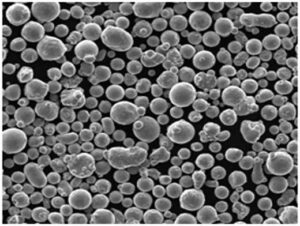
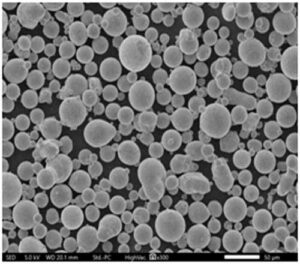
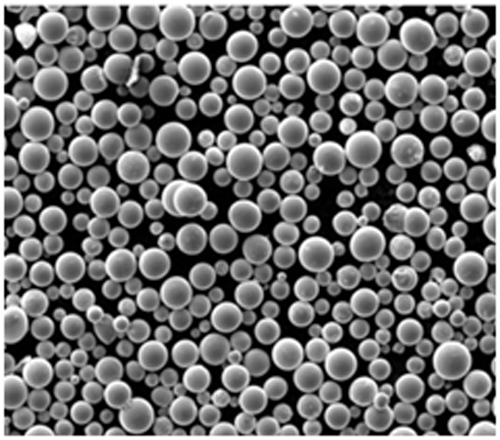
Apparent density and tap density help estimate how the powder will pack under spreading or feeding conditions. Hall flow time gives a quick indicator of handling behavior, though it should not be treated as a complete predictor of build quality. Particle image analysis, SEM review, and satellite count often explain performance differences that bulk numbers alone cannot capture.
For FeCoNiCrMn High Entropy Alloys, morphology matters because compositional complexity is only valuable if the powder bed is stable. Inconsistent spreading or powder feeding can create local thermal variability that masks the intrinsic potential of the alloy itself.
Thermal Response and Microstructural Intent
The end purpose of the powder specification is usually to produce a dense FCC-dominant structure with limited contamination and controlled residual stress. Researchers may also be watching for grain refinement, dislocation density, texture development, or post-HIP homogenization response. That is why technical discussions around this material quickly move beyond flowability into phase control and defect minimization.
Applications Across Industries
FeCoNiCrMn High Entropy Alloys are still more common in advanced engineering, qualification programs, and R&D-driven production than in mass-market metal AM. Their strongest use cases appear where a unique balance of toughness, damage tolerance, and structural complexity is more valuable than the lowest raw-material cost. In practical terms, that means aerospace research, cryogenic engineering, defense, energy systems, and high-end tooling or demonstrator components.
The alloy is not a universal substitute for stainless, cobalt, or nickel systems. Instead, it earns attention when those established families force a compromise that designers want to avoid.
Typical applications for FeCoNiCrMn High Entropy Alloys
| Endüstri | Typical Part | AM / PM Process | Why the Powder Is Used |
|---|---|---|---|
| Aerospace R&D | Lightweight brackets, cryogenic test parts, structural demonstrators | LPBF, HIP-assisted AM | Toughness and stable FCC behavior |
| Energy and cryogenic systems | Valve bodies, manifolds, low-temperature hardware | LPBF, PM, HIP | Strong low-temperature ductility |
| Defense and impact-critical hardware | Shock-tolerant mounts, housings, blast-test components | LPBF, DED | Damage tolerance and strain hardening |
| Materials research and tooling | Test coupons, inserts, benchmark geometries, near-net blanks | LPBF, PM, cladding | Property exploration and process development |
Cryogenic and Low-Temperature Service
One of the best-known strengths of the Cantor alloy family is its mechanical response at low temperatures. Studies frequently report that the alloy retains or even improves toughness and ductility under cryogenic conditions rather than becoming brittle in the way many materials do. That makes it relevant for liquid-gas handling systems, cryogenic test rigs, and scientific hardware where failure at low temperature would be unacceptable.
This does not automatically make every FeCoNiCrMn powder part a cryogenic component. Qualification still depends on density, residual porosity, post-processing, and service-environment compatibility. But the alloy’s low-temperature reputation is a major reason it remains prominent in AM materials research.
Structural Demonstrators and Advanced Prototypes
Some organizations use FeCoNiCrMn High Entropy Alloys not because they need immediate serial production, but because they want to validate new design concepts with a high-toughness advanced alloy. In these cases, AM enables internal channels, topology-optimized load paths, and experimental geometries that would be impractical to machine from cast billet.
This is especially relevant for teams comparing alloy families during early design screening. A [nickel alloy powder selection] may be more suitable for elevated-temperature service, while [cobalt alloy powder materials] can be preferred for wear-focused systems. FeCoNiCrMn occupies a different niche centered on balanced structural behavior rather than a single extreme property.
Repair, Cladding, and Surface Engineering Concepts
Although the alloy is most often discussed in bulk AM form, the powder also has relevance in cladding and surface engineering research. A high entropy alloy layer can be explored where a component surface requires a different damage-tolerance or oxidation behavior than the substrate provides. In such cases, deposition strategy, dilution, and metallurgical compatibility become critical.
When corrosion resistance or lower-cost industrial robustness is the main objective, a [stainless powder product range] may still be the more direct solution. The value of FeCoNiCrMn High Entropy Alloys appears when a designer wants a broader mechanical-performance envelope rather than only a familiar stainless response.
Manufacturing and Quality Assurance
Manufacturing FeCoNiCrMn High Entropy Alloys powder requires more than melting five metals together. Each element has different melting behavior, vapor pressure tendencies, and oxidation sensitivity, so the production route must preserve composition while producing a morphology suited to the target process. Gas atomization and vacuum-induction gas atomization are especially relevant because they allow controlled melt chemistry and spherical particle formation under protective atmospheres.
For AM users, quality assurance begins at the melt but extends through sieving, lot blending, packaging, and downstream traceability. A chemically correct powder can still fail in production if it carries too much oxygen, too many satellites, or too broad a distribution for the recoating strategy.
Typical manufacturing-route comparison for FeCoNiCrMn High Entropy Alloys powder
| Powder-Making Route | Typical Strengths | Typical Limitations | Common Use Case | Typical QA Focus |
|---|---|---|---|---|
| GA (Gas Atomization) | Fine powder output, good sphericity, scalable production | Oxidation control must be tight | LPBF and general AM powder supply | PSD, oxygen, morphology |
| VIGA (Vacuum Induction Gas Atomization) | Better melt cleanliness, good chemistry control | Higher cost and process complexity | High-purity AM and R&D lots | Chemistry uniformity, interstitials |
| PREP (Plasma Rotating Electrode Process) | Very spherical particles, low contamination potential | Less flexible for some custom chemistries, coarser cuts common | Specialty spherical powder programs | Sphericity, cleanliness, coarse fraction |
| Plasma spheroidization of pre-alloyed feed | Shape improvement of starting powder | Depends strongly on feedstock quality | Morphology tuning and reuse strategies | Surface condition, flowability |
Gas Atomization Versus PREP and VIGA
For most FeCoNiCrMn High Entropy Alloys powder programs, gas atomization is the most practical route because it balances scalability and particle quality. VIGA becomes attractive when the project emphasizes purity and chemistry uniformity, especially for high-value R&D or aerospace-grade development lots. PREP is better known for titanium and certain reactive systems, but it can still be relevant in discussions about ultra-spherical particle production and low contamination.
Truer’s background in powder-making equipment is technically relevant here because it spans PREP, gas atomization, and additive manufacturing process integration rather than a single powder format. That matters when customers are comparing not just chemistry, but route-dependent particle behavior.
Key QA Checks for FeCoNiCrMn High Entropy Alloys
A complete QA plan typically includes composition by ICP or equivalent analytical methods, PSD by laser diffraction and sieve analysis, morphology review by SEM or image analysis, oxygen and nitrogen measurement, and bulk handling properties such as flow and density. Depending on the application, users may also require XRD phase confirmation, metallographic review after a standard print, or mechanical benchmark coupons.
For measurement and qualification frameworks, [NIST additive manufacturing measurement science] is helpful because it connects feedstock characterization with process repeatability and part performance. Broader metallurgy and processing discussions around advanced alloys can also be found in [ASM materials engineering resources].
Powder Reuse, Storage, and Lot Control
Because FeCoNiCrMn High Entropy Alloys can be used in value-intensive AM programs, powder reuse often comes under scrutiny. Screening recycled powder only by PSD is rarely enough; oxygen pickup, moisture exposure, morphology changes, and potential manganese-related surface changes should also be considered. Closed handling, inert storage, and lot traceability are therefore more than administrative details.
This is where powder cleanliness and repeatability become procurement criteria. In many advanced alloy programs, users are not just buying powder; they are buying control over variability.
Why Choose Truer as Your Supplier
From a technical sourcing perspective, the case for selecting a supplier of FeCoNiCrMn High Entropy Alloys depends on whether the supplier can support advanced alloy development rather than only commodity powder sales. Buyers generally need evidence of powder-making capability, process understanding, and the ability to align PSD, morphology, and documentation with AM or PM requirements.
Shanghai Truer Technology is relevant in that context because its portfolio includes spherical metal powders across multiple alloy families and because its manufacturing ecosystem covers powder-making equipment, additive manufacturing integration, and application support. That broader technical scope matters when engineers are benchmarking high entropy materials against conventional systems such as titanium, cobalt, or nickel alloys.
In practical sourcing terms, a supplier conversation is more useful when it addresses how the powder will be used rather than only what the nominal chemistry is. Teams that also compare this HEA family with structural lightweight materials may find the [titanium alloy powder portfolio] useful for design-stage tradeoff analysis. For company background and manufacturing context, the [Truer corporate profile] provides a factual overview of the organization’s AM-related capabilities.
Ordering Guide and Support
Ordering FeCoNiCrMn High Entropy Alloys powder efficiently requires more specification detail than ordering common stainless or aluminum grades. The buyer should state the intended process, target PSD, acceptable chemistry tolerance, impurity limits, packaging format, and whether the powder is for R&D, qualification, or recurring production. Without that information, quotations can look similar on paper while referring to materially different products.
It is also useful to distinguish between exploratory research and industrial validation. Research orders often prioritize flexible lot size and powder data, while validation orders place more emphasis on repeatability, documentation, and retained samples.
Typical ordering framework for FeCoNiCrMn High Entropy Alloys
| Paketleme | Typical MOQ Tier | Teslim Süresi | Sample Policy | Tipik Kullanım |
|---|---|---|---|---|
| 250 g sealed bottle | Laboratory trial | 1-2 weeks typical | Paid sample with basic COA | Initial materials screening |
| 500 g to 1 kg can | Research qualification | 2-3 weeks typical | Sample lot available with PSD and chemistry | Coupon builds and parameter work |
| 5 kg inert-packed container | Pilot production | 3-5 weeks typical | Retained sample recommended | Repeated build studies |
| 20 kg+ batch packaging | Pre-production or program supply | 4-8 weeks typical | Batch approval route advised | Multi-lot validation and manufacturing |
What a Good RFQ Should Include
A technically useful RFQ for FeCoNiCrMn High Entropy Alloys should specify the following:
- AM or PM process route
- Requested particle-size window
- Maximum oxygen and nitrogen levels
- Composition tolerance, preferably in wt% and/or at.% as needed
- Packaging, annual volume, and documentation requirements
Those details help the supplier define the right powder cut and analytical package. Where a program requires custom discussion, the [powder inquiry contact page] is the appropriate route for sharing machine type, application, and qualification scope.
Şirketimiz
Shanghai Truer Technology Co., Ltd. was established in 2009 and created its additive manufacturing business in 2019. The company focuses on integrating 3D-printing powder-making equipment and services with metal powders for engineering applications. Its core technologies include Selective Electron Beam Melting equipment, Plasma Rotating Electrode Process powder-making equipment, and gas atomization-related capability. The powder portfolio includes TiNi, TiTa, TiAl, TiNbZr, CoCrMo, and spherical nickel-based, cobalt-based, titanium-based, copper-based, aluminum-based, and stainless steel powders for processes such as SLM, SEBM, DED, laser cladding, powder metallurgy, MIM, HIP, cold or hot spraying, welding, and coating across sectors including 3C electronics, hand tools, remote control cars, medical, aerospace, and nuclear power.
SSS
Q1. Are FeCoNiCrMn High Entropy Alloys good for metal 3D printing?
Yes, they can be very good for metal 3D printing when the application values toughness, ductility, and microstructural stability more than low material cost. FeCoNiCrMn High Entropy Alloys are especially interesting for research, cryogenic parts, and complex structural demonstrators. The main challenge is that processing and qualification are usually more demanding than for mainstream stainless or nickel powders.
Q2. What is the difference between FeCoNiCrMn High Entropy Alloys and stainless steel powder?
The main difference is alloy design philosophy. Stainless steels are usually based on iron with chromium and other additions tailored around corrosion resistance and manufacturability, while FeCoNiCrMn High Entropy Alloys distribute composition across multiple major elements to create a different balance of phase stability, work hardening, and toughness. That makes the HEA family more specialized and often more expensive.
Q3. What particle size is typical for FeCoNiCrMn High Entropy Alloys powder?
For LPBF, a common range is 15-45 µm or 15-53 µm, while DED and cladding often use 45-105 µm or broader cuts. The best range depends on the machine, layer thickness, and feeding method. Buyers should match PSD to the validated process rather than ordering by chemistry alone.
Q4. Are FeCoNiCrMn High Entropy Alloys suitable for cryogenic applications?
They are widely studied for that purpose because the Cantor alloy family is known for strong low-temperature ductility and toughness. However, suitability for a real component still depends on build density, post-processing, and service qualification. Powder quality and microstructural control are especially important in cryogenic hardware.
Q5. Do FeCoNiCrMn High Entropy Alloys require heat treatment after printing?
Often yes, although the exact treatment depends on the AM route and property targets. Stress relief, homogenization, HIP, or microstructure-conditioning steps may be used to reduce residual stress and improve uniformity. The correct cycle should be established through testing rather than assumed from wrought data.
Q6. What should buyers check on a certificate of analysis for FeCoNiCrMn High Entropy Alloys powder?
At minimum, buyers should check the five principal elements, impurity levels, particle-size distribution, oxygen content, and density or flow data. For qualification work, morphology evidence, lot traceability, and packaging condition are also important. In advanced alloy programs, those details can be as important as the nominal composition itself.