Hızlı Cevap
Aluminium 2024 powder is a high-strength Al-Cu-Mg alloy powder used for additive manufacturing, powder metallurgy, and advanced thermal spray or cladding workflows where strength-to-weight ratio matters more than maximum corrosion resistance. It is chosen for lightweight AM parts when designers need better mechanical strength than many general-purpose aluminum powders can provide, especially in aerospace, motorsport, tooling, and structural prototyping. Its main trade-off is process sensitivity: Aluminium 2024 powder typically requires tighter control of oxidation, cracking risk, and post-build heat treatment than more forgiving Al-Si grades.
What Is Aluminium 2024 powder?
Aluminium 2024 powder is the powder-metallurgy form of the well-known 2024 wrought aluminum alloy family, an Al-Cu-Mg system originally developed for applications that needed higher strength than commercially pure aluminum or simpler heat-treatable grades could provide. In traditional mill-product form, 2024 became closely associated with aircraft structures, riveted assemblies, and fatigue-loaded parts where good machinability and strong mechanical performance were valued.
As a powder, the alloy enters a different manufacturing logic. Instead of being rolled, extruded, or forged first and machined later, it is atomized into fine particles so it can be processed through additive manufacturing, hot isostatic pressing, metal injection molding, or other near-net-shape routes. That shift matters because aluminium alloy behavior in powder form is influenced not only by chemistry, but also by particle shape, oxygen pickup, surface oxide thickness, and thermal history during consolidation.
The 2024 Alloy Family in Powder Form
The 2024 alloy belongs to the 2xxx series aluminum alloys, which are defined primarily by copper as the major alloying element. Magnesium supports age hardening, while manganese and minor elements help refine structure and contribute to processing stability. This makes 2024 very different from silicon-rich AM favorites such as AlSi10Mg, which are often chosen for castability and crack resistance rather than peak structural strength.
For powder users, that distinction is important. A buyer searching for high-strength aluminum powder is often evaluating whether the extra strength of a 2xxx alloy justifies its narrower process window. The answer depends on the application. If the part is structural and every gram matters, 2024 can be compelling. If the part is primarily valued for smooth printability or corrosion resistance, another aluminum system may be easier to qualify.
Why the Powder Version Exists
The reason Aluminium 2024 powder exists is straightforward: the underlying alloy family has attractive mechanical properties, and manufacturers increasingly want those properties in geometries that cannot be produced efficiently by conventional subtractive methods. Powder-based routes enable lattice supports, lightweight brackets, internal channels, topology-optimized ribs, and near-net-shape blanks that reduce buy-to-fly ratios.
In sectors such as aerospace and performance engineering, material utilization is a real economic issue. Machining a complex aluminum bracket from plate or billet can waste a large portion of the starting stock. Powder routes reduce that inefficiency and open new design freedom, provided the alloy can be processed without excessive hot cracking or oxidation.
How It Differs From Other Aluminum AM Powders
Compared with AlSi10Mg, Aluminium 2024 powder is typically stronger after proper heat treatment but less forgiving in laser processing. Compared with 7075-family powders, it often occupies a middle ground: strong, lightweight, and well understood, but still crack-sensitive enough that process design matters. Compared with 6061-family powders, it is usually selected when structural performance outweighs ease of finishing or corrosion balance.
The practical takeaway is that Aluminium 2024 powder is not a “default” aluminum feedstock. It is a specialist alloy for users who know why they want the 2xxx family and are prepared to manage the metallurgy that comes with it.
In high-performance aluminum AM, alloy selection is rarely about printability alone; it is about the strength gained per unit mass after full process qualification.
Chemical Composition and Material Grade
The chemistry of Aluminium 2024 powder follows the 2024 alloy family rather than a single universal AM-only recipe. In most commercial specifications, copper is the dominant alloying element, magnesium is the key age-hardening partner, and manganese is present in smaller amounts to help structural stability. Silicon, iron, zinc, titanium, and chromium are usually restricted to low levels because they can influence solidification behavior, impurity control, or final mechanical properties.
In procurement, buyers should distinguish between nominal 2024 chemistry and a powder supplier’s own AM-optimized window. A supplier may keep the powder within a recognized 2024 composition family but still tighten oxygen, moisture, or minor-element limits for additive manufacturing. That is normal practice and often desirable.
Typical composition and grade cross-reference for Aluminium 2024 powder
| Alloy / Grade Reference | Cu (wt%) | Mg (wt%) | Mn (wt%) | Si (wt%) | Fe (wt%) | Diğer Unsurlar | Typical Cross-Reference |
|---|---|---|---|---|---|---|---|
| 2024 nominal composition | 3.8-4.9 | 1.2-1.8 | 0.3-0.9 | ≤ 0.50 | ≤ 0.50 | Zn ≤ 0.25, Ti ≤ 0.15, Cr ≤ 0.10, balance Al | Al2024 / UNS A92024 |
| AM-oriented 2024 powder | 4.0-4.8 typical | 1.3-1.7 typical | 0.4-0.8 typical | ≤ 0.30 typical | ≤ 0.30 typical | Minor elements controlled more tightly | Supplier spec aligned to 2024 family |
| 2024-equivalent PM feedstock | 3.8-4.9 | 1.2-1.8 | 0.3-0.9 | low | low | Residuals and oxygen stated separately | AMS / ASTM / GB family reference as applicable |
| Research-grade 2xxx aluminum powder | near-2024 window | near-2024 window | near-2024 window | controlled | controlled | May include process-tuning limits | ISO / DIN / internal powder grade mapping |
The table above should be treated as a realistic planning reference, not as a substitute for a supplier certificate of analysis. Actual contractual ranges depend on intended process, lot size, and whether the powder is being qualified for aerospace, general industrial, or R&D use.
Grade Language and Cross-Reference Practice
The 2024 family is widely recognized in the aluminum industry through AA/UNS designation systems and aerospace material language. However, powder buyers often need a more layered specification: alloy family, particle-size distribution, morphology requirement, and allowed oxygen level. In other words, “2024” by itself is not a complete powder order description.
When standards language appears in procurement documents, it may reference broader aluminum alloy conventions rather than a dedicated AM powder standard for 2024 specifically. For terminology surrounding process categories and powder-bed systems, ISO/ASTM 52900 additive manufacturing terminology is the most useful general framework. For baseline alloy identity and historical 2024-family composition context, AA 2024 alloy overview provides the commonly cited industry designation background.
Why Chemistry Control Is So Important in 2xxx Aluminum Powder
Copper-rich aluminum alloys can deliver impressive strength, but they are also less tolerant of chemistry drift than simpler low-alloy systems. Too much iron or silicon can change solidification behavior and reduce ductility. Excess oxygen or moisture can aggravate surface oxide issues, hurt powder flow, and complicate consolidation.
In practice, buyers evaluating katkılı üretim tozu in the 2024 family should ask not only for elemental composition, but also for interstitial control, sampling method, and lot homogeneity. Those details become especially important when scaling from coupon builds to flight-relevant or production-relevant structures.
Teknik Özellikler
Technical specifications for Aluminium 2024 powder are process-dependent. A laser powder bed fusion user may need a fine, narrow particle-size distribution for thin layers and good detail resolution, while a directed energy deposition user often prefers a coarser, highly flowable range. Regardless of process, the core performance indicators are similar: particle size, morphology, flow, density, and oxygen control.
Unlike very forgiving powder systems, 2024-family powders are often judged by how consistently they behave across repeated handling cycles. That means the specification must support not just one successful print, but reliable powder spreading, predictable melting, and stable post-heat-treatment properties.
Typical Aluminium 2024 powder technical specifications
| Powder Class | Typical PSD Range | Görünür Yoğunluk | Yığın Yoğunluğu | Hall Flow | Oksijen İçeriği | Sphericity / Morphology |
|---|---|---|---|---|---|---|
| Fine LPBF grade | 15-45 µm | 1.30-1.55 g/cm³ | 1.55-1.80 g/cm³ | 16-24 s/50 g typical | ≤ 0.15 wt% typical | High, mostly spherical |
| Standard LPBF grade | 15-53 µm | 1.35-1.60 g/cm³ | 1.60-1.85 g/cm³ | 15-23 s/50 g typical | ≤ 0.18 wt% typical | High sphericity, low satellites |
| Broad PSD PM / binder route | 20-63 µm | 1.40-1.65 g/cm³ | 1.65-1.90 g/cm³ | 15-25 s/50 g typical | ≤ 0.20 wt% typical | Spherical to near-spherical |
| Coarser DED / cladding grade | 45-105 µm | 1.45-1.70 g/cm³ | 1.70-1.95 g/cm³ | 14-22 s/50 g typical | ≤ 0.20 wt% typical | Free-flowing spherical powder |
These are typical commercial ranges, not universal acceptance criteria. Actual numbers depend on atomization route, powder classification strategy, and whether the material is optimized for laser absorption, layering behavior, or higher deposition rates.
PSD Selection for Aluminium 2024 Powder
Particle-size distribution determines more than just whether the powder will pass through a sieve. In LPBF, fine particles support thinner layers and better edge definition, but they also increase specific surface area, which can raise oxygen sensitivity. Broader PSDs can improve packing efficiency but may reduce consistency in very fine-feature printing.
For this reason, a good specification for Aluminium 2024 powder should always be linked to the intended machine platform and layer thickness. A 20 µm layer strategy and a 60 µm layer strategy are not asking the same thing from the powder.
Flowability, Packing, and Surface Oxide Behavior
Flowability is essential because aluminum powders form tenacious oxide films that already complicate melting and spreading. If the powder is irregular, contains too many satellites, or has picked up moisture during storage, recoating quality can deteriorate quickly. Apparent and tap density help indicate how the powder will pack into the bed, but they should be interpreted alongside particle imaging and moisture control.
This is one reason many users specify spherical powder morphology rather than only a PSD window. The shape requirement is not cosmetic; it is directly connected to layering behavior and defect risk.
Mechanical Property Intent
The end goal of these specifications is usually to achieve a favorable balance of tensile strength, fatigue performance, and mass reduction after consolidation and heat treatment. 2024-type aluminum powder is not usually chosen for decorative parts or low-load fixtures. It is chosen where mechanical efficiency matters, especially if topology optimization or weight reduction drives the design.
Applications Across Industries
The applications for Aluminium 2024 powder are concentrated in sectors that care deeply about lightweight structural performance. Aerospace is the obvious example, but the same material logic extends to defense, motorsport, robotics, and high-end industrial prototyping. In each case, the attraction is the same: stronger aluminum structures at lower mass than steel or nickel systems can achieve.
That said, application fit depends on qualification burden and corrosion environment. Some users may select AlSi10Mg for easier processing, or titanium for superior specific performance in harsh conditions. Aluminium 2024 powder sits in the middle ground where weight, strength, and manufacturing efficiency intersect.
Typical applications for Aluminium 2024 powder and related AM powders
| Endüstri | Typical Part | AM / PM Process | Why the Powder Is Used |
|---|---|---|---|
| Havacılık ve Uzay | Brackets, housings, structural prototypes | LPBF, HIP-assisted AM | Yüksek mukavemet/ağırlık oranı |
| Motor sporları | Lightweight mounts, ducts, suspension-adjacent parts | LPBF, DED | Reduced mass with good machinability |
| Endüstriyel kalıplar | Jigs, fixtures, near-net blanks | PM, LPBF | Stronger aluminum than general-purpose grades |
| Defense and robotics | Frames, sensor mounts, mobility parts | LPBF, PM | Structural efficiency and rapid iteration |
Aerospace and Flight-Adjacent Structures
Aerospace remains the most intuitive use case because the 2024 alloy family already has a long history in aircraft structures. In powder form, it supports design freedom that wrought stock cannot always provide economically, especially for parts with internal weight-saving features or low-volume specialized geometries. When the certification environment allows, it can reduce machining waste and shorten iteration cycles.
This does not mean every aircraft aluminum part should be printed in 2024 powder. The material must still pass through process qualification, property verification, and post-treatment optimization. But where geometry is complex and strength matters, the alloy earns attention.
Motorsport and Performance Engineering
Motorsport values lightweighting for the same reason aerospace does: every reduction in mass can improve system response. 2024-family powder is relevant for bespoke brackets, air-management components, structural mounts, and developmental hardware where teams need fast design changes without abandoning strong aluminum metallurgy.
In these environments, lightweight AM parts are often evaluated against both machined billet components and cast alternatives. Powder-based routes may win when geometry complexity and iteration speed are more important than the lowest possible material cost.
Tooling, Fixtures, and Engineering Development
Not every application is end-use structural hardware. Engineering teams also use 2024 powder for tooling inserts, rigid fixtures, and functional prototypes that need to behave more like a true structural aluminum component than a generic prototype alloy. This is especially useful when product development teams want to test load paths or thermal behavior using a stronger aluminum family.
For companies comparing adjacent alloy systems, an aluminum alloy powder portfolio helps place 2024 in context beside more print-friendly or more corrosion-resistant grades. In mixed-material programs, 2024 may also be compared with titanium alloy powder grades when engineers are balancing mass, strength, and cost at the concept stage.
Where Aluminium 2024 Powder Is Less Ideal
The alloy is less ideal for applications dominated by corrosion exposure, marine service, or extreme process simplicity. In those cases, other aluminum families or even stainless systems can be easier to qualify. A stainless steel powder range may be more appropriate when corrosion resistance and dimensional stability outweigh the benefits of lightweight aluminum structures.
The important point is that Aluminium 2024 powder is a performance alloy, not a universal alloy. Its value appears when a demanding design actually needs what the 2xxx family can offer.
Manufacturing and Quality Assurance
Manufacturing high-quality 2024-family aluminum powder is not just a matter of melting and spraying metal. Because aluminum oxidizes readily and copper-bearing alloys are sensitive to thermal history, the powder-making route has a direct effect on cleanliness, morphology, and downstream AM behavior. Most commercial supply programs therefore focus on controlled atomization under inert or vacuum-assisted conditions, followed by careful sieving, blending, and sealed packaging.
Quality assurance must do more than confirm alloy identity. It needs to verify whether the powder is actually suitable for the intended deposition or bed-fusion process. That means combining chemistry control with PSD data, morphology review, and oxygen measurement.
Typical QA framework for Aluminium 2024 powder
| QA Test | Common Instrument / Method | What It Checks | Typical Acceptance Approach |
|---|---|---|---|
| Kimyasal bileşim | ICP-OES, spark or wet chemistry support methods | Cu, Mg, Mn and residual elements | Must meet ordered 2024 composition window |
| Particle-size distribution | Lazer kırınımı, elek analizi | Suitability for target layer thickness | Ordered PSD range maintained |
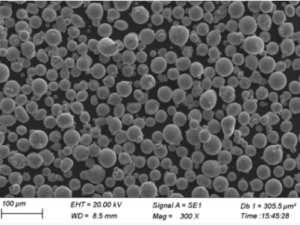
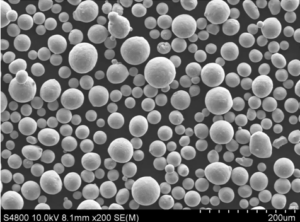
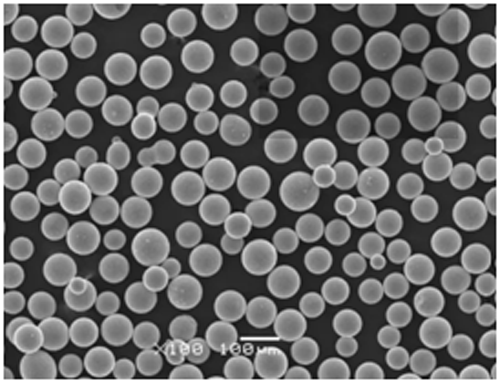
| Morphology / satellites | SEM, optical image analysis | Sphericity, agglomerates, fines behavior | Mostly spherical, low defect population |
| Oxygen / moisture | Inert gas fusion, controlled moisture test | Oxide burden and storage sensitivity | Tight maximum limit by application |
| Flow and bulk density | Hall flowmeter, apparent/tap density tests | Recoating and packing consistency | Lot-to-lot variation controlled |
Gas Atomization and Powder Cleanliness
For aluminum AM powders, gas atomization is the dominant industrial route because it can produce fine, spherical particles with the flow characteristics needed for bed-based processes. Inert-gas control, melt cleanliness, and rapid powder collection are all important for limiting oxidation. Some suppliers may pair gas atomization with classification and de-dusting practices tailored to AM rather than general PM use.
In technical terms, the most important result is not simply a beautiful SEM image. It is a reproducible powder that spreads well, absorbs energy consistently, and responds predictably to post-build treatment.
Why Aluminium 2024 Powder Needs Tighter Process Control
Compared with silicon-rich aluminum AM grades, 2024 can be less forgiving in solidification. Copper-rich chemistry can increase susceptibility to hot cracking if the process window is not well tuned. That means users should expect closer attention to scan strategy, support design, preheating, and stress-relief sequence than with some easier aluminum powders.
For teams building qualification plans, NIST additive manufacturing measurement resources are useful because they connect powder characteristics to process consistency and part validation. Broader metallurgical background on precipitation hardening, heat treatment, and aluminum performance can also be found through ASM materials engineering publications.
Heat Treatment, Reuse, and Traceability
A 2024-family powder program does not end at the printer. The final property set often depends heavily on post-build thermal treatment, densification route, machining allowance, and inspection plan. Reused powder should be monitored for oxygen pickup, morphology shift, and changes in fine-particle fraction, especially when builds are frequent.
This is where lot-to-lot consistency becomes a practical purchasing criterion. Strong single-lot properties are useful, but production stability depends on repeatable feedstock behavior across batches, packaging lots, and storage intervals.
Why Choose Truer as Your Supplier
When selecting a supplier for Aluminium 2024 powder, buyers usually look for three things: clear alloy control, process-relevant powder data, and enough manufacturing context to support qualification work. A supplier that understands only chemical analysis may not be enough for AM users who also need guidance on particle shape, PSD selection, and downstream route compatibility.
Shanghai Truer Technology is relevant here because its work spans powder-making equipment, AM-related process integration, and a broad spherical metal powder portfolio rather than a single material niche. Its adjacent offerings in copper alloy powder products also matter for engineering teams comparing conductivity-focused alloys against strength-focused aluminum systems.
From a technical evaluation standpoint, the more useful question is not whether a supplier claims premium quality, but whether the supplier can describe the powder in the language engineers actually use: morphology, lot control, PSD range, oxygen level, packaging condition, and target process compatibility. A neutral view of that broader manufacturing scope appears in the Truer company background, which helps procurement teams understand capability fit.
Ordering Guide and Support
Ordering Aluminium 2024 powder efficiently starts with a complete application description. The same nominal alloy can be supplied in different particle-size windows and packaging formats depending on whether the buyer is running LPBF trials, powder metallurgy compaction, or coarser-powder deposition work. An incomplete RFQ often leads to delays because the supplier has to clarify not only chemistry, but also process intent.
It also helps to separate development orders from production orders. Development buys usually emphasize small quantities, samples, and data review, while production orders focus more on repeatability, documentation, and change control.
Typical ordering framework for Aluminium 2024 powder
| Paketleme | Typical MOQ Tier | Teslim Süresi | Sample Policy | Tipik Kullanım |
|---|---|---|---|---|
| 500 g bottle | Lab evaluation | 1-2 weeks typical | Paid sample, basic COA | Early parameter screening |
| 1 kg sealed can | R&D qualification | 1-3 weeks typical | Sample available with PSD data | LPBF coupon builds |
| 5 kg moisture-controlled pack | Pilot production | 2-4 weeks typical | Retained sample recommended | Prototype series and validation |
| 20 kg+ industrial lot | Production supply | 4-8 weeks typical | Batch approval route advised | Recurring manufacturing demand |
What to Put in a Powder RFQ
A useful RFQ for Aluminium 2024 powder should specify:
- Intended process route
- Target particle-size distribution
- Expected heat treatment or post-processing path
- Chemistry tolerance and oxygen requirement
- Packaging format and annual consumption estimate
These details reduce back-and-forth and make the quotation technically meaningful. Where a program requires sample coordination or more specific powder discussion, the most direct route is the technical inquiry page so the request can include process details from the start.
Şirketimiz
Shanghai Truer Technology Co., Ltd. was established in 2009 and created its additive manufacturing business in 2019. The company focuses on integrating 3D-printing powder-making equipment and services with metal powders for engineering applications. Its core technologies include Selective Electron Beam Melting equipment, Plasma Rotating Electrode Process powder-making equipment, and gas atomization-related capability. The powder portfolio includes TiNi, TiTa, TiAl, TiNbZr, CoCrMo, and spherical nickel-based, cobalt-based, titanium-based, copper-based, aluminum-based, and stainless steel powders for processes such as SLM, SEBM, DED, laser cladding, powder metallurgy, MIM, HIP, cold or hot spraying, welding, and coating across sectors including 3C electronics, hand tools, remote control cars, medical, aerospace, and nuclear power.
SSS
Q1. Is Aluminium 2024 powder good for 3D printing?
It can be, but it is not the easiest aluminum powder to print. Aluminium 2024 powder is generally chosen when higher structural strength justifies tighter process control, especially in LPBF or related routes. Users should expect more sensitivity to cracking and heat-treatment strategy than with silicon-rich aluminum powders.
Q2. How does Aluminium 2024 powder compare with AlSi10Mg powder?
2024 usually offers a more strength-focused metallurgy, while AlSi10Mg is commonly preferred for easier printability and broader commercial AM experience. If the design is structurally demanding and weight-sensitive, 2024 may be attractive. If the priority is robust printing with lower qualification risk, AlSi10Mg is often simpler.
Q3. What particle size is typical for Aluminium 2024 powder in LPBF?
A fine distribution such as 15-45 µm or 15-53 µm is common for laser powder bed fusion. The right size depends on layer thickness, recoater type, and machine parameter set. Buyers should match the PSD to the validated build strategy rather than selecting by price alone.
Q4. Does Aluminium 2024 powder need heat treatment after printing?
In many cases, yes. Because 2024 is a heat-treatable Al-Cu-Mg alloy, the final balance of strength and ductility often depends on stress relief, solution treatment, aging, or another controlled thermal cycle. The exact schedule depends on the build route and target properties.
Q5. Is Aluminium 2024 powder corrosion resistant?
It has usable corrosion performance, but corrosion resistance is not the main reason engineers choose it. Compared with some other aluminum families, especially those favored for marine or general atmospheric exposure, 2024 is more often selected for strength than for corrosion leadership. Protective finishing may be needed depending on service conditions.
Q6. What should buyers check on a certificate of analysis for Aluminium 2024 powder?
At minimum, the COA should include alloy chemistry, particle-size distribution, oxygen level, and density or flow data. For serious AM qualification, morphology information, lot traceability, and packaging condition are also important. The most valuable COA is the one that supports the exact process route the buyer plans to use.