Hızlı Cevap
Gas atomized spherical pure iron powder is a high-purity ferrous feedstock made by disintegrating molten iron with high-pressure gas so the droplets solidify into near-spherical particles. For additive manufacturing, it is chosen when users need good flowability, consistent powder spreading, high packing density, and low alloy complexity. In practical terms, it fits applications that value magnetic performance, controlled sintering behavior, soft-magnetic response, and cost-effective iron-based part development more than the elevated corrosion resistance of stainless grades or the high-temperature strength of nickel alloys.
What Is gas atomized spherical pure iron powder?
Gas atomized spherical pure iron powder belongs to the broader family of spherical metal AM powders used in powder bed fusion, directed energy deposition, metal injection molding, thermal spray, and powder metallurgy. The term combines three ideas: “pure iron” refers to an iron chemistry with very low residual alloying additions; “spherical” describes the morphology; and “gas atomized” describes the production route that creates that morphology.
Historically, iron powder has been available in reduced, electrolytic, water-atomized, and gas-atomized forms. Each route serves a different industrial need. Water-atomized iron powder is common in conventional press-and-sinter PM because it is cost-effective and irregularly shaped, while gas atomization is preferred when smoother particle shape, narrower process windows, and improved powder flow are required for advanced manufacturing.
The “why” behind this material is straightforward. Pure or near-pure iron offers a baseline ferrous chemistry with predictable magnetic behavior, relatively high ductility in the unalloyed state, and broad usefulness as a matrix or development material. Once that chemistry is converted into a spherical powder, it becomes much more suitable for layer-wise processing. That matters in systems defined by additive manufacturing terminology, where repeatable recoating, layer density, and powder recyclability affect final part quality.
Compared with stainless steel or alloyed tool steels, pure iron has less inherent corrosion resistance and lower hardenability. Compared with cobalt- or nickel-based systems, it is far less alloy-complex and often more economical. For engineering teams evaluating a new ferrous process chain, gas atomized spherical pure iron powder is often the cleanest place to study beam interaction, densification, shrinkage, and magnetic performance before moving to more specialized iron-based alloys.
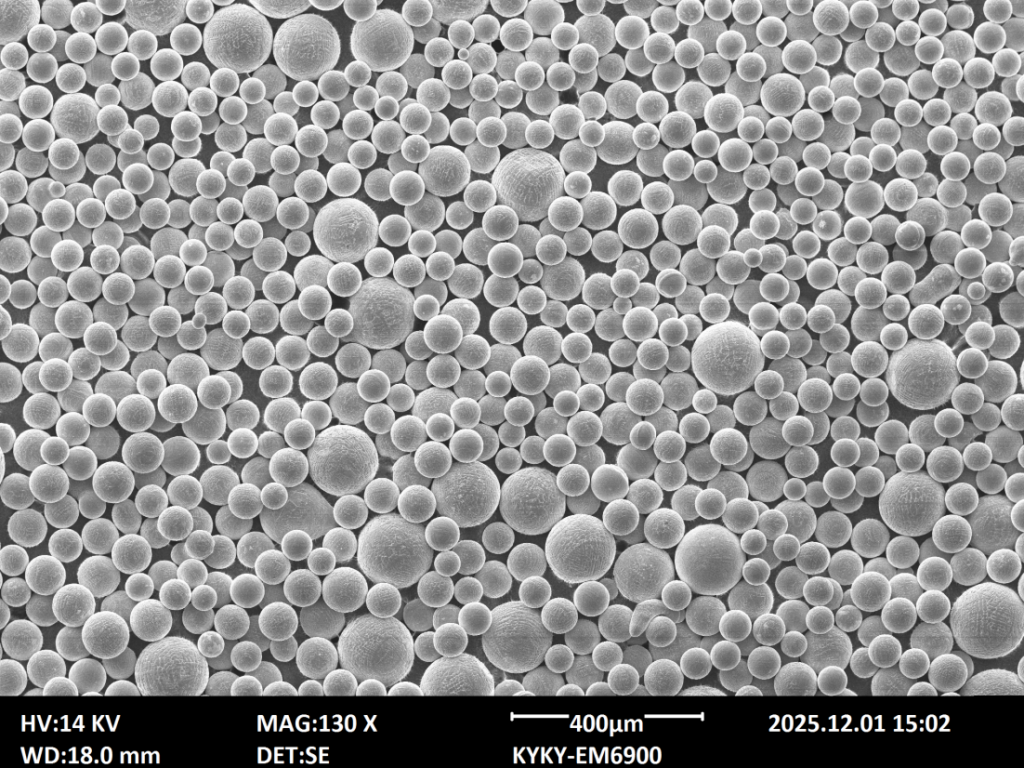
In powder-based manufacturing, particle shape is not a cosmetic detail; it is a process variable that influences flow, spreadability, apparent density, and ultimately part consistency.
How Gas Atomization Changes Iron Powder Performance
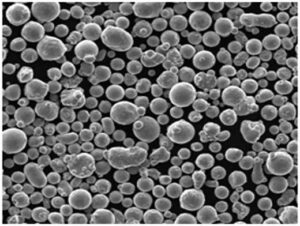
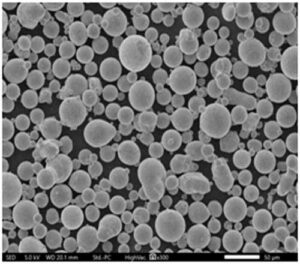
In gas atomization, molten iron flows through a nozzle and is broken into droplets by inert gas jets. Surface tension drives those droplets toward a spherical shape before they solidify. The result is lower inter-particle friction than irregular powder, which generally improves hopper discharge, recoater behavior, and die filling.
Sphericity also increases bulk packing efficiency. In many AM and PM applications, that translates into more stable layer formation and more uniform green or deposited density. Fewer satellites and fewer elongated particles further reduce the risk of poor flow or inconsistent feeding.
Pure Iron Versus Iron Alloys
Pure iron is not a substitute for every ferrous AM feedstock. If the end-use part requires corrosion resistance, a stainless steel powder range is often the more suitable option. If the component must carry heat efficiently, some designers may compare it with a copper alloy powder selection. Pure iron stands out when the design goal centers on magnetic behavior, sintering response, metallurgical simplicity, or low-alloy ferrous research.
Chemical Composition and Material Grade
In commercial practice, gas atomized spherical pure iron powder is usually specified by chemistry limits rather than by a single globally universal AM grade designation. Buyers commonly request high Fe balance with tight controls on carbon, oxygen, sulfur, phosphorus, and residual metallic impurities. That is important because minor elements influence compressibility, magnetic losses, oxide level, laser absorptivity, and sintering response.
A useful way to think about the material is as commercially pure iron powder produced to purchaser-defined AM or PM requirements. There may not be a single one-to-one crosswalk between every regional standard, but procurement documents often reference testing methods and nearest recognized purity conventions. Standards bodies such as ASTM materials standards are more often used for characterization methods than for a dedicated universal “pure iron AM powder” chemistry grade.
| Öğe | Tipik ağırlık% | Common Limit/Range | Approximate Grade or Cross-Reference |
|---|---|---|---|
| Fe | balance, typically 99.5–99.9 | remainder | Commercially pure iron powder; purchaser specification |
| C | 0.01–0.05 | ≤0.05 typical | Controlled as residual carbon for soft-magnetic and AM uses |
| O | 0.03–0.20 | depends on PSD and process | Often specified by AM/PM internal quality plan rather than grade name |
| Si | ≤0.05 | ≤0.10 typical | Residual element limit; not intentionally alloyed |
| Mn | ≤0.05 | ≤0.10 typical | Residual element limit; low-alloy target |
| S | ≤0.01 | ≤0.02 typical | Purity-critical impurity control |
| P | ≤0.01 | ≤0.02 typical | Purity-critical impurity control |
| ASTM / AMS / GB / ISO / DIN reference | - | - | Usually “nearest commercial-pure iron” reference plus test-method standards; exact one-to-one AM equivalent may not exist |
Why Chemistry Control Matters
Even very small chemistry changes can alter powder and part behavior. Carbon affects strength, phase evolution, and hardness. Oxygen influences surface oxide thickness and can reduce ductility or raise magnetic losses if it becomes excessive. Sulfur and phosphorus are typically minimized because they are undesirable impurities in most high-quality iron powders.
Grade Language Buyers Commonly Use
Instead of asking only for “pure iron powder,” industrial buyers often specify the following in a purchase document:
- nominal purity target for iron balance
- impurity ceiling for C, O, S, and P
- particle size range
- flowability and density targets
- intended process such as SLM, DED, MIM, PM, or thermal spray
- acceptable testing methods for incoming inspection
That approach is more practical than relying on a single grade name, because the same iron chemistry may be packaged in very different PSD bands for different equipment platforms.
Teknik Özellikler
Technical data for gas atomized iron powder should always be read as application-specific. A powder optimized for laser powder bed fusion will not necessarily match one intended for laser cladding or hot isostatic pressing. Even when chemistry is similar, the PSD window, fines fraction, oxygen level, and flow behavior may differ substantially.
The properties below represent common commercial targets for katkılı üretim tozu and adjacent powder-processing routes. Exact values depend on atomization parameters, classification cuts, deoxidation practice, and storage history.
| Typical PSD Range | Typical Use Case | Görünür Yoğunluk (g/cm³) | Tap Density (g/cm³) | Hall Flow (s/50 g) | Oxygen Content (wt%) | Küresellik |
|---|---|---|---|---|---|---|
| 15–45 µm | Fine LPBF development | 4.2–4.8 | 4.8–5.4 | 16–24 | 0.05–0.18 | ≥0.90 typical |
| 15–53 µm | General LPBF / binder-based use | 4.3–4.9 | 4.9–5.5 | 15–22 | 0.05–0.16 | ≥0.90 typical |
| 45–105 µm | DED / laser cladding | 4.5–5.1 | 5.1–5.8 | 13–20 | 0.04–0.14 | ≥0.92 typical |
| 53–150 µm | Thermal spray / coarse DED | 4.6–5.2 | 5.2–5.9 | 12–18 | 0.04–0.12 | ≥0.92 typical |
| 20–63 µm | MIM / specialty PM | 4.3–4.8 | 4.9–5.4 | 15–23 | 0.05–0.17 | ≥0.90 typical |
Particle Size Distribution and Process Fit
For laser powder bed fusion, users generally prefer a finer cut that promotes thin, uniform layers. However, extremely fine powder can elevate oxygen pickup and reduce flowability. For DED, spray, or cladding, a coarser PSD is often more suitable because it feeds more reliably through nozzles and powder delivery systems.
Density, Flow, and Sphericity
Apparent density and tap density are practical indicators of how efficiently the powder packs before and during processing. Hall flow provides a quick comparative measure of how easily powder passes through a calibrated funnel. While these values do not alone predict printability, they help screen lots before machine trials.
For particle sizing and powder characterization, buyers often reference methods maintained by organizations such as NIST materials measurement resources. Internally, many manufacturers also track circularity, aspect ratio, and satellite fraction by image analysis because two powders with similar Hall flow can still behave differently in a recoating environment.
Oxygen Control in Spherical Pure Iron Powder
Oxygen deserves special attention in iron powder. Fine particles carry a larger surface-area-to-volume ratio, so they tend to show higher oxygen than coarser cuts. Excessive oxidation can hurt densification and magnetic performance, which is why inert handling, sealed packaging, and disciplined recycling protocols are as important as the initial atomization step.
Applications Across Industries
Because pure iron is both metallurgically simple and broadly useful, its application range is wider than many assume. It is used not only in experimental AM builds but also in powder metallurgy, coating, joining, and magnetic component development. The right question is less “Can it be used?” and more “Which process and property set justify using pure iron instead of an alloyed alternative?”
| Endüstri | Typical Part | Primary Requirement | AM/PM Process |
|---|---|---|---|
| Research and development | process coupons, parameter blocks, benchmark geometries | baseline ferrous behavior | LPBF / SEBM / DED |
| Yumuşak manyetik bileşenler | magnetic cores, flux concentrators, electromagnetic fixtures | magnetic response, low alloy complexity | LPBF / PM / MIM |
| Thermal spray and repair | bond layers, build-up coatings, functional ferrous deposits | deposit efficiency, machinability | laser cladding / spraying |
| Tooling and fixtures | sacrificial tools, jigs, workholding features | cost control, machinability | DED / binder-based routes / PM |
| Automotive and motors | prototype ferrous inserts, magnetic test pieces | cost-effective development | LPBF / MIM / PM |
| Education and laboratories | teaching specimens, powder behavior studies | process transparency, reproducibility | multiple AM platforms |
Additive Manufacturing Development Material
Pure iron is frequently selected as a development feedstock because it removes some of the confounding effects created by complex alloy systems. Process engineers can study melt pool behavior, powder spreading, porosity response, and recycling effects without simultaneously managing precipitation hardening or multi-element segregation.
Soft-Magnetic and Electromagnetic Uses
When the application values magnetization behavior more than corrosion resistance, pure iron can be attractive. Low-alloy chemistry supports soft-magnetic functionality, although final performance still depends on porosity, texture, impurity level, and any post-build heat treatment. That makes gas atomized spherical pure iron powder relevant for research into magnetic architectures that are difficult to produce by conventional subtractive methods.
Coating, Cladding, and Hybrid Manufacturing
Coarser particle cuts are often suitable for DED, laser cladding, or hybrid repair operations. Pure iron deposits can serve as intermediate layers, build-up material, or functional surfaces where the design intent does not require a highly alloyed chemistry. In those cases, feed consistency and oxygen control remain important, but the acceptable PSD and flow window may be broader than in powder bed fusion.
Comparison With Other Metal Powder Families
Pure iron competes with several neighboring powder families depending on the design goal. Where biocompatibility and strength-to-weight ratio matter, a titanium alloy powder portfolio is more appropriate. Where wear resistance at elevated temperature matters, users may turn to a cobalt alloy powder lineup. Pure iron remains most compelling when ferrous simplicity, magnetic behavior, or economical process exploration are the priority.
Manufacturing and Quality Assurance
High-quality iron powder is defined not only by chemistry but also by process stability and verification discipline. Gas atomization offers a strong balance of scalability, morphology, and cost, but end-use performance still depends on classification, de-gassing, sieving, contamination control, and storage.
A robust quality plan for gas atomized spherical pure iron powder typically covers melt chemistry, atomization atmosphere, particle size classification, morphology inspection, gas content analysis, and lot traceability. For AM uses especially, powder performance must be stable over time, not merely compliant in a single certificate snapshot.
| Powder Route / QA Focus | Main Advantage | Sınırlama | Typical Fit for Pure Iron |
|---|---|---|---|
| Gas Atomization (GA) | scalable production, good sphericity, broad PSD control | oxygen control must be managed carefully | best general-purpose route for AM, PM, and cladding |
| Plazma Dönen Elektrot Prosesi (PREP) | very high sphericity, low satellites | higher cost, less common for pure iron commodity volumes | premium spherical powders, more often for reactive alloys |
| Vacuum Induction Gas Atomization (VIGA) | cleaner melt environment, impurity control | higher equipment complexity and cost | high-purity specialty iron and alloy powders |
| Incoming chemistry test | verifies Fe balance and residual elements | does not alone predict flow or printability | essential for every lot |
| PSD and morphology test | confirms size cut and particle shape | may miss hidden contamination | essential for process matching |
| Flow/density and gas analysis | practical handling and oxide indicators | must be interpreted with process context | key release criteria for AM lots |
Key QA Tests for Iron AM Powder
Manufacturers commonly verify:
- chemical composition by combustion and spectrometric methods
- oxygen, nitrogen, and hydrogen content
- laser diffraction or sieve-based PSD
- Hall flow, apparent density, and tap density
- morphology by microscopy or image analysis
- contamination from foreign particles or oversized material
- moisture-sensitive packaging integrity
Why GA Is Usually the Preferred Route
Compared with reduced or water-atomized powder, GA creates a morphology better aligned with automated powder delivery and thin-layer spreading. Compared with PREP, it generally offers a more practical economics profile for commercially meaningful volumes. That combination explains why gas atomization is often the preferred route when buyers request high-flow spherical iron powder rather than irregular PM-grade iron.
Powder Reuse and Lot Consistency
Many AM users want to know whether iron powder can be recycled after a build. The answer is yes, but within a controlled protocol. Oxygen pickup, fines enrichment, spatter contamination, and PSD drift must all be monitored. Lot-to-lot consistency therefore depends not just on initial manufacturing, but also on how users sieve, blend, and store reclaimed material.
For the technical meaning of additive manufacturing process families, the ASM overview of additive manufacturing provides useful context for how powder properties tie into downstream process behavior.
Why Choose Truer as Your Supplier
Supplier selection in AM powder is rarely about chemistry alone. Buyers typically evaluate whether a supplier understands the relationship between powder production, machine compatibility, inspection data, and end-use process chains. That is particularly important for pure iron, where morphology and cleanliness often matter as much as nominal Fe percentage.
Shanghai Truer Technology operates across both powder and equipment contexts. That matters because the requirements for SEBM, SLM, DED, PM, and spray are not identical, and a technically capable supplier should know how to align PSD, sphericity, and packaging with the intended route. A supplier familiar with multiple metal systems can also help users benchmark pure iron against alternative feedstocks when a project evolves from baseline ferrous trials to higher-performance materials.
Truer’s broader catalog includes nickel-based, cobalt-based, titanium-based, copper-based, aluminum-based, and stainless spherical metal powders. That cross-material experience is useful when customers need a neutral technical comparison rather than a one-grade recommendation. It also supports transition planning when a prototype starts in pure iron and later migrates into a corrosion-resistant, wear-resistant, or lightweight alloy family.
What Matters Most in Supplier Evaluation
When qualifying a powder supplier, engineers commonly look for:
- clear chemistry windows and impurity controls
- lot traceability and consistent certificates
- PSD options tailored to the intended process
- packaging that limits oxygen and moisture pickup
- willingness to provide sampling and technical discussion
- understanding of both powder production and end-use manufacturing
A technically grounded supplier should also be able to explain why one PSD cut may be suitable for cladding but not for LPBF, or why a lower oxygen target may justify longer lead time.
Ordering Guide and Support
Ordering pure iron AM powder becomes much smoother when the inquiry includes process type, PSD target, purity requirements, annual demand, and whether the use case is R&D or production. Buyers who provide only a material name often receive a technically incomplete quote, because spherical pure iron powder can be supplied in several very different forms.
The table below reflects a practical ordering structure rather than a universal rule. Lead time varies with stock level, sieve cut, testing scope, and packaging format.
| Packaging Format | Typical MOQ Tier | Typical Lead Time | Sample Policy |
|---|---|---|---|
| 500 g bottle | lab evaluation | 1–2 weeks if available | paid or complimentary depending on project stage |
| 1 kg bottle | R&D entry lot | 1-3 hafta | commonly offered for machine trials |
| 5 kg sealed can | pilot build lot | 2–4 hafta | sample retained for COA confirmation |
| 10–25 kg drum | pre-production lot | 3-5 hafta | representative sample from production lot |
| 50 kg+ batch supply | recurring production | 4–8 weeks typical | qualification samples usually supplied first |
Information to Include in an RFQ
A good request for quotation should specify:
- desired chemistry limits
- particle size range
- target process: LPBF, SEBM, DED, MIM, PM, or spray
- quantity and package size
- certificate requirements
- whether recycled powder blending is allowed in your line
- shipping destination and regulatory needs
Samples, Documentation, and Technical Support
For engineering projects, it is normal to request a certificate of analysis, PSD report, and basic flow/density data with the sample lot. If the project is moving toward repeat production, users should also discuss reserve sample retention, lot numbering, and re-order equivalence before full qualification.
For direct project communication, Truer provides a dedicated technical contact channel where buyers can align powder requirements with process needs. Company background and manufacturing context are also available through the corporate profile overview.
Şirketimiz
Shanghai Truer Technology Co., Ltd. was established in 2009 and created its additive manufacturing business in 2019. The company focuses on integrating 3D printing powder-making equipment and services with high-quality metal powders for engineering applications. Its technical scope includes Selective Electron Beam Melting equipment, Plasma Rotating Electrode Process powder-making equipment, and gas atomization-related capabilities. Truer’s powder portfolio includes TiNi, TiTa, TiAl, TiNbZr, CoCrMo, and spherical powders across nickel-, cobalt-, titanium-, copper-, aluminum-, and stainless steel systems. The company also participates in a joint innovation center for metal 3D printing with laboratories and industry experts, and serves application routes such as SLM, SEBM, DED, laser cladding, PM, MIM, HIP, spraying, welding, and coating for sectors including 3C electronics, hand tools, remote-control cars, medical, aerospace, and nuclear power.
SSS
Q1. Is gas atomized spherical pure iron powder the same as water-atomized iron powder?
No. Gas-atomized powder is typically much more spherical, flows better, and is better suited to additive manufacturing or precision feeding applications. Water-atomized iron powder is usually more irregular in shape and is often favored for conventional press-and-sinter PM where lower cost is the main driver.
Q2. What particle size is best for gas atomized spherical pure iron powder in LPBF?
A common starting point is (15\text{–}53\ \mu m), although some systems prefer narrower cuts such as (15\text{–}45\ \mu m). The ideal range depends on recoater design, layer thickness, laser settings, and the balance you want between flowability and resolution.
Q3. Can gas atomized spherical pure iron powder be used for magnetic components?
Yes, that is one of its most interesting use cases. Because the chemistry is minimally alloyed, it can support soft-magnetic development, but final magnetic performance still depends heavily on porosity, impurity control, and post-processing.
Q4. Why does oxygen content matter so much in pure iron AM powder?
Iron powder readily forms surface oxides, especially when the PSD is fine and the surface area is high. Excess oxygen can hurt densification, ductility, and magnetic behavior, so inert production, packaging, and powder handling are all important.
Q5. Is pure iron powder a better choice than stainless steel powder for additive manufacturing?
It depends on the application. Pure iron can be advantageous for magnetic response, metallurgical simplicity, and baseline ferrous process development, while stainless steel is usually preferred for corrosion resistance and broader structural service environments.
Q6. What should buyers ask for when ordering gas atomized spherical pure iron powder?
At minimum, buyers should specify chemistry limits, particle size range, intended process, package size, and documentation needs. It is also wise to ask about flowability, apparent density, oxygen level, and whether the supplier can maintain lot-to-lot consistency for future repeat orders.