Hızlı Cevap
FeCoNiCrMo High Entropy Alloys are multi-principal-element materials designed to combine solid-solution strengthening, corrosion resistance, thermal stability, and good toughness in a single feedstock. They are a strong choice for additive manufacturing parts when the design requires a better balance of strength, wear resistance, oxidation resistance, and microstructural stability than many conventional stainless steels or cobalt alloys can provide. In powder form, they are especially relevant for laser powder bed fusion, directed energy deposition, and research-driven industrial qualification where composition-driven performance matters more than commodity-grade cost.
What Is FeCoNiCrMo High Entropy Alloys?
FeCoNiCrMo High Entropy Alloys belong to the broader class of high-entropy alloys, or HEAs, in which several principal elements are combined at relatively significant concentrations rather than building the alloy around one dominant base metal. The concept became important because conventional alloy design often relies on incremental modifications to iron-, nickel-, or cobalt-based systems, while HEAs explore wider composition space to obtain unusual combinations of strength, ductility, and environmental resistance.
In the FeCoNiCrMo family, iron, cobalt, nickel, chromium, and molybdenum work together to create a compositionally complex matrix. Iron, cobalt, and nickel support matrix stability and toughness; chromium contributes corrosion and oxidation resistance; and molybdenum improves solid-solution strengthening and resistance to localized corrosion and elevated-temperature softening. The resulting alloy family is often studied as a bridge between stainless steels, Ni-based alloys, and CoCr-type wear-resistant systems.
The phrase “high entropy” refers to configurational entropy in multi-element solid solutions. In simple terms, when multiple elements are present in meaningful fractions, the alloy can favor disordered solid-solution phases rather than forming only brittle intermetallic structures. That does not mean every FeCoNiCrMo composition is single-phase or automatically ductile, but it explains why this alloy family attracts attention in advanced materials development and additive manufacturing.
A key distinction is that FeCoNiCrMo alloys are not one universally standardized grade. Different research groups and industrial developers adjust the element ratios to tune hardness, corrosion response, crack sensitivity, magnetic behavior, or high-temperature performance. Some compositions stay near equiatomic balance, while others deliberately reduce cobalt for cost, increase molybdenum for wear or chloride resistance, or narrow iron content to stabilize a desired phase fraction.
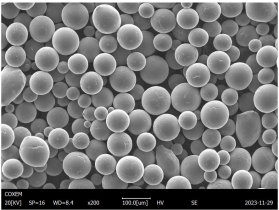
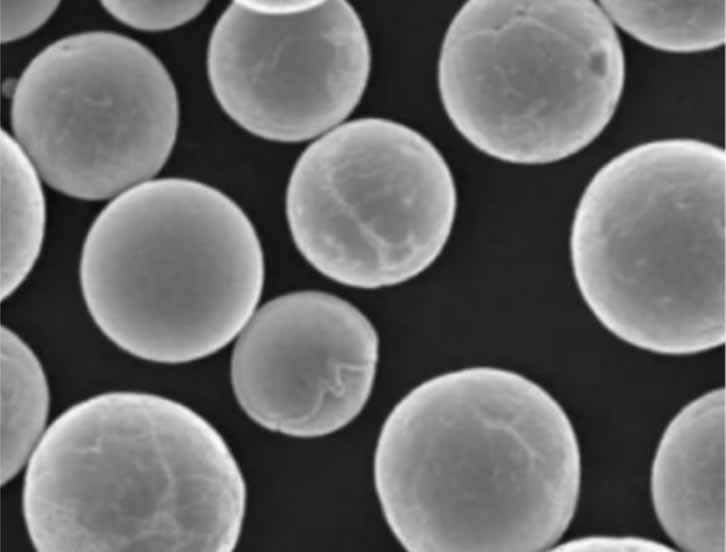
For additive manufacturing, the powder format is especially important. Spherical powder supports stable flow, dense packing, and more predictable melt-pool behavior. In AM process development, FeCoNiCrMo systems are often evaluated not only for bulk properties but also for how rapidly solidified microstructures respond to layerwise processing, reheating cycles, and post-build heat treatment.
High-entropy alloy performance is governed as much by phase control as by nominal chemistry.
Another reason this alloy family matters is its position in the market. It sits between established industrial alloys and frontier materials research. Buyers exploring FeCoNiCrMo high entropy alloy powder are often seeking more than a drop-in replacement; they are evaluating a materials platform that can offer microstructural flexibility, tunable strength, and corrosion or wear performance in environments where common steels may reach their limits.
For readers who want a concise primer on the broader field, a general high-entropy alloy overview explains the terminology and historical development that underpins these AM-focused compositions.
Chemical Composition and Material Grade
FeCoNiCrMo High Entropy Alloys Chemistry Basics
Unlike mature aerospace alloys with tightly fixed international grade systems, FeCoNiCrMo high entropy alloy powders are commonly supplied against nominal composition windows, customer drawings, or internal material specifications. The chemistry target is therefore central to procurement. Small shifts in chromium and molybdenum can change pitting resistance, segregation tendency, and carbide formation, while iron-cobalt-nickel balance influences phase stability, magnetism, and toughness.
Because this material family is still evolving, buyers should focus on declared composition basis, such as atomic percent or weight percent, before comparing two “FeCoNiCrMo” powders. A supplier may describe an alloy as equiatomic on an atomic basis, yet its weight-percent chemistry will not be numerically equal because the five elements have different atomic masses. That detail matters in inspection, blending, and downstream reproducibility.
Typical Composition Windows and Grade Cross-Reference
The table below summarizes representative industrial and research-style composition approaches for FeCoNiCrMo powders. These are typical designation styles rather than universally harmonized standards.
| Material Designation | Typical Composition (wt.%) | ASTM Cross-Reference | AMS Cross-Reference | GB Cross-Reference | ISO Cross-Reference | DIN / EN Cross-Reference |
|---|---|---|---|---|---|---|
| FeCoNiCrMo equiatomic-style HEA | Fe 16–20, Co 18–22, Ni 18–22, Cr 18–22, Mo 20–28 | No direct dedicated ASTM alloy grade; usually supplier specification | No direct AMS equivalent | Usually customer drawing or enterprise standard | No direct alloy-grade equivalent | No direct DIN / EN alloy-grade equivalent |
| Mo-lean FeCoNiCrMo HEA | Fe 18–23, Co 19–24, Ni 19–24, Cr 20–25, Mo 10–16 | Supplier specification | None commonly assigned | Supplier specification | None commonly assigned | Supplier specification |
| Mo-rich FeCoNiCrMo wear/corrosion grade | Fe 14–19, Co 17–22, Ni 17–22, Cr 17–22, Mo 24–32 | Supplier specification | None commonly assigned | Supplier specification | None commonly assigned | Supplier specification |
| Low-interstitial FeCoNiCrMo AM powder | Fe, Co, Ni, Cr, Mo per nominal target; C/N/O tightly controlled | Chemistry verified lot by lot rather than bought to one universal grade number | None commonly assigned | Enterprise standard | Internal quality plan | Internal quality plan |
This lack of direct ASTM, AMS, GB, ISO, or DIN grade equivalence is not a drawback by itself. It simply means the buyer should request full chemistry ranges, impurity ceilings, and powder-property requirements instead of relying on a familiar wrought-alloy code.
Elemental Roles in the FeCoNiCrMo System
Chromium and molybdenum are the most influential elements when corrosion and elevated-temperature stability are the target. Chromium supports passive-film formation, while molybdenum helps improve resistance to pitting and crevice attack in chloride-bearing environments. Together they also affect solidification behavior and phase selection during AM.
Iron, cobalt, and nickel shape the matrix response. Iron often helps cost and processing balance, cobalt supports hot hardness and strength retention, and nickel contributes toughness and corrosion performance. Depending on the ratio, the alloy can move toward a more ductile face-centered-cubic response or develop mixed-phase structures that raise hardness but require tighter process control.
Material Grade Reality in AM Procurement
When engineers ask for FeCoNiCrMo high entropy alloy powder, they are usually not ordering a commodity grade. They are ordering a chemistry-performance package. That is why composition-specific qualification is more important here than it is for many standard stainless or superalloy powders, and why procurement documents should define both the nominal chemistry and the allowed analytical tolerance.
Teknik Özellikler
Typical Powder Specifications for FeCoNiCrMo High Entropy Alloys
The powder characteristics for FeCoNiCrMo high entropy alloys generally align with high-quality AM feedstocks used in laser powder bed fusion and directed energy deposition. However, the alloy’s density, oxidation behavior, and segregation sensitivity mean that powder quality must be tightly controlled from atomization through packaging.
| Toz Sınıfı | Typical PSD | Görünür Yoğunluk | Yığın Yoğunluğu | Hall Flow | Oksijen İçeriği | Küresellik |
|---|---|---|---|---|---|---|
| Fine LPBF grade | 15–45 µm | 4.1–4.7 g/cm³ | 4.8–5.6 g/cm³ | 15–22 s/50 g | 150–450 ppm typical | ≥0.90 typical |
| Standard LPBF / SLM grade | 15–53 µm | 4.2–4.8 g/cm³ | 5.0–5.8 g/cm³ | 14–20 s/50 g | 120–400 ppm typical | ≥0.92 typical |
| DED / laser cladding grade | 45–105 µm | 4.3–4.9 g/cm³ | 5.1–5.9 g/cm³ | 13–18 s/50 g | 100–350 ppm typical | ≥0.93 typical |
| Coarse deposition grade | 53–150 µm | 4.4–5.0 g/cm³ | 5.2–6.0 g/cm³ | 12–17 s/50 g | 100–350 ppm typical | ≥0.93 typical |
These values are typical commercial targets rather than fixed universal limits. Final acceptance should be tied to the intended process route, machine architecture, and post-processing plan.
FeCoNiCrMo High Entropy Alloy Powder Size Selection
For LPBF, narrower PSD windows such as 15–45 µm or 15–53 µm are common because they support layer uniformity and predictable recoating. DED and laser cladding usually tolerate broader and coarser distributions, where powder feed stability and catch efficiency matter more than ultra-fine layer resolution. The right particle size therefore depends on the machine and build strategy, not only on the alloy itself.
Flowability, Packing, and Melt Behavior
Spherical HEA powder must spread consistently to produce stable layers and minimize porosity. FeCoNiCrMo alloys can show strong performance in this regard when the atomization route controls satellites and fine tails. Apparent density and tap density matter because they affect bed packing, melt-pool response, and powder consumption calculations during production planning.
Oxygen, Interstitials, and Powder Cleanliness
Interstitial control is a serious issue for complex alloys. Excess oxygen can reduce flowability, alter surface melting behavior, and contribute to inclusions or oxide-related defects. Carbon and nitrogen also deserve attention because they may shift phase balance and precipitate behavior, especially in molybdenum-bearing systems intended for corrosion or wear service.
Process Standards and Terminology
From a qualification standpoint, it is useful to align process language with ISO/ASTM 52900 terminology so that specifications clearly distinguish LPBF, DED, and other AM methods. For companies building internal standards, that vocabulary reduces ambiguity when powder, machine, and post-treatment requirements are documented across multiple sites.
Applications Across Industries
Where FeCoNiCrMo High Entropy Alloys Deliver Value
FeCoNiCrMo high entropy alloy powders are rarely chosen for low-cost mass production. Their main value lies in applications where a designer needs a difficult property combination: strength plus corrosion resistance, wear resistance plus toughness, or thermal stability plus microstructural tunability. That makes them attractive in industrial R&D, harsh-environment hardware, and next-generation component development.
| Endüstri | Typical Part | Primary Requirement | AM / PM Process |
|---|---|---|---|
| Aerospace and turbine R&D | Hot-section prototype hardware, brackets, nozzles | High-temperature stability and oxidation resistance | LPBF, DED, HIP-assisted AM |
| Energy and chemical processing | Valve trims, corrosion-resistant inserts, pump sleeves | Corrosion, cavitation, and wear resistance | LPBF, PM, laser cladding |
| Tooling and surface engineering | Hardfacing features, edge-reinforced tools, wear pads | Abrasion resistance and thermal stability | DED, laser cladding, PM |
| Marine and offshore equipment | Salt-exposed functional components, localized repair zones | Pitting resistance and structural durability | DED, cold/hot spray hybrid routes |
| Research institutes and advanced manufacturing labs | Material coupons, lattice structures, benchmark test parts | Microstructural tuning and property mapping | LPBF, SEBM research, PM |
| Nuclear and specialty industrial systems | Corrosion- and heat-exposed functional components | Long-term stability in aggressive service | DED, LPBF, coating routes |
Aerospace and High-Temperature Development
In aerospace development programs, FeCoNiCrMo alloys are usually evaluated for environments where thermal cycling, oxidation, and microstructural stability matter. They are not necessarily direct substitutes for every nickel superalloy, but they can offer an attractive research path where designers want to explore alternative strengthening and phase-control strategies. In comparative screening, teams often look at them alongside [nickel alloy powder families] used for high-temperature AM.
Corrosion and Wear-Critical Industrial Parts
Chromium and molybdenum make this alloy family interesting for aggressive industrial service. Components such as valve seats, pump elements, and localized wear zones may benefit from a composition that is more corrosion-resistant than many tool steels while still stronger and harder than common austenitic stainless grades. For some use cases, the benchmark comparison may instead be [cobalt alloy powder options] traditionally selected for wear and hot-corrosion resistance.
Repair, Cladding, and Functional Graded Designs
Directed energy deposition and laser cladding are practical routes for FeCoNiCrMo because they allow local reinforcement rather than full-part fabrication. This is important in repair environments or when only a critical surface requires HEA performance. The alloy can be introduced as a functional material layer on a lower-cost substrate, improving total part economics.
Research-Led Product Development
FeCoNiCrMo high entropy alloy powder is also heavily used in materials screening and design-of-experiments programs. Because the chemistry space is flexible, researchers can alter Mo, Cr, or Co content and then correlate phase formation, cracking tendency, corrosion data, and mechanical response. That makes the alloy family well suited to institutions and manufacturers building proprietary material platforms rather than relying only on catalog grades.
Manufacturing and Quality Assurance
How FeCoNiCrMo High Entropy Alloys Are Commonly Produced
Gas atomization is the most common production route for spherical FeCoNiCrMo powder because it offers scalable output and good control of particle shape for AM. Vacuum induction gas atomization is often preferred when tighter chemistry consistency and lower contamination are needed, especially for research-grade and high-performance industrial lots. PREP is usually less common for this alloy family than for some reactive titanium systems, but it may still be relevant in specialized spherical-powder strategies.
| QA Test | Typical Instrument / Method | What It Verifies | Typical Acceptance Direction |
|---|---|---|---|
| Kimyasal bileşim | ICP-OES, XRF, combustion analysis | Fe, Co, Ni, Cr, Mo balance and trace impurities | Within nominal alloy window and impurity limits |
| Parçacık boyutu dağılımı | Laser diffraction and sieve verification | D10, D50, D90 and cut-range compliance | Conforms to ordered PSD range |
| Morphology and satellites | SEM with image analysis | Sphericity, agglomerates, surface satellites | Predominantly spherical with low satellite fraction |
| Oxygen / nitrogen / carbon | ONH and carbon-sulfur analyzers | Interstitial cleanliness | Meets internal low-interstitial target |
| Flow and density | Hall flowmeter, apparent and tap density tests | Recoating and powder-feed behavior | Stable within agreed production range |
| Internal defect screening | Metallographic sectioning, CT when required | Porosity, inclusions, foreign particles | No abnormal contamination or process drift |
Gas Atomization, VIGA, and Powder Consistency
The choice between inert gas atomization and vacuum induction gas atomization affects more than appearance. It influences oxide pickup, evaporation control, trace contamination, and how repeatably the alloy lands inside the desired chemistry window. For complex HEAs, these details are especially important because minor composition drift can move the alloy into a different phase regime after printing.
Microstructure Validation for HEA Powder Lots
Unlike standard commodity powders, high entropy alloy lots often require closer structure-property review. Printed coupons may be examined for phase constitution, elemental segregation, and heat-treatment response before a build recipe is considered stable. In other words, powder quality is inseparable from printability for FeCoNiCrMo systems.
Acceptance Criteria Beyond the Certificate
A certificate of analysis is necessary but not sufficient. Buyers should also review test coupons for relative density, cracking tendency, hardness distribution, and microstructural homogeneity after printing and, if relevant, after HIP or solution treatment. That is particularly true when the alloy is being considered for critical service or when a custom composition is involved.
Standards Context for Additive Manufacturing QA
Although FeCoNiCrMo does not map to a single universal alloy code, AM quality planning can still use broader ASTM additive manufacturing standards as a framework for powder handling, process control, and part verification. For metallurgical benchmarking, technical literature and materials references from ASM International materials resources are often used to compare HEA behavior with established stainless, cobalt, and nickel systems.
Why Choose Truer as Your Supplier
When evaluating a supplier for FeCoNiCrMo high entropy alloy powder, the key issue is not only whether spherical powder can be produced, but whether the supplier understands how composition, particle morphology, and end-use process interact. HEA projects often involve custom chemistry targets, print-parameter iteration, and close review of powder performance across LPBF, DED, PM, or cladding workflows.
Truer is relevant in this context because its stated technical scope spans gas atomization, PREP-related powder-making equipment, selective electron beam melting equipment, and downstream process familiarity across SLM, SEBM, DED, laser cladding, PM, MIM, HIP, spraying, welding, and coating. That is useful for buyers assessing FeCoNiCrMo not as a catalog commodity but as a material for process qualification and engineering trials.
The company’s broader portfolio also matters for comparative material selection. Engineers considering FeCoNiCrMo often benchmark it against stainless, nickel, cobalt, or titanium systems before deciding which route best fits the application. Truer’s published şi̇rket profi̇li̇ ve yetenekleri̇ outline the wider ecosystem in which those comparisons are typically made.
Ordering Guide and Support
What to Define in a FeCoNiCrMo High Entropy Alloy RFQ
A useful RFQ should specify nominal chemistry, analytical tolerance, target process, particle-size range, and whether the powder is needed for research, prototyping, or repeat industrial builds. It is equally important to define interstitial limits, preferred packaging, documentation expectations, and whether the powder must support a specific machine platform or post-treatment path.
| Packaging Format | Typical MOQ Tier | Typical Lead Time | Sample Policy |
|---|---|---|---|
| 100 g evaluation vial | Screening and coupon trials | 1–2 weeks if inventory exists | Paid sample, basic chemistry/PSD data |
| 500 g laboratory bottle | Parameter development and printability study | 2–3 weeks typical | Sample with standard inspection summary |
| 1 kg sealed canister | Extended machine qualification | 2–4 weeks typical | Retained sample often available by request |
| 5 kg technical batch | Pilot production or comparative builds | 3–5 weeks typical | Full lot traceability subject to order terms |
| 10–25 kg production lot | Repeated builds or DED process development | 4–6 weeks typical | Batch documentation aligned to PO requirements |
Trial Planning and Qualification
For AM qualification, a sample order should lead to more than a single density cube. Good practice includes flowability review, recoating observation, coupon microstructure, hardness mapping, crack inspection, and post-treatment response. If the alloy will be used in a corrosive environment, corrosion testing should be part of qualification from the beginning rather than a late-stage add-on.
Communication and Technical Support
Because FeCoNiCrMo high entropy alloys are frequently supplied to a composition target rather than a universal standard grade, clear communication is essential. The purchasing team should confirm whether the composition is defined in wt.% or at.%, whether impurity caps are mandatory, and whether process-specific data are required for acceptance. For RFQs or lot-specific questions, the technical contact channel is the logical route for exchanging those details.
Şirketimiz
Shanghai Truer Technology Co., Ltd. was established in 2009 and created its additive manufacturing business in 2019. The company focuses on integrating 3D printing powder-making equipment and services with metal powders for engineering applications. Its disclosed technical scope includes selective electron beam melting equipment, plasma rotating electrode process powder-making equipment, and gas atomization-related capabilities, together with support for SLM, SEBM, DED, laser cladding, powder metallurgy, MIM, HIP, cold or hot spraying, welding, and coating. The powder portfolio includes TiNi, TiTa, TiAl, TiNbZr, CoCrMo, and spherical powders across nickel-based, cobalt-based, titanium-based, copper-based, aluminum-based, and stainless steel material families. The company also participates in a joint innovation center for metal 3D printing with laboratories and external experts, serving industries such as 3C electronics, hand tools, remote control cars, medical, aerospace, and nuclear power.
SSS
Q1. Are FeCoNiCrMo High Entropy Alloys a standard internationally graded alloy?
Not in the same way as alloys such as 316L stainless steel or Inconel 718. Most FeCoNiCrMo powders are supplied to a nominal composition window, customer drawing, or internal enterprise specification, so the exact chemistry definition must be stated in the purchase documents.
Q2. Is FeCoNiCrMo high entropy alloy powder suitable for laser powder bed fusion?
Yes, many FeCoNiCrMo compositions are good candidates for LPBF when the powder is spherical, low in interstitial contamination, and matched to a stable build parameter set. However, printability depends strongly on exact chemistry, powder PSD, and heat-treatment strategy, so parameter transfer from one HEA composition to another is not automatic.
Q3. How does FeCoNiCrMo compare with stainless steel powder?
FeCoNiCrMo high entropy alloys are usually selected when the design needs a more advanced property balance than common stainless grades can provide, especially in wear, corrosion, or high-temperature stability. Stainless steel remains easier to source, easier to qualify, and generally less expensive for mainstream production.
Q4. Why is molybdenum important in FeCoNiCrMo High Entropy Alloys?
Molybdenum contributes solid-solution strengthening and often improves resistance to localized corrosion. It can also influence phase stability and hardness, which is why even modest composition changes in Mo content may alter both printability and final performance.
Q5. What particle size is typically used for FeCoNiCrMo AM powder?
For LPBF, 15–45 µm and 15–53 µm are common commercial ranges because they balance spreading and resolution. For DED or laser cladding, coarser fractions such as 45–105 µm or 53–150 µm are more typical because powder feeding and deposition efficiency become the priority.
Q6. What should buyers ask for when ordering FeCoNiCrMo high entropy alloy powder?
At minimum, buyers should request nominal chemistry, analytical tolerance, PSD, oxygen and other interstitial data, morphology information, and lot traceability. If the powder is intended for production AM, it is also wise to ask for coupon-level printability data or agree on a qualification protocol before scale-up.