Kurzantwort
Spherical pure iron powder is a high-purity iron feedstock produced in rounded particles for additive manufacturing, powder metallurgy, and related thermal processes. It is chosen for 3D printing when engineers need good powder flow, reliable layer spreading, predictable sintering or melting behavior, and a simple ferrous chemistry that supports magnetic, structural, or process-development work. In most cases, it is the right choice when manufacturability, controllable impurity levels, and baseline iron performance matter more than the corrosion resistance of stainless steels or the high-temperature capability of nickel superalloys. (nist.gov)
What Is spherical pure iron powder?
Spherical pure iron powder is part of the broader family of metal powders used in additive manufacturing, metal injection molding, hot isostatic pressing, thermal spraying, and conventional powder metallurgy. The word “spherical” refers to particle shape, “pure iron” refers to an iron chemistry with minimal intentional alloying, and the full term usually implies a feedstock designed for controlled flow, packing, and downstream consolidation rather than a low-cost irregular PM powder. In AM terminology, it is a metallic feedstock intended for layer-wise or directed deposition processes built by successive addition of material. (iso.org)
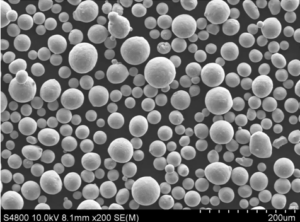
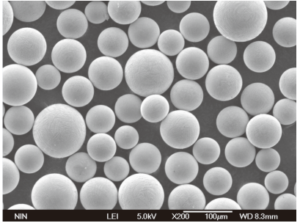
Pure iron powders have existed for decades in reduced, electrolytic, water-atomized, and gas-atomized forms. What distinguishes spherical grades is their near-spherical morphology, which generally lowers inter-particle friction and improves spreading compared with irregular particles. That difference matters in powder-bed systems, where recoating uniformity and layer density directly influence part consistency, and in directed processes, where stable powder feeding affects deposition efficiency. (nist.gov)
From a metallurgical perspective, pure iron offers a useful baseline material. It is simpler than stainless steels, tool steels, or superalloys, so it is often selected when engineers want to study beam interaction, oxidation control, density development, or magnetic response without the added complexity of multiple alloying elements. This is one reason it continues to appear in R&D environments even when final production parts may later transition to more specialized materials. (dl.asminternational.org)
For readers comparing material families, a stainless steel powder range is usually better for corrosion-critical service, while a copper alloy powder portfolio is more relevant when thermal or electrical conductivity dominates the design brief. Spherical pure iron powder stands out where magnetic properties, ferrous simplicity, machinability, or economical feedstock evaluation are the primary decision drivers.
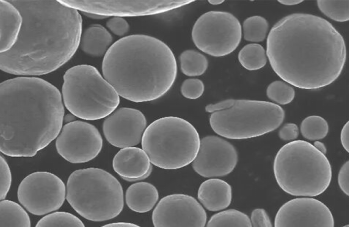
In powder-based manufacturing, particle shape is a process variable, not just a visual characteristic.
Why Particle Shape Matters in Spherical Pure Iron Powder
Powder morphology affects flowability, apparent density, tap density, and powder bed quality. NIST specifically identifies flowability, spreadability, particle size distribution, and powder layer density as important characteristics for commercial AM powders, which is why spherical morphology is valued in practice rather than treated as a cosmetic specification. (nist.gov)
Pure Iron vs. Alloyed Ferrous Powders
Pure iron is not automatically “better” than alloyed ferrous powders; it is more specialized. If a component needs corrosion resistance, precipitation hardening, or high hardness after heat treatment, an alloyed steel will typically outperform pure iron. However, when the objective is magnetic response, straightforward metallurgy, or a controllable starting point for process development, high-purity iron feedstock often has clear advantages.
Chemical Composition and Material Grade
Unlike titanium or cobalt alloys that are often ordered by a well-recognized AM grade, spherical pure iron powder is commonly purchased through purchaser-defined chemistry limits and test requirements. In real procurement practice, the powder is usually described by iron balance, residual element limits, oxygen ceiling, particle size range, and intended process. That is because there is no single universal global AM designation that fully captures every commercial pure iron powder configuration used across LPBF, DED, PM, MIM, and spray routes. (store.astm.org)
Standards still matter, but mostly as characterization references rather than as a single one-size-fits-all alloy identity. ASTM Committee B09 covers metal powders and powder products, while ISO and ASTM jointly maintain AM vocabulary standards that help buyers and suppliers align on process language. In other words, chemistry control for spherical pure iron powder is usually managed through technical data sheets, certificates of analysis, and agreed incoming-inspection methods rather than through one dominant aerospace-style material code. (astm.org)
| Constituent / Reference | Typisch wt% | Common Commercial Limit | Grade Cross-Reference / Notes |
|---|---|---|---|
| Fe | Balance, typically 99.5–99.9 | Restbetrag | Commercially pure iron; buyer-defined AM or PM specification |
| C | 0.01–0.05 | ≤0.05 typical | Residual carbon controlled for magnetic behavior and process repeatability |
| O | 0.03–0.20 | Depends on PSD and route | Usually specified by particle size class and intended process |
| Si | ≤0.05 | ≤0.10 typical | Residual element; not intentionally alloyed in pure iron grades |
| Mn | ≤0.05 | ≤0.10 typical | Residual element; often minimized for purity-focused applications |
| S | ≤0.01 | ≤0.02 typical | Impurity control for quality-critical powder supply |
| P | ≤0.01 | ≤0.02 typical | Impurity control for ductility and magnetic consistency |
| ASTM / AMS / GB / ISO / DIN | - | - | Commonly ordered as commercially pure iron with agreed test-method references rather than a strict one-to-one equivalent grade |
Chemistry Priorities for Spherical Pure Iron Powder
The most important chemistry controls are usually carbon, oxygen, sulfur, phosphorus, and unwanted metallic contamination. Carbon can influence hardness and phase behavior after processing; oxygen affects oxide content, ductility, and magnetic losses; sulfur and phosphorus are undesirable for many demanding applications because they can impair performance even at low levels. These limits become more important as part density, fine feature resolution, or magnetic efficiency becomes more critical. (store.astm.org)
How Buyers Usually Specify Material Grade
Purchasers often define spherical pure iron powder using a technical specification that lists purity target, PSD, morphology expectations, oxygen limit, and test methods. That approach is more useful than relying on a simplified grade label, because the same base chemistry may be offered in very different sieve cuts for LPBF, DED, MIM, or thermal spray. ASTM guides for metal AM powder characterization reflect this reality by emphasizing property measurement rather than assuming one powder descriptor is sufficient. (store.astm.org)
Typical Documentation Package
A serious industrial order usually asks for a certificate of analysis, PSD report, flow data, density values, and packaging identification by lot. In qualification projects, users may also request retained samples, test method references such as Hall flow and tap density standards, and confirmation that the release data come from the same production lot being shipped. ASTM powder standards, including characterization methods used across Committee B09 work, are frequently part of that discussion. (astm.org)
Technische Daten
Technical specifications for spherical pure iron powder are process-dependent. Fine LPBF powder is not interchangeable with coarse DED or spray powder, even if the chemistry is essentially identical. The most useful data sheet therefore combines particle size distribution with density, flow, oxygen, and morphology metrics so that the powder can be matched to the machine and process window. (nist.gov)
| Typical PSD Range | Typical Process Fit | Scheinbare Dichte (g/cm³) | Tap Density (g/cm³) | Hall Flow (s/50 g) | Oxygen Content (wt%) | Sphärizität |
|---|---|---|---|---|---|---|
| 15–45 µm | Fine LPBF development | 4.2–4.8 | 4.8–5.4 | 16–24 | 0.06–0.18 | ≥0.90 typical |
| 15–53 µm | General LPBF / binder-assisted routes | 4.3–4.9 | 4.9–5.5 | 15–22 | 0.05–0.16 | ≥0.90 typical |
| 20–63 µm | MIM / specialty PM | 4.3–4.8 | 4.9–5.4 | 15–23 | 0.05–0.17 | ≥0.90 typical |
| 45–105 µm | DED / laser cladding | 4.5–5.1 | 5.1–5.8 | 13–20 | 0.04–0.14 | ≥0.92 typical |
| 53–150 µm | Thermal spray / coarse DED | 4.6–5.2 | 5.2–5.9 | 12–18 | 0.04–0.12 | ≥0.92 typical |
Particle Size Distribution and AM Powder Performance
Particle size distribution is usually the first screening parameter because it controls how the powder spreads and feeds. Finer distributions support thinner layers and potentially higher feature resolution in powder bed systems, but they also increase specific surface area and may elevate oxygen pickup or reduce flowability. Coarser cuts are typically easier to feed through blown-powder nozzles and therefore fit DED, laser cladding, and some spray processes better. (nist.gov)
Flow, Density, and Packing Behavior
Apparent density and tap density indicate how efficiently a powder packs under gravity and vibration. Hall flow remains a widely used shop-floor screening tool, but ASTM work has also highlighted that traditional flow tests do not capture every aspect of powder behavior relevant to AM, especially when spreadability and layer formation are the real concerns. That is why many users supplement Hall flow with image analysis, rheology, or in-house recoating trials before releasing a lot to production. (astm.org)
Oxygen Content and Surface Condition
Oxygen is a particularly sensitive variable for iron powder because surface oxidation increases as particle size gets smaller. Fine spherical pure iron powder can still perform well, but it requires disciplined handling, inert packaging, and a controlled reuse protocol if it is to maintain consistent printing or sintering behavior. For many buyers, oxygen level is not a secondary number on the certificate; it is one of the main release criteria. (nist.gov)
Typical Test Methods Used for Spherical Powder
The most common property checks include sieve or laser-based PSD, Hall flow, tap density, apparent density, and gas analysis. ASTM references commonly used in powder workflows include methods associated with flow rate, sieve analysis, sampling, apparent density, and tap density, while NIST’s powder metrology work underscores the importance of relating those measurements to actual AM performance. (astm.org)
Applications Across Industries
Spherical pure iron powder serves a broader market than many non-specialists expect. Although it is often discussed in the context of metal 3D printing, it is also relevant to PM, MIM, cladding, thermal spray, and process-development programs where a simple iron chemistry is preferable to a fully alloyed system. Its application value comes from combining ferrous familiarity with powder characteristics suited to automated handling and controlled consolidation. (dl.asminternational.org)
| Industrie | Typical Part | Main Functional Need | AM / PM Process |
|---|---|---|---|
| R&D and process development | coupons, density cubes, benchmark geometries | baseline ferrous process mapping | LPBF / SEBM / DED |
| Soft magnetic systems | flux concentrators, magnetic cores, test fixtures | magnetic response with low alloy complexity | LPBF / PM / MIM |
| Prototyping in der Automobilindustrie | inserts, magnetic test pieces, simple ferrous prototypes | economical iteration and machining | LPBF / PM / MIM |
| Coating and repair | build-up layers, bond layers, functional deposits | deposition efficiency and simple metallurgy | laser cladding / spraying |
| Education and laboratory work | training parts, powder behavior studies | transparent metallurgy and repeatability | multiple AM platforms |
| Tooling and fixtures | sacrificial tools, jigs, holders | cost control and post-process machinability | DED / PM / binder-based routes |
Spherical Pure Iron Powder in Additive Manufacturing
For AM users, one of the biggest advantages of spherical pure iron powder is the ability to separate process effects from alloy effects. Engineers can study scan strategy, layer thickness, shielding atmosphere, or post-build heat treatment without simultaneously managing a complex precipitation or martensitic response. This makes pure iron attractive for parameter development, machine qualification, and academic or industrial process studies. (dl.asminternational.org)
Magnetic and Electromagnetic Applications
Pure iron remains relevant wherever soft-magnetic behavior matters. Depending on porosity, grain structure, impurity control, and thermal history, it can support experimental magnetic components that are difficult to fabricate by conventional subtractive methods. In these use cases, the combination of high purity and spherical morphology helps by improving powder handling first, then enabling more consistent consolidated structures. (nist.gov)
Powder Metallurgy and MIM Uses
Not all spherical pure iron powder goes into 3D printers. It can also be used in feedstocks for powder metallurgy and metal injection molding when better packing, cleaner filling, or a more controlled shape factor is desired than irregular powders can offer. Conventional PM still often favors water-atomized powder on cost grounds, but spherical material can be justified where higher consistency or specialized part geometry makes it worthwhile. (astm.org)
When to Choose Other Powder Families
Material selection always depends on service conditions. If the design needs oxidation resistance at high temperature, a nickel superalloy powder selection is usually a stronger fit. If low density is the main requirement, an aluminum alloy powder catalog is more appropriate. Spherical pure iron powder is strongest in use cases that reward magnetic simplicity, ferrous process transparency, and manageable raw-material cost.
Manufacturing and Quality Assurance
The performance of spherical pure iron powder is shaped as much by process discipline as by nominal chemistry. Manufacturers must control melting, atomization, classification, fines removal, contamination risk, moisture exposure, and packaging integrity. For buyers, that means a good certificate is important, but it is not a substitute for understanding how the powder was made and how each lot was verified. (nist.gov)
| Route or QA Check | Main Advantage | Main Limitation | Typical Acceptance Focus |
|---|---|---|---|
| Gas Atomization (GA) | scalable, commercially efficient, good sphericity | oxide control must be managed carefully | PSD, oxygen, morphology, flow |
| PREP | very high sphericity, low satellite fraction | higher cost, less common for commodity iron volumes | premium morphology and cleanliness |
| VIGA | cleaner melt environment and stronger impurity control | more complex equipment and cost structure | chemistry stability and lower contamination risk |
| PSD verification | confirms process-matched size cut | does not alone predict spreadability | within agreed sieve or laser range |
| Fließ- und Dichtheitsprüfung | practical handling indicators | incomplete predictor of printability by themselves | consistent Hall flow, apparent and tap density |
| Gas analysis and microscopy | tracks oxidation and particle condition | requires disciplined sampling | oxygen limit, low foreign particle content |
Gas Atomization vs. PREP vs. VIGA
Gas atomization is generally the most practical route for commercial spherical pure iron powder because it combines good particle shape with scalable output. PREP can produce very high-quality spherical powder, but it is more often justified for specialty alloy systems where premium sphericity and low satellite fraction offset the cost. VIGA is attractive when melt cleanliness and chemistry control are the top priorities, particularly for powders where impurity control is central to performance. (dl.asminternational.org)
Quality Assurance for Spherical Pure Iron Powder
Incoming and release testing typically cover chemistry, oxygen, PSD, flow, apparent density, tap density, and microscopic morphology. ASTM standards relevant to sampling, flow, sieve analysis, apparent density, and tap density provide a common language for these checks, while NIST research supports the idea that spreadability and powder-bed behavior should also be considered when qualifying AM feedstock. That combination of standard tests plus application-focused evaluation is the best path to powder flowability control in production. (store.astm.org)
Reuse, Storage, and Contamination Control
Spherical pure iron powder can often be reused, but only under a monitored protocol. Reclaimed powder should be screened for PSD drift, spatter contamination, and oxygen pickup, especially in fine LPBF size cuts. Sealed packaging, low-humidity handling, and lot segregation are basic but important practices when the goal is lot-to-lot consistency rather than one-off successful prints. (nist.gov)
For readers who want a general overview of powder-based AM process families, the ASM additive manufacturing handbook overview is a useful technical reference, and the NIST powder metrology laboratory explains why flowability, spreadability, and particle size matter to part quality.
Why Choose Truer as Your Supplier
For spherical pure iron powder, supplier choice is less about slogans and more about technical alignment. Buyers usually need a partner that understands how chemistry, particle shape, PSD, oxygen control, and packaging interact with the end process, whether that process is SLM, SEBM, DED, PM, or spray. That is especially important for pure iron because performance depends heavily on morphology and cleanliness, not just iron balance on the certificate.
Shanghai Truer Technology’s relevance in this area comes from its combined involvement in metal powder making equipment, spherical powder supply, and additive manufacturing process support. A supplier operating across equipment and materials is often better positioned to discuss why one sieve cut may suit powder bed fusion while another is more appropriate for cladding or MIM, or why oxygen control may need to tighten as particle size becomes finer. That practical understanding matters when users move from laboratory trials to qualification-scale purchasing.
Truer also works across multiple alloy families, which helps in comparative material selection. If a project begins with pure iron but later needs corrosion resistance, wear performance, or lower density, adjacent options such as cobalt alloy powder products or a titanium powder product range become relevant without changing supplier context. In that sense, pure iron can serve as a baseline material in a broader engineering workflow rather than an isolated purchasing decision.
What Buyers Should Evaluate
Engineers typically compare suppliers on six technical points: chemistry control, morphology consistency, process-specific PSD, packaging discipline, documentation quality, and responsiveness during qualification. A capable supplier should be able to explain not only what the numbers are, but why those numbers matter for the process the customer actually plans to run.
Ordering Guide and Support
Ordering spherical pure iron powder efficiently starts with a precise RFQ. The material name alone is not enough, because different applications may require very different PSD windows, oxygen ceilings, test packages, and packaging sizes. The most accurate quote usually comes when the buyer specifies process route, intended use, and certificate requirements up front. (store.astm.org)
| Verpackungsformat | Typical MOQ Tier | Typical Lead Time | Sample Policy |
|---|---|---|---|
| 500 g bottle | laboratory evaluation | 1–2 weeks if stocked | small paid or project-based sample |
| 1 kg bottle | entry R&D lot | 1–3 weeks typical | common for machine trial screening |
| 5 kg sealed can | pilot build lot | 2–4 weeks typical | sample linked to issued COA |
| 10–25 kg drum | pre-production order | 3–5 weeks typical | retained reference sample often available |
| 50 kg+ batch supply | recurring production demand | 4–8 weeks typical | qualification sample normally supplied first |
Information to Include in an RFQ
A well-structured inquiry should include target chemistry, particle size range, process type, annual or trial quantity, packaging preference, and required documentation. If the powder will be reused in a closed loop, it is also helpful to discuss acceptable recycle practice, oxygen control, and whether the user needs matching data from virgin and reclaimed powder streams.
Samples, Documentation, and Technical Support
Most technical buyers request a sample with chemistry and PSD data before full qualification. As projects become more serious, the discussion usually expands to lot traceability, retained samples, and agreed release tests. For direct project communication, Truer provides a technical inquiry page, while company background and manufacturing scope can be reviewed through the Truer company profile.
Lead Time Variables
Lead time depends on stock status, sieve classification, testing scope, packaging format, and export preparation. Fine AM powder with tight oxygen control generally requires more handling discipline than coarse spray-grade powder, so buyers should expect lead times to vary by specification even when the base chemistry is the same.
Unser Unternehmen
Shanghai Truer Technology Co., Ltd. was established in 2009 and created its additive manufacturing business in 2019. The company focuses on integrating 3D printing powder-making equipment and services with high-quality 3D printing powders for engineering applications of additive manufacturing. Its core technologies include Selective Electron Beam Melting equipment, Plasma Rotating Electrode Process powder-making equipment, and gas atomization capabilities relevant to spherical metal powders. The powder portfolio includes TiNi, TiTa, TiAl, TiNbZr, and CoCrMo, as well as nickel-based, cobalt-based, titanium-based, copper-based, aluminum-based, and stainless steel spherical metal powders. The company also operates within a joint innovation center for metal 3D printing with laboratories and industry experts, and serves applications spanning SLM, SEBM, DED, laser cladding, PM, MIM, HIP, cold and hot spraying, welding, and coating in industries such as 3C electronics, hand tools, remote-control cars, medical, aerospace, and nuclear power.
FAQ
Q1. Is spherical pure iron powder better than irregular iron powder for additive manufacturing?
In most AM processes, yes. Spherical powder generally spreads more evenly, packs more efficiently, and feeds more consistently than irregular powder. Those traits make it more suitable for controlled layer formation and automated powder handling.
Q2. What particle size is usually used for spherical pure iron powder in LPBF?
A common starting range is (15\text{–}53\ \mu m), with some systems preferring (15\text{–}45\ \mu m). The best choice depends on layer thickness, recoater design, energy input, and the balance between feature resolution and flowability.
Q3. Can spherical pure iron powder be used for magnetic components?
Yes, that is one of its most interesting applications. Because the chemistry is minimally alloyed, it can support soft-magnetic designs, although final magnetic behavior still depends heavily on density, porosity, oxygen level, and thermal history.
Q4. Why is oxygen content important in spherical pure iron powder?
Iron powder oxidizes readily, especially in fine particle-size cuts with high surface area. Excess oxygen can reduce ductility, complicate densification, and negatively affect magnetic performance, so oxygen control is a core quality parameter rather than a minor detail.
Q5. Is spherical pure iron powder the same as gas atomized pure iron powder?
Not always, but there is strong overlap. Many spherical pure iron powders are produced by gas atomization, though other routes such as PREP can also create highly spherical particles. Buyers should confirm the production method if morphology, satellite content, or cost structure matters to the application.
Q6. What should buyers ask for when purchasing spherical pure iron powder?
They should ask for chemistry limits, PSD, oxygen content, Hall flow, apparent density, tap density, packaging format, and certificate details. It is also wise to discuss the intended process, because a powder that works well for LPBF may not be the best choice for DED, PM, or thermal spray.
Learn more:
- Additive Manufacturing Powder Metrology Laboratory | NIST
- ISO/ASTM 52900:2021 – Additive manufacturing — General principles — Fundamentals and vocabulary
- Additive Manufacturing Processes | Handbooks | ASM Digital Library
- F3049 Standard Guide for Characterizing Properties of Metal Powders Used for Additive Manufacturing Processes
- Committee B09 on Metal Powders and Metal Powder Products | ASTM
- 100 BARR HARBOR DRIVE
- WK98365 – New Test Methods for Measuring the Flow Properties of Metal Powders using the Revolution Powder Analyzer | ASTM
- B215 Standard Practices for Sampling Metal Powders