Kurzantwort
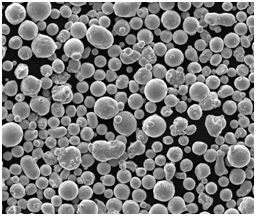
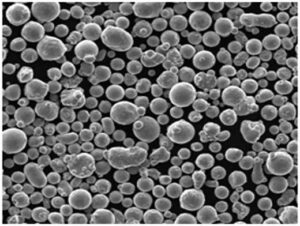
FeNiMo soft magnetic powder is an iron-nickel-molybdenum alloy powder engineered for magnetic components that need high permeability, low coercivity, and reliable powder processing behavior. In additive manufacturing and powder metallurgy, high-quality material is defined less by the nominal Fe-Ni-Mo ratio alone than by spherical morphology, narrow particle-size distribution, low oxygen, and stable annealed magnetic performance. It is usually the right choice when designers need complex geometries for electromagnetic parts, but still want softer magnetic behavior than conventional structural steels can deliver.
What Is FeNiMo soft magnetic powder?
FeNiMo soft magnetic powder belongs to the broader family of soft magnetic alloys designed to magnetize and demagnetize easily under an applied field. Unlike hard magnetic materials, which are used for permanent magnets, soft magnetic alloys are selected for cores, inductive components, magnetic circuits, shielding parts, and other applications where low hysteresis loss and fast magnetic response matter more than remanence.
Within that family, Fe-Ni-Mo compositions are best understood as molybdenum-modified iron-nickel alloys. The nickel content raises magnetic permeability and helps reduce magnetostriction in many compositions, while molybdenum is often introduced to tune resistivity, domain-wall motion, workability, and annealed magnetic behavior. In practical supply terms, FeNiMo soft magnetic powder is usually discussed as a pre-alloyed spherical powder for additive manufacturing, metal injection molding, hot isostatic pressing, or conventional powder metallurgy routes.
Why FeNiMo Exists as a Distinct Soft Magnetic Material
Pure iron has excellent saturation but is not always ideal when low coercivity, stable permeability, dimensional complexity, and tight loss control are needed. Silicon steels perform well in many laminations, but they are not a universal answer for three-dimensional magnetic geometries or powder-based net-shape manufacturing. Iron-nickel systems fill that gap by offering better soft magnetic response in applications where shape freedom or precision control of inductance is more important than raw flux density alone.
Molybdenum is the part of the chemistry that makes FeNiMo especially interesting. It can contribute to microstructural refinement and influence the final annealed condition, which is where many magnetic components reach their intended property set. In powder form, that makes FeNiMo a material of interest not only to magnetic designers, but also to engineers working on near-net-shape manufacturing of compact, intricate parts.
Relationship to Permalloy and Mo-Permalloy Families
Many buyers first encounter FeNiMo soft magnetic powder through the language of permalloy or molybdenum permalloy. In industry usage, those terms usually refer to high-nickel iron alloys, sometimes with molybdenum additions, known for very high magnetic permeability after the correct thermal treatment. FeNiMo powder does not always map one-to-one onto a single legacy wrought grade, but it clearly sits in that same technical lineage.
That distinction matters in procurement. A magnetic alloy may look similar on a chemistry sheet yet behave very differently after compaction, printing, sintering, and annealing. For that reason, FeNiMo soft magnetic powder should be evaluated as a process-sensitive magnetic feedstock rather than as a simple elemental blend.
What Sets FeNiMo Apart from Structural AM Powders
The most important difference between FeNiMo soft magnetic powder and standard structural AM powders is the design objective. Stainless steel, titanium, cobalt, and nickel superalloys are usually chosen for strength, corrosion resistance, temperature capability, or wear behavior. FeNiMo is chosen for magnetic softness first, and mechanical performance second.
That shift in priorities affects everything from composition control to post-processing. A structural powder may be acceptable if it prints dense parts with good tensile strength. A magnetic powder must also preserve high magnetic permeability after build and heat treatment, while minimizing defects that raise hysteresis loss or coercive force. Surface oxidation, residual stress, grain structure, and impurity pickup therefore have an outsized effect on value.
For soft magnetic alloys, the delivered magnetic curve matters as much as the printed shape.
Chemical Composition and Material Grade
FeNiMo soft magnetic powder is not usually traded like a single commodity alloy with one globally harmonized designation. Instead, buyers encounter a family of Fe-Ni-Mo compositions tailored around magnetic targets such as initial permeability, maximum permeability, coercivity, DC bias behavior, or process compatibility. Some are closer to classic high-nickel permalloy chemistries, while others are adjusted for powder consolidation or additive manufacturing.
That is why composition should be read together with the supply condition. A wrought strip grade, a sintered PM grade, and a gas-atomized AM powder may all be described as FeNiMo, yet their acceptable impurity levels, particle morphology, and heat-treatment windows can differ substantially.
Typical FeNiMo soft magnetic powder chemistry ranges
| Alloy Variant / Supply Description | Fe (wt%) | Ni (wt%) | Mo (wt%) | Minor Elements | Typical Grade Cross-Reference |
|---|---|---|---|---|---|
| High-nickel FeNiMo nominal grade | balance | 77–81 | 3–5 | Mn, Si, C controlled to low levels | Often compared to Mo-permalloy style internal specs; no single direct ASTM unified powder grade |
| Mid-nickel FeNiMo powder for PM | balance | 45–55 | 1–4 | Mn, Si optional; residuals tightly limited | Customer drawing or internal magnetic alloy specification |
| AM-oriented pre-alloyed spherical grade | balance | 48–80 typical by design | 2–5 typical | O, C, S, P limited; trace Cu/Cr by agreement only | Supplier AM powder grade linked to application validation |
| Custom FeNiMo magnetic alloy powder | balance | project-specific | project-specific | impurity limits and annealed property targets defined by RFQ | Cross-referenced to customer, ISO, DIN, GB, or internal part standard |
The absence of a single universal grade number does not mean the material is undefined. It means buyers should specify the magnetic objective and process route rather than assuming the name alone guarantees performance. For soft magnetic alloys, the annealed magnetic curve is often more meaningful than a generic alloy label.
Reading FeNiMo Powder Chemistry Correctly
Nickel level is the first variable most engineers notice because it strongly influences permeability and alloy family identity. Higher nickel often correlates with softer magnetic behavior, especially when the alloy is heat treated correctly, but it also changes density, cost, thermal expansion, and process response. Molybdenum is usually present in smaller amounts, yet it can have a disproportionate effect on final magnetic properties and processing stability.
For that reason, the chemistry line on a certificate should be read alongside the intended magnetic condition: as-atomized, printed, stress relieved, or fully annealed. A pre-alloyed FeNiMo powder that prints dense parts may still underperform magnetically if oxygen, carbon, or sulfur are too high. That is one reason low coercivity is a system outcome, not just a composition promise.
Standards, Definitions, and Grade Mapping
There is no single catch-all international standard that defines every FeNiMo soft magnetic powder variant for AM. Instead, users typically combine internal material specifications with established test methods and terminology standards. For additive manufacturing language, the [ISO/ASTM 52900 terminology for additive manufacturing] helps align discussions around feedstock, process categories, and part qualification.
Where users need a general background on nickel-iron magnetic alloy families, the [permalloy materials overview] is a reasonable reference point. For powder test methods such as flow and apparent density, engineers often build incoming inspection plans around recognized ASTM methods rather than relying solely on supplier nomenclature.
Impurities and Why They Matter
Impurity control is unusually important in FeNiMo soft magnetic powder because interstitial elements can degrade domain-wall motion and increase core loss. Carbon can drive unwanted phase effects, oxygen can create oxide films that hurt sintering or magnetic continuity, and sulfur or phosphorus can reduce consistency in powder metallurgy processing. Even when the nominal Fe-Ni-Mo ratio is correct, contamination can shift the part away from its intended magnetic window.
That is why high-level procurement language such as “FeNiMo powder” is not enough for critical applications. Magnetic parts should be sourced using composition limits, impurity ceilings, and post-process property expectations together.
Technische Daten
Technical specifications for FeNiMo soft magnetic powder should be written from the part backward. The right particle-size range for laser powder bed fusion is not necessarily the right range for MIM feedstock, hot isostatic pressing, or magnetic PM compaction. Likewise, the optimum powder characteristics for recoating are not identical to the optimum microstructure for final magnetic loss.
A robust specification therefore balances processability and magnetic performance. Buyers typically start with particle-size distribution, apparent density, tap density, Hall flow, oxygen, and morphology, then link those feedstock measurements to green density, printed density, sintered density, and annealed magnetic data.
Typical FeNiMo soft magnetic powder specifications
| Powder Class | Typical PSD Range | Scheinbare Dichte | Zapfstellendichte | Hall Flow | Sauerstoffgehalt | Sphericity / Morphology |
|---|---|---|---|---|---|---|
| Fine LPBF grade | 15–45 µm | 4.3–5.0 g/cm³ | 5.2–6.1 g/cm³ | 14–22 s/50 g typical | ≤0.10 wt% typical | Highly spherical, low satellites |
| Standard LPBF / multi-purpose AM grade | 15–53 µm | 4.4–5.1 g/cm³ | 5.3–6.2 g/cm³ | 13–21 s/50 g typical | ≤0.12 wt% typical | Spherical, free-flowing |
| DED / cladding grade | 45–105 µm | 4.6–5.3 g/cm³ | 5.5–6.4 g/cm³ | 12–19 s/50 g typical | ≤0.12 wt% typical | Spherical to near-spherical |
| PM / HIP broad-cut grade | 53–150 µm | 4.7–5.4 g/cm³ | 5.6–6.5 g/cm³ | 12–18 s/50 g typical | ≤0.15 wt% typical | Mostly spherical or conditioned irregular blend |
These values are representative commercial targets, not universal fixed limits. Actual acceptance criteria should be tied to build trials, compaction studies, and the required magnetic properties after thermal treatment.
FeNiMo Soft Magnetic Powder for SLM, DED, and PM
Laser powder bed fusion typically benefits from a fine, narrow, highly flowable spherical cut that can form thin, uniform layers. Directed energy deposition generally uses coarser powder for stable feeding and higher deposition rates, while traditional compaction and sintering may tolerate broader size ranges if packing density and lubricant systems are optimized.
This difference is not trivial. A powder selected only for good LPBF recoating may not produce the best green compact density in conventional PM. Similarly, a compaction-oriented powder may not deliver the layer uniformity needed for additive manufacturing. That is why spherical powder morphology is important, but never the only specification that matters.
Magnetic Properties Depend on More Than Feedstock Numbers
Powder data alone cannot fully predict magnetic performance. FeNiMo soft magnetic powder is highly sensitive to the thermal and mechanical history of the finished part. Build orientation, residual stress, sintering profile, porosity, HIP cycle, and final anneal all influence permeability, coercivity, and core loss.
In many applications, designers should treat the powder specification as the first gate and the annealed BH curve as the second gate. A lot that meets PSD and flow targets but fails the final magnetic window is still not a successful material lot.
Thermal Treatment and Final Condition
Soft magnetic materials often require carefully controlled annealing to unlock their best properties. That may include stress relief after AM, high-temperature vacuum annealing after PM densification, or atmospheres chosen to limit oxidation and preserve chemistry. Grain growth can be beneficial up to a point, but uncontrolled thermal history may distort parts or reduce dimensional precision.
For FeNiMo systems, the required balance is often between density, dimensional stability, and magnetic softness. That is why process qualification should define both feedstock and final part condition from the beginning.
Applications Across Industries
FeNiMo soft magnetic powder is used where magnetic performance must be integrated with shape complexity, miniaturization, or a powder-based production route. The most compelling use cases are not always the largest parts, but the parts where electromagnetic behavior and geometry are tightly linked. In that sense, the powder is especially relevant to advanced sensors, actuators, compact inductive systems, electromagnetic shielding, and low-loss magnetic circuits.
The alloy is not a universal replacement for ferrites, silicon steels, or cobalt-iron alloys. Instead, it fits into the design space where soft magnetic response, compactness, and powder-process flexibility justify a more specialized alloy system.
Typical applications for FeNiMo soft magnetic powder
| Industrie | Typical Part | AM / PM Process | Why the Powder Is Used |
|---|---|---|---|
| Electronics and sensors | Magnetic cores, shields, pole pieces, flux guides | MIM, PM, LPBF | High permeability with complex small geometry |
| Industrielle Automatisierung | Solenoid parts, actuator elements, stator-related inserts | PM, HIP, LPBF | Soft magnetic response with repeatable shape control |
| Luft- und Raumfahrt sowie Verteidigung | Compact magnetic housings, sensor hardware, shielding components | LPBF, HIP, DED | Weight-sensitive geometry plus controlled magnetic behavior |
| Research and prototyping | Test coupons, custom inductive parts, demonstrator cores | LPBF, PM | Rapid iteration of geometry and magnetic path design |
Electronics, Inductors, and Precision Magnetic Components
Miniaturized electronics place a premium on dimensional control and electromagnetic efficiency. FeNiMo soft magnetic powder can be attractive for shield structures, flux concentrators, and custom core forms where stamped laminations are impractical. Powder routes also open opportunities for three-dimensional magnetic circuits that cannot be produced easily from sheet materials.
In these applications, the property target is usually not maximum strength. It is stable magnetic response across production lots, often after final annealing. That makes tight oxygen control and microstructural repeatability central to component quality.
Industrial Automation and Motion Control
Actuators, relays, and electromagnetic positioning devices rely on predictable magnetization under repetitive cycling. FeNiMo soft magnetic powder can support near-net-shape production of components such as armatures, pole pieces, and magnetic housings where machining from wrought stock would create cost or design penalties. Powder metallurgy is especially relevant when the part geometry is compact and production volume is moderate to high.
Designers should still compare the alloy against alternatives. In some applications, low-cost iron or Fe-Si may be adequate; in others, cobalt-rich systems or ferrites will be more appropriate. The value of FeNiMo is strongest when magnetic softness, geometry freedom, and post-process tunability matter together.
Additive Manufacturing for Specialized Magnetic Geometries
AM is particularly useful when the magnetic path itself needs to be redesigned. Internal passages for cooling, integrated mounting features, topology optimization around field lines, and part consolidation can all justify additive routes. FeNiMo soft magnetic powder makes sense in those cases because it offers a path toward soft magnetic functionality without abandoning the geometric freedom of metal AM.
When a program compares FeNiMo against more conventional AM feedstocks, adjacent categories such as [nickel alloy powder products], [copper alloy powder materials], or [stainless steel powder options] can help benchmark trade-offs in conductivity, corrosion resistance, strength, and cost. Those comparisons are valuable because FeNiMo is a specialist material, not a generic default.
Manufacturing and Quality Assurance
The route used to make FeNiMo soft magnetic powder directly influences its processability and magnetic consistency. Gas atomization is often the most practical route for pre-alloyed spherical powder because it supports controlled chemistry and scalable production. Vacuum induction gas atomization can further improve melt cleanliness and oxygen control, while PREP is more commonly associated with highly spherical reactive alloy powders and certain specialty programs.
For soft magnetic alloys, the key issue is not only morphology. The powder-making route must also minimize contamination, segregation, and microstructural variability that later interfere with sintering, printing, or annealing response.
Typical QA framework for FeNiMo soft magnetic powder
| QA Test | Typical Instrument / Method | Typical Acceptance Focus | Warum es wichtig ist |
|---|---|---|---|
| Chemische Zusammensetzung | ICP-OES / combustion analysis | Ni and Mo within target; low C, S, P | Magnetic response depends on chemistry and impurity control |
| Particle-size distribution | Laser diffraction + sieve check | Within ordered cut, controlled fines | Affects flow, packing, recoating, and compaction |
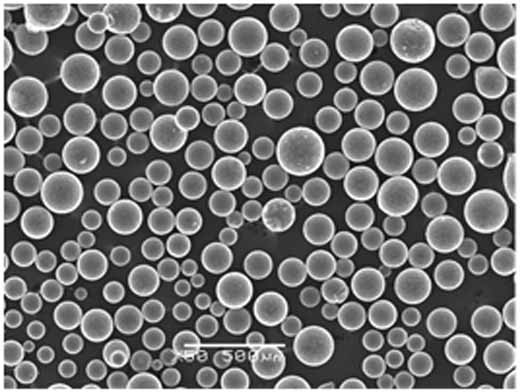
| Morphology and satellites | SEM / image analysis | Predominantly spherical, limited satellites | Improves flow consistency and packing behavior |
| Oxygen and nitrogen | Inertgasfusion | Low interstitial content, lot-specific limit | Protects soft magnetic performance and sintering response |
This kind of QA matrix should be treated as a baseline. Many programs add apparent density, tap density, Hall flow, XRD, magnetic coupon testing, and retained sample archiving.
GA, VIGA, and PREP in Context
Gas atomization is the common industrial choice because it balances throughput, powder quality, and economic practicality. VIGA becomes more attractive when a project requires especially clean chemistry, lower oxidation risk, or higher-value development lots. PREP can produce excellent particle sphericity, but it is not always the default route for every FeNiMo magnetic chemistry or particle-size target.
The manufacturing route should therefore be chosen by outcome, not by label. If the application demands ultra-consistent AM spreading, GA or VIGA may be the logical choice. If the application prioritizes spherical particle quality and the alloy format supports it, PREP may enter the discussion.
Incoming Inspection and Process Validation
A serious incoming inspection plan for FeNiMo soft magnetic powder should connect powder tests to final magnetic performance. That usually means verifying PSD, chemistry, oxygen, and morphology at receipt, then validating density, dimensional stability, and magnetic properties after the chosen process route. Without that second step, the powder may look compliant while the part does not.
For measurement frameworks in AM, the [NIST additive manufacturing measurement resources] offer useful context on feedstock-process-property relationships. Engineers seeking broader technical discussions on soft magnetic alloys and powder processing may also consult [ASM materials engineering guidance].
Powder Storage, Reuse, and Traceability
FeNiMo powders should be stored in sealed, dry conditions and handled to minimize moisture and oxygen pickup. Reuse strategies in AM should include not just sieve recovery, but also periodic checks on oxygen, fines accumulation, and morphology drift. Because magnetic performance can be sensitive to subtle chemistry and defect changes, reuse criteria should be stricter than they are for many general-purpose structural powders.
This is where lot-to-lot consistency becomes a purchasing requirement rather than a convenience. A part that passes density inspection but shows drift in coercivity or permeability can disrupt the entire device qualification path.
Why Choose Truer as Your Supplier
From a sourcing standpoint, FeNiMo soft magnetic powder should be supplied by a manufacturer or integrator that understands both powder production and the downstream AM or PM process chain. That includes composition control, spherical powder behavior, particle-size tailoring, and the interaction between feedstock quality and final part performance. It also includes the ability to discuss adjacent alloy options when the application may be better served by a different powder family.
Shanghai Truer Technology is relevant in that context because its published capability set spans additive manufacturing powder-making equipment, spherical metal powders, and multiple end-use process routes, including SLM, SEBM, DED, laser cladding, PM, MIM, HIP, spraying, welding, and coating. For a factual background on its manufacturing ecosystem and business development history, the [Truer company profile] provides the core context. In technical purchasing terms, that breadth matters because FeNiMo powder projects often sit at the boundary between materials selection, powder engineering, and process qualification.
Ordering Guide and Support
Ordering FeNiMo soft magnetic powder efficiently starts with a clear statement of the application. Buyers should specify whether the powder is intended for LPBF, DED, MIM, PM pressing, HIP, or research-scale coupon work. They should also define the target chemistry window, preferred particle-size cut, impurity limits, expected documentation, and whether final magnetic testing is part of the supply scope.
That level of detail prevents mismatches between a powder optimized for flow and a powder optimized for magnetic densification. In soft magnetic materials, the gap between “acceptable powder” and “qualified component material” can be wide if the RFQ is too generic.
Typical ordering framework for FeNiMo soft magnetic powder
| Verpackung | Typical MOQ Tier | Vorlaufzeit | Sample Policy | Typische Verwendung |
|---|---|---|---|---|
| 250 g sealed bottle | Lab trial | 1–2 weeks typical | Paid sample with basic COA | Initial chemistry and flow evaluation |
| 500 g to 1 kg inert-packed can | R&D qualification | 2–3 weeks typical | Sample lot with PSD and chemistry data | Parameter development and coupons |
| 5 kg vacuum or argon-packed container | Pilot program | 3–5 weeks typical | Retained sample recommended | Repeated builds or PM runs |
| 20 kg+ batch packaging | Pre-production | 4–8 weeks typical | Batch approval plan advised | Multi-lot validation and device-scale work |
What to Include in an RFQ
A useful RFQ for FeNiMo soft magnetic powder should include the process route, target PSD, composition target, impurity limits, part function, and planned post-processing. If magnetic properties are critical, the buyer should also define the test condition: as-built, sintered, stress relieved, or fully annealed. Without that detail, two technically different powders can appear similar in a quotation.
Where custom discussion is required, the [technical inquiry contact page] is the logical place to share machine type, target part, and documentation needs. This is especially relevant when the same project is comparing FeNiMo with conventional nickel, stainless, or copper alloy powder routes.
Unser Unternehmen
Shanghai Truer Technology Co., Ltd. was established in 2009 and created its additive manufacturing business in 2019. The company focuses on integrating 3D-printing powder-making equipment and services with 3D-printing powders for engineering applications. Its core technologies include Selective Electron Beam Melting equipment, Plasma Rotating Electrode Process powder-making equipment, and gas atomization-related capability. The company’s powder portfolio includes TiNi, TiTa, TiAl, TiNbZr, CoCrMo, and spherical nickel-based, cobalt-based, titanium-based, copper-based, aluminum-based, and stainless steel powders for use in SLM, SEBM, DED, laser cladding, powder metallurgy, MIM, HIP, cold or hot spraying, welding, and coating in industries such as 3C electronics, hand tools, remote control cars, medical, aerospace, and nuclear power.
FAQ
Q1. Is FeNiMo soft magnetic powder suitable for metal 3D printing?
Yes, FeNiMo soft magnetic powder can be suitable for metal 3D printing when the goal is to produce complex magnetic parts rather than purely structural components. The key requirement is to qualify the full route from powder to final annealed part, because AM density and residual stress can strongly affect magnetic behavior.
Q2. What magnetic properties make FeNiMo soft magnetic powder attractive?
Engineers usually choose it for high permeability, low coercivity, and stable soft magnetic response after proper heat treatment. The exact values depend on nickel level, molybdenum content, impurity control, density, and annealing condition rather than on chemistry alone.
Q3. How does FeNiMo soft magnetic powder compare with pure iron powder?
Pure iron can offer high saturation and lower cost, but it often does not deliver the same soft magnetic balance or permeability that iron-nickel-molybdenum systems can achieve. FeNiMo is generally selected when the application values refined magnetic performance more than basic low-cost magnetization.
Q4. Does FeNiMo soft magnetic powder require annealing after printing or sintering?
In most applications, yes. Stress relief or full annealing is often necessary to reduce residual stress, improve magnetic domain behavior, and move the part toward its intended permeability and coercivity targets. The exact cycle must be validated for the specific geometry and process route.
Q5. What particle size is typical for FeNiMo soft magnetic powder?
For LPBF, common commercial cuts are around 15–45 µm or 15–53 µm. Coarser fractions such as 45–105 µm are more common for DED or cladding, while PM and HIP routes may use broader ranges depending on the densification strategy.
Q6. What should buyers check on a certificate of analysis for FeNiMo soft magnetic powder?
At minimum, buyers should review Fe, Ni, and Mo composition, impurity levels such as oxygen and carbon, particle-size distribution, and morphology-related data such as flow or density. For critical magnetic parts, they should also confirm lot traceability and, where agreed, test data tied to the final post-processed condition.