Hızlı Cevap
Inconel 738LC nickel alloy powder is a precipitation-strengthened nickel-based superalloy powder engineered for high-temperature service. It is a strong choice for additive manufacturing when parts must retain strength, oxidation resistance, and creep performance in hot sections where standard stainless steels or lower-alloy nickel powders are not sufficient. In practical AM use, it is most relevant for turbine-related hardware, combustor components, and industrial hot-zone parts that need complex geometry plus reliable elevated-temperature capability.
What Is Inconel 738LC nickel alloy powder?
Inconel 738LC is a cast-type nickel-based superalloy adapted into powder form for additive manufacturing and other powder-processing routes. The “LC” designation refers to low carbon, which helps improve weldability and crack resistance relative to higher-carbon variants while preserving the alloy’s core high-temperature performance profile. In powder metallurgy and metal AM, it is typically supplied as a spherical feedstock for laser powder bed fusion, directed energy deposition, and related thermal consolidation processes.
Metallurgically, the alloy belongs to the gamma-prime-strengthened superalloy family. That classification matters because its performance does not come from nickel alone, but from a carefully balanced chemistry containing chromium, cobalt, tungsten, tantalum, titanium, aluminum, niobium, and controlled minor elements such as boron and zirconium. These additions support precipitation strengthening, grain-boundary stability, hot corrosion resistance, and oxidation resistance under demanding service conditions.
Inconel 738LC sits in a specific performance niche. It is not intended as a general-purpose corrosion alloy in the way many users think of Inconel 625, nor is it simply an easy-print substitute for Inconel 718. Instead, it is selected when the thermal environment is more aggressive and when stress-rupture and creep resistance at elevated temperature begin to dominate the material selection process.
That distinction is important for AM buyers. A designer choosing powder for hot-section hardware is often balancing several competing requirements: temperature capability, oxidation resistance, crack susceptibility during processing, post-build heat-treatment response, and final microstructural stability. Inconel 738LC is relevant because it offers a mature superalloy chemistry with a strong service record in turbine-class environments, while the powder format enables internal channels, weight reduction, and geometry consolidation that are difficult to achieve by casting or machining alone.
The alloy is also worth understanding in the broader context of metal powder classification. General additive manufacturing terminology resources are useful because they clarify the process categories in which Inconel 738LC powder is typically qualified, especially when procurement documents must distinguish powder bed fusion from directed energy deposition or powder metallurgy.
Chemical Composition and Material Grade
Inconel 738LC nickel alloy powder chemistry
The performance of Inconel 738LC begins with its chemistry. Nickel forms the matrix, chromium contributes oxidation and hot-corrosion resistance, cobalt strengthens the matrix and supports hot strength, while aluminum and titanium drive gamma-prime precipitation. Tantalum, tungsten, molybdenum, and niobium further reinforce the elevated-temperature capability, and low carbon helps reduce some weldability-related penalties associated with more highly alloyed cast superalloys.
For AM powder buyers, chemistry must be viewed at two levels. First, the alloy has a nominal composition window associated with the 738LC grade. Second, the delivered powder lot must be verified for each controlled element, because small drifts in aluminum, titanium, carbon, oxygen, or residuals can shift cracking tendency, heat-treatment behavior, and final creep response.
Composition and grade cross-reference
| Material Designation | Typical Composition (wt.%) | ASTM Cross-Reference | AMS Cross-Reference | GB Cross-Reference | ISO Cross-Reference | DIN / EN Cross-Reference |
|---|---|---|---|---|---|---|
| Inconel 738LC / UNS N07738 | Ni balance, Cr 15.7–16.3, Co 8.0–9.0, W 2.4–2.8, Mo 1.5–2.0, Ta 1.5–2.0, Al 3.2–3.7, Ti 3.2–3.7, Nb 0.6–1.1, C 0.03–0.11, B 0.003–0.015, Zr 0.03–0.08 | No single dedicated ASTM commodity AM powder grade commonly used | Usually purchased to proprietary or customer specification | Typically enterprise or program-specific designation | No direct ISO alloy grade designation commonly cited for powder procurement | No universal DIN / EN equivalent commonly used in AM purchasing |
| IN738LC AM powder | Same nominal chemistry, PSD and gas limits defined by PO | Supplier chemistry certification plus powder test plan | Internal aerospace material control plan | Supplier or project standard | Internal quality documentation | Supplier specification |
| LPBF-grade 738LC spherical powder | Same base chemistry, low oxygen and tight PSD | Often referenced by test methods rather than alloy designation | Program-specific | Supplier specification | Program-specific | Supplier specification |
| DED-grade 738LC powder | Same base chemistry, coarser PSD for feed consistency | Chemistry verified per order | Program-specific | Supplier specification | Program-specific | Supplier specification |
The practical takeaway is that Inconel 738LC is often bought through a technical purchase specification rather than by relying on a single globally harmonized powder standard. That is normal for advanced superalloy AM feedstock and should not be treated as a red flag by itself.
Why low carbon matters in 738LC
The “LC” suffix is more than a naming detail. Lower carbon generally reduces the volume of certain grain-boundary carbide networks that can make processing less tolerant, especially during repair, joining, or thermally complex manufacturing routes. In the AM context, that can translate into a somewhat more manageable balance between crack sensitivity and high-temperature capability, although process qualification remains essential.
Inconel 738LC nickel alloy powder versus nearby superalloys
The most common comparison set includes Inconel 718, Inconel 625, and cast or powder variants of turbine superalloys such as René or CM families. Compared with 718, 738LC is usually considered more capable at higher sustained temperatures but also more demanding to process. Compared with 625, it offers much stronger gamma-prime strengthening and better creep potential, but with higher crack sensitivity and a narrower processing window.
For readers building a broader alloy-screening matrix, the nickel-based powder portfolio is a useful reference point because it shows where turbine-grade superalloys sit relative to more weldable or corrosion-focused nickel materials.
Teknik Özellikler
Typical Inconel 738LC nickel alloy powder parameters
Powder specifications for Inconel 738LC need to cover morphology, chemistry, and process behavior. Because the alloy is intended for high-consequence parts, powder quality is not just a handling issue; it directly affects layer uniformity, melt stability, defect formation, and the reproducibility of post-build heat treatment.
| Toz Sınıfı | Typical PSD | Görünür Yoğunluk | Yığın Yoğunluğu | Hall Flow | Oksijen İçeriği | Küresellik |
|---|---|---|---|---|---|---|
| Fine LPBF grade | 15–45 µm | 4.2–4.8 g/cm³ | 4.8–5.5 g/cm³ | 15–23 s/50 g | 200–500 ppm typical | ≥0.92 typical |
| Standard LPBF / SLM grade | 15–53 µm | 4.3–4.9 g/cm³ | 4.9–5.6 g/cm³ | 14–22 s/50 g | 200–450 ppm typical | ≥0.93 typical |
| DED / laser cladding grade | 45–105 µm | 4.4–5.1 g/cm³ | 5.0–5.8 g/cm³ | 13–20 s/50 g | 150–400 ppm typical | ≥0.94 typical |
| Coarse deposition grade | 53–150 µm | 4.5–5.2 g/cm³ | 5.1–5.9 g/cm³ | 12–19 s/50 g | 150–400 ppm typical | ≥0.94 typical |
These values are typical commercial targets for spherical superalloy powder and should be treated as illustrative rather than universal acceptance limits. The final specification should always be tied to the intended machine platform, energy source, and qualification route.
Inconel 738LC nickel alloy powder for LPBF and DED
For laser powder bed fusion, finer particle-size distributions such as 15–45 µm or 15–53 µm are widely used because they support thin layers and good recoating. For directed energy deposition, coarser cuts such as 45–105 µm are more common because steady feeding and predictable catch efficiency become more important than ultra-fine layer spreadability.
PSD choice also influences thermal behavior. Finer fractions can increase packing and local absorption but may raise oxygen sensitivity and flow variability. Coarser fractions are often easier to feed in nozzle-based systems, though they may require different energy density and cooling strategies to achieve dense deposits.
Feedstock characteristics that matter most
Among all incoming powder properties, morphology, low satellite content, gas content, and narrow PSD control usually carry the most weight. Spherical superalloy AM powder performs more consistently in both recoating and powder-feeding systems, which is especially important for a crack-sensitive alloy where build instability can quickly turn into metallurgical defects.
Printed-part behavior and heat treatment
The powder itself is only half the story. Inconel 738LC generally requires carefully controlled thermal treatment after consolidation to develop the intended gamma-prime distribution and to relieve residual stresses. Solution and aging cycles may differ across programs, but the objective is the same: stabilize the microstructure so that strength, creep resistance, and oxidation behavior line up with the service requirement.
A buyer should therefore distinguish between as-built powder properties and qualified part properties. A powder lot can pass all incoming tests and still underperform if the build strategy or thermal cycle is not matched to the alloy. That is one reason high-temperature superalloys demand a tighter integration of materials engineering and process engineering than many lower-alloy AM systems.
Standards language and test methods
Because AM procurement often references test methods rather than single alloy standards, the ASTM standards platform is often consulted when teams define methods for particle size, flow, chemistry, and density verification. The test framework matters because repeatable measurement is essential when small lot-to-lot differences can affect cracking behavior or post-build response.
Applications Across Industries
Where Inconel 738LC nickel alloy powder delivers value
Inconel 738LC is most closely associated with high-temperature turbine-class environments, but its usefulness extends into any sector where hot gas, cyclic temperature exposure, and oxidation resistance dominate the design brief. That combination makes it more specialized than many AM alloys, yet highly relevant in the right applications.
| Endüstri | Typical Part | Primary Requirement | AM/PM Process |
|---|---|---|---|
| Havacılık ve uzay tahrik sistemleri | Turbine blades, vanes, shrouds, seal segments | Creep strength and oxidation resistance | LPBF, DED, HIP-assisted AM |
| Endüstriyel gaz türbinleri | Combustor hardware, transition pieces, hot-section repairs | Hot corrosion resistance and thermal stability | DED, laser cladding, repair AM |
| Enerji üretimi | Nozzles, burner components, thermal shields | Sustained high-temperature service | LPBF, DED, PM |
| Automotive motorsport and turbo systems | High-heat housings, manifolds, hot gas hardware | Short-cycle thermal fatigue resistance | LPBF, DED |
| Research and prototyping | Coupons, topology-optimized hot-section demonstrators | Material screening and process development | LPBF, PM |
| MRO and refurbishment | Build-up features on worn superalloy surfaces | Restored geometry in high-temperature zones | DED, cladding |
Turbine and combustor hardware
The most obvious use case is turbine-related hardware. Parts such as vanes, shrouds, and combustor elements operate where oxidation, thermal cycling, and sustained stress interact continuously. In that environment, Inconel 738LC offers a more suitable balance than lower-strength nickel alloys that are easier to print but less durable at elevated temperature.
Repair, restoration, and feature addition
Another important use case is repair and refurbishment. Directed energy deposition and laser cladding can add material to worn or damaged regions on hot-section components, allowing localized restoration instead of full part replacement. This is particularly relevant for expensive superalloy hardware where service economics depend on repairability.
Advanced geometry for hot-zone parts
AM changes the design equation because it allows internal cooling paths, part consolidation, and localized geometry that conventional casting or machining may struggle to deliver economically. For hot-zone hardware, that means a designer can pursue better temperature control without automatically switching to an entirely different alloy system.
When to choose 738LC over other material families
Inconel 738LC is not a universal answer for all thermal parts. If the service temperature is moderate and the design emphasis is corrosion resistance or weldability, alloys such as 625 or stainless grades may be more efficient choices. If weight reduction is the main driver, titanium or aluminum systems may enter the conversation long before a turbine superalloy is justified.
That is why engineers often benchmark hot-section alloys against neighboring powder families such as cobalt alloy powder grades and other high-temperature materials before fixing the final specification. The comparison is usually less about brand names than about creep window, oxidation behavior, and manufacturability.
Manufacturing and Quality Assurance
Producing Inconel 738LC nickel alloy powder
Inconel 738LC powder is commonly produced through controlled melting and atomization routes designed to minimize contamination and produce a highly spherical particle population. Because the alloy contains reactive strengthening elements such as aluminum and titanium, as well as tightly controlled minor additions, the melting atmosphere and atomization environment have a measurable influence on the finished powder.
Gas atomization is widely used for nickel superalloy powder because it supports industrial scale and good sphericity. Vacuum induction melting plus inert gas atomization can improve control over chemistry and oxygen pickup. PREP is also relevant in high-purity spherical powder discussions, particularly when ultra-clean powder and low satellite content are prioritized, although cost and feedstock format may differ from GA routes.
| QA Test | Typical Instrument / Method | What It Verifies | Typical Acceptance Direction |
|---|---|---|---|
| Kimyasal bileşim | ICP-OES, combustion analysis, inert gas fusion | Major alloy elements and minor controlled additions | Within ordered chemistry range |
| Parçacık boyutu dağılımı | Laser diffraction with sieve confirmation | D10, D50, D90 and cut compliance | Matches specified PSD window |
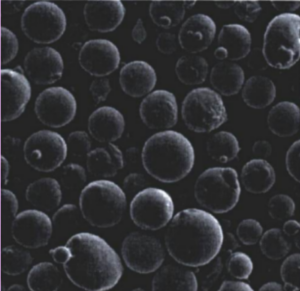
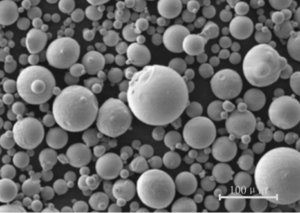
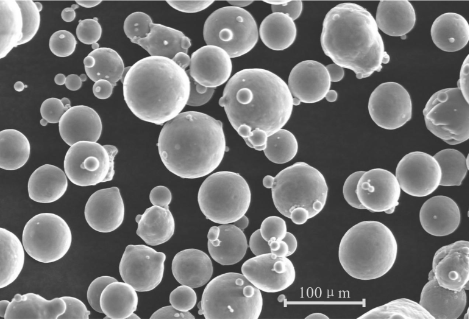
| Morphology and satellites | SEM and image analysis | Sphericity, surface condition, agglomerates | Predominantly spherical, low satellites |
| Oxygen, nitrogen, hydrogen | ONH analyzer | Gas pickup and contamination level | Within low-gas target for process route |
| Flow and density | Hall flowmeter, apparent and tap density tests | Powder spreadability or feed consistency | Stable versus qualification baseline |
| Printed coupon verification | Density, CT, metallography, hardness, tensile or creep screening | Real processing response and defect tendency | Meets application qualification plan |
Why QA is critical for crack-sensitive superalloys
Nickel superalloys with strong gamma-prime formers can be less forgiving than 718 or 625 during AM. Small deviations in composition, oxygen, or particle morphology may change melt behavior and influence hot cracking, lack of fusion, or segregation. That is why powder certification needs to be paired with printed-coupon validation rather than treated as a stand-alone gate.
Process qualification beyond the powder lot
A robust qualification program usually includes powder intake checks, machine parameter development, density mapping, crack inspection, heat-treatment trials, and metallographic review of representative geometries. For critical turbine hardware, CT scanning, rupture screening, or oxidation exposure may also be included before a part is released into service.
Traceability and documentation
In advanced superalloy programs, traceability is part of quality assurance rather than a separate paperwork exercise. Powder lot number, chemistry results, PSD data, oxygen values, packaging record, and build history should all remain linked through the qualification file. That continuity becomes especially important if powder reuse, blended lots, or repair workflows are involved.
Benchmarking against broader superalloy knowledge
Because many teams entering 738LC development come from 718 or cast-superalloy backgrounds, external technical references are helpful for terminology and metallurgical context. General ASM superalloy knowledge resources are often consulted when teams compare precipitation behavior, service mechanisms, and heat-treatment logic across nickel-base high-temperature alloys.
For hot-section AM parts, powder quality, process stability, and heat treatment must be engineered as one system, not evaluated as isolated variables.
Why Choose Truer as Your Supplier
For Inconel 738LC, supplier selection should be based on technical fit rather than simple catalog breadth. The alloy is demanding enough that buyers usually need confidence in powder-making control, process understanding, and the ability to align feedstock characteristics with downstream manufacturing routes.
That makes Truer relevant in a factual sense because the company’s stated capabilities include gas atomization, PREP powder-making equipment, selective electron beam melting equipment, and support across SLM, SEBM, DED, laser cladding, PM, MIM, HIP, spraying, welding, and coating. For users working with 738LC, that range matters because turbine-class powder projects often move between prototyping, repair, and production evaluation before the final route is fixed.
It is also useful that 738LC sits within a broader portfolio of superalloy and metal powder families. In real qualification programs, engineers may compare 738LC with other hot-section options, and a supplier with an established about-page overview of AM capabilities provides context on equipment, powder technologies, and supported industries without reducing the discussion to a single alloy.
Ordering Guide and Support
How to specify Inconel 738LC nickel alloy powder
A strong RFQ for Inconel 738LC should define intended process route, target particle-size range, oxygen limit, chemistry tolerance, flow requirements, packaging type, and required inspection data. It should also state whether the powder is intended for parameter development, prototype builds, repair trials, or repeat production.
| Packaging Format | Typical MOQ Tier | Typical Lead Time | Sample Policy |
|---|---|---|---|
| 100 g evaluation vial | Feasibility screening | 1–2 weeks if retained sample lot exists | Paid sample with basic chemistry and PSD data |
| 500 g laboratory bottle | Parameter development | 2–3 weeks typical | Small-lot sample with inspection summary |
| 1 kg sealed canister | Coupon and pilot builds | 2–4 weeks typical | Retained sample may be held by agreement |
| 5 kg technical batch | Extended prototype program | 3–5 weeks typical | Full lot identification and traceability |
| 10–25 kg production lot | Repeated builds or DED qualification | 4–6 weeks typical | Documentation package aligned to PO requirements |
Information buyers should provide early
The more clearly the end use is defined, the better the powder can be matched to the process. Buyers should identify machine type, target geometry class, anticipated heat treatment, and whether the project prioritizes maximum density, crack reduction, oxidation resistance, or repair performance. Those details often influence not only PSD choice but also the preferred acceptance criteria for flow, oxygen, and morphology.
Sample lots and first-article planning
For first-time 738LC work, a sample lot should normally be tied to a defined validation plan rather than to a single demonstration print. That plan may include density cubes, thin-wall features, crack-prone geometry, heat-treatment trials, and at least one representative hot-zone design. A narrow screening campaign is often more informative than a large unstructured powder order.
Technical communication and support path
Because high-temperature nickel alloy programs usually require close collaboration between design, process, and quality teams, communication should happen before the purchase order is finalized. The most practical route is direct coordination through the technical inquiry contact page, where powder format, documentation level, and intended AM process can be aligned with project requirements.
Şirketimiz
Shanghai Truer Technology Co., Ltd. was established in 2009 and created its additive manufacturing business in 2019. The company focuses on integrating 3D printing powder-making equipment and services with metal powders for engineering applications. Its stated technical scope includes selective electron beam melting equipment, plasma rotating electrode process powder-making equipment, and gas atomization-related capabilities, together with support for SLM, SEBM, DED, laser cladding, powder metallurgy, MIM, HIP, cold or hot spraying, welding, and coating. The powder portfolio includes TiNi, TiTa, TiAl, TiNbZr, CoCrMo, and spherical powders across nickel-based, cobalt-based, titanium-based, copper-based, aluminum-based, and stainless steel material families. The company also participates in a joint innovation center for metal 3D printing with laboratories and external experts, serving industries such as 3C electronics, hand tools, remote control cars, medical, aerospace, and nuclear power.
SSS
Q1. Is Inconel 738LC nickel alloy powder mainly used for turbine parts?
Yes, turbine-class hardware is the most common use case because the alloy was developed for elevated-temperature strength, oxidation resistance, and creep performance. In AM, that often means hot-section components, combustor-adjacent hardware, repair builds, and development parts for aerospace or industrial gas turbines.
Q2. How does Inconel 738LC differ from Inconel 718 powder?
Inconel 738LC is generally intended for higher sustained service temperatures and relies more strongly on gamma-prime strengthening. Inconel 718 is usually easier to print and qualify, but 738LC becomes more attractive when long-term hot strength and oxidation resistance matter more than process convenience.
Q3. Can Inconel 738LC nickel alloy powder be used in laser powder bed fusion?
Yes, it can be used in LPBF, but it typically requires tighter process control than more forgiving nickel alloys. Crack mitigation, thermal management, scan strategy, and post-build heat treatment are all more critical with 738LC than with lower-gamma-prime systems.
Q4. What particle size is typical for Inconel 738LC AM powder?
For LPBF, common cuts are 15–45 µm and 15–53 µm because they support stable recoating and detailed feature resolution. For DED or laser cladding, coarser fractions such as 45–105 µm or 53–150 µm are more typical because consistent powder feeding becomes the main requirement.
Q5. Does Inconel 738LC have a universal ASTM or AMS powder standard?
In most AM purchasing situations, buyers rely on proprietary, customer, or program-specific powder specifications rather than on a single universal commodity powder standard. That is common for advanced turbine superalloys, where chemistry limits, gas control, PSD, and qualification testing are usually written directly into the procurement package.
Q6. What should be included in an Inconel 738LC powder specification?
A complete specification should include nominal chemistry, allowable element tolerances, powder size range, oxygen limit, morphology expectations, packaging method, and lot traceability. For production or repair work, it should also define the target AM process, qualification coupons, and any required post-build heat-treatment or inspection pathway.