Hızlı Cevap
Cobalt chromium molybdenum dental powder is a pre-alloyed metal powder used to 3D print dental frameworks, crowns, bridges, and partial denture structures. It is widely chosen because it offers high stiffness, corrosion resistance, biocompatibility-oriented alloy design, and reliable laser powder bed fusion performance in one material system. For dental labs and device manufacturers, that translates into thin but strong geometries, repeatable fit, less process variation than casting, and a production workflow that integrates well with digital scanning, CAD design, and serial customization.
What Is cobalt chromium molybdenum dental powder?
Cobalt chromium molybdenum dental powder is a cobalt-based alloy powder formulated for dental manufacturing by additive processes, especially selective laser melting and other laser powder bed fusion routes. The alloy family is commonly abbreviated as CoCrMo or Co-Cr-Mo, but the full name is useful in search and procurement because it clearly distinguishes the material from other cobalt alloys intended for wear parts, hardfacing, or high-temperature service.
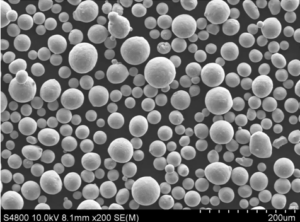
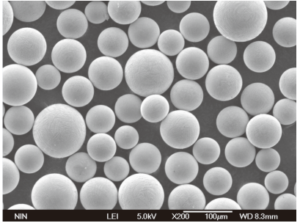
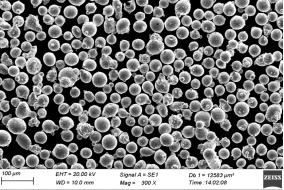
In practical terms, the powder is supplied as a spherical, pre-alloyed feedstock with controlled particle size, chemistry, and oxygen level. Unlike cast ingots or milling blanks, it is engineered specifically to spread into thin layers and melt consistently under a focused energy source. That difference in physical form is not a detail; it is the reason the material works in dental additive manufacturing at all.
Cobalt chromium molybdenum dental powder in the alloy family
Cobalt provides the matrix, chromium supports passive-film corrosion resistance, and molybdenum improves strength and localized corrosion behavior. Together, these elements create an alloy family known for high elastic modulus, good wear behavior, and strong structural stability in thin sections. Those traits are especially useful in dentistry, where frameworks must resist deformation without becoming excessively bulky.
The dental version of the alloy occupies a distinct niche within the broader cobalt-alloy category. A generic cobalt-chromium powder may look similar on paper, but dental production places tighter demands on fine feature resolution, margin quality, polishing response, and reproducibility from batch to batch. That is why a qualified dental AM powder should be evaluated beyond nominal chemistry alone.
Why the dental market still uses CoCrMo
Cobalt-chromium alloys became established in dentistry long before metal additive manufacturing was commercially mature. They gained adoption as strong, corrosion-resistant alternatives to many noble-metal systems and became especially important where rigidity and cost control mattered. AM did not replace those advantages; it reframed them inside a digital workflow.
Today, dental labs and OEMs use cobalt chromium molybdenum dental powder because it works well for patient-specific parts that combine thin geometry with structural demands. The material remains relevant precisely because modern digital dentistry still needs rigidity, fit stability, and durable oral-environment performance.
How it differs from other dental metals
Compared with titanium, cobalt chromium molybdenum dental powder generally offers higher stiffness but also higher density. Compared with stainless steels, it is more closely aligned with established dental alloy practice for long-term framework use. Compared with cast CoCr alloys, AM-grade powder adds a different layer of control by standardizing feedstock shape, size distribution, and cleanliness.
A useful way to frame it is this: the alloy chemistry explains why the material is suitable, but the spherical powder morphology explains why it is manufacturable by AM. Both matter equally when the goal is repeatable dental production.
Terminology and standards context
In technical discussions, the process language is often aligned with ISO/ASTM additive manufacturing terminology and the alloy family is commonly discussed in the context of dental metallic material classifications such as ISO dental alloy standards. Background definitions of cobalt-chromium materials are also widely summarized in cobalt-chrome alloy references.
In dental AM, powder consistency is often just as important as nominal alloy chemistry.
Chemical Composition and Material Grade
The chemistry of cobalt chromium molybdenum dental powder is built around a cobalt-rich base with chromium and molybdenum as the principal alloying elements. For dental use, the powder is typically designed to remain within recognized cobalt-chromium-molybdenum composition windows while also controlling minor elements and residuals that can affect printability, surface finish, and long-term corrosion behavior.
Procurement teams should treat chemistry as a baseline, not the whole qualification picture. Two powders can both sit inside a similar alloy family and still behave differently in a dental build if one contains more satellites, wider particle distribution tails, or a higher oxygen level after packaging. That is why material grade review should always be combined with morphology, PSD, and cleanliness data.
Typical chemistry window for cobalt chromium molybdenum dental powder
In most dental AM grades, chromium is present at a relatively high level to support passivation and corrosion resistance in the oral environment. Molybdenum strengthens the alloy and helps support resistance to localized attack. Carbon is usually controlled carefully because carbide formation influences hardness, strength, and ductility balance.
Nickel is also watched closely even when only present as a residual element. Many dental customers prefer clear disclosure of nickel content because it affects qualification, specification writing, and end-user communication.
| Element / Grade Item | Typical Content (wt%) | Alaşımdaki İşlev | Common Grade Reference | Cross-Reference Note |
|---|---|---|---|---|
| Kobalt (Co) | balance | base matrix and high modulus support | CoCrMo dental alloy family | broadly aligned with ASTM F75-type chemistry windows |
| Krom (Cr) | 26.0–30.0 | passive film formation and corrosion resistance | CoCr dental AM and dental casting families | commonly associated with ISO dental metallic materials |
| Molibden (Mo) | 5.0–7.0 | strengthening and pitting resistance support | CoCrMo alloy family | often cited in ASTM F75-related discussions |
| Karbon (C) | typically 0.05–0.35 | carbide control, hardness, strength balance | supplier-controlled dental AM grade | lower or tighter ranges may be used for AM optimization |
| Silisyum (Si) | typically ≤1.0 | deoxidation / minor process balance | alloy-specific specification | should be controlled for consistency |
| Manganez (Mn) | typically ≤1.0 | minor alloy/process role | alloy-specific specification | excessive variation can affect repeatability |
| Demir (Fe) | typically low residual | impurity control | supplier release limits | monitored rather than intentionally added |
| Nikel (Ni) | typically low residual | residual element disclosure | customer- or market-specific limit | often reviewed carefully in dental supply chains |
Grade mapping and standard interpretation
For dental buyers, grade mapping can be confusing because alloy chemistry, dental classification, and additive manufacturing powder specifications do not come from a single universal document. ASTM F75 is often used as a chemistry reference point for cobalt-chromium-molybdenum alloys, while dental materials are more often categorized through dentistry-oriented standards and internal validation systems. That makes “equivalent” a term to use carefully.
The safest approach is to read grade cross-references as directional rather than automatic substitution approval. If a powder supplier mentions ASTM, ISO, DIN, or GB families, the buyer should still request the exact certified chemistry and powder-property limits for the delivered lot.
Dental alloy classification versus AM powder specification
A dental alloy classification generally tells you what sort of metallic material family the part belongs to and what type of use case it is compatible with. An AM powder specification tells you how the feedstock must behave before it ever becomes a part. Those are different questions.
That distinction matters because a chemistry that is acceptable for a cast dental alloy does not automatically guarantee ideal laser powder bed fusion behavior. For AM, the material must satisfy alloy intent and powder engineering requirements at the same time.
Teknik Özellikler
Technical specifications define whether cobalt chromium molybdenum dental powder will spread evenly, absorb energy consistently, and produce dense parts with acceptable surface quality. In dental AM, fine details such as clasp profiles, margin edges, thin connectors, and lattice-like support regions make feedstock quality especially influential.
A strong data package normally includes particle size distribution, apparent density, tap density, Hall flow, oxygen content, and evidence of high sphericity. In many qualification programs, those values are paired with SEM images and lot traceability records. Buyers should view the entire set together rather than chasing one “best” number.
Particle size distribution for dental 3D printing powder
Dental laser powder bed fusion usually uses finer PSD cuts than many larger industrial applications. Smaller particles can improve detail reproduction and support thin layers, but they also raise surface area and sensitivity to oxidation or powder reuse effects. The best size range is therefore a compromise between resolution and robust handling.
| Powder Class | PSD Range (µm) | Görünür Yoğunluk (g/cm³) | Tap Density (g/cm³) | Hall Flow (s/50 g) | Oksijen İçeriği | Küresellik |
|---|---|---|---|---|---|---|
| Ultra-fine dental grade | 10–30 | 4.0–4.4 | 4.7–5.2 | 16–24 | typically low, lot controlled | high |
| Standard dental LPBF grade | 15–45 | 4.2–4.6 | 4.9–5.4 | 14–22 | typically low, lot controlled | high to very high |
| Broad dental production grade | 15–53 | 4.3–4.8 | 5.0–5.6 | 12–20 | low, certificate-based | very high |
| Process-flex grade | 20–63 | 4.4–4.9 | 5.1–5.7 | 12–19 | application-specific control | kÜRESEL |
| Coarser engineering grade | 45–105 | 4.6–5.1 | 5.3–5.9 | 11–18 | controlled per use case | spherical to near-spherical |
Flowability, density, and recoating behavior
Powder flow and packing consistency directly affect layer uniformity. Apparent density gives a first look at how the powder packs under gravity, while tap density indicates how much further the particles can consolidate. Hall flow is a simple, widely recognized handling metric, but it should not be interpreted alone.
A powder may show acceptable Hall flow yet still spread poorly if it contains too many agglomerates, irregular particles, or a large fraction of ultrafines. In dental production, those subtle weaknesses often appear as rough surfaces, local porosity, or dimensional scatter in thin parts before they show up in bulk coupons.
Oxygen, nitrogen, and powder aging
Oxygen level matters because fine metal powder has a large surface area, and its chemistry can drift during storage, reuse, and transport. Nitrogen can also affect alloy response depending on the production route and atmosphere history. Labs that print dental components routinely should therefore manage powder lifecycle controls rather than relying only on as-received certificates.
General measurement principles for morphology and powder characterization are often discussed in NIST materials measurement resources. Those principles are useful when building internal SOPs for reuse limits, sieve practice, and retained sample checks.
Typical property expectations in practice
Most buyers of cobalt chromium molybdenum dental powder are not searching for the absolute finest PSD or fastest Hall flow. They are usually trying to minimize variation across lots while keeping print settings stable. That is why consistent mid-range values with clean morphology can be more useful than a single aggressive spec that is hard to reproduce at scale.
Applications Across Industries
Although the target keyword points to dental use, cobalt chromium molybdenum dental powder sits within a broader ecosystem of powder-based manufacturing. The same alloy family is relevant wherever thin sections, wear resistance, structural rigidity, and corrosion performance are valuable. Dentistry remains the most distinctive use case because it combines tight tolerances with mass customization.
Dental AM stands apart from many engineering applications in one key respect: parts are small, numerous, and patient-specific. That means productivity depends not only on alloy strength but also on nesting efficiency, powder stability, and predictable post-processing behavior.
Dental frameworks remain the primary application
Fixed prosthetic frameworks are one of the most common outputs of cobalt chromium molybdenum dental powder. These include bridge substructures, coping-like components, and long-span frameworks where rigidity matters. The alloy supports thin design sections without the same degree of flex risk associated with lower-modulus materials.
Partial denture components and clasp structures
Removable partial denture frameworks are another important application because they combine fine geometry with local stress concentration. Clasps, rests, major connectors, and mesh sections require a material that remains strong in relatively thin profiles. CoCrMo continues to fit that requirement well.
Implant prosthetic structures and custom support parts
Implant-supported bars and superstructures can also benefit from the alloy when high stiffness and customized geometry are priorities. In broader manufacturing, similar cobalt-based powders may appear in medical fixtures, prototype tooling, or specialty wear components, though those uses often require separate validation.
| Endüstri | Typical Part | Main Requirement | AM / PM Process |
|---|---|---|---|
| Dental laboratory | crowns and bridge frameworks | precision, rigidity, digital repeatability | SLM / LPBF |
| Removable prosthetics | partial denture frameworks and clasps | thin-section strength and elastic control | SLM / LPBF |
| Implant prosthetics | bars and superstructures | patient-specific geometry with structural stability | SLM / LPBF |
| Medical support manufacturing | fixtures and auxiliary metallic parts | corrosion resistance and robust alloy behavior | LPBF / PM |
| Research institutions | process coupons and validation specimens | benchmark alloy family for AM studies | LPBF |
| Engineering prototyping | compact wear-resistant components | dimensional stability and strength | LPBF / PM / MIM |
Material comparison in a wider powder portfolio
Dental buyers often compare CoCrMo with titanium alloys, stainless steels, and sometimes nickel-based alloys used in other high-performance sectors. A broader view of cobalt-based alloy powder grades helps place dental CoCrMo inside the larger cobalt materials family. For cross-material design decisions, a titanium alloy powder portfolio is also useful when weight, stiffness, and biocompatibility strategy are being evaluated together.
Manufacturing and Quality Assurance
The production route used to make cobalt chromium molybdenum dental powder has a major effect on particle shape, cleanliness, and lot stability. Gas atomization is the most common industrial route for fine dental AM powders because it can produce spherical particles at commercially useful scale. PREP and VIGA are also relevant in broader AM powder discussions, particularly when cleanliness or morphology control is a major consideration.
Still, route labels alone do not qualify a powder. What matters to the user is the released feedstock: its PSD, chemistry, oxygen level, morphology, and consistency from batch to batch. A powder that sounds advanced but ships with wide variance is less useful than a conventional route executed with strong quality discipline.
GA, PREP, and VIGA in practical terms
Gas atomization generally offers the best balance of throughput and cost for fine cobalt chromium molybdenum dental powder. PREP is often associated with excellent sphericity and cleanliness, while VIGA supports tightly controlled melting and atomization atmospheres. Each method has strengths, but dental AM users should focus on delivered properties and documentation rather than process branding alone.
| Production Route / QA Item | Typical Equipment or Method | Main Strength | Main Limitation | Relevance to Dental Powder |
|---|---|---|---|---|
| Gas Atomization (GA) | inert gas atomizer plus screening line | scalable supply of fine spherical powder | control of fines and satellites is essential | most common route for dental AM feedstock |
| HAZIRLIK | rotating electrode plasma process | very high sphericity and clean particle surfaces | higher cost and less typical for mainstream dental volumes | relevant for premium spherical powder discussions |
| VIGA | vacuum induction melting with gas atomization | controlled melt cleanliness and atmosphere | more complex equipment chain | useful where chemistry control is critical |
| PSD verification | laser diffraction and sieve checks | confirms lot size distribution | method correlation must be managed | essential for layer consistency |
| Morphology and chemistry QA | SEM, ICP-OES, combustion analysis | verifies particle shape and composition | requires disciplined acceptance criteria | core to release testing |
Incoming inspection and batch release
A robust release package for cobalt chromium molybdenum dental powder normally includes certificate data for chemistry and particle size distribution, plus internal controls for oxygen and morphology. Advanced users may also request retained-sample policies, lot numbering logic, and evidence of contamination control in classification and packaging.
Incoming inspection at the customer site should mirror the risk level of the intended application. For a dental lab qualifying a new powder source, that often means build trials on representative parts, not just density cubes or tensile coupons.
Reuse strategy and contamination control
Lot-to-lot consistency becomes even more important once powder reuse begins. Every sieve cycle, transfer step, or container opening creates an opportunity for oxidation, moisture pickup, or foreign-particle contamination. Because dental components are small and detail-sensitive, those changes may show up early as roughness drift or fit instability.
A disciplined reuse protocol usually defines maximum recycle count, virgin-to-reclaimed blend ratio, sieve mesh, and storage atmosphere. This is not simply a housekeeping issue; it is part of process capability.
Why Choose Truer as Your Supplier
Choosing a supplier for cobalt chromium molybdenum dental powder is less about slogans and more about technical fit. Buyers need a source that understands powder production, AM process behavior, and the practical link between feedstock characteristics and printed-part outcomes. In dental work, small inconsistencies can affect surface finish, support removal, and final fit long before they produce obvious build failures.
Truer is relevant in this context because its work spans powder-making equipment, spherical metal powders, and additive manufacturing process ecosystems. That combination is useful when a customer needs discussion at the level of atomization route, powder morphology, PSD tailoring, and downstream use in SLM, SEBM, DED, or related powder-based processes.
The breadth of the material portfolio also matters. A supplier that handles CoCrMo together with nickel-based, titanium-based, copper-based, aluminum-based, and stainless steel powders can support comparative material selection rather than treating each inquiry as an isolated SKU. For organizational background, the Truer company profile provides a concise overview of this manufacturing focus.
Ordering Guide and Support
Ordering cobalt chromium molybdenum dental powder starts with a precise technical description of the application. “Dental CoCrMo powder” is not enough on its own, because buyers may need different particle size ranges, packaging formats, or documentation sets depending on machine platform and qualification stage.
The ordering conversation should identify the process route, machine model, preferred PSD, expected monthly consumption, and required certificates. A supplier can give a more meaningful quotation when the intended use is clearly defined, especially if the project involves pilot validation or regulated documentation review rather than simple stock replenishment.
Sample strategy for cobalt chromium molybdenum dental powder
Many labs and OEMs begin with a small sample to verify spreading behavior and parameter compatibility. After that, they usually move to a pilot lot for repeatability studies and only then to larger routine volumes. This staged path helps separate true powder behavior from machine setup, build orientation, or post-processing variables.
| Packaging Format | Typical MOQ Tier | Typical Lead Time | Sample Policy | Typical Use Stage |
|---|---|---|---|---|
| 500 g bottle | evaluation | 1–2 weeks if stock exists | small paid or approved sample | initial print screening |
| 1 kg bottle | prototype | 1-3 hafta | common first technical order | parameter development |
| 5 kg sealed pack | pilot | 2–4 hafta | generally after specification alignment | repeatability builds |
| 10 kg pack | pre-production | 3-5 hafta | follows preliminary qualification | validation stage |
| 25 kg drum or custom pack | production | project-based | not typical as first sample | routine manufacturing supply |
Information to include in an RFQ
A strong RFQ usually states whether the powder is intended for crowns, bridges, partial frameworks, implant bars, or mixed dental production. It should also note whether reuse is planned, what certificates are required, and whether the customer needs assistance with powder selection against machine parameters.
When technical discussion or quotation support is needed, the most direct channel is the powder inquiry contact page. Clear application details at first contact generally shorten the evaluation cycle.
Şirketimiz
Shanghai Truer Technology Co., Ltd. was established in 2009 and created its additive manufacturing business in 2019. The company focuses on integrating 3D printing powder-making equipment and services with spherical metal powders for engineering applications of additive manufacturing. Its core technologies include Selective Electron Beam Melting equipment, Plasma Rotating Electrode Process powder-making equipment, and gas atomization. The powder portfolio includes TiNi, TiTa, TiAl, TiNbZr, CoCrMo, and nickel-based, cobalt-based, titanium-based, copper-based, aluminum-based, and stainless steel powders. The company also participates in a joint innovation center for metal 3D printing with laboratories and industry experts, and serves end-use processes including SLM, SEBM, DED, laser cladding, powder metallurgy, MIM, HIP, cold and hot spraying, welding, and coating across 3C electronics, hand tools, remote control cars, medical, aerospace, and nuclear power.
SSS
Q1. Is cobalt chromium molybdenum dental powder the same as regular CoCr powder?
Not necessarily. Many powders share a similar alloy family name, but dental powder is usually controlled more tightly for PSD, morphology, residual elements, and consistency in thin-feature printing. A generic CoCr powder may be acceptable for another industrial application yet still be a poor fit for dental LPBF.
Q2. What particle size is most common for cobalt chromium molybdenum dental powder?
For dental laser powder bed fusion, common ranges include 10–30 µm, 15–45 µm, and 15–53 µm. The right choice depends on the machine, layer thickness, recoater design, and whether the priority is fine detail or a broader processing window.
Q3. Why do dental labs choose cobalt chromium molybdenum dental powder instead of casting?
AM reduces dependence on wax pattern variability, investment quality, and manual casting control. It also fits cleanly into digital dentistry workflows built around scanning, CAD design, nesting, and repeatable production of customized parts.
Q4. Can cobalt chromium molybdenum dental powder be reused after printing?
Yes, but only under controlled procedures. Reuse should include sieving, storage discipline, blend rules, and limits for oxygen pickup and contamination, because these factors can alter part fit and surface quality.
Q5. What documents should buyers request with cobalt chromium molybdenum dental powder?
At minimum, buyers usually request chemistry and particle size distribution data. Depending on the application, they may also ask for oxygen content, Hall flow, apparent density, tap density, morphology evidence, packaging records, and batch traceability.
Q6. Is cobalt chromium molybdenum dental powder only used for dentistry?
No. Related cobalt-chromium-molybdenum powders are also used in selected medical, research, and engineering applications. However, a powder optimized for dental production should not be assumed to be automatically interchangeable with powders qualified for other AM or PM uses.