Hastelloy B Alloy Powder and Its Additive Manufacturing Application
Giriş
Hastelloy B is a typical Ni–Mo type solid solution strengthening nickel-based corrosion-resistant alloy, renowned for its outstanding stability in highly reducing corrosive environments. This alloy is designed with a high molybdenum content and demonstrates extremely strong corrosion resistance in hydrochloric acid, hydrofluoric acid, and chloride systems.
As a result, it is widely used in the fields of chemical engineering, petroleum, energy equipment, and surface engineering. With the advanced manufacturing technologies, Hastelloy B alloy powder has gradually become one of the important materials for laser cladding, additive manufacturing (LPBF/DED), and powder metallurgy manufacturing.
Chemical composition
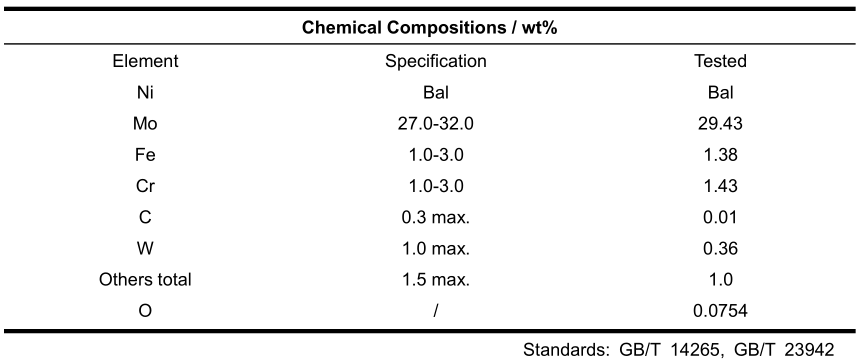
Lot No. TRUER 20241209-02
Hastelloy B is a nickel-molybdenum alloy specifically designed for extreme reducing and acidic environments. Its key feature is that by having extremely low carbon (C) and silicon (Si) contents, it significantly enhances the intergranular corrosion resistance of the weld heat-affected zone, allowing it to be used directly after welding.
Among them, Mo is the most crucial reinforcing element. Approximately 30% of the molybdenum forms a stable solid solution structure in the Ni matrix, enabling the material to have an extremely low corrosion rate in reducing acids such as hydrochloric acid. At the same time, by strictly controlling the contents of impurities such as carbon and silicon, the formation of brittle precipitated phases can be effectively inhibited, thereby improving the material’s stability and welding performance.
Powder preparation and properties
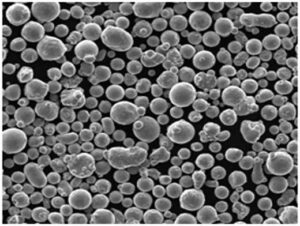
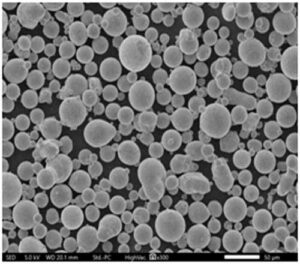
Hastelloy B alloy powder is usually prepared by vacuum atomization (VIGA) or inert gas atomization (GA) processes. These methods can produce metal powder with high purity, high sphericality and uniform particle size distribution.
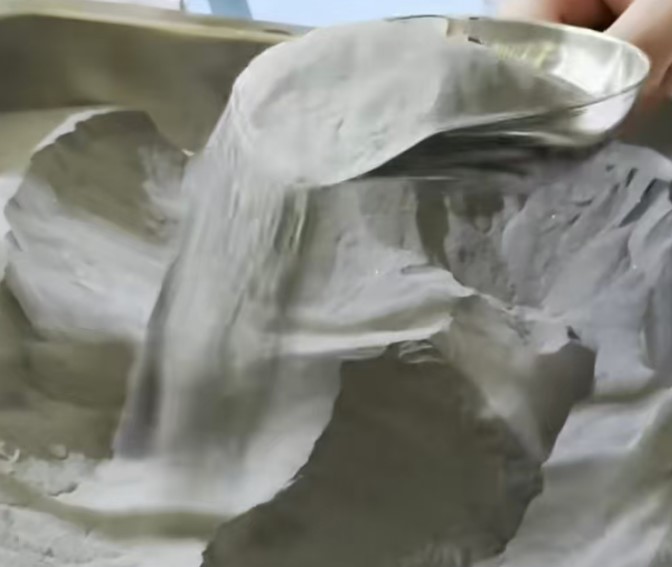
Typical powder characteristics include powder morphology, particle size, flowability and density.
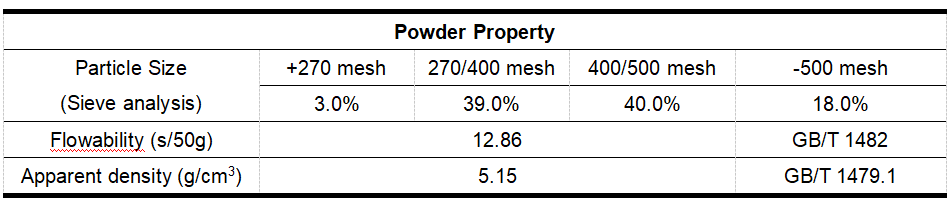
Lot No. TRUER 20241209-02
Good sphericity and particle size distribution can significantly enhance the fluidity and powder deposition stability of the powder. During laser processing, it is easier to form a stable molten pool, thereby achieving a high-density and low-defect forming structure.
SEM Fotoğrafı
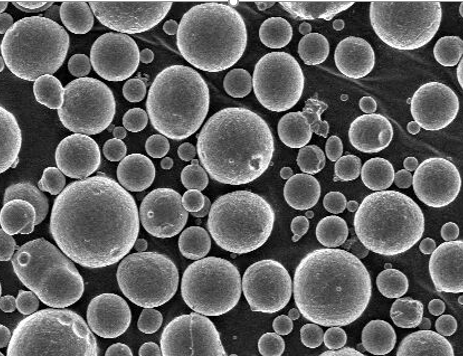
Microscopic characteristics
The matrix structure of Hastelloy B is a single-phase γ-Ni austenite solid solution (FCC) structure. The Mo element is distributed in the nickel matrix in a solid solution form, forming a stable solid solution strengthening system.
Under the conditions of traditional metallurgy and additive manufacturing, the microstructure has the following characteristics:
• Single-phase austenitic structure is stable
• Mo element is uniformly dissolved
• There are fewer grain boundary precipitated phases.
• The grains are significantly refined under the condition of rapid solidification
This stable solid solution structure not only ensures the corrosion resistance of the material, but also endows it with excellent toughness and processing properties.
Mechanical and physical properties
The mechanical properties of Hastelloy B are characterized by a combination of moderate strength and high toughness. The typical properties at room temperature are as follows:
• Tensile strength: ≥ 760 MPa (110 ksi)
• Yield strength (0.2%): ≥ 345 MPa (50 ksi)
• Elongation: ≥ 40%
• Density: Approximately 9.22 g/cm³
• Melting point range: approximately 1370 °C
Compared with many high-strength alloys, the advantage of Hastelloy B lies not in its extremely high strength, but in its ability to maintain long-term stable mechanical properties in a highly corrosive environment.
Korozyon direnci
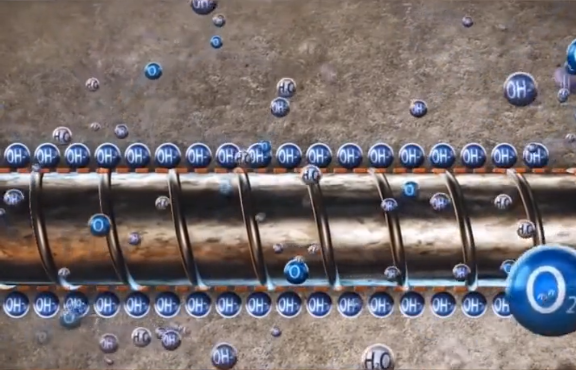
The most distinctive feature of Hastelloy B is its extremely strong corrosion resistance in highly reducing media.
Typical corrosion-resistant environments include:
• Hydrochloric acid (HCl)
• Hydrofluoric acid (HF)
• Wet chlorine gas environment
• Sulfuric acid reduction system
• Chloride system
In various concentrations and temperatures of hydrochloric acid environments, the corrosion rate of Hastelloy B alloy is usually lower than 0.1 mm/year, which is much better than that of conventional stainless steel and many nickel-based alloys. Therefore, in the hydrochloric acid condition, Hastelloy B is often regarded as one of the most reliable engineering materials.
Laser cladding and additive manufacturing applications
With the development of advanced manufacturing technologies, the application of Hastelloy B alloy powder in surface engineering and additive manufacturing is increasing day by day.
- Lazer kaplama
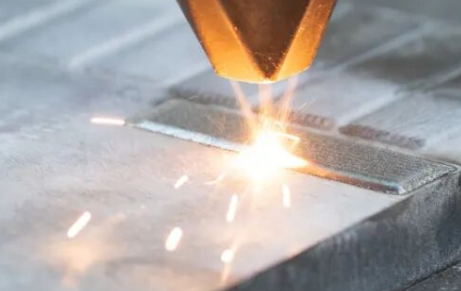
Hastelloy B powder exhibits excellent molten pool stability and metallurgical bonding ability during laser cladding, enabling the formation of a dense corrosion-resistant coating.
Typical properties of the cladding layer:
• Hardness: 220–260 HV
• Porosity: < 1%
• Coating thickness: 0.5–3 mm
Common applications include:
• Corrosion protection coating on the inner wall of the chemical reactor
• Valve sealing surface
• Pump body and shaft sleeve
• Acidic medium pipeline
- Katmanlı üretim
In additive manufacturing processes, such as LPBF and DED, Hastelloy B also demonstrates excellent processing adaptability. Due to its stable solid solution structure and low crack sensitivity, it enables high-density forming.
The typical density of additive manufacturing components can reach 99.5%. This enables Hastelloy B to be capable for manufacturing complex corrosion-resistant structural components and key parts of chemical equipment.