Resposta rápida
Hastelloy C22 thermal spraying powder is a nickel-chromium-molybdenum-tungsten alloy powder designed for corrosion-resistant coatings. It is the right choice for harsh service when equipment faces mixed acids, chlorides, wet corrosion, and oxidizing-reducing process swings that can overwhelm stainless steels or lower-alloy spray materials. In thermal spray practice, it is commonly selected for dense protective overlays on pumps, valves, shafts, vessels, and chemical-processing hardware where substrate protection matters more than bulk structural strength.
What Is Hastelloy C22 thermal spraying powder?
Hastelloy C22 is a high-performance nickel-based corrosion alloy that has been adapted into powder form for surface engineering processes. In thermal spray applications, the powder is used to create a protective coating rather than a fully dense load-bearing component. That distinction matters because buyers are not just selecting an alloy; they are selecting a corrosion-management strategy for expensive base materials.
The alloy belongs to the Ni-Cr-Mo family of corrosion-resistant superalloys. Its chemistry was developed to resist a broad spectrum of aggressive media, especially where both oxidizing and reducing conditions may occur in the same operating environment. That makes it different from many thermal spray alloys that are chosen mainly for wear resistance, high hardness, or simple oxidation protection.
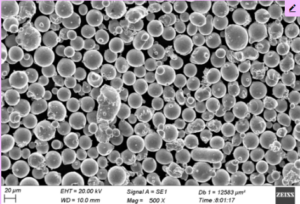
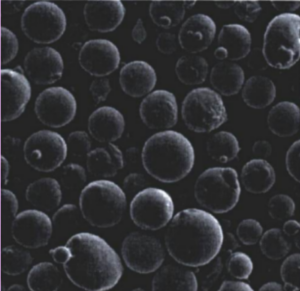
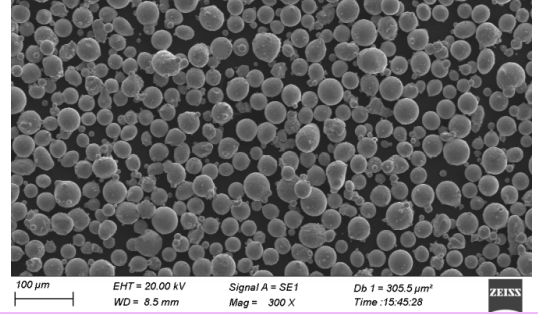
In powder form, Hastelloy C22 is generally supplied as a spherical or near-spherical feedstock for HVOF, HVAF, plasma spray, laser cladding, and related deposition routes. Depending on the process, the target outcome may be a low-porosity corrosion barrier, a rebuild layer, or a multifunctional coating that combines corrosion resistance with moderate wear performance. The powder form also allows users to protect localized surfaces without replacing the full component in solid C22 plate, bar, or castings.
A useful way to understand the grade is to compare it with neighboring nickel alloys. Hastelloy C276 is often viewed as the legacy benchmark for broad corrosion resistance, while C22 is commonly preferred where enhanced resistance to pitting, crevice attack, and certain oxidizing chloride environments is required. Compared with nickel-chromium self-fluxing spray alloys, C22 is less about remelted hardness and more about chemical durability in severe process streams.
For engineering teams, the appeal of this alloy is economic as much as metallurgical. When a carbon steel or stainless substrate can be protected with a high-integrity C22 coating, plant operators may extend service life while controlling raw material costs and downtime. That is why the powder is relevant not only in thermal spraying, but also in broader repair, refurbishment, and corrosion-control planning.
Composição química e tipo de material
Hastelloy C22 thermal spraying powder chemistry
The corrosion profile of Hastelloy C22 comes from a carefully balanced chemistry. Nickel provides the corrosion-resistant matrix, chromium supports oxidizing-environment resistance, molybdenum improves performance in reducing acids and chloride-bearing media, and tungsten helps reinforce resistance across mixed chemical conditions. Iron is controlled at a relatively low level, while carbon and silicon are kept low to reduce the risk of detrimental precipitates and compromised corrosion behavior.
In surface engineering, chemistry control is especially important because coatings are often specified for environments where small deviations can shift corrosion performance. Powder buyers should therefore look beyond the headline alloy name and confirm the ordered chemistry window, trace impurity limits, and any process-specific restrictions on oxygen or contamination pickup.
Grade identity and purchasing references
Hastelloy C22 is most commonly associated with UNS N06022. In international specifications, it is also referenced by the European material number 2.4602 and the traditional designation NiCr21Mo14W. For thermal spraying powder, however, procurement documents often blend alloy-grade references with supplier-specific powder requirements covering particle size distribution, morphology, and coating performance.
| Grade / Designation | Typical Composition (wt.%) | ASTM Cross-Reference | AMS Cross-Reference | GB Cross-Reference | ISO Cross-Reference | DIN / EN Cross-Reference |
|---|---|---|---|---|---|---|
| Hastelloy C22 / UNS N06022 | Ni balance, Cr 20.0–22.5, Mo 12.5–14.5, W 2.5–3.5, Fe 2.0–6.0, Co max 2.5, C max 0.015, Mn max 0.50, V max 0.35, Si max 0.08, P max 0.02, S max 0.02 | ASTM B574/B575 chemistry commonly referenced for wrought product alignment | No single universal AMS thermal spray powder designation commonly used | GB market references may be project-specific | ISO alloy-use references may be cited, but no universal powder grade is typical | EN 2.4602 / NiCr21Mo14W |
| HVOF-grade C22 powder | Same base chemistry, with PSD and oxygen limits defined by PO | ASTM chemistry alignment plus supplier powder test plan | Customer or aerospace internal requirement | Supplier or program-specific | Supplier or program-specific | Chemistry aligned to 2.4602 where requested |
| Plasma-spray C22 powder | Same base chemistry, often broader PSD than HVOF grade | Chemistry verified per ordered standard | Program-specific | Supplier specification | Supplier specification | Supplier specification |
| Laser cladding C22 powder | Same nominal chemistry, coarser cut for feed stability | Chemistry verified by certificate | Program-specific | Supplier specification | Supplier specification | Supplier specification |
The table highlights a practical point: C22 powder is usually bought through a technical procurement package rather than through a single all-in-one thermal spray commodity standard. That is common for advanced corrosion-resistant powders and reflects the fact that deposition route strongly affects how the material is specified.
Why Hastelloy C22 differs from C276 and 625
C22 is often evaluated against C276 because both belong to the Hastelloy corrosion-alloy family. C22 generally offers stronger resistance to pitting and crevice corrosion in certain aggressive oxidizing chloride conditions, while C276 remains a widely used all-rounder in process equipment. Compared with Alloy 625, C22 typically provides broader chemical resistance in severe wet-corrosion service, though 625 may be preferred when users balance corrosion performance with cost, availability, and multi-purpose use.
Corrosion mechanism focus
The alloy’s value shows up most clearly where localized corrosion is the failure mode. Pitting, crevice corrosion, and corrosion in contaminated acids can destroy conventional coatings long before uniform metal loss becomes the limiting factor. Resistência à corrosão de amplo espectro is therefore the main reason engineers specify C22 coatings on critical process surfaces.
For procurement teams comparing nickel families, a broader nickel alloy powder range can help place C22 alongside wear-focused, high-temperature, and general corrosion-resistant grades used in adjacent processes.
Especificações técnicas
Typical Hastelloy C22 thermal spraying powder parameters
Powder data for thermal spray applications must describe both handling behavior and expected deposition response. Unlike feedstock for laser powder bed fusion, thermal spraying powder is evaluated more heavily for flow consistency, particle morphology, sprayability, and coating quality rather than for ultra-fine layer spreading.
| Grau de pó | Typical PSD | Densidade aparente | Densidade da torneira | Hall Flow | Conteúdo de oxigênio | Esfericidade |
|---|---|---|---|---|---|---|
| Fine plasma spray grade | 15–45 µm | 4.1–4.8 g/cm³ | 4.8–5.6 g/cm³ | 16–24 s/50 g | 300–800 ppm typical | ≥0.90 typical |
| Standard HVOF grade | 15–53 µm | 4,3–5,0 g/cm³ | 5,0–5,8 g/cm³ | 14–22 s/50 g | 250–700 ppm typical | ≥0.92 typical |
| Coarse HVOF / HVAF grade | 20–63 µm | 4,4–5,1 g/cm³ | 5,1–5,9 g/cm³ | 13–21 s/50 g | 250–650 ppm typical | ≥0.92 typical |
| Laser cladding grade | 45–105 µm | 4,5–5,2 g/cm³ | 5,2–6,0 g/cm³ | 12–20 s/50 g | 200–600 ppm typical | ≥0.93 typical |
These values are typical commercial ranges rather than mandatory universal limits. Final acceptance should always be matched to the chosen deposition process, gun setup, substrate material, and target coating thickness.
Hastelloy C22 thermal spraying powder for HVOF and plasma spray
HVOF and HVAF are common routes when users want dense, low-porosity corrosion-resistant coatings. The high particle velocity helps reduce oxide formation and can produce coatings with better cohesion and lower connected porosity than many conventional spray routes. Plasma spray remains relevant where geometry, deposition rate, or equipment availability make it the preferred process, though coating density and post-treatment needs may differ.
For laser cladding, coarser powder fractions are often selected to ensure stable powder feeding and predictable melt-pool interaction. In that context, the outcome resembles a metallurgically bonded overlay more than a classic lamellar thermal spray coating. The same alloy can therefore behave quite differently depending on process energy, dilution, and solidification mode.
Coating properties that matter most
End users usually focus on coating hardness first, but that is not the best primary metric for C22. The more important measures are porosity, oxide content, bond strength, coating continuity, and corrosion performance in the actual process stream. Low-porosity coating performance is especially important because even an excellent corrosion alloy can underperform if connected porosity allows the process fluid to reach the substrate.
Surface finish, thickness, and post-processing
As-sprayed C22 coatings may require grinding, machining, or sealing depending on the application. Pump sleeves and shaft surfaces often need controlled finish for seal compatibility, while vessel internals may prioritize coating continuity over precision surface texture. Thickness can range from thin corrosion barriers to heavier rebuild layers, but thicker deposits should be assessed for residual stress and substrate distortion.
Standards and terminology
Technical buyers often use the ISO additive manufacturing terminology framework and related surface-engineering terminology to align internal documentation across repair, cladding, and powder-processing workflows. While thermal spray sits outside some AM categories, the shared powder-language around PSD, morphology, and feedstock traceability is still useful when multi-process manufacturing is involved.
Aplicações em diversos setores
Where Hastelloy C22 thermal spraying powder is used
The strongest use case for C22 coatings is corrosive process equipment that is expensive to replace and difficult to keep offline. Thermal spraying allows localized protection on surfaces exposed to media that can pit, crevice, or chemically attack stainless steels and more conventional nickel alloys.
| Setor | Typical Part | Primary Service Need | AM/PM Process |
|---|---|---|---|
| Processamento químico | Pump shafts, impellers, valve trim, reactor internals | Mixed-acid and chloride corrosion resistance | HVOF, plasma spray, laser cladding |
| Oil and gas / refining | Seal areas, sleeves, choke components, vessel hardware | Sour and contaminated process stream protection | HVOF, HVAF, cladding |
| Celulose e papel | Digester components, washers, liquor-handling surfaces | Resistance to aggressive wet chemistry | HVOF, plasma spray |
| Marítimo e offshore | Splash-zone fittings, fluid-handling components | Chloride-rich corrosion control | HVOF, cladding |
| Geração de energia | FGD hardware, scrubber parts, ducting features | Wet-corrosion and acidic condensate protection | HVOF, plasma spray |
| Pharmaceutical and specialty chemical plants | Clean-process fittings, transfer hardware | Broad chemical compatibility and service cleanliness | HVOF, cladding |
Chemical and petrochemical equipment
Chemical processing is the most natural fit. Pumps, valve bodies, agitator shafts, and vessel internals often operate in media that combine chlorides, oxidizers, reducing acids, and process upsets. In those environments, C22 coatings can extend maintenance intervals when substrate alloys alone would not provide enough chemical margin.
Energy, offshore, and environmental systems
C22 is also useful in scrubbers, flue-gas desulfurization systems, and contaminated fluid service. In these installations, the challenge is often not temperature alone but chemically unstable condensates and intermittent process variations. Thermal spray overlays can protect high-risk surfaces while allowing the core component to be built from a more economical structural alloy.
Repair and life extension
A common selection pathway is not new-build manufacturing, but refurbishment. If wear, corrosion, or machining damage is localized, a sprayed or clad C22 layer may restore service life without replacing the whole part. This is particularly relevant for shafts, sleeves, seal lands, and other surfaces where the damaged zone is limited but operational consequences are large.
Material comparison across neighboring families
Not every corrosive service requires a nickel-molybdenum-chromium-tungsten alloy. Stainless spray materials may be adequate for mild chloride exposure, cobalt systems may be preferred where hot wear dominates, and copper or aluminum families may enter the picture when conductivity or low weight matters more than chemical durability. Readers comparing adjacent options may find the stainless steel powder collection useful when screening alternatives for less severe corrosion environments.
Thermal spray versus solid alloy construction
Specifying C22 as a coating rather than a bulk material can change the economics of a project. A fully solid Hastelloy component may offer the highest chemical margin, but it can also bring higher raw material and fabrication cost. Coating a lower-cost structural substrate is often attractive when corrosion is surface-driven and the substrate is otherwise mechanically suitable.
Fabricação e Garantia de Qualidade
Producing Hastelloy C22 thermal spraying powder
C22 powder is typically manufactured through controlled melting and atomization routes that aim to produce consistent chemistry, good flow, and high sphericity. Gas atomization is widely used because it can generate powder suitable for thermal spray and cladding while maintaining good industrial throughput. Vacuum-based melting before atomization can help control contamination, especially for low-carbon corrosion alloys where cleanliness matters.
Because C22 is chosen for corrosion-critical service, powder quality must be assessed with the final coating in mind. Particle shape, satellite content, internal porosity, oxide level, and PSD all influence how the powder accelerates, heats, and flattens during spraying. Incoming powder inspection therefore serves as a predictor of coating behavior, not just a warehouse acceptance exercise.
| QA Test | Typical Instrument / Method | What It Verifies | Typical Acceptance Direction |
|---|---|---|---|
| Composição química | ICP-OES, combustion analysis, inert gas fusion | Alloy chemistry and low-carbon control | Within ordered chemistry range |
| Distribuição do tamanho das partículas | Laser diffraction and sieve verification | Compliance with spray-gun feed window | Matches specified PSD cut |
| Morphology and satellites | SEM with image analysis | Particle shape, fines, satellites, agglomerates | Predominantly spherical or near-spherical |
| Oxygen and contamination | ONH analyzer and residue review | Oxide level and gas pickup | Within process-specific target |
| Flow and bulk density | Hall flowmeter, apparent and tap density tests | Powder feeding consistency | Stable against qualification baseline |
| Coating validation | Metallography, porosity analysis, bond testing, corrosion screening | Real deposited coating quality | Meets coating qualification plan |
Powder quality versus coating quality
It is possible for a powder lot to look acceptable on paper and still produce an underperforming coating if spraying parameters are poorly matched. Gun type, stand-off distance, fuel ratio, substrate preparation, and surface temperature all influence coating density and adhesion. That is why serious qualification programs include both powder certificates and deposited-coating evaluation on representative coupons.
Substrate preparation and bond integrity
The substrate is part of the coating system. Grit blasting, roughness control, cleaning, and masking determine how effectively the sprayed particles anchor to the surface. If bond quality is poor, even a chemically superior alloy will fail prematurely through spallation or underfilm corrosion.
Corrosion testing and application-specific qualification
For critical service, coating qualification often includes immersion testing, electrochemical screening, salt or acid exposure, and cross-sectional metallography after testing. The specific protocol depends on the plant chemistry, but the purpose is always the same: verify that the coating behaves as a barrier in the real environment rather than in an abstract catalog condition. The NIST materials data resources are often useful for teams building a property-verification workflow around corrosion and materials characterization practices.
In corrosive service, the right alloy chemistry is necessary, but coating density and bond integrity decide whether the substrate is actually protected.
Traceability in industrial procurement
Industrial buyers increasingly expect full traceability from melt source to packaged powder lot. A complete file may include chemistry, PSD, oxygen, flow, morphology data, packaging record, and retained-sample identification. This level of control is especially important when the same part family will be recoated repeatedly over multiple maintenance cycles.
Process flexibility and powder ecosystems
A supplier with experience across thermal spraying, laser cladding, and related powder routes can often help define more realistic specifications. That matters for C22 because a plant may begin with HVOF as the preferred route, then later compare laser cladding for thicker rebuilds or more localized metallurgical bonding. In such cases, process understanding is as important as raw powder availability.
Por que escolher a Truer como seu fornecedor
For a corrosion-alloy powder such as C22, supplier evaluation should focus on process fit, documentation capability, and breadth across adjacent powder technologies. Buyers often need more than a nominal chemistry match; they need a feedstock defined for the actual spray route, coating objective, and inspection plan.
Within that context, Truer is relevant because its stated capabilities include gas atomization, PREP powder-making equipment, and support for downstream processes such as laser cladding, DED, powder metallurgy, spraying, and coating. That range matters when the same corrosion-resistant alloy may be considered for both sprayed overlays and alternative deposition methods during project development.
It is also useful that the company works across multiple spherical metal powder families. In real industrial decision-making, C22 may be compared not only with other nickel grades but also with cobalt, stainless, copper, titanium, or aluminum systems depending on the service profile. A broader cobalt alloy powder category can provide a relevant benchmark when hot wear and corrosion must be balanced together.
Guia de pedidos e suporte
How to specify Hastelloy C22 thermal spraying powder
A strong RFQ should state the intended process first: HVOF, HVAF, plasma spray, or laser cladding. From there, the buyer should define particle size range, morphology expectation, chemistry limits, oxygen target, certificate requirements, and whether the powder is for new-build coating, refurbishment, or parameter development.
| Formato da embalagem | Typical MOQ Tier | Typical Lead Time | Sample Policy |
|---|---|---|---|
| 100 g lab sample vial | Feasibility screening | 1–2 weeks if retained lot exists | Paid sample with basic chemistry and PSD report |
| 500 g development bottle | Spray parameter trials | 2–3 weeks typical | Small-lot sample available on request |
| 1 kg sealed canister | Coupon and pre-production testing | 2–4 weeks typical | Inspection summary typically included |
| 5 kg technical batch | Extended qualification work | 3–5 weeks typical | Retained sample may be kept by agreement |
| 10–25 kg production pack | Routine coating or repair campaigns | 4–6 weeks typical | Documentation aligned with purchase order |
Information the supplier will usually need
The powder choice depends heavily on coating thickness, substrate type, target surface finish, and corrosion medium. Buyers should also specify whether the priority is dense barrier protection, moderate rebuild capability, or combined corrosion-and-wear service. Those details often determine whether a fine or medium PSD is more appropriate.
Sample strategy for first-time users
A small qualification lot is usually the most efficient starting point. Instead of ordering a full production quantity immediately, users can validate feeding behavior, coating porosity, bond strength, and corrosion performance on coupons and representative parts. This approach reduces the risk of discovering a process mismatch after a larger procurement cycle.
Documentation and technical communication
Because thermal spray outcomes depend on both powder and application method, technical alignment before ordering is important. For project-specific discussion of PSD, inspection, and packaging options, a direct inquiry through the powder requirements contact page is typically the most efficient route.
Nossa empresa
Shanghai Truer Technology Co., Ltd. was established in 2009 and created its additive manufacturing business in 2019. The company focuses on integrating 3D printing powder-making equipment and services with metal powders for engineering applications. Its stated technical scope includes selective electron beam melting equipment, plasma rotating electrode process powder-making equipment, and gas atomization-related capabilities, together with support for SLM, SEBM, DED, laser cladding, powder metallurgy, MIM, HIP, cold or hot spraying, welding, and coating. The powder portfolio includes TiNi, TiTa, TiAl, TiNbZr, CoCrMo, and spherical powders across nickel-based, cobalt-based, titanium-based, copper-based, aluminum-based, and stainless steel material families. The company also participates in a joint innovation center for metal 3D printing with laboratories and external experts, serving industries such as 3C electronics, hand tools, remote control cars, medical, aerospace, and nuclear power. A concise company background profile outlines this manufacturing and application scope.
Perguntas frequentes
Q1. Is Hastelloy C22 thermal spraying powder better than C276 powder for corrosion coatings?
Not universally; the better choice depends on the specific medium and failure mode. C22 is often preferred where pitting, crevice corrosion, and mixed oxidizing-reducing conditions are central concerns, while C276 remains a widely used benchmark for broad corrosive service.
Q2. Which thermal spray process is best for Hastelloy C22 powder?
HVOF and HVAF are common choices when dense, low-porosity corrosion-resistant coatings are required. Plasma spray can also be suitable, especially for particular geometries or plant setups, but coating density and post-treatment needs may differ.
Q3. Can Hastelloy C22 thermal spraying powder be used for laser cladding?
Yes, the same alloy chemistry can be supplied in coarser particle sizes for laser cladding. In that case, the deposit behaves more like a metallurgically bonded overlay than a conventional lamellar thermal spray coating, so dilution and heat input must be controlled.
Q4. What particle size is typical for Hastelloy C22 thermal spraying powder?
For HVOF or plasma spray, common cuts include 15–45 µm, 15–53 µm, and 20–63 µm depending on the equipment and target coating structure. For laser cladding, coarser distributions such as 45–105 µm are more typical because stable powder feeding is the main requirement.
Q5. Is Hastelloy C22 thermal spraying powder mainly for corrosion resistance or wear resistance?
Its primary purpose is corrosion resistance, especially in chloride-bearing and chemically mixed service environments. It can provide moderate wear performance, but if extreme abrasion or high-temperature galling is the dominant issue, other alloy families may be more appropriate.
Q6. What should be included in a Hastelloy C22 powder purchase specification?
A useful specification should define alloy chemistry, PSD, morphology, oxygen target, packaging format, and required inspection data. It should also identify the deposition process, target coating thickness, substrate type, and any qualification tests such as porosity measurement, bond strength, or corrosion exposure.