Resposta rápida
Ligas de alta entropia FeNiCrMn are multi-principal-element alloys, typically built around iron, nickel, chromium, and manganese in near-balanced ratios, and they are chosen for additive manufacturing when engineers want a combination of ductility, phase stability, corrosion potential, and research-grade tunability that differs from conventional stainless steels or nickel alloys. For 3D printing parts, this alloy family is especially relevant in R&D, functional prototyping, and advanced materials programs where a stable FCC matrix, crack resistance, and microstructure control during rapid solidification are more important than using a fully standardized commodity grade.
What Is FeNiCrMn High Entropy Alloys?
FeNiCrMn High Entropy Alloys belong to the broader high-entropy alloy, or HEA, family, where several principal elements share the composition space instead of one base element dominating the chemistry. That idea changed alloy design by shifting attention away from traditional “base metal plus additions” logic toward compositionally complex systems with unusual phase behavior, diffusion characteristics, and strengthening responses. For readers who want the broader metallurgical context, the high-entropy alloy overview is a useful starting point.
In the Fe-Ni-Cr-Mn system, the alloy family is often associated with compositions that favor a face-centered cubic matrix, especially when the elemental balance is close to equiatomic and aluminum is absent. That matters because FCC-dominant HEAs are widely studied for their damage tolerance, plasticity, and relative processing friendliness compared with harder, more brittle BCC-leaning systems. In practice, FeNiCrMn compositions are frequently examined alongside the well-known Cantor-type alloy family, even when cobalt is intentionally removed or reduced for cost, density, supply-chain, or property-tuning reasons.
Why This Alloy Family Exists
The reason FeNiCrMn High Entropy Alloys attract attention is not novelty alone. Engineers and materials researchers are looking for alloy systems that maintain useful mechanical behavior under complex loading and non-equilibrium processing conditions, especially those created by laser and electron beam melting. FeNiCrMn compositions offer a valuable platform for studying how rapid solidification, elemental segregation, dislocation structures, and heat treatment affect final performance.
Compared with many precipitation-hardened nickel superalloys, FeNiCrMn systems are usually less about mature aerospace certification and more about a tunable metallurgy platform. Compared with common austenitic stainless steels, they can provide a different combination of lattice distortion, stacking-fault behavior, and composition-driven strengthening. That makes them relevant in additive manufacturing research, specialty industrial components, and qualification pathways where metallurgy development is part of the project scope.
Key Metallurgical Characteristics of FeNiCrMn High Entropy Alloys
The most typical traits associated with this family include:
- A single-phase FCC tendency in many near-equiatomic compositions
- High compositional complexity without relying on one dominant base element
- Good potential for ductility and toughness, especially in carefully controlled microstructures
- Sensitivity to build thermal history, post-processing, and impurity control
- Strong relevance as a model alloy family for AM process-structure-property studies
Because these alloys are not defined by one universal industrial standard, the exact property profile depends heavily on the chosen ratio of Fe, Ni, Cr, and Mn, plus impurity content, powder size distribution, and the thermal cycles produced during printing and post-build treatment.
In advanced powder metallurgy, chemistry alone does not define performance; powder morphology and thermal history complete the material system.
FeNiCrMn as a Powder for Additive Manufacturing
In additive manufacturing, FeNiCrMn is usually supplied as a spherical powder made by gas atomization or another route capable of generating flowable particles with low contamination. The alloy is typically explored in laser powder bed fusion first because that route offers fine thermal control, small test coupons, and relatively fast composition screening. It can also be evaluated in directed energy deposition or broader powder metallurgy workflows when researchers want to compare solidification path effects across processes.
For teams comparing material families, adjacent options such as nickel alloy powder grades e stainless steel spherical powders are often used as reference points when weighing cost, corrosion behavior, and qualification burden against the design freedom of HEAs.
Composição química e tipo de material
FeNiCrMn High Entropy Alloys do not correspond to a single universally standardized grade in the way that 316L, 17-4PH, or Inconel 718 do. Instead, the name describes a composition family, and each project usually specifies its own nominal chemistry, allowable deviations, impurity limits, and powder acceptance criteria. That is a critical procurement point: buyers should not assume that all FeNiCrMn powders on the market are metallurgically equivalent just because the same four elements appear on a product sheet.
The most common design logic is to keep Fe, Ni, Cr, and Mn in broadly similar proportions while adjusting one or more elements to influence stacking-fault energy, phase stability, corrosion response, or printability. In many cases, manganese is the most operationally sensitive element because of its vapor pressure and oxidation behavior during melting and atomization. This means the “as-designed” composition and the “as-delivered” powder chemistry must be checked carefully, especially when fine powder fractions are used in laser-based AM.
Typical FeNiCrMn High Entropy Alloys Composition Windows
The following table presents representative chemistry windows in weight percent for illustration. These are typical, project-oriented composition formats rather than globally standardized named grades.
| Material Variant | Fe (wt%) | Ni (wt%) | Cr (wt%) | Mn (wt%) | Typical Grade / Spec Reference | ASTM / AMS / GB / ISO / DIN Cross-Reference |
|---|---|---|---|---|---|---|
| Near-equiatomic FeNiCrMn | 23-27 | 23-27 | 23-27 | 23-27 | Enterprise HEA specification | No direct dedicated equivalent; project-specific |
| Ni-lean FeNiCrMn | 25-30 | 18-23 | 23-27 | 23-27 | Cost-optimized development grade | No direct dedicated equivalent; project-specific |
| Cr-adjusted FeNiCrMn | 22-26 | 22-26 | 26-30 | 22-26 | Corrosion-focused custom grade | No direct dedicated equivalent; project-specific |
| Controlled-impurity FeNiCrMn | balance | balance | balance | balance | R&D / AM powder internal spec with O/N/H limits | No direct dedicated equivalent; project-specific |
The absence of a direct ASTM, AMS, GB, ISO, or DIN grade number does not mean the material is unmanaged. It means qualification is usually built from a combination of purchase specifications, powder test methods, and AM documentation standards rather than from a legacy wrought-alloy designation. For terminology alignment across programs, many engineers refer to ISO/ASTM 52900 terminology when describing processes, feedstocks, and AM workflow definitions.
Grade Selection Factors That Matter More Than the Name
In practice, selecting a FeNiCrMn powder grade involves more than matching a label on a quotation. The buyer should define the target microstructure, intended process route, expected service temperature, and the level of chemistry deviation that can be tolerated after atomization and printing.
A near-equiatomic chemistry may be preferred when the goal is to preserve FCC stability and study baseline HEA behavior. A Cr-adjusted version may be more attractive when oxidation or corrosion resistance is being emphasized. A Ni-lean version can make economic sense in some development programs, but only if the shift in phase stability and deformation behavior is understood.
Impurities and Residual Elements
Residual oxygen, nitrogen, sulfur, and carbon can have outsize effects in HEA powders because they influence inclusion formation, grain-boundary chemistry, and laser melt behavior. For FeNiCrMn, manganese volatility also creates an additional process-control issue that is less pronounced in many common stainless steels. That is why powder cleanliness should appear on the same level of importance as nominal Fe-Ni-Cr-Mn balance when reviewing technical documentation.
Especificações técnicas
Powder technical specifications determine whether FeNiCrMn High Entropy Alloys will behave consistently in additive manufacturing equipment. Beyond chemistry, users need tight control over particle-size distribution, shape, flowability, apparent density, tap density, and oxygen content. These variables influence recoating stability, packing behavior, melt-pool continuity, and ultimately defect formation in the built part.
For laser powder bed fusion, fine and medium PSD cuts are the most common. Electron-beam systems and some DED processes can tolerate or prefer broader or coarser cuts, but the target distribution must still be matched to layer thickness, energy density, and powder delivery method. A general background on process categories appears in the additive manufacturing process guide, though project qualification always requires more specific machine-level data.
Typical FeNiCrMn High Entropy Alloys Powder Specifications
| Forma de pó | Typical PSD Range | Densidade aparente | Densidade da torneira | Hall Flow | Conteúdo de oxigênio | Esfericidade |
|---|---|---|---|---|---|---|
| Fine LPBF powder | 15-53 µm | 3.8-4.6 g/cm³ | 4.4-5.2 g/cm³ | 15-23 s/50 g | ≤ 1000 ppm typical | ≥ 0.90 typical |
| Standard AM powder | 20-63 µm | 3.9-4.7 g/cm³ | 4.5-5.3 g/cm³ | 14-21 s/50 g | ≤ 900 ppm typical | ≥ 0.92 typical |
| Coarser EBM / hybrid AM powder | 45-105 µm | 4.0-4.8 g/cm³ | 4.6-5.4 g/cm³ | 13-20 s/50 g | ≤ 900 ppm typical | ≥ 0.93 typical |
| DED / spray-grade powder | 53-150 µm | 4.1-4.9 g/cm³ | 4.7-5.5 g/cm³ | 12-19 s/50 g | ≤ 1200 ppm typical | ≥ 0.90 typical |
These values are realistic technical ranges for spherical metal powder procurement, not fixed universal requirements. Exact results vary with atomization route, sieve cut, Mn retention, and how satellites are controlled during production and classification.
FeNiCrMn High Entropy Alloys Powder Characteristics That Affect Printing
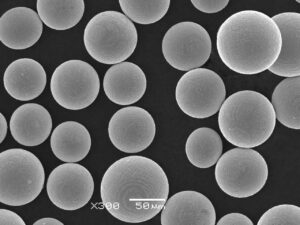
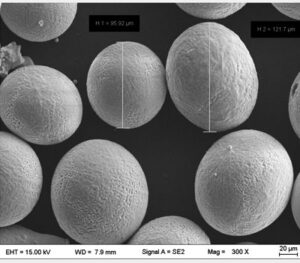
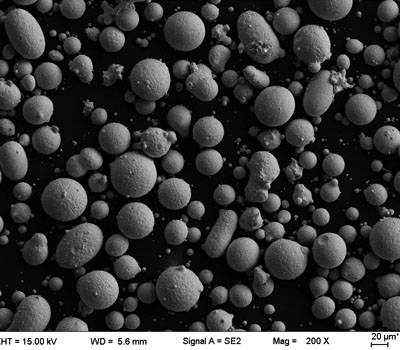
Particle shape is one of the most immediate practical issues. Highly spherical particles spread more evenly and reduce the chance of streaking, local layer-thickness variation, and unstable powder bed packing. In FeNiCrMn systems, where researchers often want to isolate metallurgy variables, spherical AM powder helps reduce noise caused by poor feedstock morphology.
Flowability also deserves close attention. If a powder shows acceptable Hall flow but contains too many elongated particles or satellites, it may still produce inconsistent recoating in thin layers. The specification should therefore treat Hall flow as one useful metric, not the only one.
Oxygen, Mn Retention, and Reuse Behavior
Oxygen control is important for all metal AM powders, but FeNiCrMn adds another concern: manganese is more reactive and can be more susceptible to loss or oxidation during melting cycles. That means virgin-powder chemistry and used-powder chemistry should both be checked during parameter development. Reuse studies should examine not only oxygen pickup, but also whether Mn content drifts after repeated exposure to the build chamber environment.
Powder reuse is possible in principle, yet HEA qualification plans typically treat it cautiously. The more compositionally sensitive the alloy design, the more important it becomes to track every reuse cycle and its effect on both chemistry and part performance.
Aplicações em diversos setores
FeNiCrMn High Entropy Alloys are most often used where a stable FCC-type microstructure, damage tolerance, and experimental design flexibility are more valuable than mature code-book standardization. In that sense, the alloy family sits between academic materials science and emerging industrial application. It is not the default choice for commodity brackets or routine tooling, but it can be the right choice for programs that prioritize novel performance windows and microstructural control.
Where FeNiCrMn High Entropy Alloys Are Used
This alloy family appears most often in R&D-intensive industries. Aerospace labs use it for coupon studies, thermal-mechanical test structures, and comparison against conventional austenitic or nickel-based systems. Energy and industrial research groups may use it for corrosion studies, cryogenic-mechanical testing, or components that must tolerate complex stress states without brittle response.
| Setor | Typical Part | AM / PM Process | Why the Alloy Is Considered |
|---|---|---|---|
| Aerospace R&D | Mechanical test coupons, lightweight demonstrators, lattice specimens | LPBF, EBM | FCC stability, ductility potential, non-equilibrium microstructure studies |
| Energy & Power | Corrosion coupons, heat-exposed fixtures, experimental flow parts | LPBF, DED | Compositionally tunable behavior under thermal and environmental loading |
| Cryogenic / Scientific Equipment | Structural inserts, test bars, low-temperature prototypes | LPBF, PM | Attractive toughness and deformation behavior in FCC-based systems |
| Materials Research & Universities | Phase-mapping builds, benchmark samples, reuse studies | LPBF, PM, MIM | Strong model system for AM process-structure-property investigation |
Why the Alloy Is Not a Commodity Powder
The same qualities that make FeNiCrMn attractive for research also make it less routine for broad commercial deployment. Qualification is more customized, property databases are smaller, and application-specific testing is usually required. That means the alloy delivers the highest value where the user expects to learn from the material, not just print it.
Comparison With Alternative AM Powders
In relation to stainless steel powders, FeNiCrMn may offer a different balance of lattice distortion, strain hardening, and compositional flexibility. In relation to nickel-based powders, it can reduce reliance on a heavily Ni-dominant matrix while still supporting a high-alloy chemistry space. In relation to cobalt-bearing HEAs, it can sometimes offer a more focused route for users who want to avoid cobalt without abandoning the HEA design framework.
These comparisons should always be made with part geometry, process route, and cost of qualification in mind. A technically interesting alloy is not automatically the best production alloy if the application does not need its unique metallurgy.
Fabricação e Garantia de Qualidade
Powder production route has a direct effect on FeNiCrMn quality because the alloy contains elements with different melting, reactivity, and vapor-pressure behavior. Gas atomization remains the most practical route for many spherical powders, but vacuum-assisted variants and PREP-based routes can be relevant when contamination control or morphology quality becomes the top priority.
The quality assurance plan should verify not only composition, but also consistency from heat to heat and lot to lot. In a material family that is still largely governed by customer specifications, repeatability is often a bigger business issue than whether a powder merely meets one nominal chemistry target.
Powder-Making Route Comparison
| Route | Main Strengths | Main Limitations | Typical Powder Traits | Suitable Use Cases |
|---|---|---|---|---|
| GA (Gas Atomization) | Scalable production, broad PSD flexibility, efficient batch output | Satellite control and oxidation management require tight discipline | Spherical to near-spherical powder with industrial throughput | General AM, PM, and development-scale production |
| PREP (Plasma Rotating Electrode Process) | Excellent sphericity, high cleanliness, very good flow behavior | Higher cost and electrode preparation requirements | Very clean, highly spherical particles with low defect tendency | Premium R&D powder and demanding print trials |
| VIGA (Vacuum Induction Gas Atomization) | Better atmosphere and melt chemistry control for reactive systems | More complex equipment and tuning requirements | Spherical powder with controlled contamination risk | Qualification-critical lots and advanced alloy development |
| Post-processed hybrid supply | Flexible sourcing with downstream classification | Incoming quality may vary more widely | Property spread depends on screening and blending discipline | Non-critical prototyping and early feasibility studies |
FeNiCrMn High Entropy Alloys QA Checklist
A strong release protocol typically includes elemental analysis by ICP-OES or XRF, oxygen and nitrogen by inert gas fusion, PSD by laser diffraction and sieve confirmation, morphology review by SEM, and bulk handling tests such as Hall flow, apparent density, and tap density. Some customers also request cross-section checks for internal porosity and satellite frequency because those defects can influence print stability.
For AM qualification, the first batch should usually be paired with build coupons that test density, cracking tendency, microstructure, and chemistry retention after printing. In FeNiCrMn systems, that second step is especially important because manganese behavior during melting can make the printed chemistry diverge from the powder chemistry if process parameters are poorly controlled.
Release Documentation and Acceptance Criteria
Batch release paperwork should state nominal composition, measured composition, PSD cut, oxygen content, packaging condition, and lot traceability. For advanced HEA programs, it is also sensible to request retained samples and a change-notification agreement if atomization gas, crucible practice, or sieve procedure changes between orders.
This is where project-specific qualification becomes central. The powder should not be accepted only because it looks similar to the previous lot; it should be accepted because both data and trial-build evidence show that it remains inside the validated process window.
Por que escolher a Truer como seu fornecedor
When FeNiCrMn powder is being sourced for additive manufacturing, the main supplier question is whether the manufacturer can align chemistry control, powder morphology, and application support around a non-commodity alloy. That question is more important than simple price comparison because HEA programs frequently require trial builds, lot discussion, and process-specific documentation.
Shanghai Truer Technology is relevant in this context because its capabilities span powder-making equipment and application-oriented additive manufacturing workflows. Its background in PREP, gas atomization, and SEBM is technically meaningful for customers who need to translate alloy design into a qualified powder form rather than buy only a generic spherical feedstock.
Why Supplier Capability Matters for FeNiCrMn AM Powder
FeNiCrMn High Entropy Alloys often need custom PSD fractions, lot-level chemistry review, and realistic discussion of process fit across SLM, SEBM, DED, or PM routes. A supplier that understands powder production and end-use processing can reduce iteration time when the objective is not merely powder delivery, but repeatable part performance.
That is why process-integrated manufacturing is a relevant criterion in this alloy family. A concise overview of Truer’s broader equipment-and-material scope appears on the company background page, which helps explain how the powder business sits alongside additive manufacturing process technologies.
Guia de pedidos e suporte
Ordering FeNiCrMn High Entropy Alloys should begin with an engineering specification, not a generic “send quotation” message. At minimum, the buyer should state the target process, powder size range, nominal composition, allowable manganese variation, oxygen limit, and whether the powder is intended for screening, qualification, or production. If the project is in early-stage R&D, it is often useful to request multiple small PSD cuts or composition variants in parallel.
The procurement workflow should also address whether the customer needs certificates of analysis, morphology images, retained samples, and recycled-powder guidance. These details are easy to postpone, but they become critical once the first successful build creates pressure to move quickly into repeat trials.
Typical Ordering Framework
| Embalagem | Typical MOQ Tier | Prazo de entrega | Sample Policy | Notas |
|---|---|---|---|---|
| 500 g lab bottle | R&D sample | 1-3 weeks typical | Paid sample or screening lot | Suitable for initial coupon studies and parameter scouting |
| 1-5 kg sealed container | Qualification batch | 2-4 weeks typical | Usually available with COA | Common for LPBF process development |
| 10-25 kg inert-packed drum | Pilot lot | 3-6 weeks typical | Retained sample recommended | Used for repeated builds and broader testing |
| 50 kg+ industrial batch | Scale-up program | 4-8 weeks typical | Formal lot approval advised | Best for multi-build campaigns and supply consistency review |
Information to Include in an RFQ
A well-prepared inquiry for FeNiCrMn powder should include:
- Intended process route, such as LPBF, SEBM, DED, PM, or MIM
- Required PSD and any oversize or fines restrictions
- Target chemistry, including acceptable Mn deviation
- Oxygen, nitrogen, and moisture expectations
- Packaging format and shipping condition
- Required documentation, test methods, and traceability level
If technical alignment is needed before a formal purchase order, the powder inquiry contact page is the practical place to coordinate specification details, sample scope, and delivery expectations.
Nossa empresa
Shanghai Truer Technology Co., Ltd. was established in 2009 and created its additive manufacturing business in 2019. The company focuses on integrating 3D-printing powder-making equipment and related services with spherical metal powders for engineering applications. Its core technologies include Selective Electron Beam Melting equipment, Plasma Rotating Electrode Process powder-making equipment, and gas atomization-related capability. The product scope includes TiNi, TiTa, TiAl, TiNbZr, CoCrMo, plus nickel-based, cobalt-based, titanium-based, copper-based, aluminum-based, and stainless steel spherical metal powders for SLM, SEBM, DED, laser cladding, powder metallurgy, MIM, HIP, cold or hot spraying, welding, and coating in sectors such as 3C electronics, hand tools, remote control cars, medical, aerospace, and nuclear power.
Perguntas frequentes
Q1. Are FeNiCrMn High Entropy Alloys good for laser powder bed fusion?
Yes, they can be very suitable for laser powder bed fusion when the chemistry is tightly controlled and the powder has high sphericity and low oxygen content. Their FCC-oriented metallurgy often makes them attractive for crack-resistant build studies and deformation-focused research. However, print parameters still need to be optimized carefully, especially to manage manganese behavior during melting.
Q2. How do FeNiCrMn High Entropy Alloys compare with 316L stainless steel powder?
FeNiCrMn High Entropy Alloys are generally more compositionally complex and are chosen for different reasons than 316L. While 316L is a mature, standardized, and cost-effective AM material, FeNiCrMn is typically used where researchers want tunable FCC HEA behavior, distinctive strain-hardening response, or a broader metallurgy development platform. The trade-off is that qualification is usually more involved.
Q3. What particle size is best for FeNiCrMn High Entropy Alloys in AM?
For LPBF, common target ranges are 15-53 µm or 20-63 µm because they support thin layers and stable powder spreading. Coarser cuts such as 45-105 µm may be appropriate for EBM or some DED workflows. The correct choice depends on machine type, layer thickness, feature size, and how aggressively the process window is being optimized.
Q4. Are there dedicated ASTM or ISO grades for FeNiCrMn High Entropy Alloys powder?
In most cases, no dedicated widely adopted commercial grade exists for this exact HEA family. Procurement usually relies on enterprise specifications, project documents, and agreed powder test methods rather than on one globally recognized wrought-style alloy designation. That is why chemistry tolerances and acceptance criteria should be written explicitly into the order.
Q5. What are the main risks when buying FeNiCrMn High Entropy Alloys powder?
The main risks are chemistry drift, especially involving manganese, excessive oxygen pickup, inconsistent particle morphology, and insufficient lot-to-lot reproducibility. A powder may appear acceptable on paper yet behave differently in the machine if PSD tails, satellite levels, or chemistry retention are not tightly managed. Review of both powder data and trial-build data is therefore essential.
Q6. Can FeNiCrMn High Entropy Alloys be used outside additive manufacturing?
Yes. They can also be investigated for powder metallurgy, MIM, thermal processing studies, and broader metallurgy research where FCC-type HEA behavior is of interest. In many programs, AM is simply the fastest way to fabricate test structures, while the underlying alloy science remains relevant across multiple manufacturing routes.