간단한 답변
Pure iron powder for additive manufacturing is a high-purity ferrous feedstock engineered for powder-bed fusion, directed energy deposition, metal injection molding, and related powder-based processes. It is chosen when users need spherical particles, stable flow, controlled residual elements, and predictable sintering or melting behavior without the added complexity of stainless steel or high-alloy systems. In practice, it is especially valuable for process development, magnetic components, research parts, coatings, and industrial applications where powder consistency and straightforward metallurgy are more important than corrosion resistance.
What Is pure iron powder for additive manufacturing?
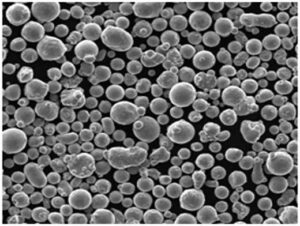
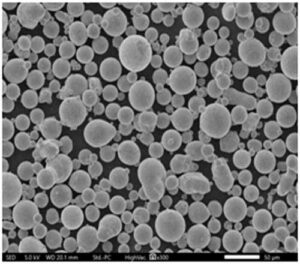
Pure iron powder for additive manufacturing refers to iron powder with very high iron content and tightly controlled residual elements, produced in a form suitable for modern powder-based manufacturing routes. In most AM contexts, the term implies spherical or near-spherical powder made by gas atomization or another advanced powder-making process, rather than irregular powder intended only for conventional press-and-sinter applications. The emphasis is not just on chemistry, but on how that chemistry is delivered as a processable feedstock.
From a materials classification standpoint, it sits within the wider family of ferrous additive manufacturing powders. Unlike stainless steel powders, which rely on chromium-rich chemistries for corrosion resistance, or tool steels, which depend on alloying additions for hardness and wear performance, pure iron powder is intentionally simple. That simplicity is one of its strengths: it gives engineers a cleaner baseline for studying melting behavior, densification, microstructure development, magnetic response, and post-processing effects.
Historically, iron has always been central to powder metallurgy, but additive manufacturing has changed the way iron powder is evaluated. In traditional PM, lower-cost water-atomized or reduced iron powders are often sufficient. In additive manufacturing, however, the feedstock must spread evenly, feed predictably, and respond consistently to a laser or electron beam. That is why pure iron powder for additive manufacturing is typically associated with more refined production routes and tighter controls than commodity iron powder.
Another reason this material exists is to provide a neutral platform for engineering development. Researchers and production teams often need a metal powder that is easier to interpret than complex alloys. Pure iron makes it possible to isolate the effects of particle size, beam energy, atmosphere, layer thickness, and thermal history with fewer metallurgical variables in the background. The ISO/ASTM 52900 terminology guide is helpful here because it distinguishes the major additive process categories in which iron powder may behave very differently.
How Pure Iron AM Powder Differs From Conventional Iron Powder
The difference is not merely semantic. Conventional iron powder may be optimized for compaction behavior, cost efficiency, or sponge-like surface area for sintering. Pure iron powder for additive manufacturing, by contrast, is usually optimized around powder flow, morphology, chemistry stability, and machine compatibility. Those priorities affect nearly every part of the specification, from oxygen limits to the chosen particle size window.
Why Spherical Morphology Matters
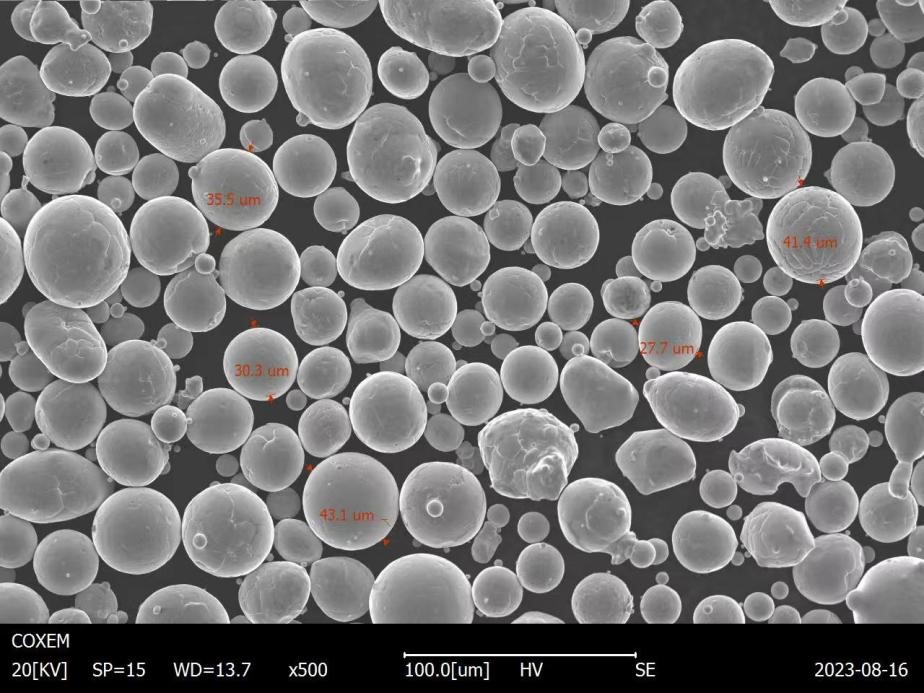
A spherical AM powder generally spreads more uniformly than an angular powder. That matters in thin powder layers, where poor spreading can create local thickness variation, inconsistent energy absorption, or porosity. For blown-powder processes, spherical particles also support more stable delivery through the feeding system.
Why Engineers Still Use Pure Iron
There is a tendency to focus on exotic alloys in additive manufacturing, yet pure iron remains highly relevant because it offers a controllable reference material. It is used when metallurgical simplicity, magnetic behavior, or adaptable downstream processing is more valuable than high corrosion resistance or extreme-temperature performance. In that sense, pure iron powder serves as both a practical feedstock and a benchmark material.
In powder-based manufacturing, feedstock behavior often determines process stability before alloy design determines final properties.
Chemical Composition and Material Grade
Pure iron powder for additive manufacturing is usually purchased to a chemistry envelope rather than a single globally standardized alloy name. That is common in powders where the end-use process defines the most important acceptance limits. Buyers typically focus on iron balance, carbon, oxygen, sulfur, phosphorus, nitrogen where relevant, and trace metallic impurities that could affect performance or repeatability.
The phrase “pure iron” should also be interpreted carefully. In industrial materials language, it rarely means absolutely 100% iron. It usually means commercially pure iron with residuals controlled to agreed limits. For additive manufacturing, those limits may be tighter than for general PM because thin layers, high surface area, and repeated thermal cycling can magnify the effects of contamination or oxide content.
The most common purchasing approach is to specify both the chemistry and the testing framework. That means a powder might be described as commercially pure spherical iron powder for AM, with max limits for carbon, oxygen, sulfur, and phosphorus, supported by lot-specific certification. Many purchasers use recognized standards for sampling and measurement language even when no single one-to-one alloy equivalent exists. The ASTM metal powder standards catalog is often consulted for the relevant test-method ecosystem.
| Constituent / Reference | 일반적인 wt% | Common Commercial Limit | Grade Cross-Reference / Notes |
|---|---|---|---|
| Fe | Balance, typically 99.5–99.9 | 나머지 | Commercially pure iron for AM or purchaser-defined ferrous powder |
| C | 0.01–0.05 | ≤0.05 typical | Important for hardness drift, microstructure, and post-process response |
| O | 0.03–0.18 | PSD- and route-dependent | Usually tighter for fine LPBF powder than for coarse DED powder |
| S | ≤0.01 | ≤0.02 typical | Low sulfur preferred for consistent ductility and cleanliness |
| P | ≤0.01 | ≤0.02 typical | Low phosphorus supports better mechanical consistency |
| Si | ≤0.05 | ≤0.10 typical | Usually treated as residual rather than deliberate alloy addition |
| Mn | ≤0.05 | ≤0.10 typical | Residual control helps maintain near-pure iron character |
| ASTM / AMS / GB / ISO / DIN | - | - | Commonly ordered to agreed chemistry and test methods, not a universal alloy-equivalent grade |
Residual Elements That Matter Most
Carbon, oxygen, sulfur, and phosphorus are usually the first residuals buyers examine. Carbon influences hardness and phase behavior; oxygen is closely tied to oxide content and powder surface condition; sulfur and phosphorus are generally minimized because they can impair toughness, ductility, or consistency. In magnetic or research applications, even modest impurity shifts can change the usefulness of the final part.
Grade Language in Real Procurement
It is common for a request for quotation to describe the powder in operational terms instead of using a short grade code. A purchaser may ask for pure iron AM powder, spherical, 15–53 µm, oxygen below a defined level, with certificate of analysis and morphology report. This style of specification is more actionable than a generic label because it connects chemistry to the intended process.
Pure Iron vs. Stainless and Alloyed Ferrous Powders
Pure iron should not be specified the same way as stainless steel or precipitation-hardening steels. In alloyed ferrous powders, nominal composition often dominates selection. With pure iron powder for additive manufacturing, the decisive factors are usually purity, morphology, and size classification. When corrosion resistance becomes critical, a stainless steel powder catalog is often the more appropriate comparison point than pure iron.
기술 사양
Technical specifications for pure iron powder for additive manufacturing must match the process window. A powder suitable for laser powder bed fusion is not automatically a good choice for directed energy deposition, MIM, or thermal spray. The most useful technical sheet therefore presents particle size distribution, density values, flow characteristics, oxygen level, and morphology in one view.
The reason these metrics matter is straightforward. In AM, powder is not a passive raw material; it actively influences recoating, absorption, packing, spatter sensitivity, and even powder recycling behavior. A good specification is one that makes those relationships visible before the first build starts.
| Typical PSD Range | Typical Process Fit | 겉보기 밀도(g/cm³) | Tap Density (g/cm³) | Hall Flow (s/50 g) | Oxygen Content (wt%) | 구형성 |
|---|---|---|---|---|---|---|
| 15–45 µm | Fine LPBF development | 4.2–4.8 | 4.8–5.4 | 16–24 | 0.06–0.18 | ≥0.90 typical |
| 15–53 µm | General LPBF | 4.3–4.9 | 4.9–5.5 | 15–22 | 0.05–0.16 | ≥0.90 typical |
| 20–63 µm | MIM and specialty PM | 4.3–4.8 | 4.9–5.4 | 15–23 | 0.05–0.17 | ≥0.90 typical |
| 45–105 µm | DED and laser cladding | 4.5–5.1 | 5.1–5.8 | 13–20 | 0.04–0.14 | ≥0.92 typical |
| 53–150 µm | Thermal spray and coarse DED | 4.6–5.2 | 5.2–5.9 | 12–18 | 0.04–0.12 | ≥0.92 typical |
Particle Size Distribution in Pure Iron AM Powder
입자 크기 분포 is one of the most influential variables because it changes both handling and melting behavior. Finer powders are better aligned with thin layers and finer features, but their greater surface area usually makes them more sensitive to oxygen pickup and powder reuse effects. Coarser fractions often feed more easily in nozzle-based systems and are preferred for cladding or spraying.
Flow and Packing Behavior
Apparent density and tap density provide a quick picture of how the powder packs under gravity and after mechanical settling. Higher packing efficiency generally supports more uniform layer formation or feed delivery, though the relationship is not perfectly linear in real machines. Hall flow remains a common screening metric because it is easy to compare across lots, even if experienced users know it is only part of the powder-behavior story.
Oxygen, Surface Chemistry, and Powder Reuse
Oxygen level is especially important in pure iron powder because iron surfaces oxidize readily if the powder is not well protected. Fine powders are the most vulnerable, particularly during repeated handling or recycling. For that reason, users should monitor not only the as-shipped oxygen value but also the condition of reused powder after multiple production cycles.
Morphology, Satellites, and Spreadability
A nominally spherical powder can still perform poorly if it contains too many satellites or a broad uncontrolled PSD. Spreadability depends on the combined effect of shape, fines content, surface condition, and packing behavior. The NIST additive manufacturing powder resources are useful for understanding why laboratory powder data should be connected to actual process performance.
Machine Fit and Qualification
No single technical data sheet can guarantee success on every machine. Layer thickness, beam diameter, shielding gas strategy, and recoater type all influence how pure iron powder behaves during a build. A technically strong qualification plan uses the specification as a starting point, then confirms performance with controlled machine trials.
Applications Across Industries
Pure iron powder for additive manufacturing appears in a wider range of applications than many buyers expect. While it is not a universal structural material, it is valuable wherever simple iron chemistry, magnetic behavior, or process-friendly powder morphology creates an advantage. It is particularly useful in development settings because it allows process engineers to evaluate machine behavior without the confounding effects of highly alloyed systems.
| 산업 | Typical Part | Main Functional Need | AM / PM Process |
|---|---|---|---|
| Research and development | coupons, benchmark geometries, parameter blocks | baseline ferrous process mapping | LPBF / SEBM / DED |
| 연자성 부품 | magnetic cores, flux guides, test structures | magnetic response with low alloy complexity | LPBF / PM / MIM |
| 자동차 프로토타입 제작 | fixtures, brackets, validation parts | economical ferrous prototypes | LPBF / PM |
| Surface engineering | repair tracks, bond layers, build-up features | stable powder feeding and deposition | laser cladding / spray |
| Education and laboratories | training samples, metallurgical studies | clear process-property relationships | multi-process AM |
| Tooling support | jigs, holders, sacrificial process tools | machinability and controlled cost | DED / PM / binder-based routes |
Pure Iron Powder for Additive Manufacturing in R&D
One of the most common uses for pure iron powder for additive manufacturing is process development. Research teams use it to study scan strategies, porosity formation, heat treatment effects, and atmosphere sensitivity with fewer compositional variables than stainless steel or superalloys. That makes it a practical baseline material for both academic and industrial programs.
Magnetic and Electromagnetic Components
Pure iron has long-standing relevance in magnetic applications, and additive manufacturing expands the design possibilities for this class of part. Complex internal geometries, lightweight magnetic structures, and topology-optimized features can all benefit from a feedstock that retains the essential characteristics of iron. In these projects, magnetic component development often depends as much on purity and pore control as on the AM process itself.
Powder Metallurgy, MIM, and Hybrid Manufacturing
Although the phrase targets additive manufacturing, pure iron powder may also support MIM, PM, and hybrid manufacturing routes used alongside AM. In some cases, the same chemistry is evaluated in both printed and molded forms to compare shrinkage, density, and downstream machining. That makes pure iron an unusually flexible material for process benchmarking.
Coatings, Cladding, and Repair
Coarser size fractions are frequently relevant for cladding and spray-based deposition. In these applications, flow consistency and feeding behavior may matter even more than fine feature resolution. Pure iron is not always the final service material, but it is useful for bond layers, repairs, experiments, and precursor deposition work.
When Another Powder Family Makes More Sense
Pure iron is rarely the best option when the application requires corrosion resistance, oxidation resistance, or extreme high-temperature capability. In those cases, materials from a nickel-based powder range, a titanium powder collection, or copper- and aluminum-based systems may offer a better functional fit. Material selection should follow service requirements first, not just powder availability.
Manufacturing and Quality Assurance
The quality of pure iron powder for additive manufacturing is shaped by the full manufacturing route, not just the final certificate. Melt quality, atomization conditions, gas selection, cooling rate, sieving practice, de-dusting, lot blending, sampling, and sealed packaging all affect how the powder performs in real equipment. For high-purity iron, post-production handling is especially important because oxidation can change surface condition relatively quickly if controls are weak.
Different production methods can all produce usable powder, but they do not deliver the same balance of morphology, cleanliness, and cost. Gas atomization is widely used because it is practical at industrial scale and can produce the spherical morphology needed for many AM processes. PREP and VIGA are also relevant in certain contexts, especially when cleanliness or morphology targets are unusually demanding.
| Route or QA Check | Main Advantage | Main Limitation | Typical Acceptance Focus |
|---|---|---|---|
| Gas Atomization (GA) | scalable production and good spherical morphology | satellite control and oxidation management are essential | PSD, oxygen, flow, morphology |
| 준비 | excellent sphericity and low satellite fraction | higher cost and less common for commodity iron | premium morphology and cleanliness |
| VIGA | high melt cleanliness and tight chemistry control | more complex processing setup | low contamination and stable residuals |
| PSD verification | confirms size cut and fines control | does not alone predict printability | agreed distribution limits |
| Density and flow testing | simple comparison across lots | incomplete picture of spreadability | apparent density, tap density, Hall flow |
| Gas analysis and microscopy | reveals oxide condition and foreign matter | requires disciplined sampling practice | oxygen, particle surface, contamination control |
GA, PREP, and VIGA in Context
Gas atomization is generally the most practical route for commercial pure iron AM powder because it balances throughput, morphology, and cost. PREP is often associated with premium spherical powder, though it is more commonly justified for reactive or high-value alloys than for plain iron. VIGA becomes relevant when purity, atmosphere control, and low contamination are the dominant concerns.
Quality Assurance for Pure Iron Powder for Additive Manufacturing
A robust QA program covers chemistry, oxygen, size distribution, density, flow, and morphological review by microscopy or image analysis. For demanding users, documentation should be lot-specific rather than based on generic catalog values. In production environments, powder cleanliness is monitored not only at shipment but also after storage, transfer, and reuse.
Packaging, Storage, and Handling Discipline
Powder performance can deteriorate after manufacturing if storage and handling are poorly controlled. Pure iron powder should be sealed in moisture-resistant packaging, labeled by lot, and protected from unnecessary air exposure during transfer. Users should also define internal handling procedures so that the material arriving at the machine is still representative of the certified lot.
Why Requalification Matters
Powder reuse is common in additive manufacturing, but pure iron must be monitored carefully because oxidation and fines accumulation can gradually alter behavior. Periodic checks for oxygen content, PSD drift, and visible contamination help keep the process window stable. The ASM materials engineering resources provide useful background on how powder metallurgy principles intersect with modern additive practice.
Why Choose Truer as Your Supplier
Choosing a supplier for pure iron powder for additive manufacturing is primarily a question of technical fit. Buyers need a partner that understands the relationship between melt quality, powder-making route, morphology, chemistry, and the end-use process. That is particularly important for pure iron because seemingly small changes in oxygen level, particle size window, or satellite fraction can affect spreading, feeding, and final part behavior.
Shanghai Truer Technology is relevant because its activities span metal powder making equipment, additive manufacturing processes, and spherical powder supply. That broader process perspective matters when a customer is trying to align feedstock choice with LPBF, SEBM, DED, laser cladding, MIM, or PM requirements. A supplier working across both powder production and application environments is better positioned to discuss why one powder cut may suit one process and not another.
Truer’s broader portfolio also matters for comparison-based engineering decisions. Teams that start with pure iron as a baseline may later move to cobalt-, titanium-, stainless-, or nickel-based alternatives once application targets become more demanding. In that setting, supplier value often comes from process-to-powder alignment rather than from offering a single isolated product.
Technical Factors Buyers Should Compare
When reviewing suppliers, engineers should compare chemistry control, morphology consistency, documentation depth, packaging discipline, and willingness to discuss lot-specific data. A technically capable supplier should also be able to connect powder characteristics to an actual process route rather than speaking only in catalog language. This is especially important when transitioning from laboratory trials to recurring production lots.
Ordering Guide and Support
Ordering pure iron powder for additive manufacturing begins with a clear technical definition of the required material. The term “pure iron powder” is too broad on its own because the relevant product depends on particle size, residual chemistry, oxygen limit, morphology, packaging, and process type. A concise, complete RFQ reduces evaluation time and prevents misalignment between the powder supplied and the process planned.
| Packaging Format | Typical MOQ Tier | Typical Lead Time | Sample Policy |
|---|---|---|---|
| 500 g bottle | lab evaluation quantity | 1–2 weeks if stocked | small paid sample or project-based sample |
| 1 kg bottle | early R&D screening lot | 1–3 weeks typical | common for parameter development |
| 5 kg sealed can | pilot qualification lot | 2–4 weeks typical | sample often linked to the same batch family |
| 10–25 kg drum | pre-production supply | 3–5 weeks typical | retained reference sample may be available |
| 50 kg+ batch supply | recurring production demand | 4–8 weeks typical | qualification sample normally precedes volume order |
What to Include in an RFQ
A useful RFQ should identify the intended process, desired PSD, required chemistry limits, packaging preference, quantity, and certification expectations. If the powder will be used in qualification trials, it also makes sense to request apparent density, tap density, Hall flow, oxygen content, and morphology information. The more closely the inquiry reflects the real process window, the more useful the supplier response will be.
Samples and Technical Communication
Many buyers begin with a small sample to evaluate spreading, feeding, density, and build quality before scaling up to pilot or recurring lots. During that stage, it is helpful to keep the discussion tied to machine conditions and target part function rather than asking only for generic powder data. For project discussions, Truer provides a powder sales contact page, and its company profile overview outlines the broader additive manufacturing and powder-equipment context.
Lead Time Variables
Lead time usually depends on stock position, required PSD class, QA scope, packaging type, and export logistics. Fine AM fractions with tighter oxygen controls are often more handling-sensitive than coarse fractions intended for cladding or spraying. As a result, two orders with the same nominal chemistry may still require different production and release timelines.
우리 회사
Shanghai Truer Technology Co., Ltd. was established in 2009 and created its additive manufacturing business in 2019. The company focuses on integrating 3D printing powder making equipment and services with high-quality 3D printing powders for engineering applications of additive manufacturing. Its core technologies include Selective Electron Beam Melting equipment, Plasma Rotating Electrode Process powder making equipment, and gas atomization relevant to spherical metal powders. The product portfolio includes TiNi, TiTa, TiAl, TiNbZr, and CoCrMo, together with nickel-based, cobalt-based, titanium-based, copper-based, aluminum-based, and stainless steel spherical metal powders. The company also participates in a joint innovation center for metal 3D printing with laboratories and industry experts, and supports SLM, SEBM, DED, laser cladding, PM, MIM, HIP, cold and hot spraying, welding, and coating for industries including 3C electronics, hand tools, remote-control cars, medical, aerospace, and nuclear power.
자주 묻는 질문
Q1. Is pure iron powder for additive manufacturing the same as ordinary iron powder?
No. Pure iron powder for additive manufacturing is usually produced and classified with tighter controls on particle shape, powder flow, particle size distribution, and impurity limits than ordinary iron powder used in conventional PM. Those differences are important for layer formation, feeding stability, and reproducible melting or sintering.
Q2. What particle size is commonly used for pure iron powder in laser powder bed fusion?
A common range is 15–53 µm, with some users preferring 15–45 µm for finer layer strategies. The optimal range depends on the machine platform, recoater design, layer thickness, and tolerance for fines-related oxidation.
Q3. Can pure iron powder for additive manufacturing be used for magnetic parts?
Yes, and that is one of its most relevant application areas. Pure iron is attractive for magnetic research and prototype components because its simple chemistry makes it easier to interpret the effects of density, porosity, and heat treatment on magnetic performance.
Q4. Why is oxygen content so critical in pure iron AM powder?
Oxygen affects oxide formation, powder surface condition, and sometimes final part density and consistency. Because pure iron oxidizes relatively easily, storage, transfer, and powder reuse practices can be just as important as the initial certified oxygen value.
Q5. Is pure iron powder better than stainless steel powder for additive manufacturing?
Not inherently; the right choice depends on the application. Pure iron is often preferred for baseline process studies, magnetic uses, and simple ferrous development work, while stainless steel is generally a better option when corrosion resistance or broader structural performance is required.
Q6. What should buyers request when sourcing pure iron powder for additive manufacturing?
They should request chemistry limits, PSD, oxygen content, density data, Hall flow, morphology information, packaging details, and lot-specific certification. It is also important to specify the intended process, because a powder optimized for LPBF may not be the best choice for DED, MIM, PM, or spraying.