간단한 답변
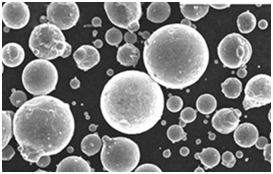
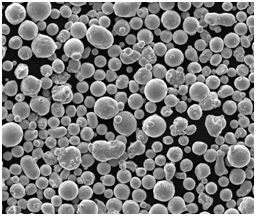
PREP spherical Inconel 718 powder is a nickel-based superalloy feedstock produced by the Plasma Rotating Electrode Process to deliver high sphericity, low contamination, and stable flow behavior for metal additive manufacturing. It is widely chosen for 3D printing applications because Inconel 718 combines strong high-temperature strength, corrosion resistance, and crack-resistant processability, while PREP production improves powder cleanliness and morphology. That combination makes it especially suitable for aerospace, energy, medical, and high-reliability industrial parts made by SLM, SEBM, DED, and related powder-based processes.
What Is PREP spherical Inconel 718 powder?
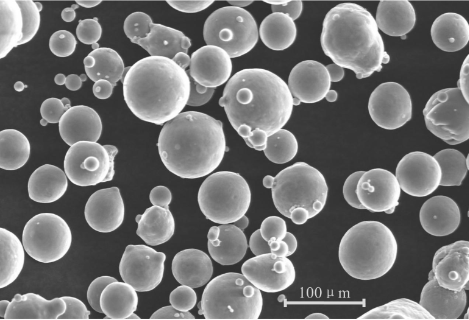
PREP spherical Inconel 718 powder is the powder-feedstock form of Inconel 718, a precipitation-hardenable nickel-chromium superalloy, manufactured by the Plasma Rotating Electrode Process rather than by conventional gas atomization alone. In simple terms, it is a premium spherical metal powder engineered for advanced manufacturing routes that require consistent particle shape, controlled chemistry, and reliable thermal performance in the finished part.
Inconel 718 has been one of the most widely used nickel superalloys in aerospace and power-generation hardware because it offers a rare balance of weldability, tensile strength, fatigue performance, oxidation resistance, and useful strength at elevated temperature. That balance explains why the alloy became important not only in forged and cast products, but also in additive manufacturing and powder metallurgy. Compared with some more crack-sensitive nickel superalloys, 718 is often considered one of the more process-friendly options for laser and electron-beam systems.
Why PREP matters for spherical powder quality
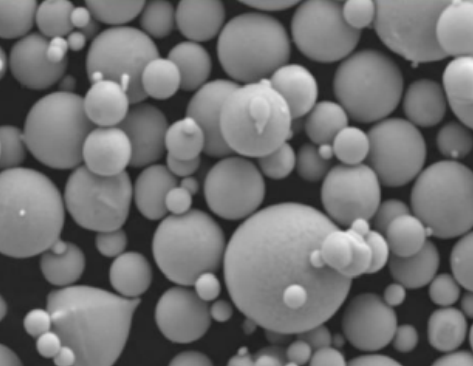
The PREP route starts with a rotating alloy electrode that is melted at the tip by plasma. Centrifugal force throws molten droplets outward, and those droplets solidify into highly spherical particles. Because the process does not rely on a tundish or nozzle in the same way many atomization setups do, PREP is frequently associated with lower inclusion risk, lower satellite content, and a narrower population of irregular particles.
That difference matters in metal additive manufacturing. A cleaner, more spherical powder can improve spreadability in powder-bed systems, feeding consistency in deposition systems, and repeatability from lot to lot. For buyers evaluating premium feedstock, PREP spherical Inconel 718 powder is often discussed in the context of powder morphology and cleanliness rather than chemistry alone.
How Inconel 718 fits within the nickel superalloy family
Inconel 718 belongs to the class of nickel-based superalloys strengthened mainly through niobium-rich precipitates along with gamma-double-prime and gamma-prime phases after suitable heat treatment. It sits in an important middle ground within the superalloy family: stronger and more heat-resistant than standard stainless steels, but generally easier to process than some higher gamma-prime turbine alloys. That is one reason it is so common in AM qualification programs.
Within a broader nickel superalloy powder portfolio, 718 is often the benchmark material for high-strength corrosion-resistant printing in demanding environments. Engineers frequently compare it with cobalt alloys, titanium alloys, and stainless steels, but its combination of temperature capability and manufacturing practicality gives it a distinct position.
PREP spherical Inconel 718 powder vs. standard atomized 718 powder
Not every Inconel 718 powder on the market is made the same way. Gas-atomized powder can perform very well and remains common in industry, but PREP powder is often selected when exceptionally high sphericity, low entrapped contamination, and premium flow behavior are priorities. That does not automatically make PREP the right answer for every project, yet it does make it relevant for critical applications where feedstock consistency directly affects build stability and final part quality.
For additive manufacturing teams, the decision usually comes down to process sensitivity. If the build relies on smooth recoating, tight powder reuse control, and reproducible densification, PREP spherical Inconel 718 powder can offer a practical advantage.
Chemical Composition and Material Grade
The performance of PREP spherical Inconel 718 powder begins with the alloy chemistry. Although powder morphology affects handling and printing behavior, the high-temperature strength, corrosion resistance, and age-hardening response of the material still come from the classic 718 composition window. Buyers therefore need to evaluate both the powder form and the base alloy specification together.
Typical composition of Inconel 718 alloy powder
| Element / Reference Item | Typical wt.% | Primary Function in Alloy | Common Grade Cross-Reference |
|---|---|---|---|
| 니켈(Ni) | 50.0–55.0 | Matrix phase, corrosion and heat resistance | UNS N07718 / alloy 718 |
| 크롬(Cr) | 17.0–21.0 | 산화 및 내식성 | Aligned with ASTM B637 chemistry family |
| 철(Fe) | 잔액 | Cost-effective matrix component | Standard in Inconel 718 composition |
| Niobium + Tantalum (Nb+Ta) | 4.75–5.50 | Precipitation strengthening | Core strengthening addition in 718 |
| 몰리브덴(Mo) | 2.80–3.30 | Solid-solution strengthening | Typical for 718 grade |
| 티타늄(Ti) | 0.65–1.15 | Precipitation hardening support | Standard 718 range |
| 알루미늄(Al) | 0.20–0.80 | Gamma-prime contribution | Controlled hardening addition |
| 코발트 (Co) | ≤1.0 typical | Residual/controlled element | Often limited rather than targeted |
| 탄소(C) | ≤0.08 | Carbide control | Chemistry limit item |
| 망간(Mn) | ≤0.35 | Residual/processing-related | Chemistry limit item |
| 실리콘(Si) | ≤0.35 | Residual/processing-related | Chemistry limit item |
| 유황(S) | ≤0.015 | Impurity control | Low sulfur preferred |
| 인(P) | ≤0.015 | Impurity control | Low phosphorus preferred |
| ASTM reference | - | Powder and feedstock procurement may reference additive or alloy standards | Often linked to ASTM alloy family documents |
| AMS reference | - | Aerospace procurement commonly aligns with wrought/bar or powder-related callouts | Buyer specification dependent |
| GB / ISO / DIN reference | - | Cross-reference depends on end-use qualification | Usually handled by customer drawing or internal standard |
The table reflects the widely recognized chemistry window for alloy 718. In actual procurement, powder buyers may call out the UNS number, a proprietary purchasing specification, or a standard family reference that points back to the conventional chemistry. For additive manufacturing, the certificate of analysis, lot consistency, and impurity control are often more important than any single label printed on the package.
Chemistry and precipitation hardening behavior
The key to Inconel 718 is its precipitation response. Niobium is especially important because it supports the formation of strengthening phases that give the alloy its useful combination of room-temperature and elevated-temperature performance after solution and aging treatments. Chromium protects against oxidation and corrosion, while molybdenum contributes additional strengthening.
The alloy’s chemistry also explains why it is attractive in AM. Inconel 718 retains better processability than many superalloys while still delivering a strong property set after heat treatment. That balance has made it a staple in powder-bed fusion development and high-value industrial part production.
Material grades and specification language in real purchasing
Buyers should not assume that all 718 powder certificates use identical standard language. Some orders reference aerospace-style material control, some reference UNS chemistry only, and some combine chemistry, PSD, morphology, oxygen, and packaging rules in a single supplier data sheet. In additive manufacturing, the usable grade is often defined by the full process specification, not by chemistry alone.
For terminology consistency, many engineers align internal documentation with ISO/ASTM additive manufacturing terminology. That is helpful when purchase teams, materials engineers, and machine operators all need the same definitions for powder reuse, powder bed fusion, or directed energy deposition.
기술 사양
Technical specifications are what turn a nominal alloy into a functional AM feedstock. PREP spherical Inconel 718 powder must spread, flow, pack, melt, and solidify predictably. For that reason, the practical specification usually covers much more than chemistry: it also includes particle size distribution, sphericity, gas content, density behavior, and packaging condition.
Typical technical specifications for PREP spherical Inconel 718 powder
| 매개변수 | 15–53 µm | 45–105 µm | 53–150 µm | Typical Notes |
|---|---|---|---|---|
| Typical process use | SLM / LPBF | DED / laser cladding | DED / thermal spray / larger track deposition | Process-specific selection |
| D10 | 15–18 µm | 45–52 µm | 53–62 µm | Laser diffraction typical |
| D50 | 28–34 µm | 68–78 µm | 88–102 µm | Median particle size typical |
| D90 | 48–53 µm | 98–105 µm | 142–150 µm | Upper cut tightly controlled |
| 겉보기 밀도 | 4.3–4.8 g/cm³ | 4.5–4.9 g/cm³ | 4.6–5.0 g/cm³ | Depends on PSD and morphology |
| 탭 밀도 | 4.9–5.4 g/cm³ | 5.0–5.6 g/cm³ | 5.1–5.7 g/cm³ | Indicates packing response |
| 홀 흐름 | 12–18 s/50 g | 11–17 s/50 g | 10–16 s/50 g | Typical for high-sphericity feedstock |
| 산소 함량 | ≤0.03 wt.% typical | ≤0.03 wt.% typical | ≤0.035 wt.% typical | Final limit by agreement |
| 질소 함량 | ≤0.02 wt.% typical | ≤0.02 wt.% typical | ≤0.02 wt.% typical | Low gas pickup preferred |
| 구형성 | ≥0.95 typical | ≥0.95 typical | ≥0.95 typical | PREP powders often show high circularity |
| Satellite content | Very low typical | Very low typical | Low typical | Helps flow and recoating |
| Moisture condition | Dry, inert-sealed | Dry, inert-sealed | Dry, inert-sealed | Storage discipline required |
These are realistic commercial ranges for high-quality superalloy powder, but they remain typical rather than universal. Different machine platforms, reuse policies, and quality plans may require a tighter or slightly different specification window.
PREP spherical powder and particle morphology
One of the main reasons users specify PREP is particle morphology. Compared with more irregular powders, highly spherical particles usually exhibit better powder-bed spreading, lower inter-particle friction, and more consistent packing. In feeder-based processes, they can also promote smoother transport through lines and nozzles.
This does not mean morphology is the only performance variable. A very spherical powder with drifting chemistry or elevated oxygen can still create build problems. Still, for buyers prioritizing premium feedstock, high sphericity and low satellites are two of the most visible reasons PREP powder commands attention.
PSD selection for SLM, SEBM, and DED
Finer cuts such as 15–53 µm are typically selected for laser powder bed fusion because the process relies on thin layers and uniform recoating. Electron beam platforms may use similar or somewhat adjusted distributions depending on machine architecture and layer strategy. Coarser PSD ranges, including 45–105 µm or 53–150 µm, are more common in DED and cladding, where powder catchment and feeder stability matter more than thin-bed behavior.
The correct PSD is therefore application-driven, not generic. A powder that performs well in one process may be suboptimal in another, even when the underlying chemistry is identical. That is why buyers should define machine type and process route before finalizing the feedstock order.
Oxygen, cleanliness, and reuse performance
Low oxygen and low contamination help preserve the integrity of both the powder and the finished part. In nickel superalloys, excessive oxygen can affect melt behavior, oxide formation, and the cleanliness of consolidated material. PREP is often discussed favorably here because of its ability to generate clean, highly spherical particles with relatively low satellite formation.
Reuse adds another layer of complexity. Even premium powder will gradually change with thermal exposure, sieving, and handling. A sound reuse strategy therefore monitors oxygen, out-of-range particles, and visible spatter contamination rather than assuming all lots remain identical over time.
Technical data and standards context
Procurement teams often want to connect powder specifications with recognized standards language. For conventional alloy identity, ASTM alloy 718 material references are commonly used as a framework. For AM powder behavior, however, user-defined acceptance criteria often go beyond general alloy standards and include particle imaging, flow, gas analysis, and packaging conditions tailored to the production route.
Applications Across Industries
PREP spherical Inconel 718 powder is widely used because the alloy can handle a demanding blend of stress, corrosion, and temperature while remaining compatible with multiple additive manufacturing methods. This gives it unusual versatility across high-value sectors where part failure is expensive and conventional manufacturing may struggle with geometry, lead time, or material waste.
Typical applications by sector
| 산업 | Typical Part | AM / PM Process | Why 718 PREP Powder Is Used |
|---|---|---|---|
| 항공우주 | Brackets, manifolds, combustor-adjacent hardware, engine components | SLM, SEBM, DED | High strength, oxidation resistance, design freedom |
| 에너지와 전력 | Turbine tooling, burner hardware, repair features, hot gas path support parts | DED, laser cladding, PM | Good elevated-temperature capability and repair value |
| 석유 및 가스 | Corrosion-resistant downhole or topside components | SLM, PM | Corrosion resistance plus high strength |
| 의료 | Surgical tools, instrumentation, non-implant specialty hardware | slm | Strength, sterilization tolerance, precision manufacturing |
| 자동차 및 모터스포츠 | Turbo-related hardware, fixtures, heat-resistant functional parts | SLM, DED | Thermal durability and complex geometry |
| Industrial manufacturing | Tooling inserts, nozzles, fixtures, wear-and-heat exposed components | SLM, PM, cladding | Strong balance of manufacturability and performance |
Aerospace remains the most visible field for Inconel 718 AM powder because the alloy has long been accepted in demanding structural and thermal service. It supports lightweight design strategies, part consolidation, and shorter development cycles for components that would otherwise require extensive machining or complex assemblies.
Aerospace and power-generation use cases
Aerospace programs frequently favor 718 when a part needs strong fatigue resistance, corrosion performance, and moderate-to-high temperature capability without the processing penalties associated with more sensitive superalloys. The alloy is common in tooling, structural engine-adjacent hardware, and complex internal-flow geometries. PREP powder becomes especially relevant when powder consistency is part of the qualification strategy.
In power-generation and energy systems, the material also appears in repair and refurbishment workflows. DED and cladding can restore geometry or build up local features on valuable hardware, reducing scrap and shortening downtime. That gives PREP spherical Inconel 718 powder a role not only in new-build parts but also in life-extension programs.
Medical and precision industrial applications
Although not a standard implant alloy, Inconel 718 can be relevant to surgical tooling, high-strength fixtures, and specialized components where sterilization resistance and mechanical durability matter. In industrial environments, the alloy is often used for precision hardware exposed to heat, pressure, or corrosive conditions.
Where different property profiles are needed, engineers may compare 718 with stainless steel powder grades, titanium powders, or cobalt alloys. That comparison usually comes down to failure mode: heat and strength favor 718, weight favors titanium, and some wear-dominant applications may favor cobalt systems.
Why PREP powder is chosen for demanding builds
When the part is high value and the qualification burden is high, powder consistency becomes a strategic variable. Engineers do not want to troubleshoot layer defects, feeder fluctuations, or morphology-driven density drift halfway through a validation program.
For critical metal AM, premium powder is often selected to reduce variability before process optimization even begins.
That is one reason PREP spherical powder for additive manufacturing attracts attention in advanced aerospace, energy, and research programs. It offers a route to tighter control over the feedstock, which can simplify downstream process development.
Manufacturing and Quality Assurance
Production method and quality assurance are central to the value proposition of PREP spherical Inconel 718 powder. Buyers do not specify PREP simply because it sounds advanced; they specify it because manufacturing route can influence sphericity, cleanliness, flow, and lot consistency. Those powder-level characteristics then affect machine stability and part quality.
PREP vs. GA vs. VIGA for Inconel 718 powder
| Powder Route | Typical Particle Shape | Satellite Level | Relative Cleanliness | Main Use Consideration |
|---|---|---|---|---|
| 준비 | 고도로 구형 | Very low typical | 매우 높음 | Preferred for premium AM feedstock and consistency-sensitive builds |
| Gas Atomization (GA) | Spherical to near-spherical | Low to moderate typical | Good | Broadly used, scalable, cost-effective |
| VIGA | 구형 | Low typical | 매우 좋음 | Strong chemistry control with inert melting and atomization |
| Plasma atomization / specialty routes | 고도로 구형 | Low typical | 높음 | Useful for niche premium applications |
| Recycled / blended feedstock | 변수 | 변수 | Depends on control program | Requires tighter incoming QA before use |
PREP often stands out because it can minimize satellites and produce very round particles. Gas atomization remains highly important in industry because it offers strong commercial scalability and can achieve excellent quality when well controlled. VIGA adds benefits in chemistry control and inert handling, which also matter for premium superalloys.
QA checks that matter most for PREP spherical Inconel 718 powder
A typical incoming quality package includes chemical composition, PSD by laser diffraction, particle morphology by image analysis or SEM review, apparent density, tap density, Hall flow, and oxygen or nitrogen testing. Some buyers also request moisture checks, magnetic contamination review, retained samples, and full lot traceability.
The best QA plans link powder test results to process intent. A fine LPBF powder should be judged partly by spreading and layer formation behavior, while a DED powder may place more emphasis on feeder stability and catchment consistency. Good QA is therefore application-specific, not just paperwork-heavy.
Powder route, defects, and process reliability
Different powder routes influence different risk profiles. Satellite-rich powder may recoater poorly, irregular particles may bridge in feed systems, and contamination can complicate densification or surface quality. PREP is often favored where users want to reduce these variables before they begin machine parameter optimization.
That said, no powder route eliminates the need for process development. Laser power, scan strategy, preheat conditions, shielding atmosphere, and post-build heat treatment still determine much of the final performance. Powder quality lowers risk, but it does not replace engineering discipline.
Documentation, traceability, and lot control
For aerospace and other regulated sectors, traceability matters almost as much as the nominal spec. A reliable supply chain should connect the source alloy, PREP run, screening or classification batch, inspection records, and final packaging lot. If a build anomaly emerges later, that traceability allows root-cause analysis to proceed quickly.
Materials teams often use NIST materials measurement resources and related reference practices as part of their broader quality framework. Even when procurement is supplier-specific, a measurement culture grounded in recognized methods improves consistency across the entire AM workflow.
Why Choose Truer as Your Supplier
Supplier selection for PREP spherical Inconel 718 powder should focus on technical fit, route knowledge, and process awareness rather than on price alone. The most useful supplier is one that understands how powder-making method interacts with downstream applications such as SLM, SEBM, DED, PM, and cladding. That is particularly relevant for PREP powder, where the route itself is part of the material decision.
Truer is relevant because PREP is not just a catalog term within its operating context; it is part of the company’s equipment and powder-making capability base. That makes discussions about electrode quality, spherical morphology, process matching, and lot control more grounded in manufacturing realities. A concise company background overview gives context for that technical scope.
Another practical advantage is portfolio breadth. Buyers evaluating 718 often compare it with cobalt, titanium, copper, aluminum, or stainless alternatives depending on whether heat resistance, wear, conductivity, or low density is the dominant requirement. In those cases, process-matched powder selection is usually more valuable than choosing an alloy family in isolation.
Ordering Guide and Support
Ordering PREP spherical Inconel 718 powder efficiently starts with a clear specification package. Buyers should define the manufacturing process, target PSD, planned application, required inspection items, packaging preference, and whether the project is for R&D, qualification, or production. That information determines not only price and lead time, but also whether the requested powder cut is appropriate for the machine and part geometry.
Typical ordering framework
| Packaging Format | MOQ Tier | Typical Lead Time | Sample Policy |
|---|---|---|---|
| 250 g sample bottle | Evaluation lot | 1–2 weeks typical if stock fraction exists | Paid screening sample available |
| 500 g sealed bottle | Lab and parameter development | 1–3 weeks typical | COA summary may accompany sample |
| 1 kg inert-sealed bottle | Initial build trials | 2–3 weeks typical | Same-lot follow-up possible |
| 5 kg sealed can | Qualification campaign | 2–4 weeks typical | Additional data by agreement |
| 10 kg sealed drum | Pilot production | 3–5 weeks typical | Retained sample can be arranged |
| 25 kg export drum | Routine production or scheduled program | 4–6 weeks typical | Lot traceability package included |
These lead times are typical planning values rather than universal commitments. PREP production schedules, sieve fractions, and documentation requirements can all affect actual delivery. For critical builds, it is often better to reserve a defined lot and qualify that lot directly rather than mix material from multiple campaigns.
Information buyers should provide up front
A useful RFQ for PREP spherical Inconel 718 powder usually includes the machine model, process type, preferred particle size range, annual volume estimate, and critical acceptance criteria such as oxygen content or sphericity threshold. If the powder is intended for medical tooling, aerospace hardware, or DED repair, that should be stated early because the documentation package may change.
Clarifying whether virgin-only powder is required is also important. Some users allow tightly controlled blended reuse in development environments, while others require fully virgin powder for qualification or customer delivery parts.
Technical support and inquiry handling
Most problems in powder procurement begin when the alloy is specified but the process is not. A supplier cannot reasonably recommend the right PSD, packaging, or acceptance window without knowing whether the customer is running LPBF, SEBM, DED, or PM.
For projects that need discussion before purchase, the most direct path is the technical inquiry page. That is especially useful when the request involves customized sieve cuts, documentation expectations, or alignment between PREP powder and a specific AM platform.
우리 회사
Shanghai Truer Technology Co., Ltd. was established in 2009 and created its additive manufacturing business in 2019. The company integrates 3D printing powder-making equipment and services with metal powders for engineering applications of additive manufacturing. Its core technologies include Selective Electron Beam Melting equipment and Plasma Rotating Electrode Process powder-making equipment, with gas atomization also relevant to powder production. The company’s powder portfolio includes TiNi, TiTa, TiAl, TiNbZr, CoCrMo, as well as nickel-based, cobalt-based, titanium-based, copper-based, aluminum-based, and stainless steel spherical metal powders. It also participates in a joint innovation center for metal 3D printing with laboratories and experts, and serves processes including SLM, SEBM, DED, laser cladding, PM, MIM, HIP, cold or hot spraying, and welding or coating for industries such as 3C electronics, hand tools, remote-control cars, medical, aerospace, and nuclear power.
자주 묻는 질문
Q1. What is the advantage of PREP spherical Inconel 718 powder over gas-atomized 718 powder?
The main advantage is typically powder morphology and cleanliness. PREP powder often shows higher sphericity, fewer satellites, and lower contamination risk, which can improve flow, spreading, and consistency in demanding AM applications.
Q2. Is PREP spherical Inconel 718 powder better for SLM or SEBM?
It can be used in both, provided the PSD is matched to the platform. Finer fractions are more common for SLM or LPBF, while electron beam systems may use similar but process-tuned distributions depending on layer thickness and machine settings.
Q3. What particle size range is commonly ordered for PREP spherical Inconel 718 powder?
A 15–53 µm range is common for powder-bed fusion, while 45–105 µm and 53–150 µm are more typical for DED, cladding, or other feeder-based processes. The correct choice depends on the machine, powder delivery system, and intended part geometry.
Q4. Does Inconel 718 powder require heat treatment after printing?
Yes, in most engineering applications it does. The alloy is precipitation hardenable, so solution and aging treatments are usually needed to achieve the final mechanical property profile associated with 718.
Q5. Is PREP spherical Inconel 718 powder suitable for aerospace parts?
Yes, aerospace is one of its most established use areas. The alloy’s strength, oxidation resistance, and AM compatibility make it a strong candidate for structural and engine-adjacent components, provided the full process chain is qualified.
Q6. How should PREP spherical Inconel 718 powder be stored?
It should be stored in sealed, dry, inert-protected packaging and handled in a clean environment with moisture control. Once opened, exposure time should be minimized and powder reuse should be managed through documented sieving, gas-content checks, and lot tracking.