간단한 답변
hollow-free Inconel 738LC powder is a precipitation-strengthened nickel superalloy feedstock engineered for high-temperature additive manufacturing. It is chosen for AM parts because it combines the elevated-temperature capability of Inconel 738LC with cleaner particle interiors, lower entrapped-gas risk, and more stable spreading behavior than powders with a higher fraction of hollow particles. For laser and electron-beam processes, that usually translates into better powder packing, more predictable melt-pool behavior, and a lower probability of porosity-related defects in demanding aerospace, energy, and hot-section components.
What Is hollow-free Inconel 738LC powder?
Inconel 738LC belongs to the cast nickel-base superalloy family developed for service in severe thermal and oxidation environments. The “LC” suffix commonly refers to low-carbon control relative to earlier variants, helping balance castability, weldability, crack sensitivity, and hot-corrosion resistance while preserving high creep strength. In powder form, the alloy is used not only for conventional powder metallurgy routes but also for metal additive manufacturing processes defined by the ISO/ASTM additive manufacturing terminology framework.
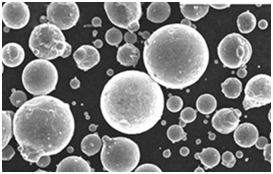
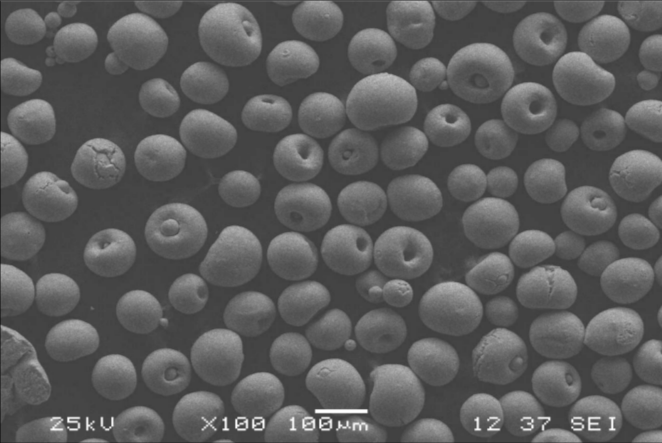
The phrase “hollow-free” does not describe a separate nominal alloy chemistry. Instead, it describes a powder-quality objective: minimizing particles that contain internal voids, shell-like structures, or gas-filled cavities created during atomization and solidification. That matters because a particle may look spherical from the outside yet still carry an internal defect that influences apparent density, flow, packing efficiency, laser absorption, and the final porosity signature in printed parts.
For demanding AM builds, the difference between conventional and low internal porosity powder is practical rather than semantic. A hollow-particle fraction that is too high can increase the chance of lack-of-fusion-like indications, irregular remelting, or gas-derived pores after consolidation. When the particle population is dense, round, and internally sound, the powder bed becomes more uniform and process windows are easier to hold from layer to layer.
Metallurgically, Inconel 738LC is valued for its strong gamma matrix plus gamma-prime strengthening response. Aluminum and titanium promote a significant volume fraction of ordered precipitates, while chromium, cobalt, tungsten, tantalum, molybdenum, niobium, boron, and zirconium support oxidation resistance, hot corrosion resistance, grain-boundary stability, and creep performance. This is why the grade continues to attract attention for hot-zone hardware where temperatures and stresses exceed the comfort zone of many stainless steels or lower-strength nickel alloys.
In the AM market, Inconel 738LC sits in a narrower niche than general-purpose grades such as Inconel 625 or 718. It is harder to process, more crack-sensitive, and usually requires tighter control of heat input, scan strategy, powder cleanliness, and post-build heat treatment. The reward is higher capability in environments where turbine efficiency, combustion temperature, oxidation life, or creep rupture performance matter more than ease of printing.
In high-temperature AM, powder quality is not a cosmetic issue; it is a first-order process variable.
A useful comparison is to other superalloys and metallic powder systems. Materials in a broader nickel superalloy powder range often trade off printability against temperature capability, while cobalt alloy feedstocks for wear and heat resistance may be preferred when galling or corrosion dominates the design envelope. Inconel 738LC earns its place when sustained hot strength is the main requirement and the manufacturing route can support stricter processing discipline.
Chemical Composition and Material Grade
The chemistry of Inconel 738LC is centered on a nickel base with balanced additions for precipitation hardening, oxidation resistance, and creep strength. Exact supplier limits can vary slightly by melting route, feedstock form, and customer specification, so purchasing documents should always define whether the requested chemistry is nominal, cast-alloy-equivalent, or AM-optimized.
Typical Chemistry of hollow-free Inconel 738LC Powder
| 항목 | Typical wt.% / Grade | Cross-Reference / Note |
|---|---|---|
| 니켈(Ni) | 잔액 | Matrix element of Inconel 738LC |
| 크롬(Cr) | 15.5–16.5 | Oxidation and hot-corrosion resistance |
| 코발트 (Co) | 8.0–9.0 | Strengthening and microstructural stability |
| 텅스텐(W) | 2.4–2.8 | Solid-solution strengthening |
| 몰리브덴(Mo) | 1.5–2.0 | High-temperature strength contribution |
| 탄탈륨(Ta) | 1.5–2.0 | Gamma-prime support and creep resistance |
| 니오븀(Nb) | 0.7–1.1 | Secondary strengthening contribution |
| 알루미늄(Al) | 3.2–3.7 | Gamma-prime former |
| 티타늄(Ti) | 3.2–3.7 | Gamma-prime former |
| 탄소(C) | 0.08–0.13 | Controlled carbide content; LC = low-carbon variant |
| 붕소(B) | 0.005–0.015 | Grain-boundary strengthening |
| 지르코늄(Zr) | 0.03–0.10 | Grain-boundary support |
| 철(Fe) | ≤ 0.50 | Residual / impurity control |
| 실리콘(Si) | ≤ 0.30 | Residual / impurity control |
| 망간(Mn) | ≤ 0.20 | Residual / impurity control |
| Sulfur / Phosphorus | typically very low | Restricted for cleanliness |
| ASTM reference | No universal dedicated ASTM AM grade | Usually ordered to supplier chemistry plus test certificate |
| AMS reference | No single AMS powder designation universally used | Buyer often specifies chemistry, PSD, and QA plan |
| GB reference | Often supplied as enterprise specification | Cross-reference should be confirmed per order |
| ISO reference | No one-to-one ISO material grade for this powder | Process standards exist, but chemistry is supplier-defined |
| DIN / EN reference | No exact direct DIN equivalent commonly used in AM trade | Closest match is generally chemistry-based rather than code-based |
Because Inconel 738LC originated as a cast superalloy, standards language can be confusing when it is ordered as a powder. Some customers assume that every powder must map neatly to an ASTM or ISO material designation; in practice, many high-performance AM powders are purchased to a supplier-controlled chemistry and testing specification instead. That is especially true when the buyer wants hollow-particle limits, oxygen caps, or flow parameters beyond legacy cast-alloy requirements.
For engineering teams, the important point is that chemistry alone does not define powder suitability. A nominally correct alloy can still be a poor AM feedstock if its particle shape distribution, internal void content, or contamination level are not controlled. That is why advanced procurement packages increasingly define morphology, powder size distribution, gas content, and reuse strategy alongside alloy composition.
When customers compare Inconel 738LC with nearby grades, they often benchmark it against 713C, 718, 625, Rene-type cast superalloys, or other turbine alloys. The closer the application moves toward sustained high thermal exposure, the more attractive 738LC becomes. The closer the application moves toward easy weldability and forgiving build behavior, the more designers may shift toward other nickel alloys.
기술 사양
For AM, technical specification is not just a list of powder numbers; it is a description of how the powder will behave in a machine. Particle size distribution influences recoating and layer density, oxygen influences ductility and crack risk, and density metrics indicate how efficiently the powder bed packs before melting.
Typical Specification Window for Inconel 738LC AM Powder
| 매개변수 | 15–53 µm Grade | 45–105 µm Grade | 53–150 µm Grade | Typical Test / Note |
|---|---|---|---|---|
| Recommended process | Fine L-PBF / SLM | EBM, DED, coarse L-PBF | DED, cladding, thermal spray blends | Application dependent |
| D10 | 15–20 µm | 45–55 µm | 53–65 µm | Laser diffraction, typical |
| D50 | 28–35 µm | 70–80 µm | 90–105 µm | Laser diffraction, typical |
| D90 | 48–53 µm | 100–105 µm | 145–150 µm | Laser diffraction, typical |
| 겉보기 밀도 | 4.6–5.1 g/cm³ | 4.7–5.2 g/cm³ | 4.8–5.3 g/cm³ | Typical range |
| 탭 밀도 | 5.0–5.6 g/cm³ | 5.2–5.8 g/cm³ | 5.3–5.9 g/cm³ | Typical range |
| 홀 흐름 | 14–20 s/50 g | 12–18 s/50 g | 11–17 s/50 g | Typical for spherical powder |
| 산소 | ≤ 0.03 wt.% typical target | ≤ 0.03 wt.% typical target | ≤ 0.04 wt.% typical target | Exact limit by process |
| 질소 | low, often ≤ 0.02 wt.% | low, often ≤ 0.02 wt.% | low, often ≤ 0.02 wt.% | Supplier-controlled |
| 구형성 | typically ≥ 0.95 | typically ≥ 0.95 | typically ≥ 0.95 | Image analysis, typical |
| Hollow particle fraction | minimized | minimized | minimized | Customer-defined QA target |
The fine 15–53 µm cut is usually selected for laser powder bed fusion when the goal is thin layers and tight feature resolution. The 45–105 µm and 53–150 µm cuts are often more practical for electron-beam processes, DED, laser cladding, or other routes where thicker deposition and higher mass flow are preferred.
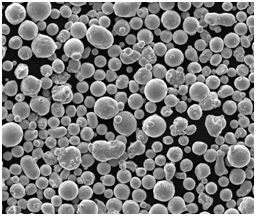
The attraction of 구형 형태 is straightforward. Rounded particles reduce interlocking, improve hopper discharge, and create a more uniform spread on the build plate. When that external shape is paired with low satellite content and minimal hollow particles, the powder usually shows better packing behavior and more stable energy coupling.
Engineers should still remember that a “good” number depends on the process. A powder optimized for electron-beam melting may not be ideal for laser powder bed fusion, and a DED-grade feedstock should not be judged by exactly the same flow criteria as a fine SLM fraction. The goal is not one universal number set, but a matched system involving powder, machine, and post-processing route.
Processing Implications for hollow-free Inconel 738LC powder
In practical AM operations, hollow-free powder helps shrink the gap between nominal settings and actual outcomes. Stable density and flow can make recoating more repeatable, which is especially important for crack-sensitive superalloys where inconsistent local powder thickness can magnify thermal gradients. Many users therefore treat internal-particle quality as part of the process stability window, not merely as a supplier inspection metric.
Fine-tuning still matters. Scan strategy, baseplate temperature, contour settings, hatch spacing, and preheat are all critical for Inconel 738LC. Even excellent powder cannot fully compensate for a parameter set that drives excessive residual stress or hot cracking.
Applications Across Industries
Inconel 738LC powder is used where thermal load is too severe for ordinary engineering alloys and where additive manufacturing offers value through geometry, repair, short-run production, or design iteration. Typical parts are either directly exposed to hot gas flow or located near zones where oxidation, creep, and thermal fatigue accumulate over time.
Where hollow-free Inconel 738LC powder adds value
| 산업 | Typical Part | AM / PM Process | Why This Alloy Is Chosen |
|---|---|---|---|
| 항공우주 | Turbine blades, vanes, shrouds, combustor hardware | L-PBF, EBM, DED repair | 고온 강도 및 내산화성 |
| Energy / Power Generation | Gas turbine hot-section parts, transition pieces, burner components | DED, cladding, PM | Creep and hot-corrosion performance |
| 산업용 가스 터빈 | Nozzle segments, seal features, legacy replacement parts | L-PBF, DED | Useful for complex cooling or repair geometries |
| Automotive Motorsport | Turbocharger-adjacent hot parts, exhaust-side high-heat hardware | L-PBF, PM | Heat capability beyond many steels |
| Oil & Gas / Process Heat | Burners, thermal shields, high-heat fixtures | DED, PM, HIP-assisted routes | Oxidation and thermal cycling resistance |
| MRO and Repair | Feature restoration on worn superalloy components | DED, laser cladding | Extends service life of expensive parts |
Aerospace is the most visible use case because turbine efficiency often pushes materials toward the upper end of their thermal capability. AM is attractive when engineers need internal channels, rapid iteration, small-batch replacement parts, or repairable build-ups on expensive substrates. That said, full qualification for flight or turbine-critical parts remains rigorous and usually involves machine-specific, heat-treatment-specific, and geometry-specific validation.
In energy and industrial gas turbines, the value proposition can be even more immediate. Operators may need spare parts for mature systems with long lead times or discontinued tooling. Powder-based manufacturing routes can support near-net-shape fabrication, targeted repair, or hybrid manufacture without reopening the entire legacy casting chain.
In repair, the case for high-quality powder is especially strong. Worn hot-section hardware often already contains service-induced damage, oxidation, or residual stresses. Starting the restoration process with internally sound powder reduces one variable in an already complex metallurgical system.
Comparison with adjacent AM material families
Designers sometimes compare Inconel 738LC against titanium, stainless, copper, aluminum, or cobalt alloy powders simply because those are the other common AM families available on the market. Broader material options such as titanium alloy powder systems for lightweight structures, stainless feedstocks, and copper alloys fill different performance spaces and should be evaluated by service environment, not just printability.
If the part is driven by density reduction, titanium may outperform nickel alloys. If the part is driven by thermal conductivity, copper systems may be better. But if the problem is sustained high-temperature exposure with creep and oxidation concerns, Inconel 738LC remains in the conversation because few AM alloys are designed for that combination of demands.
Manufacturing and Quality Assurance
“Hollow-free” quality begins upstream, at powder production. The route used to melt, atomize, solidify, classify, and handle the powder has a direct effect on internal porosity, satellite formation, chemistry retention, and contamination control.
How hollow-free superalloy powder is made
Gas atomization is the most common industrial route for nickel superalloy powder because it is scalable and compatible with controlled atmospheres. Vacuum induction gas atomization can reduce contamination and improve chemistry control, but the details of nozzle design, melt superheat, gas selection, droplet breakup, and solidification rate strongly affect whether particles freeze as dense spheres or develop internal cavities.
Plasma rotating electrode process is another route associated with premium spherical powders, especially when cleanliness and dense particle formation are priorities. PREP typically produces highly spherical powder with low satellite content, though size distribution and economics differ from gas atomization. For some AM users, PREP offers a practical route to lower hollow-particle incidence; for others, optimized vacuum gas atomization is the better fit.
After atomization, sieving and air classification separate the target size cuts. Powders may then be blended, sampled, and tested for chemistry, oxygen, morphology, and flow. At this stage, the supplier’s discipline often matters as much as the atomization route itself, because mishandling can introduce fines, moisture pickup, or cross-alloy contamination.
Quality Assurance for hollow-free Inconel 738LC powder
| QA Test | Typical Instrument / Method | 목적 | Typical Acceptance Direction |
|---|---|---|---|
| Chemistry verification | ICP-OES / combustion analysis | Confirms alloy matches Inconel 738LC target chemistry | Within supplier or customer limits |
| 입자 크기 분포 | Laser diffraction / sieve analysis | Ensures correct AM process fraction | Inside ordered PSD band |
| 형상 검사 | SEM / optical image analysis | Checks roundness, satellites, and surface defects | Predominantly spherical particles |
| 겉보기 및 탭 밀도 | Hall / Scott volumeter and tap tester | Indicates packing behavior | Consistent with qualified batch range |
| 흐름성 | Hall flowmeter or equivalent | Supports stable recoating or feeding | Stable flow within process target |
| Oxygen / nitrogen control | 불활성 기체 융합 분석 | Limits embrittlement and contamination risk | At or below customer maximum |
| Hollow particle evaluation | Metallographic cross-section / micro-CT / polished mount analysis | Measures internal void content | Minimized fraction per QA plan |
| Moisture / handling status | Controlled storage and packaging checks | Prevents degradation before use | Dry, sealed, traceable condition |
The most credible suppliers do not reduce QA to a single certificate line. They build a traceable dataset showing how one batch compares with previous lots, how retained samples behave after storage, and how the powder performs after one or more reuse cycles. For high-temperature alloys, batch-to-batch consistency often matters as much as hitting the initial specification.
Users should also ask how “hollow-free” is defined. Some suppliers treat it as a qualitative descriptor; others establish a measurable internal-defect threshold using cross-sections or micro-CT. A buyer who cares about repeatability should request the definition in writing, along with the sampling plan used to verify it.
Another practical question concerns recycled or reclaimed powder. In production AM, virgin powder is often blended with returned powder from the build chamber. For Inconel 738LC, reuse strategy must be conservative because oxidation, fines generation, and chemistry drift can gradually change powder behavior. A strong incoming powder does not eliminate the need for reuse controls, but it makes those controls more meaningful.
Why Choose Truer as Your Supplier
Selecting a supplier for Inconel 738LC powder is not only a purchasing decision; it is also a process-risk decision. Buyers generally look for evidence that the supplier understands superalloy metallurgy, powder-making equipment, lot traceability, and the downstream realities of SLM, SEBM, DED, PM, and repair applications.
Truer’s relevance in this area is tied to powder manufacturing technology and process integration rather than branding language. The company works across gas atomization and PREP-related equipment contexts and serves powder applications ranging from additive manufacturing to MIM, HIP, spraying, welding, and coating. That matters for Inconel 738LC because hot-section alloys usually need tighter process understanding than commodity AM powders.
A second consideration is portfolio depth. A supplier that handles multiple metallic systems can usually help engineers compare alternatives with fewer assumptions. Truer’s broader material set includes nickel, cobalt, titanium, copper, aluminum, stainless, and specialized alloys, which helps when a development program is still choosing between temperature capability, density, corrosion resistance, and cost.
For teams evaluating supply-chain capability, a factual overview on the company’s metal AM business background provides context on equipment, powder scope, and application support. In practice, qualification still depends on the specific batch, specification, and process route, but supplier transparency is a useful starting point.
Questions procurement teams should ask any powder supplier
Procurement and engineering should jointly define the data package they expect before ordering production quantities. For hollow-free Inconel 738LC powder, that typically includes chemistry, PSD, density, flow, oxygen, morphology images, internal-void evaluation method, lot traceability, and packaging controls.
It is also sensible to ask whether the supplier has experience supporting pilot runs, coupon builds, and post-processing recommendations. Inconel 738LC is rarely a “plug-and-play” powder; qualification works best when powder supply and process development are aligned from the beginning.
Ordering Guide and Support
An effective ordering process starts by matching the powder cut to the machine and application. Buyers should specify process type, layer thickness or feed mode, desired particle size distribution, chemistry limits, documentation package, and whether the powder is for R&D, qualification, repair, or serial production.
Typical Ordering Options for hollow-free Inconel 738LC powder
| 포장 | Typical MOQ Tier | Typical Lead Time | Sample Policy |
|---|---|---|---|
| 500 g bottle, sealed inert package | Lab evaluation | 1–2 weeks if stock or short-run sample is available | Small paid sample commonly available |
| 1 kg bottle | R&D / parameter development | 1–3 weeks typical | Often supplied with basic COA |
| 5 kg canister | Pilot build programs | 2–4 weeks typical | Sample from production lot may be offered |
| 10 kg drum | Pre-production | 3–5 weeks typical | Reserved lot sampling by request |
| 25 kg drum | Standard production tier | 3–6 weeks typical | Qualification documents usually defined in PO |
| Custom pack with desiccant and inert sealing | Project-specific | By agreement | Useful for export or long transit conditions |
Sample orders are not just for chemistry confirmation. They are the phase where users can compare recoating behavior, coupon density, surface finish, crack tendency, and heat-treatment response against their machine setup. For a challenging superalloy, that early work often saves far more time than it costs.
Technical support should also cover documentation expectations. Many buyers need certificates of analysis, PSD reports, morphology images, and oxygen data, while regulated industries may request additional traceability or retained-sample practices. The most productive route is to define those requirements before the first shipment rather than after qualification begins.
When a project moves from screening to scale-up, commercial terms also matter. Procurement teams should align on MOQ, replenishment frequency, acceptable split lots, and whether repeat orders must be held to the same PSD and gas-content envelope used during machine qualification. Direct technical coordination through the powder inquiry and application support channel is usually more efficient than treating a superalloy order like a commodity purchase.
우리 회사
Shanghai Truer Technology Co., Ltd. was established in 2009 and created its additive manufacturing business in 2019. The company focuses on integrating 3D-printing powder-making equipment and services with metal powders for engineering applications of additive manufacturing. Its core technologies include Selective Electron Beam Melting equipment and Plasma Rotating Electrode Process powder-making equipment, with gas atomization also relevant to its powder activities. The product portfolio includes TiNi, TiTa, TiAl, TiNbZr, CoCrMo, and spherical metal powders across nickel-, cobalt-, titanium-, copper-, aluminum-, and stainless-steel families. The company also works with end processes such as SLM, SEBM, DED, laser cladding, PM, MIM, HIP, cold or hot spraying, and welding or coating, serving industries including 3C electronics, hand tools, remote-control cars, medical, aerospace, and nuclear power.
자주 묻는 질문
Q1. Is hollow-free Inconel 738LC powder better than standard Inconel 738LC powder for AM?
Yes, when “hollow-free” means the powder has a lower fraction of internally voided particles and that condition is actually verified. The alloy chemistry may be the same, but improved internal particle integrity can support better packing, more consistent melting, and a lower risk of gas-related porosity in printed parts.
Q2. Which AM processes commonly use hollow-free Inconel 738LC powder?
The powder can be used in laser powder bed fusion, electron beam melting, directed energy deposition, and laser cladding, depending on the particle size cut. Fine fractions are usually preferred for powder bed systems, while coarser fractions are more common for DED and repair work.
Q3. Why is Inconel 738LC considered difficult to print?
It is a high-strength, gamma-prime-hardened superalloy with significant crack sensitivity under steep thermal gradients. Successful printing therefore depends on tight control of preheat, scan strategy, energy density, support design, and post-build heat treatment, not just on the nominal alloy grade.
Q4. What particle size is best for hollow-free Inconel 738LC powder?
There is no universal best size; the correct answer depends on the machine and process. A 15–53 µm range is common for fine laser powder bed work, while 45–105 µm or 53–150 µm grades are often more suitable for EBM, DED, or cladding applications.
Q5. How should hollow-free Inconel 738LC powder be stored?
It should be stored sealed, dry, and traceable, ideally under controlled humidity and with minimal exposure to air during handling. Nickel superalloy powders can pick up oxygen, moisture, and fines-related contamination over time, which may affect flow and final part quality.
Q6. What data should buyers request before ordering hollow-free Inconel 738LC powder?
At minimum, buyers should request chemistry, PSD, apparent density, tap density, flowability, oxygen content, morphology evidence, and the method used to evaluate hollow particles. For qualification programs, it is also wise to ask for lot traceability, packaging details, and any available guidance on reuse or recycling in the target AM process.