Hızlı Cevap
PREP IN718 powder is a nickel-based superalloy powder made for additive manufacturing and other powder-processing routes that demand clean, spherical, flowable feedstock. It is often chosen for critical 3D printed parts because IN718 combines strong high-temperature strength, corrosion resistance, weldability, and broad process familiarity, while PREP production helps deliver narrow morphology control, fewer satellites, and cleaner particle surfaces. For aerospace, energy, and demanding industrial components, that combination reduces process instability and supports more repeatable density, microstructure, and mechanical performance.
What Is PREP IN718 powder?
PREP IN718 powder refers to alloy 718 powder produced by the plazma döner elektrot süreci, a route designed to make highly spherical metal particles from a rotating consumable bar or electrode. IN718 itself is a precipitation-hardenable nickel-chromium superalloy, widely used when parts must retain strength across elevated temperatures while resisting oxidation and corrosive service environments.
Within the broader family of nickel-based additive manufacturing powders, IN718 occupies an important middle ground. It is not the highest-temperature superalloy in absolute terms, but it is one of the most practical and widely qualified grades because it balances strength, crack resistance, processability, post-build heat-treat response, and supply-chain familiarity. That is why the alloy appears so often in powder bed fusion, directed energy deposition, laser cladding, and hot isostatic pressing workflows.
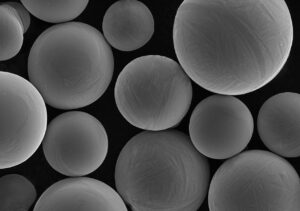
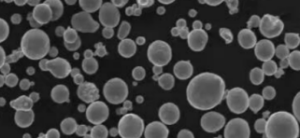
PREP matters because alloy chemistry alone does not guarantee printability. Particle shape, surface condition, internal cleanliness, and the amount of fines or satellites can affect recoating behavior, powder spreading, packing density, laser absorption consistency, and oxygen sensitivity. In that context, PREP is valued for producing particles with high sphericity and a cleaner morphology than many conventional atomized alternatives.
Compared with gas-atomized alloy 718 powder, PREP material is frequently selected when users prioritize premium powder characteristics for critical builds, especially where powder recycling discipline, repeatability, or demanding qualification frameworks are involved. Compared with other nickel grades such as 625, 738-type alloys, or advanced crack-sensitive superalloys, IN718 is often easier to process and more forgiving during build parameter development.
The terminology also matters. In the language of ISO/ASTM additive manufacturing terminology, powder characteristics are part of the feedstock definition, not an afterthought. For engineers, procurement teams, and quality managers, that means PREP IN718 powder should be evaluated as a system: alloy composition, powder morphology, particle size distribution, chemistry control, and downstream heat-treatment behavior all interact.

Chemical Composition and Material Grade
IN718 is based on the UNS N07718 chemistry family. Its strengthening response comes primarily from niobium-, titanium-, and aluminum-driven precipitation hardening, while chromium contributes corrosion and oxidation resistance and molybdenum supports solid-solution strengthening. Iron is present as a balance element, which helps differentiate 718 from some more highly alloyed nickel superalloys.
In powder form, compositional control is not only about nominal chemistry. It also affects segregation sensitivity, melt-pool behavior, hot cracking response, and final aging results. For that reason, a supplier should verify both alloying-element windows and impurity controls, especially oxygen, nitrogen, sulfur, and nonmetallic inclusions.
The table below shows a typical composition range for PREP IN718 powder together with common material-grade references used by buyers. Exact procurement documentation can vary by application, print process, and end-user qualification plan.
| Element / Grade Reference | Typical or Common Range (wt%) | ASTM Cross-Reference | AMS Cross-Reference | GB Cross-Reference | ISO / DIN Context |
|---|---|---|---|---|---|
| Nikel (Ni) | 50.0–55.0 | Commonly aligned with UNS N07718 chemistry in AM specs | Chemistry consistent with 718 aerospace usage | Commonly referenced under GH4169 equivalence | Used within the 2.4668 / NiCr19Fe19Nb5Mo3 family context |
| Krom (Cr) | 17.0–21.0 | Same chemistry family as AM 718 feedstock | Aerospace 718 chemistry family | GH4169 chemistry framework | Comparable grade mapping used in European specifications |
| Demir (Fe) | Denge | Residual balance per 718 alloy | Denge | Denge | Denge |
| Niobium + Tantalum (Nb+Ta) | 4.75–5.50 | Key precipitation-strengthening window | Same | Same | Same |
| Molibden (Mo) | 2.80–3.30 | Standard 718 range | Same | Same | Same |
| Titanyum (Ti) | 0.65–1.15 | Standard 718 range | Same | Same | Same |
| Alüminyum (Al) | 0.20–0.80 | Standard 718 range | Same | Same | Same |
| Kobalt (Co) | ≤ 1.00 typical limit | Controlled residual | Controlled residual | Controlled residual | Controlled residual |
| Karbon (C) | ≤ 0,08 | Impurity control critical for AM | Same | Same | Same |
| Oxygen / Nitrogen / Sulfur | Supplier-controlled, typically low for AM powder | Often tighter than wrought-only chemistry needs | Application-dependent | Application-dependent | Application-dependent |
From a standards perspective, buyers often cross-check chemistry against the general 718 family, then add AM-specific powder and part requirements. In practice, specifications may reference the ASTM additive manufacturing standards catalog and then narrow further through purchaser drawings, internal material standards, or aerospace prime requirements. That distinction is important because a composition that is nominally “718” may still be unacceptable if powder morphology or impurity levels fall outside the intended process window.
A useful commercial comparison is with the broader nickel alloy powder range, where 718 is usually selected when elevated-temperature strength, fatigue capability, and heat-treatable performance matter more than maximum corrosion resistance alone. Engineers sometimes shortlist 625 first because it is easier to print, but move to 718 when the final service condition demands higher structural capability.
In metal AM, feedstock consistency is a process variable, not a purchasing detail.
Teknik Özellikler
Technical specifications for PREP IN718 powder should be read as a combination of chemistry, particle engineering, and powder-handling behavior. Two lots can share the same nominal alloy and still behave differently in a machine if their particle-size distribution, fines content, or flow characteristics differ materially.
Typical PREP IN718 Powder Size Classes
For powder bed fusion, the most common particle-size distributions are in the fine and medium ranges, often centered around (15\text{–}53\ \mu m) or (15\text{–}45\ \mu m), depending on machine architecture and recoating conditions. Coarser cuts such as (45\text{–}105\ \mu m) or (53\text{–}150\ \mu m) are more common for directed energy deposition, laser cladding, thermal spray variants, or specialized powder metallurgy uses.
Flowability, Density, and Surface Condition
Apparent density and tap density provide a proxy for powder packing behavior. Hall flow gives a practical view of how quickly the powder moves through a standard funnel, which is relevant for powder handling and, indirectly, spreadability. For PREP IN718 powder, users typically expect satellite-free morphology or at least significantly reduced satellites relative to many conventional atomized powders.
Oxygen and Purity Control
Because nickel superalloys are used in demanding applications, oxygen and other interstitial or impurity levels deserve separate attention. PREP powder is often preferred when users want low oxygen pickup, especially for highly qualified parts or longer powder reuse programs. Actual acceptance limits depend on process route and customer specification, but low and stable oxygen is generally more valuable than a single attractive number from one lot.
| Specification Item | Fine AM Grade | Standard PBF Grade | Coarse DED / Cladding Grade | Notlar |
|---|---|---|---|---|
| Parçacık boyutu dağılımı | 15–45 µm typical | 15–53 µm typical | 45–105 µm or 53–150 µm typical | Selected by machine type and layer thickness |
| Görünür yoğunluk | 4.4–4.9 g/cm³ typical | 4.5–5.0 g/cm³ typical | 4.6–5.1 g/cm³ typical | Depends on PSD and shape |
| Musluk yoğunluğu | 4.9–5.5 g/cm³ typical | 5.0–5.6 g/cm³ typical | 5.1–5.7 g/cm³ typical | Higher with smoother, coarser cuts |
| Hall akışı | 13–20 s/50 g typical | 12–18 s/50 g typical | 11–17 s/50 g typical | Very fine powders may flow slower |
| Oksijen içeriği | ≤ 500 ppm typical for premium lots | ≤ 500–800 ppm typical | ≤ 800 ppm typical | Final limit is application-specific |
| Sphericity / morphology | Near-spherical, low satellites | Near-spherical | Near-spherical | Image analysis and SEM commonly used |
The properties in the table are typical commercial reference points rather than universal mandatory values. Purchasers should still confirm the required test methods, whether values are guaranteed per lot, and whether the certificate of analysis covers virgin powder only or the packaging condition actually shipped.
A second technical issue is powder reuse. PREP material is attractive partly because its starting morphology can remain robust through screened reuse cycles, provided the user has a disciplined powder-management protocol. Even so, recycled powder should be monitored for oxygen rise, fines accumulation, and altered flow behavior.
Finally, a powder specification should fit the downstream process. A laser powder bed fusion program focused on thin-wall aerospace brackets may prefer one PSD window, while electron beam or DED users may optimize around a different range. The right question is not which PREP IN718 powder is “best” in general, but which cut and purity profile best supports a defined machine, layer thickness, scan strategy, and post-processing route.
Applications Across Industries
PREP IN718 powder is used wherever engineers need the process flexibility of metal AM combined with the service reliability of a well-understood superalloy. Its application range is broad because alloy 718 can tolerate complex geometries, elevated temperatures, and cyclic loading better than many easier-to-print structural metals.
In aerospace, the alloy is common for engine-adjacent hardware, tooling, and development parts that must resist heat and maintain strength. In energy and power-generation settings, it appears in hot-section auxiliaries, sealing hardware, and repair or overlay applications. Industrial users value it for fixtures, molds, high-load inserts, and corrosion-resistant components in harsh process environments.
The alloy is not only for end-use parts. PREP IN718 powder also supports repair, prototyping, parameter development, and powder-metallurgy routes where spherical feedstock improves filling and densification behavior. Compared with materials from a titanium alloy powder portfolio, 718 is typically heavier and less attractive for strict lightweighting, but it often wins when heat resistance and cost-to-performance balance are more important than absolute specific strength.
| Endüstri | Typical Part | Performance Driver | AM / PM Process |
|---|---|---|---|
| Havacılık ve Uzay | Brackets, housings, manifolds, tooling, engine-adjacent hardware | Heat resistance, fatigue strength, qualification familiarity | SLM / LPBF, SEBM, DED |
| Energy / Power | Turbine auxiliaries, sealing components, burner hardware, repair overlays | Elevated-temperature durability, oxidation resistance | LPBF, DED, laser cladding |
| Oil & Gas / Process Industry | Valves, corrosion-resistant inserts, wear parts | Corrosion resistance plus structural strength | LPBF, PM, HIP |
| Automotive / Motorsport | Turbo-related hardware, test fixtures, heat-exposed prototypes | Rapid iteration with high-temperature capability | LPBF, DED |
| Tooling / Industrial Equipment | Hot-work fixtures, molds, jigs, forming tools | Dimensional stability and long service life | LPBF, PM, MIM |
| Research / Defense | Qualification coupons, development hardware, bespoke geometries | Process development and low-volume complexity | LPBF, SEBM, HIP |
Aerospace remains the most visible sector because qualification language around 718 is mature and many design teams already understand its heat-treatment routes. That does not mean it is automatically the best option. For lower-temperature corrosion service, 625 may be adequate; for lightweight biomedical implants, titanium may be more suitable; for wear-dominant conditions, cobalt alloys can become stronger candidates than 718.
Even within one industry, selection depends on trade-offs. If a part sees moderate heat but severe corrosion, a more corrosion-focused alloy may be better. If it sees high cyclic stress at temperature and a complex internal geometry, PREP IN718 powder becomes much more compelling because it links robust alloy performance to feedstock characteristics that support stable AM builds.
Manufacturing and Quality Assurance
PREP production begins with a rotating feed rod or electrode, which is melted at the tip by a plasma source. Centrifugal force throws molten droplets outward, where they solidify into spherical particles. The route differs from gas atomization in both droplet formation and resulting powder morphology, and those differences are often visible under microscopy.
Why PREP Is Distinguished from GA and VIGA
Gas atomization is versatile, scalable, and common across AM metals. Vacuum induction gas atomization adds cleaner melting and controlled atmosphere management. PREP, by contrast, is often chosen for premium sphericality, lower contamination risk from crucible contact, and a reduced tendency toward irregular satellites.
Quality Tests That Matter for PREP IN718 Powder
A serious QA program should include particle-size testing, morphology checks, apparent and tap density, Hall flow, oxygen/nitrogen analysis, moisture control, and chemistry verification. For highly controlled applications, users may also ask for SEM imaging, ICP-OES chemistry, LECO interstitial analysis, and documentation on lot traceability, sieving, and packaging atmosphere.
Tedarikçi Değerlendirme Kriterleri
The most useful evaluation point is not a single specification line but lot-to-lot consistency. A technically strong supplier should be able to explain how each lot is melted, classified, sampled, tested, packed, and retained for traceability. For critical AM production, that process discipline often matters more than whether one test number appears marginally better on paper.
| Öznitelik | GA Toz | VIGA Powder | PREP Toz | Neden Önemli? |
|---|---|---|---|---|
| Parçacık şekli | Generally spherical, some satellites common | Spherical, usually cleaner than open GA | Very spherical, often lowest satellite level | Better spreading and packing |
| Contamination risk | Moderate, depends on melt and atomization controls | Lower due to vacuum/inert handling | Low, with minimal crucible interaction | Important for critical AM |
| Typical PSD flexibility | Very broad and scalable | Broad and well controlled | Controlled, often premium but less mass-volume oriented | Affects cost and application fit |
| Surface condition | Good commercial standard | Clean commercial/premium standard | Often very clean with smooth surfaces | Impacts flow and reuse |
| Cost position | Usually lowest | Mid to premium | Premium | Must match part criticality |
| Best-fit use case | General AM and PM | Higher-purity AM programs | Critical AM parts, premium feedstock needs | Selection depends on qualification path |
Inspection should also match the process risk. If the powder is intended for routine industrial printing, a standard certificate package may be sufficient. If the powder will support flight hardware or nuclear-adjacent development, buyers typically require deeper traceability, retained samples, and tighter change-control discipline.
The most rigorous programs align feedstock testing with machine and part data. That means correlating powder PSD, chemistry, and morphology against recoating behavior, porosity results, tensile properties, surface finish, and build yield. Over time, this creates a more defensible qualification package than treating powder certificates as isolated documents.
For organizations benchmarking suppliers, NIST materials measurement programs provide a useful reminder that measurement quality and method consistency are as important as nominal test values. Likewise, ASM International superalloy resources help frame why nickel alloy processing history can strongly influence final properties, even when chemistry is unchanged.
Why Choose Truer as Your Supplier
For PREP IN718 powder, supplier selection should focus on process capability, powder-making route, documentation discipline, and application support rather than broad marketing claims. Truer is relevant in this space because its manufacturing focus includes PREP powder-making equipment as well as gas atomization capability, which gives it direct process context for spherical AM powders rather than only trading activity.
That matters when customers need a technically reasoned discussion about why a certain PSD cut, packaging format, or purity target fits LPBF, SEBM, DED, HIP, MIM, or coating processes. A supplier involved in both equipment and powder can often speak more precisely about how feedstock characteristics translate into engineering outcomes.
Truer’s role is also broader than a single alloy. Its portfolio covers nickel, cobalt, titanium, copper, aluminum, and stainless steel spherical powders, plus specialty systems such as TiNi, TiTa, TiAl, TiNbZr, and CoCrMo. Readers who want a factual overview of that manufacturing orientation can review the company’s background and production scope.
From a buyer’s perspective, the practical differentiators are response quality, specification clarity, sample traceability, and willingness to define acceptance criteria before an order is released. Those are especially important with PREP IN718 powder because small feedstock differences can create disproportionate effects in print stability and qualification timelines.
Ordering Guide and Support
Ordering PREP IN718 powder should begin with the intended process route, not with price alone. A useful inquiry normally specifies machine type, process family, target PSD, whether the powder is for virgin qualification or ongoing production, desired certificate package, annual demand, and shipping destination. When that information is available upfront, suppliers can propose more relevant cuts and packaging configurations.
Sample strategy also deserves planning. Small trial quantities are useful for flow, spread, and coupon validation, but they should come from a traceable lot and include the same documentation structure expected for scale orders. Otherwise, a successful trial may not translate cleanly into production procurement.
| Packaging Format | Typical MOQ Tier | Typical Lead Time | Sample Policy |
|---|---|---|---|
| 1 kg bottle | Lab / R&D quantity | 1–3 weeks if stock or near-stock | Small paid sample common |
| 5 kg bottle | Evaluation batch | 2–4 weeks typical | Often available from same lot family |
| 10 kg bottle | Pilot production | 2–5 weeks typical | Best for machine parameter development |
| 25 kg drum | Standard production tier | 3–6 weeks typical | Usually tied to formal quotation |
| Custom inert-packed lot | Qualified program / project order | 4–8 weeks depending on testing | Documentation scope agreed before shipment |
Lead time depends on whether the request is for an existing PSD cut, a custom sieve fraction, or a fresh production lot with extended testing. It is also affected by whether the purchaser needs SEM images, retained samples, or additional chemistry verification beyond the standard certificate.
When preparing a request for quotation, it helps to state acceptable ranges rather than only nominal targets. For example, an LPBF user may ask for a (15\text{–}53\ \mu m) cut with low oxygen, high sphericity, and documented Hall flow, while a cladding user may prioritize a (45\text{–}105\ \mu m) cut and robust packaging for transport and storage. Technical inquiries can be routed through Truer’s metal powder contact channel, where project details can be matched to the appropriate powder route and documentation set.
Şirketimiz
Shanghai Truer Technology Co., Ltd. was established in 2009 and created its additive manufacturing business in 2019. The company works on integrating 3D printing powder-making equipment and services with spherical metal powders for engineering applications of additive manufacturing. Its core technologies include Selective Electron Beam Melting equipment, PREP powder-making equipment, and gas atomization. The product and application scope covers nickel-, cobalt-, titanium-, copper-, aluminum-, and stainless steel-based powders, along with TiNi, TiTa, TiAl, TiNbZr, and CoCrMo systems for processes such as SLM, SEBM, DED, laser cladding, powder metallurgy, MIM, HIP, spraying, welding, and coating in industries including medical, aerospace, nuclear power, 3C electronics, hand tools, and remote-control cars.
SSS
Q1. Is PREP IN718 powder better than gas-atomized IN718 powder?
Not automatically; it depends on the application. PREP material is often preferred when premium sphericality, cleaner morphology, and tighter feedstock consistency are important, while gas-atomized powder may offer a lower cost position for less demanding programs. The right choice depends on qualification needs, machine behavior, and total part economics.
Q2. Which particle size is best for PREP IN718 powder in LPBF?
For many laser powder bed fusion systems, (15\text{–}45\ \mu m) and (15\text{–}53\ \mu m) are common starting ranges. The optimal cut depends on layer thickness, recoater type, laser settings, and whether the build emphasizes thin walls, productivity, or surface finish. Users should validate powder selection against their actual machine and parameter set.
Q3. Can PREP IN718 powder be reused after printing?
Yes, but reuse should be controlled rather than assumed. Screening, blend management, oxygen monitoring, and periodic checks of PSD and flow are important because powder can change over repeated thermal exposure and handling cycles. A documented reuse protocol is especially important for qualified or safety-critical parts.
Q4. What heat treatment is used after printing IN718 parts?
Typical post-processing routes include stress relief, solution treatment when required, and aging to develop precipitation hardening. The exact sequence depends on the AM process, the target property set, and whether HIP is included. End users should follow the part specification or approved process route rather than a generic recipe.
Q5. Is PREP IN718 powder suitable for aerospace parts?
Yes, it is widely considered suitable for aerospace development and production applications when the powder, machine process, and post-treatment route are properly qualified. Alloy 718 has long industrial familiarity, which helps with design allowables and certification discussions. However, aerospace acceptance always depends on program-specific qualification requirements.
Q6. What should buyers ask for when sourcing PREP IN718 powder?
At minimum, ask for chemistry, PSD, apparent density, tap density, flow data, oxygen content, morphology information, packaging details, and lot traceability. It is also useful to confirm whether the certificate values are guaranteed for the shipped lot and which test methods were used. For critical builds, buyers often request retained samples and a clear change-control policy.