簡単な回答
Pure copper powder for 3D printing is a high-purity, metal AM feedstock engineered for stable layer deposition and dense part formation. It is selected when a design requires high thermal and electrical conductivity together with shapes that are difficult to machine, braze, or assemble conventionally. In practice, it is the right choice for heat exchangers, induction components, cooling inserts, RF parts, and compact electrical hardware where internal channels, part consolidation, and thermal performance matter more than maximum structural strength.
What Is pure copper powder for 3D printing?
Pure copper powder for 3D printing is a specialized form of elemental copper produced for additive manufacturing processes such as laser powder bed fusion, electron-beam-based routes, directed energy deposition, and selected powder metallurgy workflows. Unlike commodity copper powder, this material is engineered around powder behavior as much as chemistry. Particle shape, particle size distribution, oxide condition, and flowability all influence how well the powder spreads, absorbs energy, and consolidates into dense parts.
In the broader AM materials landscape, pure copper belongs to the high-conductivity nonferrous metals family. That places it in a different design category from stainless steels, nickel superalloys, titanium alloys, and even precipitation-hardened copper grades such as CuCrZr. The core reason to specify pure copper is not mechanical strength; it is conductivity. When the part’s function depends on moving heat quickly or carrying electrical current efficiently, pure copper remains one of the most attractive options in metal 3D printing.
The “pure” designation is also more nuanced than it appears. A powder may be described as pure copper because the copper content is very high, but AM users still care about the identity and level of residuals. Oxygen, sulfur, lead, bismuth, iron, phosphorus, and other trace elements can alter conductivity, print behavior, joining response, or post-process stability even at low concentrations. As a result, AM-grade copper is commonly specified with tighter impurity controls than standard industrial copper powders.
Historically, copper was considered challenging for laser-based additive manufacturing. Its high reflectivity limits energy absorption at common wavelengths, while its high thermal conductivity rapidly carries heat away from the melt pool. These same properties are exactly why copper performs well in service, but they also narrow the process window during printing. Progress in laser systems, process control, and powder engineering has made pure copper increasingly viable for demanding production components.
Another reason this material exists as a dedicated AM feedstock is geometric economics. Conventional copper fabrication is excellent for rods, plates, sheets, tubing, and many milled components. It becomes less efficient when a part needs conformal cooling, integrated manifolds, thin internal fins, lattice heat-transfer surfaces, or assembly consolidation. Additive manufacturing allows those features to be built directly, often with fewer joints and fewer secondary operations.
The terminology used across the AM industry is aligned by ISO/ASTM 52900 terminology, but powder procurement in the real world is more detailed than terminology alone. Engineers buying copper powder want data that connects the material to a specific process window, not just a generic material category.
In copper AM, powder quality affects not only printability, but also the conductivity that justifies using copper in the first place.
How pure copper 3D printing powder differs from standard copper powder
Standard copper powder may be acceptable for press-and-sinter parts, thermal spraying, or blending into friction materials, yet still be unsuitable for additive manufacturing. The reason is that AM powder must function as a controlled process medium. It has to form uniform layers, resist excessive agglomeration, and melt consistently over many build cycles.
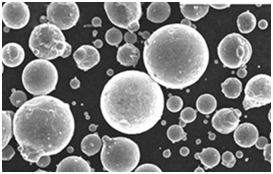
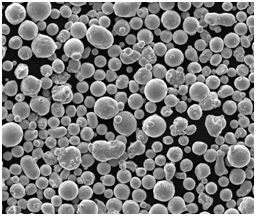
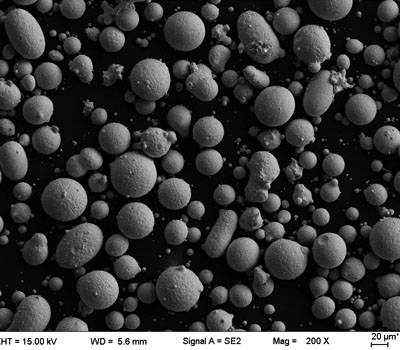
This is why 球状形態 is so important. Spherical particles generally flow better, pack more predictably, and create more stable powder beds than irregular particles. Water-atomized copper can be economical for conventional PM, but gas-atomized spherical powder is usually preferred for high-end 3D printing applications.
Why pure copper exists alongside copper alloys
Pure copper and copper alloys solve different engineering problems. Pure copper is selected where conductivity dominates the specification; alloys are often selected where hardness, wear resistance, high-temperature strength, or improved print robustness becomes more important.
That distinction matters in early material selection. A design team may start with pure copper because of thermal or electrical requirements, then compare it with alloyed options when structural loads, repeated thermal cycling, or post-build machining constraints become more severe. Broader comparisons with a copper alloy powder portfolio are common in real product development because conductivity is rarely the only design variable.
化学組成および材料グレード
The chemical composition of pure copper powder for 3D printing is simple in headline terms and complex in practical terms. The headline is high copper content. The complexity lies in residuals and oxygen. For many AM applications, those secondary variables influence final conductivity and process stability more than a small difference in nominal copper percentage.
Procurement teams often use wrought copper grades as reference points rather than as complete specifications. A powder supplier may align chemistry with an ETP or oxygen-free copper family, but then add powder-specific controls covering particle size, morphology, apparent density, and oxide condition. In other words, the grade name helps frame the chemistry, while the purchase specification defines whether the powder is truly suitable for additive manufacturing.
| Powder Type / Reference Concept | Cu (wt%) | Key Residual Limits (typical) | Oxygen Condition | Grade Cross-Reference / Equivalent |
|---|---|---|---|---|
| AM pure copper, ETP-type reference | ≥ 99.7 | Fe, Pb, S, Bi tightly controlled | Low to moderate, process-specific | Similar chemistry concept to ASTM/UNS C11000, GB T2, DIN E-Cu57, ISO/EN ETP references |
| AM pure copper, oxygen-free reference | ≥ 99.95 | Total metallic residuals kept very low | Very low oxygen target | Similar chemistry concept to ASTM/UNS C10100 or C10200, GB TU1/TU2, DIN OF-Cu |
| AM pure copper, low-oxygen custom grade | ≥ 99.9 | Residuals set by purchaser specification | Low oxygen, tightly managed | Cross-reference typically project-specific across ASTM / GB / DIN chemistry baselines |
| AM pure copper, high-conductivity print grade | ≥ 99.9 | Low tramp elements and controlled sulfur/phosphorus | Low oxygen with batch release testing | Internal supplier grade linked to recognized copper family standards |
| PM or spray pure copper feedstock | ≥ 99.5 to 99.9 | Residuals vary by route and end use | Application-dependent | May align with industrial copper powder grades more than AM-dedicated specifications |
Residual elements in pure copper powder for 3D printing
Residual elements are often the deciding factor in high-performance copper AM programs. A powder listed as 99.9% copper may still behave differently from another 99.9% copper powder if the balance is distributed differently among oxide, sulfur-bearing species, or metallic contaminants. For conductive components, that difference can be meaningful.
Lead and bismuth are generally undesirable because they can affect hot workability and joining behavior. Sulfur and phosphorus are also watched carefully because they can influence conductivity and metallurgical cleanliness. Iron, nickel, and other tramp metals may be acceptable at low levels, but their limits should reflect the end-use requirement rather than a generic commodity standard.
Oxygen-free versus ETP reference grades
Oxygen-free reference grades are commonly used where conductivity and cleanliness are paramount. They are also attractive where the finished part may undergo brazing, diffusion bonding, or vacuum service. For AM buyers, the main appeal is not the grade label itself but the low-oxygen philosophy behind it.
ETP-type chemistries can still be suitable in some industrial thermal management applications, especially when the process route has been validated end to end. The correct selection depends on the balance between performance target, cost, and print qualification history.
Standards language and real AM purchasing practice
Many copper powder purchase specifications combine several kinds of references. Chemistry may point to wrought copper grade concepts, while powder tests rely on powder metallurgy methods and additive manufacturing qualification plans. This blended specification style is normal because the powder must satisfy both metallurgical purity and process compatibility.
Authoritative background on materials classification and test culture can be found through ASTM standards resources and related industrial frameworks, but buyers should still translate those references into process-relevant acceptance criteria for their own AM equipment.
技術仕様
Technical specifications for pure copper powder for 3D printing usually cover particle size distribution, apparent density, tap density, flow behavior, oxygen content, and particle morphology. These are not independent variables. A tighter particle size cut can improve layer consistency, but it may also change surface area and storage sensitivity. Similarly, excellent Hall flow does not automatically guarantee trouble-free recoating if the powder contains too many satellites or a poorly controlled fines tail.
The specification must also match the printing route. Laser powder bed fusion, electron-beam-related workflows, directed energy deposition, and laser cladding each impose different requirements on size range and feed behavior. Fine powder is often preferred where thin layers and high detail are important, while coarser distributions may be more practical for blown-powder or repair-style processes.
| Typical Use Class | PSD Range (µm) | 見かけ密度 (g/cm³) | Tap Density (g/cm³) | Hall Flow (s/50 g) | 酸素含有量 | Sphericity / Morphology |
|---|---|---|---|---|---|---|
| Fine powder for laser powder bed fusion | 15–53 | 4.5–5.2 | 5.0–5.8 | 16–24 | typically low, purchaser-defined | Highly spherical, low satellites |
| Standard AM copper powder | 20–63 | 4.6–5.3 | 5.1–5.9 | 15–23 | typically low, purchaser-defined | Spherical with controlled fines |
| DED / cladding copper powder | 45–105 | 4.7–5.4 | 5.2–6.0 | 14–22 | application-specific | 球形からほぼ球形 |
| Coarser PM / spray feedstock | 53–150 | 4.8–5.5 | 5.3–6.1 | 13–21 | application-specific | Spherical, broader PSD acceptable |
| Custom machine-specific cut | Per customer drawing | Per specification | Per specification | Per specification | Per specification | Per specification |
Particle size distribution in copper AM powder
Particle size distribution is one of the most practical levers for tuning print behavior. For laser powder bed fusion, 15–53 µm and 20–63 µm are common starting points because they balance layer formation, feeding behavior, and detail resolution. Finer cuts can support thin layers and sharper features, but they also increase surface area and can raise sensitivity to oxidation or handling losses.
The shape of the distribution matters as much as the nominal range. Too many ultrafine particles can make powder spread less predictably and increase oxygen exposure. Too many coarse particles can interfere with thin recoating strategies and reduce local packing uniformity.
Flowability and packing behavior of 3D printing copper powder
Apparent density and tap density provide useful clues about how the powder will pack in a build layer. Higher values often correlate with efficient bed formation, but the relationship is not absolute. Two powders can have similar density values and still perform differently because their surface texture, satellite content, or fines profile is different.
Hall flow remains a common screening test because it is simple and widely understood. Even so, experienced AM users rarely rely on it alone. They combine flow data with morphology review, PSD analysis, and trial recoating observations to determine whether the powder is truly robust.
Why low oxygen matters in copper powder
For conductivity-focused applications, low oxygen control is one of the most important technical requirements. Oxide films can alter laser interaction, melt-pool behavior, and the conductivity of the finished part. That means the powder can technically “print” while still failing the functional reason it was selected.
The underlying science of copper behavior and materials measurement is supported by institutions such as NIST materials measurement resources. In practical purchasing, however, oxygen limits should always be linked to end-use requirements and validated print data rather than generic assumptions.
業界を横断した活用事例
Pure copper powder for 3D printing creates value where performance is tied to conductivity and geometry at the same time. Traditional manufacturing can produce many excellent copper components, but it becomes less efficient when the part requires internal cooling channels, integrated flow paths, thin-wall heat-transfer structures, or part-count reduction. Additive manufacturing becomes attractive when those design freedoms materially improve performance or simplify assembly.
The strongest demand drivers are thermal management and electrical functionality. Compact electronics, aerospace thermal hardware, advanced tooling, and energy systems all contain copper parts that benefit from topology freedom or integrated cooling. In these cases, the ability to print the shape is important, but the ability to preserve copper’s intrinsic conductivity is what makes the project worthwhile.
| 産業 | Typical Part | Primary Functional Requirement | AM / PM Process |
|---|---|---|---|
| Aerospace and space | Combustion liners, thermal straps, RF waveguide parts | High heat flux dissipation and electrical conductivity | L-PBF, DED, specialty AM routes |
| Electronics and 3C | Heat spreaders, cooling plates, thermal base structures | Fast heat transfer in compact assemblies | L-PBF, binder-assisted PM, PM |
| Tooling and molds | Conformal cooling inserts, heat extraction blocks | Shorter cycle time and localized thermal control | L-PBF, DED, HIP-assisted routes |
| エネルギーと電力 | Busbar-adjacent structures, induction parts, cooling blocks | Current carrying and heat removal | L-PBF, PM, cladding |
| 自動車およびモータースポーツ | Inverter cooling parts, e-drive thermal components | Packaging-efficient thermal management | L-PBF, DED |
| Medical and scientific equipment | Instrument thermal stages, custom conductive components | Stable heat transfer in low-volume builds | L-PBF, PM |
Thermal management uses for pure copper powder for 3D printing
Thermal management is the clearest use case because copper’s physical advantages are easy to translate into engineering outcomes. Conformal cooling channels can follow the geometry of a mold or hot spot far more closely than drilled passages. Internal fins, lattices, or manifolded flow paths can increase heat-transfer area without adding unnecessary bulk.
This is especially valuable in electronics and tooling. In electronics, it can reduce peak temperatures and improve thermal uniformity in crowded assemblies. In injection or die tooling, it can reduce cycle time and improve temperature control at difficult-to-cool zones.
Electrical and electromagnetic components
Pure copper is also used for specialized electrical hardware where conventional fabrication would require multiple joined pieces. Current-carrying structures, induction components, and compact conductive bodies can sometimes be consolidated into a single printed part. That consolidation may lower assembly complexity and create more design freedom around adjacent features.
In these applications, conductivity retention after printing and post-processing becomes central. A visually successful build is not enough if the finished part underperforms electrically compared with a conventionally made copper alternative.
Comparing copper with other AM material families
Material selection in AM rarely happens in isolation. Aluminum alloys may be preferred when weight reduction matters more than peak conductivity, stainless steels when corrosion resistance and stiffness dominate, and nickel alloys when elevated-temperature capability is critical. That is why engineers often evaluate lightweight aluminum powder grades そして stainless steel powder options alongside copper when defining a production route.
製造および品質保証
Most pure copper powder for 3D printing is produced by gas atomization. In this route, molten copper is disintegrated by high-pressure inert gas into droplets that solidify into largely spherical particles. The powder is then classified into the required size range and tested before release. Gas atomization remains the most common industrial route because it offers a workable combination of throughput, morphology control, and commercial scalability.
Other routes also matter. PREP is valued for cleanliness and sphericity in certain powder families, while vacuum induction gas atomization can improve atmosphere control in specialty production. For pure copper, route selection is shaped by the trade-off between cleanliness, cost, throughput, and the performance demands of the final application.
| Powder-Making Route | Typical Strengths | Typical Limitations | Best-Fit Use Cases | Relative Cost / Throughput |
|---|---|---|---|---|
| Gas Atomization (GA) | Good scalability, spherical powder, flexible PSD control | Oxidation and satellites must be tightly managed | Mainstream AM, PM, cladding, conductive copper feedstock | Balanced cost and high industrial throughput |
| PREP | Very clean powder and excellent particle shape | Higher cost and less common for pure copper economics | Premium specialty programs and clean-feedstock needs | Higher cost, lower general throughput |
| ヴィーガ | Strong atmosphere control with integrated melting and atomization | More complex equipment and process economics | High-purity specialty copper powder production | Medium to high cost |
| 水の霧化 | High productivity and low cost for conventional PM | Irregular shape and higher oxidation reduce AM suitability | Press-and-sinter copper parts rather than advanced AM | Lower cost, very high throughput |
| Plasma-related routes | High sphericity and cleanliness in selected systems | Typically expensive for commercial copper powder volumes | Niche high-specification applications | 高コスト |
Quality assurance for spherical copper powder
A serious QA plan for copper powder starts before atomization and continues through packaging. Chemistry control, atmosphere management, particle classification, oxygen testing, and morphology checks all matter. Powder that passes chemistry but fails on particle shape or oxide condition may still create recoating issues or lower-than-expected conductivity.
That is why many advanced users ask for image-based particle review in addition to standard certificates. Morphology, satellites, agglomerates, and surface texture are not always captured well by bulk data alone. Visual evidence often explains powder behavior that simple numerical values cannot.
Process-specific qualification of pure copper 3D printing powder
No single copper powder specification works equally well across every machine and every process. A fine powder qualified for one laser powder bed fusion system may not behave identically on another platform with a different recoater, shielding strategy, or energy density window. The same chemistry can therefore require different practical release criteria depending on the production context.
This is why process-specific qualification matters. The most reliable programs connect powder data with build density, conductivity testing, microstructure review, and sometimes post-process response such as HIP, machining, or joining. Copper AM becomes much more predictable when powder qualification is tied to the exact application rather than treated as a generic catalog exercise.
なぜサプライヤーとしてTruerを選ぶべきなのか
For pure copper powder programs, supplier selection usually depends on technical control rather than marketing language. Buyers want to know whether the supplier understands powder manufacture, additive processes, and the link between powder characteristics and final part function. With copper, that matters more than usual because the material’s value depends heavily on preserving conductivity while maintaining print stability.
Truer’s relevance comes from its involvement in both powder-making technologies and downstream additive manufacturing processes. The company works with gas atomization and PREP-related equipment and supports applications across SLM, SEBM, DED, laser cladding, PM, MIM, HIP, spraying, welding, and coating. That process breadth is useful when a copper project must be evaluated not only as a powder purchase, but as part of a larger manufacturing route.
From a procurement perspective, one of the most important differentiators is lot-to-lot consistency. Copper parts can be sensitive to subtle shifts in powder size distribution, surface condition, and oxygen state. A supplier that documents those variables clearly is generally more valuable than one that offers only a basic purity statement.
Truer’s wider metal powder offering also matters in multi-material development environments. A program comparing copper with titanium, cobalt, nickel, or stainless solutions can benefit from a common supplier framework, especially when qualification methods need to stay aligned across several materials families.
ご注文ガイドとサポート
Ordering pure copper powder for 3D printing is most effective when the application is defined first. The buyer should state the intended process, target particle size range, required conductivity level, oxygen expectations, packaging format, and whether the part is prototype, pilot, or production grade. Without that information, two powders that both look acceptable on paper may perform very differently in the machine.
For new copper applications, staged qualification is usually the most practical approach. A small sample can establish a first process window, a pilot lot can confirm repeatability and conductivity outcomes, and a production lot can then be aligned to the validated range. This helps reduce risk before a project scales.
| 包装形態 | Typical MOQ Tier | Typical Lead Time | Sample Policy | 備考 |
|---|---|---|---|---|
| 500 g bottle | R&D evaluation | 1–2 weeks if available | Small paid or approved qualification sample | Suitable for initial parameter screening |
| 1 kg入りボトル | Prototype builds | 1~3週間 | Common first-stage evaluation size | Often used for coupons and conductivity checks |
| 5 kg sealed unit | Pilot production | 2~4週間 | Usually supplied after initial screening | Supports repeatability studies |
| 10–25 kg drum | Pre-production / production | 3–6 weeks depending on specification | Typically follows qualification approval | Preferred for controlled lot release |
| Custom industrial pack | Volume programs | Project-based | Not normally used for early sampling | May include inert packing and custom labeling |
What to include in a copper powder RFQ
A strong RFQ should include chemistry target, PSD range, printing process, machine type, expected annual usage, documentation requirements, and any end-use compliance concerns. If the part is intended for aerospace, medical, nuclear, or regulated electronics service, those expectations should be declared at the start rather than after sample approval.
It is also useful to define what “success” means. Some projects prioritize conductivity, others surface finish, geometric detail, deposition rate, or post-machining response. Clear priorities help determine whether a finer or coarser copper powder cut is appropriate.
Sample evaluation and technical coordination
Sample quantities are most useful when paired with a structured evaluation plan. Typical checkpoints include powder spreadability, build density, electrical or thermal conductivity, microstructure, and response to any post-processing step. Without that framework, it is difficult to convert an encouraging trial into a stable purchasing specification.
When a program requires custom packaging, nonstandard PSD, or application-specific release limits, early coordination through the technical contact page can help prevent mismatched assumptions between buyer and supplier.
当社
Shanghai Truer Technology Co., Ltd. was established in 2009 and created its additive manufacturing business in 2019. The company focuses on integrating 3D printing powder-making equipment and services with metal powders for additive manufacturing applications. Its core technologies include Selective Electron Beam Melting equipment, Plasma Rotating Electrode Process powder-making equipment, and gas atomization. The powder portfolio includes TiNi, TiTa, TiAl, TiNbZr, CoCrMo, and spherical nickel-based, cobalt-based, titanium-based, copper-based, aluminum-based, and stainless steel powders for processes including SLM, SEBM, DED, laser cladding, PM, MIM, HIP, cold or hot spraying, welding, and coating. The company also participates in a joint innovation center for metal 3D printing with laboratories and industry experts, and additional background is available in the 会社概要ページ.
よくある質問
Q1. Is pure copper powder for 3D printing difficult to process?
Yes, compared with many common AM alloys, pure copper is generally more demanding because it reflects incident laser energy and quickly conducts heat away from the melt pool. Those properties narrow the process window and can make lack-of-fusion or instability more likely if powder quality and parameters are not aligned. Once the powder, machine, and build strategy are matched, however, consistent results are achievable.
Q2. What particle size is typical for pure copper powder for 3D printing?
For laser powder bed fusion, 15–53 µm and 20–63 µm are common specification windows. Coarser cuts such as 45–105 µm are more typical for directed energy deposition or cladding-style processes. The correct range depends on layer thickness, feature size, and powder delivery method.
Q3. Why is oxygen content so important in pure copper AM powder?
Oxygen matters because oxide films can reduce conductivity and influence how the powder interacts with the energy source during printing. Even when total copper purity looks high, excessive oxide can undercut functional performance in heat-transfer or electrical parts. That is why oxygen is often treated as a controlled variable rather than a secondary note in the certificate.
Q4. Is pure copper better than CuCrZr for 3D printing applications?
It is better when conductivity is the primary requirement and the part does not depend on alloy-strengthened performance. CuCrZr can offer a more favorable balance of strength and printability in some designs, but it generally gives up some thermal and electrical conductivity compared with pure copper. The best choice depends on whether the part is mainly functional, structural, or a compromise between both.
Q5. Can pure copper powder for 3D printing be reused after a build?
In many production environments, yes, but reuse should follow a documented powder management plan. Screening, blend-back ratio, oxygen trend monitoring, and periodic morphology checks are important because repeated handling can shift powder behavior over time. Reuse policy should always be validated against the performance requirements of the final part.
Q6. What should buyers ask a supplier before ordering pure copper powder for 3D printing?
They should ask for chemistry, oxygen level, PSD data, density values, Hall flow, morphology information, packaging details, and lot traceability. It is also useful to ask how the powder has been qualified for the intended process and whether sample-to-production consistency is documented. For copper, those details are often more important than a single headline purity number.