簡単な回答
PREP spherical Inconel 738LC powder is a plasma-rotating-electrode-produced nickel-based superalloy powder engineered for additive manufacturing in high-temperature service environments. It is chosen for 3D printing when the application requires strong creep resistance, oxidation performance, and microstructural stability beyond the range of more general-purpose nickel alloys. In practice, it is most relevant for aerospace, gas turbine, and advanced energy components where powder cleanliness, sphericity, and high-temperature mechanical retention matter as much as the nominal alloy chemistry.
What Is PREP spherical Inconel 738LC powder?
PREP spherical Inconel 738LC powder is the additive-manufacturing feedstock form of alloy 738LC, a precipitation-strengthened nickel superalloy developed for elevated-temperature structural use. The alloy is best known in turbine-related applications because it combines good hot-corrosion resistance with strong creep and rupture properties at temperatures where many conventional engineering alloys soften too quickly. In powder form, that same chemistry is adapted for laser or electron-beam-based layerwise consolidation, where particle morphology and cleanliness directly affect build consistency.
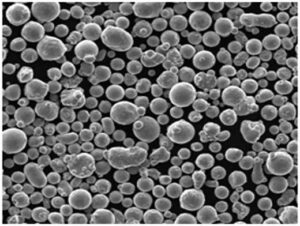
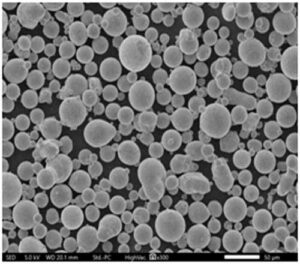
The term “PREP” refers to Plasma Rotating Electrode Process, a powder production route that starts from a rotating alloy electrode and uses plasma energy to generate droplets that solidify into highly spherical particles. For demanding AM alloys, PREP is valued because it tends to produce low-satellite, low-contamination powder with excellent flow behavior. Those characteristics are especially useful for superalloys that already have a relatively narrow process window and benefit from stable powder spreading and predictable melting.

Why Inconel 738LC Exists as a Distinct Superalloy
Inconel 738LC was designed for service conditions that combine heat, stress, and aggressive gas exposure. Its alloying strategy emphasizes gamma-prime strengthening through aluminum and titanium, while chromium, cobalt, tungsten, tantalum, and other additions support oxidation resistance, matrix stability, and high-temperature strength. The “LC” suffix generally denotes a low-carbon version relative to earlier variants, intended to improve castability and balance grain-boundary behavior.
For additive manufacturing, those same metallurgical advantages are attractive, but they come with tradeoffs. IN738LC offers better hot-section capability than easier AM alloys such as 625 or 718, yet it is also more sensitive to cracking, heat input, and thermal history. That is why powder quality and process control are central to successful use.
PREP Spherical Powder vs. Conventional Atomized Powder
Not all spherical powders are equivalent. Gas-atomized powder can be highly suitable for many nickel alloy AM jobs, but PREP spherical powder is often selected when users want particularly high sphericity, low satellite content, and strong lot cleanliness. Those attributes can improve spreading uniformity in powder bed systems and reduce variability during long builds.
That does not mean PREP automatically solves all printability challenges. Rather, it reduces one major source of variation: inconsistent feedstock morphology. For an alloy like 738LC, that can make parameter development and build repeatability more manageable.
AM Context for Alloy 738LC
The additive manufacturing industry generally treats 738LC as a specialized superalloy rather than a mass-market powder grade. It is most relevant in high-value sectors where the printed part justifies a premium material and a more careful qualification route. A concise ISO/ASTM 52900 terminology overview is useful here because it frames how metal AM processes and feedstocks are classified across the broader industrial landscape.
For advanced nickel superalloys, powder quality is not a secondary variable; it is part of the process design.
化学組成および材料グレード
The chemistry of PREP spherical Inconel 738LC powder is the main reason it remains important in turbine-class additive manufacturing. The alloy depends on a carefully balanced nickel matrix strengthened by gamma-prime precipitates, supported by refractory and grain-boundary-modifying additions. In printed form, that chemistry still defines the property envelope, but the final result also depends on cooling rate, residual stress, scan strategy, and post-build heat treatment.
Unlike some standardized AM grades, Inconel 738LC is more often ordered by alloy designation plus an agreed technical powder specification than by one universal powder standard number. Buyers typically define composition targets, trace-element control, and powder property limits in the purchase documentation.
| Element / Grade Item | 典型的なwt | 典型的な範囲 | ASTM / AMS / GB / ISO / DIN Cross-Reference Notes |
|---|---|---|---|
| ニッケル(Ni) | バランス | バランス | Base element; IN738LC is normally procured by alloy designation rather than a single dedicated AM powder standard |
| クロム(Cr) | 16.0 | 15.5–16.5 | Supports oxidation and hot-corrosion resistance; usually verified through supplier chemistry certification |
| コバルト | 8.5 | 8.0–9.0 | Stabilizes the matrix and high-temperature strength response |
| タングステン(W) | 2.6 | 2.4–2.8 | Refractory strengthener for elevated-temperature service |
| モリブデン (Mo) | 1.75 | 1.5–2.0 | Contributes solid-solution strengthening and hot strength |
| タンタル (Ta) | 1.75 | 1.5–2.0 | Supports gamma-prime strengthening and high-temperature retention |
| アルミニウム(Al) | 3.4 | 3.2–3.7 | Key precipitation-strengthening element |
| チタン(Ti) | 3.4 | 3.2–3.7 | Works with aluminum to form gamma-prime |
| Nb, C, B, Zr, Fe, Si, Mn | controlled minors | tightly controlled | Minor elements are usually governed by internal or customer specifications; no simple one-to-one ASTM/AMS/GB/ISO/DIN AM powder equivalent is typically used |
Composition Control in PREP Spherical Inconel 738LC Powder
In a precipitation-hardened superalloy, small chemistry shifts can affect crack sensitivity, heat-treatment response, and long-term microstructural stability. That is why buyers of PREP spherical Inconel 738LC powder usually look beyond the major elements and pay attention to carbon, boron, zirconium, and residual impurity control. These low-level additions can strongly influence grain-boundary behavior and, by extension, elevated-temperature performance.
For AM, chemistry control also matters because a printed component experiences rapid thermal cycling. If the powder chemistry varies significantly from lot to lot, it becomes harder to determine whether a build outcome is caused by machine settings or by the feedstock itself.
Material Grade Interpretation
Inconel 738LC is widely recognized across superalloy engineering, but it does not map neatly onto the kind of simple commodity-grade ordering seen with more standardized stainless or titanium AM powders. Users therefore tend to qualify the full material system: nominal chemistry, powder size range, morphology, oxygen level, and post-build processing route. That is consistent with how many organizations approach the ASTM additive manufacturing standards catalog, which emphasizes methods, terminology, and process-specific qualification rather than a one-code answer for every alloy.
Relation to Other Nickel Superalloy Powders
Compared with Inconel 625, 738LC is less about corrosion-first performance and more about elevated-temperature structural retention. Compared with Inconel 718, it generally targets higher service temperatures but often requires tighter control in printing and subsequent heat treatment. Within a broader nickel alloy powder catalog, 738LC therefore sits toward the higher-temperature, more specialized end of the application spectrum.
技術仕様
Technical specifications for PREP spherical Inconel 738LC powder are driven by the intended AM route. Powder bed fusion systems typically require fine, highly flowable fractions such as 15–53 µm or 15–45 µm, while directed energy deposition and laser cladding may use coarser cuts such as 45–105 µm or 53–150 µm. In either case, the critical variables are not only size range but also apparent density, tap density, Hall flow, oxygen content, and particle sphericity.
Because PREP produces very round particles with relatively low satellite attachment, it is often selected for applications where powder spreading consistency and feedstock cleanliness are central to qualification. This is particularly useful for thin layers, fine recoating behavior, and multi-build powder management.
| PSDレンジ | Typical AM Use | 見かけ密度 (g/cm³) | Tap Density (g/cm³) | Hall Flow (s/50 g) | Oxygen Content (wt%) | 球形度 |
|---|---|---|---|---|---|---|
| 15~45 µm | Fine-layer laser powder bed fusion | 4.8–5.2 | 5.3–5.8 | 14–20 | 0.01–0.03 typical | 0.96–0.99 typical |
| 15~53 µm | General LPBF build stock | 4.9–5.3 | 5.4–5.9 | 13–19 | 0.01–0.03 typical | 0.96–0.99 typical |
| 20–63 µm | Broader recoating window for PBF | 4.9–5.4 | 5.5–6.0 | 12–18 | 0.01–0.03 typical | 0.96–0.99 typical |
| 45~105 µm | Directed energy deposition / cladding | 5.0–5.5 | 5.7–6.2 | 11–17 | 0.01–0.04 typical | 0.96–0.99 typical |
| 53~150 µm | Higher-throughput DED and laser cladding | 5.1–5.6 | 5.8–6.3 | 10–16 | 0.01–0.04 typical | 0.96–0.99 typical |
Particle Size Distribution for PREP Spherical Powder
The correct PSD depends on machine architecture, recoater type, layer thickness, and energy density strategy. Very fine cuts can support thin layers and feature resolution, but they also increase surface area, which can make oxygen control and powder handling more sensitive. Coarser cuts are typically better for DED and cladding, where powder transport and catch efficiency matter more than thin-layer packing.
In procurement, PSD should therefore be tied to the process name rather than specified in isolation. Ordering “Inconel 738LC powder” without the target process leaves too much room for mismatch.
Flowability, Packing, and Recoating Behavior
Hall flow, apparent density, and tap density are useful indicators of how a powder will behave during handling and recoating. They are not complete predictors of print success, but they provide an early filter for feedstock suitability. PREP spherical Inconel 738LC powder is often selected because high roundness and low irregular particle content can improve layer formation and reduce recoater disturbance.
That advantage becomes more visible as build jobs get longer or more complex. A powder that spreads consistently over many layers can reduce build interruptions and make defect analysis more straightforward.
Oxygen Content and Surface Condition
Low oxygen content supports consistent melting and cleaner metallurgical behavior during consolidation. In high-performance nickel alloys, excess surface oxidation can alter wetting behavior and complicate pore or inclusion analysis after printing. For that reason, powder cleanliness is usually treated as both a manufacturing issue and a storage issue.
The same powder can perform differently depending on how it is opened, sieved, reused, and stored. That is why advanced users often qualify not just virgin powder but also powder-handling practice.
Why Sphericity Matters in Alloy 738LC
High sphericity improves not only flow but also packing regularity and powder-bed uniformity. In an alloy with a relatively demanding print window, those small improvements can matter. A well-formed powder bed helps reduce layer-to-layer variation, which in turn supports more stable melt-pool behavior.
A broader NIST AM materials measurement program is relevant here because it highlights how powder measurement underpins repeatable additive manufacturing at scale.
業界を横断した活用事例
PREP spherical Inconel 738LC powder is most relevant where service temperatures are high, part value is substantial, and the design cannot compromise on hot-section capability. Aerospace and turbine programs are the most obvious examples, but the alloy also appears in advanced power, repair engineering, and thermal test development. Its use is rarely casual; it is usually tied to a specific operating condition that justifies a premium superalloy and a disciplined qualification path.
The process route varies by geometry and economics. Powder bed fusion is useful for intricate shapes and internal features, while DED or cladding may be better for repair, large-section buildup, or localized reinforcement.
| 産業 | Typical Part | Main Requirement | AM / PM Process |
|---|---|---|---|
| 航空宇宙用エンジン | Turbine vanes, blade segments, shroud features | Creep and oxidation resistance at elevated temperature | LPBF / repair development |
| 産業用ガスタービン | Combustor-adjacent hardware, hot-path components | Thermal stability in sustained high-heat service | LPBF / DED / cladding |
| Power generation maintenance | Restoration coupons and repair zones | Life extension of high-value nickel parts | Laser cladding / DED |
| AM research and qualification | Parameter coupons, lattice trials, microstructure studies | Evaluation of crack-sensitive superalloy behavior | LPBF / SEBM research |
| Thermal process equipment | Heat-resistant inserts and fixture zones | Strength retention during thermal cycling | LPBF / HIP-assisted workflow |
| Energy and materials labs | Creep, oxidation, and exposure test samples | Controlled high-temperature materials screening | Powder metallurgy / AM trials |
Aerospace and Turbine Components
In gas turbine environments, material selection is driven by temperature capability, oxidation resistance, and creep life rather than by ease of manufacturing alone. PREP spherical Inconel 738LC powder is relevant because it brings a known turbine-class alloy into additive workflows that can enable design flexibility, repair strategy, or spare-part modernization.
This does not mean every hot-section part should be printed from 738LC. Qualification remains demanding, and in many cases only certain geometries or low-volume, high-value parts justify the AM route.
Repair, Feature Build-Up, and Hybrid Manufacturing
For repair engineering, the alloy is useful where replacing an entire component would be much more expensive than restoring a local region. DED and cladding can apply 738LC or a related nickel alloy to worn surfaces, tips, edges, or thermal zones. Hybrid routes may also deposit material and then machine to final dimensions.
Such workflows make sense only when deposition quality is consistent. That is one reason users often prefer tightly controlled spherical feedstock in this alloy family.
R&D and Qualification Work
A large share of 738LC powder consumption in AM still occurs in development environments. Researchers and engineering teams use the alloy to study crack susceptibility, scan strategy, heat treatment, and long-term stability under service-like conditions. Those efforts help define whether the alloy is best suited to full builds, selective features, or repair-only workflows.
When Other Powder Families Are Better Choices
Not every high-performance part needs a nickel superalloy. If the priority is lightweighting, a titanium powder product range may be more suitable. If moderate-temperature corrosion resistance or lower cost matters more than turbine-class heat capability, an industrial stainless steel powder selection may be the better engineering answer.
製造および品質保証
Manufacturing route and quality assurance are especially important for PREP spherical Inconel 738LC powder because the alloy itself is demanding. Powder morphology, internal porosity, chemistry stability, and oxygen level all influence print behavior. A premium alloy with inconsistent powder attributes can quickly erase the benefit of its nominal chemistry.
PREP is often chosen because it can produce extremely spherical powder with low contamination risk and strong flow performance. Gas atomization and vacuum-controlled atomization routes remain important as well, especially when balancing scalability, cost, and target PSD flexibility.
| Route or QA Method | Main Advantage | Main Limitation | Typical Acceptance Focus |
|---|---|---|---|
| プラズマ回転電極プロセス(PREP) | Excellent sphericity and low satellite content | Higher cost and narrower production economics for some lots | Morphology, cleanliness, consistent PSD, premium flowability |
| Gas Atomization (GA) | Scalable production and broad commercial familiarity | More satellites and fines may require tighter classification | PSD control, flow, oxygen, chemistry repeatability |
| Vacuum Induction Gas Atomization (VIGA) | Strong atmosphere and melt control | More complex processing chain | Low impurity levels, lot chemistry consistency |
| Laser diffraction PSD testing | Rapid quantitative size distribution data | Sensitive to sampling discipline | D10, D50, D90 inside agreed range |
| SEM morphology inspection | Direct evaluation of shape and satellites | Surface-focused unless paired with other tests | High roundness, low agglomeration, minimal irregular particles |
| Inert gas fusion O/N testing | Reliable oxygen and nitrogen measurement | Does not directly predict printability | Compliance with internal impurity limits |
PREP vs. GA vs. VIGA for Inconel 738LC AM Powder
PREP is particularly attractive for crack-sensitive or high-value alloys because it minimizes morphological variability. Gas atomization remains a strong industrial route, especially for larger volumes and flexible sizing, but may require stricter control of satellites and fines. VIGA-type systems add value through cleaner atmosphere control and consistent melt chemistry, which can be important in premium superalloy production.
For buyers, the correct route depends on the intended process and qualification burden. If recoating quality and powder cleanliness are central, PREP often has a strong case.
Powder Qualification for Additive Manufacturing
Qualification should include chemistry, PSD, oxygen content, and morphology at minimum. Many users also request apparent density, tap density, Hall flow, retained samples, and documentation on sieving or packaging conditions. In demanding AM programs, lot-to-lot consistency matters as much as any single certificate value.
The powder should also be evaluated in the context of the real machine and build strategy. Laboratory numbers are necessary, but the final standard is whether the powder creates stable layers and repeatable parts.
Storage, Reuse, and Powder Lifecycle
Powder quality does not stop at shipment release. Reuse policy, sieve practice, humidity exposure, and contamination control can all change how the powder behaves in the machine. For high-performance superalloys, even small shifts in fines population or surface oxidation can alter build outcomes.
That is why serious users define a powder lifecycle plan early in qualification. The goal is not only to print successfully once, but to keep the material system stable across repeated builds.
なぜサプライヤーとしてTruerを選ぶべきなのか
Supplier fit for PREP spherical Inconel 738LC powder depends on whether the source understands both powder production and downstream AM use. Buyers in this category usually need more than a generic superalloy certificate; they need a powder partner that can discuss PSD targeting, morphology expectations, process compatibility, and the difference between research-scale qualification and repeat industrial supply.
Shanghai Truer Technology is relevant in that context because its additive manufacturing activities connect powder-making equipment, powder supply, and end-use AM processes. The company profile for Truer describes work in PREP equipment, gas atomization, SEBM-related systems, and multiple families of spherical metal powder. For specialized nickel superalloys, that combination is useful because the technical discussion often starts with process requirements rather than price alone.
ご注文ガイドとサポート
A technically complete inquiry for PREP spherical Inconel 738LC powder should specify the intended AM process, target PSD, preferred packaging, estimated annual volume, and required test documents. It is also helpful to state whether the powder is for LPBF parameter development, production builds, DED trials, or repair evaluation. That context makes it easier to align the powder cut and release criteria with the actual engineering task.
For many projects, sample evaluation is the most efficient first step. A small-lot trial can confirm spreading behavior, density response, crack tendency, and post-build microstructure before a larger qualification campaign begins.
| 包装形態 | Typical MOQ Tier | Typical Lead Time | Sample Policy |
|---|---|---|---|
| 500 g bottle | Feasibility screening | 1–2 weeks typical if sample stock is available | Paid sample or engineering evaluation sample |
| 1 kg入りボトル | 初期パラメータの策定 | 1–3 weeks typical | Common for first LPBF trials |
| 5 kg入り密閉缶 | Extended coupon matrix and repeat runs | 通常2~4週間 | Often supplied with baseline test data |
| 10 kg sealed can | Pilot build and machine qualification | 3–5 weeks typical | Retained sample arrangement may be available |
| 25 kg lot packaging | Repeat engineering supply or pre-production | 4–8 weeks typical | Larger orders generally follow sample approval |
Information to Include in an RFQ
Useful technical inputs include alloy designation, target particle size range, process route, layer thickness, substrate or baseplate material, and any limits on oxygen or residual elements. If the program already has a draft parameter window, including that information can help avoid testing an unsuitable powder cut.
This is especially important for 738LC because process success is strongly linked to both feedstock control and thermal management. A vague inquiry often produces an unnecessarily long qualification cycle.
Samples, Documentation, and Technical Communication
Most organizations qualify a specialized superalloy powder in stages: sample request, machine trial, metallography, heat-treatment evaluation, and then broader procurement. That staged path reduces technical risk and helps separate powder variables from machine variables. For quotation and specification discussion, the most direct route is the technical contact page.
当社
Shanghai Truer Technology Co., Ltd. was established in 2009 and created its additive manufacturing business in 2019. The company is dedicated to integrating 3D printing powder-making equipment and services with high-quality 3D printing powders to accelerate engineering applications of additive manufacturing. Its core technologies include Selective Electron Beam Melting equipment, Plasma Rotating Electrode Process powder-making equipment, and gas atomization relevant to spherical powder production. The powder portfolio includes TiNi, TiTa, TiAl, TiNbZr, CoCrMo, along with nickel-based, cobalt-based, titanium-based, copper-based, aluminum-based, and stainless steel spherical metal powders. The company also participates in a joint innovation center for metal 3D printing with laboratories and industry experts, and serves end processes including SLM, SEBM, DED, laser cladding, powder metallurgy, MIM, HIP, cold and hot spraying, welding, and coating for industries such as 3C electronics, hand tools, remote control cars, medical, aerospace, and nuclear power.
よくある質問
Q1. Is PREP spherical Inconel 738LC powder mainly used for LPBF or for DED?
It can be used in both, but PREP spherical Inconel 738LC powder is especially attractive for powder bed routes because high sphericity and low satellite content support stable recoating. Coarser PSD cuts can also be prepared for DED or cladding when the application calls for repair or larger feature buildup. The right answer depends on geometry, cost, and qualification scope.
Q2. Why is PREP preferred for some Inconel 738LC powder applications?
PREP is often chosen because it produces very round particles with strong flowability and relatively low contamination risk. For a superalloy with a demanding process window, those characteristics can reduce one source of variability during printing. The benefit is feedstock consistency rather than a guarantee of crack-free builds.
Q3. What particle size is typical for PREP spherical Inconel 738LC powder in laser powder bed fusion?
Common LPBF ranges include 15–45 µm and 15–53 µm, though exact sizing depends on layer thickness, machine configuration, and recoater strategy. Some users also qualify 20–63 µm windows where a broader distribution is acceptable. Final selection should be tied to the actual process setup rather than copied from another machine.
Q4. Does Inconel 738LC require heat treatment after additive manufacturing?
In most technical programs, yes. Post-build heat treatment is usually needed to relieve stress, stabilize the microstructure, and develop the intended precipitation-strengthened condition. The precise cycle depends on the process route, crack-management strategy, and target final properties.
Q5. How does Inconel 738LC compare with Inconel 718 powder for 3D printing?
Inconel 738LC generally targets higher-temperature service and stronger creep resistance, while 718 is usually easier to print and qualify. If the application does not need turbine-class heat capability, 718 may offer a more forgiving process route. If elevated-temperature strength retention is the priority, 738LC can be the more appropriate material despite the added complexity.
Q6. Can PREP spherical Inconel 738LC powder be recycled after a build?
Potentially, but reuse should be managed carefully through sieving, contamination control, and monitoring of fines and oxygen pickup. Recycled powder may behave differently from virgin material, especially in a high-performance superalloy. A reuse strategy should be based on measured powder condition and validated build results, not on assumption alone.