إجابة سريعة
Inconel 690 nickel alloy powder is a high-chromium nickel-based alloy powder designed for demanding environments that combine heat, oxidation, and aggressive corrosive media. For 3D printing and related powder-based processes, it is chosen when the part must resist high-temperature oxidation, carburization, and stress-corrosion cracking better than many standard nickel alloys. The best results come from powder with controlled chemistry, low oxygen, spherical morphology, and a particle-size distribution matched to the intended process, whether that is laser powder bed fusion, DED, HIP, or powder metallurgy.
What Is Inconel 690 nickel alloy powder?
Inconel 690 nickel alloy powder is the powder form of Alloy 690, a nickel-chromium-iron corrosion- and heat-resistant alloy known for its very high chromium level relative to many other engineering nickel alloys. In wrought product form, Alloy 690 is widely associated with nuclear, thermal-processing, and chemical-service components that need excellent resistance to oxidizing environments and good structural stability at elevated temperatures. In powder form, the same alloy family becomes suitable for additive manufacturing, powder metallurgy, hot isostatic pressing, thermal spraying, and repair-oriented deposition processes.
Alloy Family and Metallurgical Identity
The alloy belongs to the broader Ni-Cr-Fe family rather than the precipitation-hardened superalloy family. That distinction matters because Alloy 690 is typically selected for corrosion resistance and oxidation resistance first, not for the ultra-high creep strength targets that drive grades such as Inconel 718. Its chemistry, especially the chromium content of roughly 27% to 31%, gives it a strong passive surface film and strong resistance to many oxidizing and sulfur-bearing service conditions.
The nickel matrix provides a stable austenitic structure, while the iron content helps balance cost and processability within the alloy system. Compared with lower-chromium grades such as Alloy 600, Inconel 690 is generally preferred when service conditions demand a stronger margin against oxidation, nitridation, or chloride-related degradation in hot environments. That is one reason high chromium content is central to how the alloy is specified and sold.
Why This Alloy Exists in Powder Form
Historically, Alloy 690 was used in wrought forms such as plate, bar, tube, and welding consumables. The growth of metal additive manufacturing created a new use case: engineers wanted the same corrosion and heat resistance in more complex geometries, internal channels, lightweight structures, and repair builds. Powder production made that possible.
Powder form is also useful beyond AM. For thermal spray coatings, hot isostatic pressing, and net-shape powder metallurgy, a free-flowing nickel alloy feedstock can reduce machining waste and improve shape efficiency. As a result, Inconel 690 nickel alloy powder is now relevant not only to traditional high-temperature industries, but also to advanced manufacturing teams optimizing part design and process economics.
How Inconel 690 Differs from Other Nickel Alloys
A common mistake in sourcing is to treat all nickel alloys as interchangeable. In reality, each alloy family solves a different materials problem. Alloy 625 is often selected for broad corrosion resistance and weldability; Alloy 718 is selected for age-hardenable high strength; Alloy 600 is a well-established heat-resistant nickel alloy; and Alloy 690 stands out when long-term resistance to oxidizing high-temperature environments and stress-corrosion damage is especially important.
That makes Inconel 690 nickel alloy powder less of a general-purpose AM metal and more of a targeted engineering material. It is not always the cheapest or easiest powder to qualify, but it can be the right answer when environment, not just strength, drives part failure. In that context, oxidation and stress-corrosion resistance are the alloy’s defining value.
In high-temperature alloy selection, the service environment usually decides the material before the geometry does.
Why Powder Quality Matters More Than the Alloy Name Alone
The phrase “Inconel 690 powder” describes chemistry, but not complete usability. Two powders with nominally similar chemistry can behave very differently in the machine or in downstream thermal processing if their oxygen levels, particle-size distributions, or sphericity differ. This is especially relevant in AM, where powder flow and layer consistency influence both build quality and final density.
For that reason, material selection should not stop at the alloy designation. Engineers should also define the delivery condition, such as gas-atomized AM powder, DED feedstock, thermal spray grade, or PM-grade spherical powder. In practical procurement, spherical AM powder is often preferred for repeatable flow, recoating, and packing.
Chemical Composition and Material Grade
Inconel 690 nickel alloy powder is commonly aligned with the chemistry of Alloy 690, typically referenced by UNS N06690. While different end-product standards apply to sheet, plate, bar, wire, tube, and weld metal, powder buyers generally use the nominal alloy chemistry as the starting point and then add powder-specific requirements for interstitials, size distribution, and morphology.
The most important compositional feature is the alloy’s high chromium content. That level is the reason Alloy 690 is often chosen over Alloy 600 in strongly oxidizing service, and it is also one of the main reasons the alloy performs well against metal dusting tendencies, sulfur-bearing atmospheres, and certain high-temperature corrosion modes.
Typical Composition of Inconel 690 Nickel Alloy Powder
| Material / Grade Reference | Ni (wt%) | Cr (wt%) | Fe (wt%) | Mn (wt%) | Si (wt%) | C (wt%) | Other Limits | Common Cross-Reference |
|---|---|---|---|---|---|---|---|---|
| Alloy 690 nominal chemistry | 58.0 دقيقة | 27.0–31.0 | 7.0–11.0 typical | 0.50 max | 0.50 max | 0.05 max | S 0.015 max, Cu 0.50 max | UNS N06690; EN/DIN 2.4642 / NiCr30Fe9 |
| AM-grade pre-alloyed powder | 58.0 دقيقة | 27.0–31.0 | balance within nominal range | 0.35 max typical | 0.35 max typical | 0.03 max typical | O and N controlled by powder spec | Supplier powder grade derived from UNS N06690 |
| PM / HIP-oriented nickel alloy powder | 58.0 دقيقة | 27.0–31.0 | balance within nominal range | 0.50 max | 0.50 max | 0.05 max | P and S kept low for densification | Customer drawing or internal PM alloy standard |
| Welding-matched chemistry family | 58.0 min typical | 27.0–31.0 typical | balance typical | controlled | controlled | low-carbon practice | Product-form-specific filler limits | Related to Alloy 690 consumable chemistry, not a direct AM powder standard |
The composition window should always be confirmed against the intended application and the product form being qualified. A powder used for laser powder bed fusion may be held to tighter oxygen and carbon limits than a powder used for certain thermal spray or repair applications.
Grade Cross-Reference and Standards Context
Alloy 690 is widely associated with UNS N06690 and the EN/DIN designation 2.4642, sometimes written as NiCr30Fe9 in European naming practice. Product standards vary by form. For example, wrought sheet and plate, rod and bar, pipe and tubing, and welding consumables each have their own established specification pathways. Powder suppliers therefore usually reference the nominal wrought chemistry and then build a separate internal powder specification on top of it.
That approach is normal in AM. Many successful additive alloys entered the market through existing wrought or cast chemistries rather than through a powder-only historical standard. Readers who want general background on the Inconel family can consult the [Inconel alloy family overview], while those validating process definitions often use the [ISO additive manufacturing terminology standard] as a common language baseline.
Why Minor Elements Matter in Inconel 690 Nickel Alloy Powder
Minor elements can have a disproportionate effect on performance. Carbon should be controlled because carbide precipitation and grain-boundary chemistry can influence corrosion behavior after thermal exposure. Sulfur and phosphorus are kept low because they can impair hot workability, weldability, and consistency in powder processing.
Oxygen is especially important in powder form. Even when nominal Ni-Cr-Fe chemistry is correct, excessive surface oxide can reduce flow, compromise fusion behavior, and change downstream microstructure. In critical applications, the buyer should ask not only for nominal composition, but also for powder-specific interstitial limits and lot-level analytical data.
Practical Grade Selection for Engineers
Most engineers do not actually buy “a standard grade” in isolation; they buy a material package. That package includes chemistry, powder size cut, morphology, cleanliness, documentation, and downstream process expectations. For Inconel 690 nickel alloy powder, the correct grade selection question is therefore not only “Is it N06690?” but also “Is it the right N06690 powder for my build platform, post-processing route, and service environment?”
المواصفات الفنية
Powder specifications determine how reliably Inconel 690 nickel alloy powder will feed, spread, compact, and densify. In additive manufacturing, the same chemistry can produce different outcomes depending on particle-size distribution, apparent density, and oxygen content. In thermal spray and DED, feed stability and deposition behavior can be just as important as chemistry.
A technically useful powder specification should therefore connect the feedstock to the process. The chosen size range must fit the recoater, nozzle, carrier-gas behavior, or compaction requirement rather than being treated as a generic quality metric.
Typical Technical Specifications for Inconel 690 Nickel Alloy Powder
| Powder Class | Typical PSD Range | الكثافة الظاهرة | كثافة الحنفية | Hall Flow | محتوى الأكسجين | Sphericity / Morphology |
|---|---|---|---|---|---|---|
| Fine LPBF grade | 15–45 µm | 4.3–5.0 g/cm³ typical | 5.0–5.9 g/cm³ typical | 14–22 s/50 g typical | ≤0.10 wt% typical | Highly spherical, limited satellites |
| Standard LPBF / multi-purpose AM grade | 15–53 µm | 4.4–5.1 g/cm³ typical | 5.1–6.0 g/cm³ typical | 13–21 s/50 g typical | ≤0.10 wt% typical | Spherical, free-flowing |
| DED / laser cladding grade | 45–105 µm | 4.5–5.3 g/cm³ typical | 5.2–6.2 g/cm³ typical | 12–19 s/50 g typical | ≤0.12 wt% typical | Spherical to near-spherical |
| PM / HIP broad-cut grade | 53–150 µm | 4.6–5.4 g/cm³ typical | 5.4–6.4 g/cm³ typical | 12–18 s/50 g typical | ≤0.15 wt% typical | Mostly spherical, low internal contamination |
These values are representative commercial targets rather than universal standards. Actual limits should be set by the process route, machine type, and the part performance required after heat treatment.
Inconel 690 Powder for LPBF and EBM-Adjacent Workflows
For LPBF, the most common requirement is a narrow distribution with strong spreadability and minimal coarse outliers. Fine powders improve layer formation but also raise handling sensitivity and oxidation risk, so balance matters. In electron-beam or adjacent high-energy powder-bed workflows, the powder may need additional attention to electrical charging behavior, preheat response, and controlled fines content.
Even if the nominal chemistry is correct, poor morphology can produce spatter-related defects, uneven layers, or unstable build density. That is why low oxygen content and controlled satellites are frequently specified alongside the particle-size cut.
Powder Metrics That Most Affect Printability
Apparent density and tap density help predict packing behavior, though they should not be confused with final part density. Hall flow gives a practical window into whether the powder will feed or spread consistently, especially in production settings with repeated recycling. Sphericity influences both flow and powder-bed homogeneity.
None of these numbers should be read alone. A powder with excellent Hall flow but excessive oxygen may still underperform after fusion and heat treatment. Likewise, a powder with acceptable chemistry but broad fines content may be difficult to handle consistently in volume manufacturing.
Heat Treatment, Densification, and Final Condition
Like many nickel alloys, Inconel 690 components often benefit from post-build heat treatment to reduce residual stress and stabilize microstructure. The exact route depends on the process: stress relief for LPBF, HIP plus solution treatment in some dense-part strategies, or sintering optimization in PM routes. Because Alloy 690 is not primarily an age-hardened alloy, final performance depends more on density, grain structure, and environmental compatibility than on precipitation strengthening cycles.
For buyers, that means powder qualification should include a downstream view. It is not enough to ask whether the powder meets PSD and chemistry limits. The better question is whether the material can reliably produce the target corrosion and oxidation performance after the full process chain.
Applications Across Industries
Inconel 690 nickel alloy powder is used where corrosion resistance and elevated-temperature environmental stability dominate material selection. The strongest application case is not “all hot parts,” but specifically hot parts exposed to oxidizing, sulfur-bearing, chloride-associated, or otherwise aggressive process environments. Powder-based manufacturing is particularly attractive when those service demands must be combined with geometric complexity or localized repair.
Typical Applications for Inconel 690 Nickel Alloy Powder
| الصناعة | Typical Part | AM / PM Process | Why the Powder Is Used |
|---|---|---|---|
| توليد الطاقة | Burner hardware, transition components, corrosion-resistant inserts | LPBF, DED, HIP | High-temperature oxidation and corrosion resistance |
| Nuclear systems | Steam-generator-related hardware, sleeves, overlays, shielding-adjacent components | DED, HIP, PM | Resistance to stress-corrosion cracking and high-purity water service compatibility |
| المعالجة الكيميائية | Furnace fixtures, reactor internals, heat-resistant nozzles, corrosion-critical parts | LPBF, PM, thermal spray feedstock | Good performance in oxidizing and hot corrosive environments |
| Thermal processing and industrial heating | Retorts, radiant tube details, support hardware, hot-zone accessories | DED, PM, cladding | Resistance to carburization, nitridation, and scale formation |
Power and Energy Equipment
High-temperature power equipment often contains regions where ordinary stainless steels lose margin against oxidation or hot corrosion. Inconel 690 nickel alloy powder can be useful for localized components, overlays, or geometrically complex hardware that must remain stable during repeated thermal cycles. In repair scenarios, powder-fed deposition routes can also reduce the need to replace large assemblies.
This application logic is especially relevant when engineers are already comparing heat-resistant alloys across powder families. In such cases, a broader [nickel superalloy powder range] provides a useful comparison baseline against other Ni-based grades used in energy equipment.
Nuclear and High-Purity Water Systems
Alloy 690 is well known in the nuclear field because of its resistance to stress-corrosion cracking relative to older alloy systems used in certain steam-generator environments. Powder form can be relevant for repair, cladding, near-net-shape components, and application-specific hardware where conventional wrought fabrication is cumbersome.
Material qualification in this area is necessarily strict. Powder cleanliness, traceability, and final heat-treatment documentation can matter as much as the nominal grade itself. For this reason, lot-to-lot consistency is not simply a supply-chain preference; it is part of technical risk control.
Chemical Processing and Heat Treatment Industries
Chemical plants and thermal-processing equipment frequently present mixed exposure modes: oxidizing gases, sulfur species, thermal cycling, and corrosive condensates. Alloy 690’s chromium-rich chemistry is valuable in such conditions, especially when fabricated shapes are hard to machine from wrought stock. Powder manufacturing adds flexibility in creating custom nozzles, holders, support structures, and internal flow features.
Engineers should still compare the material with neighboring alloy systems. In some corrosion cases, stainless alloys may suffice; in others, cobalt or titanium families may be more relevant. For comparison purposes, [stainless steel powder grades] and [cobalt alloy powder materials] help frame where Alloy 690 is the more suitable technical choice.
Additive Manufacturing for Repair and Part Consolidation
One of the less-discussed strengths of Inconel 690 powder is its role in repair and life extension. DED and laser cladding can rebuild worn surfaces, add corrosion-resistant layers, or restore geometry to high-value hot-section components. In part-consolidation projects, additive manufacturing can also reduce weld count, internal joints, or assembly complexity in corrosive service hardware.
That design freedom is often where the alloy delivers its highest return. The raw powder may be more specialized than a common stainless feedstock, but the combination of environmental resistance and design flexibility can justify the choice.
Manufacturing and Quality Assurance
The manufacturing route for Inconel 690 nickel alloy powder strongly affects performance in AM and powder-based processing. For most high-quality feedstock, gas atomization is the standard route because it produces good sphericity, scalable output, and a practical balance between cost and cleanliness. Vacuum induction gas atomization is often preferred when tighter chemistry control and lower contamination are required.
Powder for demanding corrosion service should be treated as a controlled metallurgical product, not as generic atomized metal. The alloy’s high chromium content makes surface oxidation management particularly important during melting, atomization, drying, screening, and packaging.
Typical Quality Assurance Framework
| QA Test | Typical Instrument / Method | Typical Acceptance Focus | ما أهمية ذلك |
|---|---|---|---|
| التركيب الكيميائي | ICP-OES, XRF cross-check, combustion analysis | Ni, Cr, Fe within target; low C, S, P | Confirms alloy identity and corrosion-performance baseline |
| Particle-size distribution | Laser diffraction plus sieve verification | Ordered cut within specification; limited coarse fraction | Affects spreading, feeding, and packing |
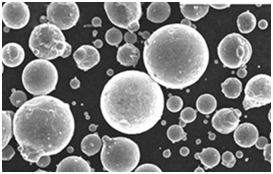
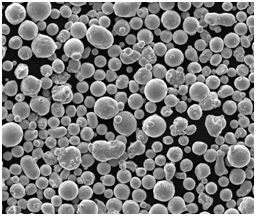
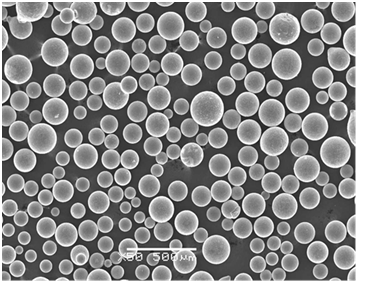
| Morphology and satellite level | SEM and image analysis | Predominantly spherical particles, limited satellites | Supports flow stability and densification |
| Oxygen / nitrogen / moisture control | Inert gas fusion and controlled handling records | Interstitials within agreed lot limits | Preserves printability and final alloy cleanliness |
These tests are typically supplemented by apparent density, tap density, Hall flow, retained sample control, and packaging integrity checks. For production work, many users also require lot traceability from melt to packaged container.
GA, VIGA, and PREP in Practice
Gas atomization is widely used because it can produce commercially practical lots with strong flow characteristics. VIGA introduces tighter control over melting and atomization atmosphere and is often favored for higher-value or more cleanliness-sensitive alloy powders. PREP is well known for producing extremely spherical particles, but its economic fit depends on alloy, size target, and production scale.
For Inconel 690 nickel alloy powder, the most important question is not which acronym sounds best. It is whether the selected route can repeatedly deliver clean chemistry, low oxygen, and the size distribution the customer actually needs.
Inspection, Documentation, and Acceptance Criteria
Incoming powder inspection should align with the process route. LPBF users usually focus heavily on morphology, fines management, and flow; DED users may focus more on feeder stability and coarse-particle control; PM users may prioritize apparent density and compressibility. The acceptance plan should reflect those priorities rather than copying a generic template.
Teams building formal qualification systems often reference the [NIST additive manufacturing program] for measurement-oriented guidance and the [ASTM standards platform] for test-method frameworks used in powder characterization. Those sources do not replace internal qualification, but they help structure it.
Reuse Strategy and Powder Lifecycle Control
Nickel alloy powders are often recycled in production, but reuse should be controlled rather than assumed. With Inconel 690, repeated thermal exposure can shift fines distribution, surface oxide condition, and flow behavior. A disciplined reuse plan typically includes sieve control, lot blending rules, and periodic requalification of oxygen and PSD.
This is especially important in corrosive-service applications where the safety margin comes from microstructural consistency as well as nominal chemistry. A powder lifecycle plan is therefore part of material quality, not an afterthought.
Why Choose Truer as Your Supplier
From a technical procurement perspective, a suitable supplier for Inconel 690 nickel alloy powder should understand both powder production and the downstream manufacturing routes that use it. That means the supplier should be able to discuss particle-size tailoring, morphology, atomization route, documentation, and the practical differences between feedstock for LPBF, DED, PM, MIM, or coating applications. It is also useful when the supplier can situate Alloy 690 within a wider portfolio of nickel, cobalt, titanium, copper, aluminum, and stainless powders, because engineers often compare multiple alloy systems before freezing a design.
Shanghai Truer Technology is relevant in that context because its published capability set includes spherical metal powders, PREP-related equipment, gas-atomization-related capability, and process familiarity across SLM, SEBM, DED, laser cladding, PM, MIM, HIP, and spraying routes. Readers seeking a factual overview of the company’s background, equipment orientation, and powder ecosystem can review the [company background at Truer].
Ordering Guide and Support
Ordering Inconel 690 nickel alloy powder efficiently starts with a precise technical brief. The buyer should define the intended process, target PSD, chemistry requirements, impurity limits, documentation package, and whether the powder will be used as virgin feedstock only or within a managed reuse loop. It is also useful to state whether the application is for printing, cladding, PM densification, or coating.
That specificity reduces the risk of ordering a chemically correct but operationally mismatched powder. A DED grade, for example, will not perform like an LPBF grade, even if both are nominally Alloy 690.
Typical Ordering Framework
| التعبئة والتغليف | Typical MOQ Tier | المهلة الزمنية | Sample Policy | ❓ ما هي الشهادات التي يستوفيها مسحوق SBK2218 الخاص بكم؟ |
|---|---|---|---|---|
| 250 g sealed bottle | Laboratory trial | 1–2 weeks typical | Paid sample with basic COA | Initial chemistry and flow review |
| 500 g to 1 kg inert-packed can | R&D qualification | 2–3 weeks typical | Sample lot with PSD and composition data | Parameter development and coupon builds |
| 5 kg vacuum or argon-packed container | Pilot evaluation | 3–5 weeks typical | Retained sample recommended | Repeated builds or feeder trials |
| 20 kg+ industrial packaging | Pre-production or production | 4–8 weeks typical | Batch approval plan advised | Multi-build campaigns and process validation |
Information Buyers Should Include in an RFQ
A complete RFQ should identify machine type, process route, target part function, desired powder size range, and any final property expectations. If the part is intended for corrosive or nuclear-adjacent service, the buyer should also define required analytical documentation, traceability depth, and packaging format.
When direct discussion is needed, the [technical contact channel] is the appropriate route for sharing machine parameters, qualification scope, and target lot size. This is particularly useful when a program is comparing Inconel 690 with adjacent nickel alloys or other corrosion-resistant powder families.
شركتنا
Shanghai Truer Technology Co., Ltd. was established in 2009 and created its additive manufacturing business in 2019. The company focuses on integrating 3D-printing powder-making equipment and services with 3D-printing powders for engineering applications. Its core technologies include Selective Electron Beam Melting equipment, Plasma Rotating Electrode Process powder-making equipment, and gas atomization-related capability. The company’s powder portfolio includes TiNi, TiTa, TiAl, TiNbZr, CoCrMo, and spherical nickel-based, cobalt-based, titanium-based, copper-based, aluminum-based, and stainless steel powders for use in SLM, SEBM, DED, laser cladding, powder metallurgy, MIM, HIP, cold or hot spraying, welding, and coating in industries such as 3C electronics, hand tools, remote control cars, medical, aerospace, and nuclear power.
التعليمات
Q1. Is Inconel 690 nickel alloy powder better than Inconel 625 for oxidation resistance?
In many high-temperature oxidizing environments, Alloy 690 is favored because its chromium content is significantly higher than that of Alloy 625. That higher chromium level generally improves scaling resistance and environmental stability, although final selection should still depend on the exact service chemistry and temperature range.
Q2. Can Inconel 690 nickel alloy powder be used for laser powder bed fusion?
Yes, it can be used for LPBF when supplied in a suitable fine spherical cut, typically in the 15–45 µm or 15–53 µm range. Successful use depends on powder cleanliness, flow behavior, optimized scan parameters, and appropriate post-build heat treatment.
Q3. What is the main advantage of Inconel 690 nickel alloy powder in corrosive service?
The main advantage is its strong resistance to oxidizing corrosion and stress-corrosion cracking compared with some lower-chromium nickel alloys. This makes it especially relevant for chemical processing, high-temperature furnace hardware, and certain power-generation environments.
Q4. Does Inconel 690 nickel alloy powder require heat treatment after printing?
Most printed parts benefit from post-build stress relief or other controlled thermal treatment. The exact cycle depends on the process route and final part requirement, but the goal is usually to reduce residual stress, stabilize the microstructure, and support consistent corrosion performance.
Q5. What particle size is typical for Inconel 690 nickel alloy powder?
LPBF grades are commonly supplied around 15–45 µm or 15–53 µm, while DED or cladding grades are often coarser, such as 45–105 µm. Broader cuts can also be supplied for PM or HIP applications, depending on densification strategy and handling requirements.
Q6. What should buyers check on a certificate of analysis for Inconel 690 nickel alloy powder?
At minimum, buyers should verify nickel, chromium, and iron content, along with carbon, sulfur, oxygen, and particle-size distribution. For critical applications, they should also review morphology data, flow characteristics, packaging condition, and full lot traceability from melt to shipment.