إجابة سريعة
gas atomized spherical Inconel 939 powder is a nickel-based superalloy feedstock engineered for additive manufacturing and other advanced powder-processing routes that demand high strength at elevated temperature. It is chosen when a component must resist creep, oxidation, and hot corrosion better than general-purpose nickel alloys can. In practical AM use, it is especially relevant for turbine-related hardware, combustion-zone parts, repair builds, and high-heat industrial components where powder flow consistency, dense deposition, and long-term thermal stability all matter.
What Is gas atomized spherical Inconel 939 powder?
Gas atomized spherical Inconel 939 powder is a powder form of the nickel-based superalloy commonly known as Inconel 939 or alloy 939, produced through an atomization route that converts molten metal into near-spherical particles. The alloy belongs to the family of precipitation-strengthened superalloys designed for service in severe thermal environments. Its reputation comes from its ability to maintain mechanical integrity under heat, stress, and oxidizing atmospheres that would degrade many conventional engineering alloys.
In the AM sector, this material sits in a performance class above more forgiving nickel alloys such as 625. That higher performance comes from a more complex chemistry and a stronger gamma-prime strengthening response. The same features that give the alloy excellent hot-section durability also make it more demanding in powder production, process optimization, and heat treatment.
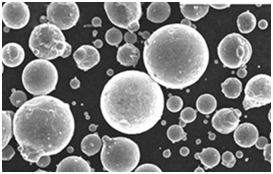
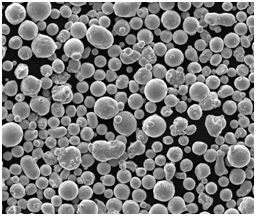
The term “gas atomized” matters because it refers to how the powder is made, not just what the alloy is. In gas atomization, a stream of molten metal is disintegrated by high-pressure inert gas into droplets that solidify rapidly into particles. When process control is good, the result is a powder with good roundness, relatively low satellite content, and the flow characteristics needed for AM, powder metallurgy, and thermal processes.
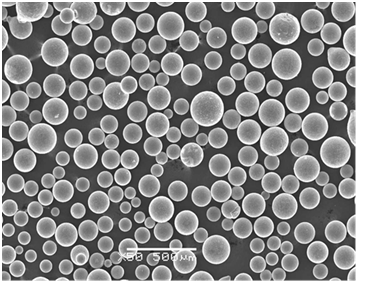
The word “spherical” is equally important. For additive manufacturing, particle shape affects more than appearance. A highly spherical morphology supports predictable powder spreading in laser powder bed fusion, smoother conveying in directed energy deposition feeders, and better packing behavior in several downstream applications. According to [ISO/ASTM 52900 additive manufacturing terminology], process stability in powder-based AM depends heavily on feedstock behavior, so morphology is a core engineering variable rather than a cosmetic one.
Why Inconel 939 exists as a material grade
Inconel 939 was developed for conditions where oxidation resistance, hot corrosion resistance, and sustained elevated-temperature strength need to coexist. Chromium contributes environmental resistance, cobalt stabilizes the matrix, tungsten and other refractory elements strengthen the alloy, and aluminum plus titanium promote gamma-prime precipitation. Together, these features give the alloy a useful property balance for gas turbines and other high-temperature systems.
This balance explains why Inconel 939 remains relevant in powder form. In conventional manufacturing, complex castings made from high-performance superalloys can be expensive, slow to source, or difficult to modify. AM-compatible powder allows the same alloy family to move into repair, feature addition, prototyping, and near-net-shape production workflows.
How spherical Inconel 939 powder differs from general nickel powder
Not all nickel alloy powders are interchangeable. Inconel 939 powder is more application-specific than corrosion-oriented grades and more thermally focused than many lower-strength nickel feedstocks. Engineers typically evaluate it when parts face sustained heat exposure rather than simply mild corrosion or room-temperature structural loading.
That means the decision to use this powder is usually driven by service environment first and manufacturing method second. If the part will see combustion gas, thermal cycling, or high-temperature mechanical stress, alloy 939 becomes relevant. If the environment is cooler or easier, a less demanding and more easily processed nickel grade may be sufficient.
Typical AM and powder-processing routes
Gas atomized spherical Inconel 939 powder is used in laser powder bed fusion, directed energy deposition, laser cladding, hot isostatic pressing feedstock preparation, and selected powder metallurgy programs. Some users also evaluate it for repair applications where the alloy match to a high-temperature substrate matters more than ease of deposition.
For companies comparing broader powder families, a dedicated [nickel alloy powder range] provides the most useful context. It shows where high-temperature superalloys sit alongside more general-purpose nickel materials and why the specification for alloy 939 is often tighter on particle shape, contamination, and size classification.
Chemical Composition and Material Grade
The chemical composition of gas atomized spherical Inconel 939 powder is the reason the alloy performs so well at temperature. In nickel superalloys, minor shifts in aluminum, titanium, cobalt, tungsten, tantalum, and carbon can change precipitation behavior, oxidation response, and crack sensitivity. For AM buyers, composition must therefore be considered together with powder cleanliness and the intended process route.
Typical composition and grade cross-reference
| Element / Reference | Typical wt.% | الدور في السبيكة | Cross-Reference Note |
|---|---|---|---|
| النيكل (ني) | الرصيد | Matrix phase | Base metal of the superalloy |
| الكروم (Cr) | 22.0–23.0 | Oxidation and hot-corrosion resistance | Core defining element |
| الكوبالت (Co) | 18.0–19.0 | Matrix stability and hot strength | Typical for alloy 939 |
| التنجستن (W) | 1.8–2.3 | Solid-solution strengthening | Supports elevated-temperature performance |
| الموليبدينوم (Mo) | 0.4–0.9 | Strengthening contribution | Lower than some other superalloys |
| التنتالوم (Ta) | 1.2–1.8 | Gamma-prime support | Important for hot strength |
| الألومنيوم (Al) | 1.7–2.0 | Gamma-prime former | Critical to precipitation hardening |
| التيتانيوم (Ti) | 3.3–3.9 | Gamma-prime former | Important in strengthening balance |
| النيوبيوم (Nb) | 0.6–1.2 | Secondary strengthening | Controlled addition |
| الكربون (C) | 0.10–0.18 | Carbide formation | Impacts grain-boundary behavior |
| البورون (B) | 0.005–0.02 | Grain-boundary strengthening | Minor but influential addition |
| الزركونيوم (Zr) | 0.03–0.08 | Grain-boundary conditioning | Tight control preferred |
| الحديد (Fe) | ≤1.0 typical | Residual / controlled minor element | Usually kept low |
| السيليكون (Si) | ≤0.5 typical | العنصر المتبقي | Controlled impurity level |
| المنجنيز (Mn) | ≤0.5 typical | العنصر المتبقي | Controlled impurity level |
| ASTM / AMS / ISO / DIN / GB | — | Often supplied to producer or customer specification | No single universal AM powder designation governs all deliveries |
For commercial powder procurement, buyers often discover that the alloy name is widely recognized while the exact powder standard is not uniform across every market. That is normal in additive manufacturing. The alloy can be well established metallurgically, yet the powder form may still be ordered to supplier technical specification, internal aerospace repair criteria, or project-specific acceptance rules.
Metallurgical significance of alloy 939 chemistry
The chemistry of gas atomized spherical Inconel 939 powder places it squarely in the high-temperature superalloy category. It is not optimized only for corrosion resistance, and it is not a simple weld-overlay alloy. Its composition is deliberately tuned for strength retention under heat, which is why it appears in hot-section discussions and turbine-related build or repair programs.
A defining feature is the alloy’s gamma-prime strengthening response. Aluminum and titanium work with nickel to form the precipitate structure that gives the alloy much of its elevated-temperature capability. Cobalt, chromium, tantalum, and tungsten further shape the balance of thermal stability, oxidation resistance, and creep behavior.
Grade references and procurement reality
In practice, many purchasers focus less on a one-line grade equivalence and more on the documented chemistry window, powder morphology, and intended application route. This is because AM parts are qualified as systems. A powder with the correct nominal chemistry but the wrong size cut or a high oxygen level may still fail to meet the process requirement.
That is why technical data sheets for gas atomized spherical Inconel 939 powder often include both alloy chemistry and powder-specific metrics. For critical components, the final purchase language should define composition, particle size distribution, test method, packaging atmosphere, and certification expectations together.
المواصفات الفنية
Technical specifications determine whether gas atomized spherical Inconel 939 powder behaves well in production rather than just looking acceptable on paper. Different AM routes require different size cuts, but all of them depend on predictable flow, low contamination, and a morphology suited to either recoating or feeder transport. This section is where application engineering becomes practical.
Typical technical specification for gas atomized spherical Inconel 939 powder
| المعلمة | 15–53 µm | 45–105 µm | 53–150 µm | Typical Comment |
|---|---|---|---|---|
| التطبيق النموذجي | LPBF / fine feature AM | DED / laser cladding | DED / larger deposition | Process dependent |
| D10 | 15–20 µm | 45–55 µm | 53–65 µm | Laser diffraction typical |
| D50 | 28–35 µm | 68–80 µm | 88–105 µm | Median size typical |
| D90 | 48–53 µm | 100–105 µm | 145–150 µm | Upper cut control |
| الكثافة الظاهرة | 4.5–5.1 g/cm³ | 4.7–5.3 g/cm³ | 4.8–5.4 g/cm³ | Morphology dependent |
| كثافة الحنفية | 5.0–5.8 g/cm³ | 5.2–5.9 g/cm³ | 5.3–6.0 g/cm³ | Packing behavior typical |
| تدفق القاعة | 13–20 s/50 g | 11–18 s/50 g | 10–17 s/50 g | Typical for good spherical powder |
| محتوى الأكسجين | ≤0.03 wt.% typical | ≤0.03 wt.% typical | ≤0.04 wt.% typical | Final limit by agreement |
| المحتوى النيتروجيني | ≤0.02 wt.% typical | ≤0.02 wt.% typical | ≤0.02 wt.% typical | Low gas pickup preferred |
| الكروية | ≥0.93 typical | ≥0.93 typical | ≥0.93 typical | Image-analysis basis |
| Satellite content | Low typical | Low typical | Low typical | Important for consistent flow |
| Moisture condition | Dry sealed pack | Dry sealed pack | Dry sealed pack | Storage discipline required |
For laser powder bed fusion, the finer 15–53 µm cut is common because it supports layer spreading and thin recoats. For directed energy deposition and laser cladding, coarser size cuts are generally more appropriate because the process depends on feeder transport, nozzle delivery, and melt-pool capture rather than bed spreading.
Spherical powder behavior and AM process stability
spherical powder morphology improves more than just flow numbers. In powder bed systems, it helps achieve smoother layer deposition and more uniform packing. In DED, it reduces the risk of erratic delivery, powder pulsing, and nozzle-side accumulation that can disrupt bead geometry.
A good AM powder is therefore judged by combined behavior. PSD, morphology, and oxygen level interact with the machine, not independently from it. The same alloy can perform very differently when one of those variables moves out of control.
Why oxygen and satellite control matter
High-performance nickel alloys are sensitive to surface condition. Excessive oxygen pickup can influence wetting, melting behavior, and inclusion formation, especially after repeated handling or recycling. This is why inert production, proper drying, and sealed packaging remain central to the quality conversation.
Satellite particles matter because they reduce effective roundness and can worsen both spreading and conveying. In a practical sense, a powder with a nominally correct PSD but a heavy satellite population may behave like a lower-quality feedstock in the machine. For gas atomized spherical Inconel 939 powder, morphology is therefore inseparable from specification.
Matching particle size to end use
An aerospace development team qualifying new LPBF coupons may start with a fine distribution to improve feature resolution. A repair-focused operation using laser cladding may prefer a broader or coarser window to match feeder hardware and deposition rate. Powder buyers should therefore request the distribution range that fits the process, not simply the alloy name.
This is also where cross-alloy comparison becomes useful. A broader [stainless steel powder catalog] can illustrate how size cuts shift across AM routes even when the process category stays the same. The same specification logic applies to advanced nickel superalloys, only with tighter tolerance for contamination and inconsistency.
Applications Across Industries
Gas atomized spherical Inconel 939 powder is used when temperature capability justifies both the material cost and the process discipline it requires. It is not a universal nickel powder. It is a specialist feedstock for thermally severe environments and for parts whose operating conditions punish weaker alloys.
Typical industry applications for gas atomized spherical Inconel 939 powder
| الصناعة | Typical Part | AM / PM Process | Why the Alloy Is Selected |
|---|---|---|---|
| الفضاء | Combustor hardware, shrouds, turbine hot-section features | LPBF, DED, repair cladding | قوة درجة الحرارة العالية ومقاومة الأكسدة |
| التوربينات الغازية الصناعية | Vanes, blade features, transition components | DED, laser cladding | Hot corrosion and creep resistance |
| توليد الطاقة | Burner parts, thermal hardware, wear-and-heat exposed zones | DED, PM | Stable service in hot gas paths |
| MRO and repair | Tip rebuilds, surface restoration, dimensional recovery | DED, cladding | Material match for high-value components |
| Energy equipment | Heat-resistant structural zones | AM and PM development | Retention of properties at elevated temperature |
| Research institutions | Qualification coupons, parameter studies, comparative trials | LPBF, DED | Development of superalloy AM windows |
The clearest fit is turbine-related work. Whether the application is aerospace or industrial power, the alloy is valued because it survives where simpler materials soften, oxidize too fast, or lose dimensional integrity. That does not mean every hot component should use alloy 939, but it does mean the alloy earns attention when the service envelope becomes severe.
Aerospace and turbine relevance
Aerospace engineering tends to evaluate alloy 939 where operating margins are narrow and thermal exposure is persistent. In those cases, the ability to print, repair, or build up a compatible superalloy can support design iteration and maintenance planning. The powder form is especially useful when local material addition is preferable to replacing an entire complex part.
Industrial gas turbines follow similar logic, although the economics can differ. Fleet maintenance, uptime planning, and repair turnaround often make advanced deposition powders attractive even when processing is demanding.
In high-heat AM, powder selection is ultimately a service-temperature decision disguised as a manufacturing choice.
Repair, feature addition, and near-net-shape use
Directed energy deposition and laser cladding are common where the goal is not a fully printed final part but a repaired or modified component. Gas atomized spherical Inconel 939 powder can be used to rebuild worn edges, restore dimensions, or add thermal-performance features in a controlled way. That is often more economical than recasting or replacing a large part for a localized defect.
Near-net-shape use is also possible, especially in development programs. However, successful application depends on a qualified process window, proper heat treatment, and realistic expectations about machining allowance and residual stress management.
Where alternative powder families may be better
Not all harsh environments point to nickel superalloys. Severe wear without sustained high temperature may shift toward [cobalt-based wear-resistant powders]. Lightweight structures exposed to moderate heat may move toward titanium or aluminum systems instead. Engineers should match service temperature, corrosion mode, density target, and fabrication method before specifying alloy 939.
That selection discipline helps avoid both underengineering and overengineering. Gas atomized spherical Inconel 939 powder is best used where its thermal-performance advantages translate directly into part value.
Manufacturing and Quality Assurance
The phrase “gas atomized spherical” implies a manufacturing route, but not all atomized powders are equal. The details of melting practice, atomizing atmosphere, sieving, classification, and post-processing determine whether the powder is truly suitable for AM. For a high-performance superalloy, production route and quality assurance are often as important as nominal chemistry.
GA, PREP, and VIGA in context
| Production Route | Typical Particle Shape | Cleanliness Level | Main Advantage | Main Limitation |
|---|---|---|---|---|
| GA (Gas Atomization) | Spherical to near-spherical | Good with inert control | Scalable and commercially practical | Satellite control varies by setup |
| تجهيز | كروي للغاية | عالية جداً | Excellent morphology and low contamination | Higher cost, different yield profile |
| فيجا | كروي | جيد جداً | Strong chemistry control with vacuum melting | Equipment-intensive route |
| Plasma-based specialty routes | Spherical refined fractions | عالية | Useful for premium feedstock tailoring | Availability may be narrower |
Gas atomization is widely used because it balances industrial scale, cost, and morphology. For many AM applications, well-controlled GA powder provides the right mix of roundness, consistency, and supply practicality. PREP is often discussed when extremely high sphericity and cleanliness are desired, while VIGA can offer strong melt-quality control for sensitive superalloys.
What quality assurance should verify
low oxygen content is one of the most important acceptance criteria, but it is not the only one. A complete QA program usually verifies chemistry, PSD, morphology, flowability, apparent density, tap density, and packaging integrity. In AM, especially for superalloys, a certificate of analysis should support process qualification rather than replace it.
Morphology review is especially important for gas atomized spherical Inconel 939 powder. Microscopy or image-based assessment can identify satellite particles, irregular fractions, or signs of poor classification that simple chemistry data will not reveal. Because the material is often used in demanding thermal applications, traceability and retained sample practices also matter.
The link between powder QA and final part quality
A consistent powder supports consistent melting. That, in turn, affects porosity, bead shape, track overlap, and microstructural uniformity. If feedstock varies significantly from lot to lot, the build process may appear unstable even when the machine settings are unchanged.
For testing frameworks and terminology, many buyers consult the [ASTM International standards platform] when writing specifications, while metallurgical guidance is often cross-checked against [ASM superalloy reference resources]. These sources help standardize the language used to describe testing, properties, and process expectations.
Lot release should reflect application risk
A development lot for coupon trials may not require the same release package as a repair lot intended for flight-related or critical industrial hardware. That difference should be defined early. lot-to-lot traceability becomes increasingly important as the part value, service temperature, and regulatory sensitivity rise.
In practical procurement, the right QA level is the one that fits the end-use risk. Over-specifying every lot can slow development, but under-specifying a critical lot can create qualification failure later. The most effective approach is to define the powder release package in direct relation to the intended AM or repair program.
Why Choose Truer as Your Supplier
Choosing a supplier for gas atomized spherical Inconel 939 powder is less about catalog length than about technical fit. Buyers need a source that understands alloy behavior, powder production routes, and the downstream process differences between LPBF, DED, laser cladding, and powder metallurgy. For complex nickel superalloys, that context is necessary to avoid ordering a chemically correct but operationally unsuitable powder.
Truer is relevant because its metal powder activity is connected to equipment and process knowledge rather than isolated from them. The company’s background in powder-making equipment and additive manufacturing workflows gives context to discussions about PSD range, morphology, and process matching. A concise [Truer company overview] presents that operating scope and the powder-related ecosystem around it.
A second factor is portfolio breadth. Buyers evaluating Inconel 939 frequently compare it against other high-temperature or specialty alloy families before finalizing a specification. In those cases, a supplier that also works across nickel, cobalt, titanium, copper, aluminum, and stainless materials can support more grounded selection decisions without forcing all applications into one alloy category.
Ordering Guide and Support
Ordering gas atomized spherical Inconel 939 powder should begin with the manufacturing route, not the trade name alone. The purchaser should define whether the powder is intended for LPBF, DED, laser cladding, HIP-related feedstock preparation, or experimental trials. That decision determines particle-size range, packaging format, and the QA information needed on the first shipment.
Typical packaging and ordering framework
| Packaging Format | MOQ Tier | Typical Lead Time | Sample Policy |
|---|---|---|---|
| 500 g bottle | Laboratory screening | 1–2 weeks if stock exists | Paid sample commonly available |
| 1 kg bottle | Initial AM parameter trials | 1–3 weeks typical | Same-lot documentation may be included |
| 5 kg sealed can | Development build campaigns | 2–4 weeks typical | Additional test items by request |
| 10 kg drum | Pilot-scale qualification | 3–5 weeks typical | Reserved sample may be negotiated |
| 25 kg drum | Production planning or MRO use | 3–6 weeks typical | COA and traceability per order |
| Custom inert packaging | Export or moisture-sensitive programs | By agreement | Project-specific terms |
Most technical teams benefit from a staged qualification sequence. First, confirm powder handling, flow, and machine compatibility. Second, verify density, crack response, and heat-treatment behavior on representative coupons. Third, lock the PSD and QA package before scaling to pilot or production volume.
Information buyers should provide up front
A good inquiry usually includes target process, machine type, particle-size range, annual quantity estimate, and whether the powder is for new-build AM or repair. It should also state any limits on oxygen, packaging format, documentation, or regional shipping needs. This reduces back-and-forth and shortens the path to a technically meaningful quotation.
Where clarification is needed, the most efficient next step is direct contact through the [technical inquiry page]. For alloy 939, early discussion about size cut, certification, and end use often prevents qualification drift later.
شركتنا
Shanghai Truer Technology Co., Ltd. was established in 2009 and created its additive manufacturing business in 2019. The company integrates 3D printing powder-making equipment and services with metal powders for engineering applications of additive manufacturing. Its core technologies include Selective Electron Beam Melting equipment and Plasma Rotating Electrode Process powder-making equipment, with gas atomization also relevant to powder production. The powder portfolio includes TiNi, TiTa, TiAl, TiNbZr, CoCrMo, along with nickel-based, cobalt-based, titanium-based, copper-based, aluminum-based, and stainless steel spherical metal powders. The company also participates in a joint innovation center for metal 3D printing with laboratories and experts, and serves end processes including SLM, SEBM, DED, laser cladding, PM, MIM, HIP, cold or hot spraying, and welding or coating for industries such as 3C electronics, hand tools, remote-control cars, medical, aerospace, and nuclear power.
التعليمات
Q1. Is gas atomized spherical Inconel 939 powder mainly used for LPBF or DED?
It can be used in both, but the correct particle-size range differs by process. Finer powder is generally preferred for LPBF recoating, while coarser cuts are more common for DED and laser cladding.
Q2. Why is Inconel 939 chosen over more common nickel alloys like 625?
The main reason is elevated-temperature performance. Alloy 939 offers stronger high-heat capability, especially where oxidation resistance and creep-related stability are more important than easy processability.
Q3. What does “spherical” really mean in powder procurement?
It refers to particle morphology, not just marketing language. More spherical particles usually provide better flow, more stable feeding or spreading, and more predictable packing than irregular particles.
Q4. Can gas atomized spherical Inconel 939 powder be reused after an AM build?
It can be reused in some workflows, but only with a controlled recycling procedure. Screening, contamination control, and checks on oxygen pickup and PSD drift are important before reused powder is returned to critical builds.
Q5. What certifications or documents should buyers request with this powder?
Most buyers request a certificate of analysis covering chemistry, PSD, oxygen, and basic physical characteristics. For more demanding programs, additional morphology data, traceability details, retained samples, and agreed test methods may be appropriate.
Q6. Is gas atomized spherical Inconel 939 powder suitable for medical implants?
It is generally associated with high-temperature industrial and turbine-related applications rather than implant use. Its strengths are thermal stability, oxidation resistance, and hot-section performance, not the biocompatibility profile typically sought in medical implant alloys.