إجابة سريعة
Gas atomized spherical AlSi10Mg powder is an aluminum-silicon-magnesium AM feedstock engineered for consistent flow, dense builds, and lightweight metal parts. It is widely chosen for additive manufacturing because it combines low density, good printability, and favorable strength-to-weight performance in one powder system. For engineers, that means it is often the right choice for thin-wall structures, topology-optimized brackets, housings, heat-management parts, and functional prototypes where reduced mass, dimensional stability, and serial repeatability matter more than extreme high-temperature capability.
What Is gas atomized spherical AlSi10Mg powder?
Gas atomized spherical AlSi10Mg powder is a powder form of the castable aluminum alloy AlSi10Mg, produced specifically for additive manufacturing and related powder-based processes. The alloy belongs to the Al-Si-Mg family, a group widely used where a balance of castability, corrosion resistance, lightweighting, and post-processing flexibility is required. In powder form, the alloy is typically optimized for laser powder bed fusion, though it is also relevant to directed energy deposition, metal injection molding, and some thermal spray or powder metallurgy routes depending on particle size.
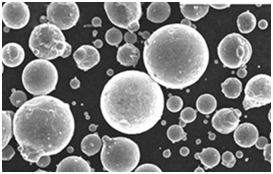
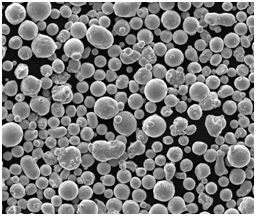
The phrase contains three distinct technical ideas. “Gas atomized” refers to the powder-making route, in which a molten alloy stream is broken into fine droplets by high-pressure inert gas and rapidly solidified. “Spherical” refers to particle shape, a critical feature for smooth recoating, high packing density, and predictable powder feeding. “AlSi10Mg” identifies the alloy chemistry itself, centered on aluminum with roughly 10 wt% silicon and a smaller magnesium addition that supports age-hardening response and mechanical performance after printing.
In additive manufacturing, AlSi10Mg became important because it solves a common engineering problem: how to produce complex aluminum parts without relying on tooling-intensive casting or excessive machining from billet. It is especially relevant for industries that want mass reduction without giving up processability. Compared with many high-strength wrought aluminum alloys, AlSi10Mg is generally more forgiving in AM because its silicon-rich composition lowers cracking sensitivity and supports stable melt behavior.
That does not mean every aluminum powder behaves the same way. AlSi10Mg differs from pure aluminum, AlSi12, and high-strength aerospace alloys in both metallurgy and processing response. Pure aluminum prioritizes conductivity but is comparatively soft. AlSi12 can offer excellent castability and print stability but typically with a slightly different strength-ductility balance. More highly alloyed aerospace aluminum grades may offer superior strength in some conditions but often at the cost of a narrower process window.
The “why” behind this alloy is therefore practical rather than theoretical. Designers choose it when they need a powder that can print reliably into near-net-shape lightweight components and still deliver useful structural performance after stress relief, heat treatment, machining, or surface finishing. Within the broader AM material landscape defined by ISO/ASTM additive manufacturing terminology, AlSi10Mg has become one of the most established aluminum feedstocks for production-oriented use.
Why spherical AlSi10Mg powder matters in powder-bed AM
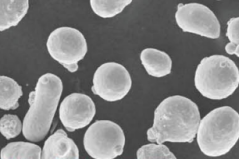
The shape of the particles strongly affects real-world build behavior. Spherical particles reduce internal friction, which improves powder spreadability across the build plate and supports more uniform layers. That matters because poor layer consistency can translate into porosity, surface defects, or unstable melt tracks.
For AlSi10Mg specifically, spherical morphology also helps make parameter development more transferable from one lot to another. If the shape distribution varies too much, even a chemically correct alloy can behave unpredictably during recoating and melting. That is why buyers rarely evaluate aluminum AM powder by chemistry alone.
How AlSi10Mg fits into the aluminum AM family
AlSi10Mg is often treated as the workhorse grade of aluminum additive manufacturing. It occupies a practical middle ground between easy-to-process casting-style aluminum alloys and more specialized structural or thermal-performance compositions. In machine shops and AM labs, it is frequently the first aluminum powder qualified because it offers a broad design envelope.
Engineers evaluating alternatives often compare it with materials from a broader aluminum AM powder lineup. That comparison usually centers on weight savings, crack resistance, corrosion behavior, as-built strength, and the economics of post-processing.
In aluminum AM, powder morphology and chemistry are inseparable from part quality; the feedstock is a design variable, not just a purchased consumable.
Distinguishing AlSi10Mg from cast and wrought counterparts
Although the chemistry resembles familiar cast aluminum, the printed microstructure is not identical to a conventionally cast part. Rapid solidification in additive manufacturing refines the microstructure and can create a fine silicon network that contributes to strength in the as-built condition. Subsequent thermal exposure may modify that network, which is why property targets must always be tied to the exact post-build heat-treatment route.
This distinction matters in qualification. A buyer cannot assume that a powder described as “AlSi10Mg” will automatically reproduce the same behavior as a cast ingot or wrought stock with similar nominal chemistry. AM feedstock specification requires its own controls for particle size, oxygen, flow, contamination, and lot traceability.
Chemical Composition and Material Grade
Chemically, AlSi10Mg is an aluminum alloy dominated by silicon, with magnesium added in smaller quantity to enhance hardening response and mechanical properties. In powder procurement, the practical concern is not just whether the alloy falls inside a published chemistry band, but whether that chemistry is stable enough for repeatable AM performance. Silicon affects fluidity and solidification behavior, magnesium influences precipitation response, and trace iron or other residuals can shift ductility and corrosion behavior.
Many procurement documents therefore combine alloy-grade references with powder-specific acceptance criteria. This is common because standards describe the material family, while AM users must additionally define particle morphology, size cuts, and cleanliness. For that reason, buyers often treat standard grade language as a baseline, not the full technical specification.
| Material / Grade Reference | Al (wt%) | Si (wt%) | Mg (wt%) | Other Elements (typical limits) | Grade Cross-Reference / Equivalent |
|---|---|---|---|---|---|
| AlSi10Mg AM powder, standard reference | الرصيد | 9.0–11.0 | 0.20–0.45 | Fe, Mn, Cu, Zn, Ti controlled to supplier spec | Commonly aligned with EOS-style AlSi10Mg chemistry concepts and DIN/EN cast-alloy references |
| European cast-alloy analog | الرصيد | 9.0–11.0 | 0.20–0.45 | Fe typically limited; Cu and Zn low | Comparable to EN AC-AlSi10Mg family concepts |
| ASTM cast chemistry reference | الرصيد | about 9.0–11.0 | about 0.20–0.45 | Residuals controlled per cast alloy standard | Similar to A360 / related Al-Si-Mg cast-alloy chemistry bands, application-dependent |
| GB aluminum-silicon-magnesium reference | الرصيد | typical AlSi10Mg range | typical Mg range | Residuals per applicable GB chemistry table | Chinese grade mapping is often project-specific rather than one-to-one AM equivalence |
| Custom AM-qualified AlSi10Mg | الرصيد | purchaser-defined within target range | purchaser-defined within target range | Oxygen and contamination limits added to chemistry | Internal AM specification based on process qualification |
Chemistry control in gas atomized spherical AlSi10Mg powder
For AlSi10Mg, the chemistry must be stable enough to support both printability and predictable heat treatment. Silicon content that drifts too far can alter melt viscosity, shrinkage tendency, and final hardness. Magnesium variation may change aging response and therefore shift final tensile properties even if the as-built part appears acceptable.
That is why alloy certificates should be read together with powder lot data. A single chemical analysis confirms nominal composition, but it does not reveal whether segregation, oxidation, or contamination occurred during melting and atomization. AM users typically need all of those variables under control.
Standards versus purchaser specifications
There is no single universal standard that fully describes every requirement for gas atomized spherical AlSi10Mg powder in additive manufacturing. Instead, suppliers and end users usually blend alloy-grade references with internal AM requirements. This hybrid approach is normal because metal powder must perform as both a material and a process medium.
Many engineers use ASTM additive manufacturing standards resources as a framework when drafting powder and qualification language. At the same time, they rely on machine-specific process development to define what chemistry band and powder condition are acceptable for the intended application.
Why trace elements still matter
Even in an alloy where aluminum and silicon dominate, small residuals matter. Iron can affect ductility and microstructure; copper and zinc may alter corrosion response; titanium and manganese can influence solidification behavior. For most users, the goal is not absolute purity, but chemistry consistency within a validated window.
That point becomes even more important in serial production. A part family qualified on one AlSi10Mg lot may require statistical chemistry control across subsequent lots to ensure equivalent behavior in density, surface finish, and mechanical testing.
المواصفات الفنية
Technical specifications for gas atomized spherical AlSi10Mg powder usually cover particle size distribution, apparent density, tap density, Hall flow, oxygen content, and particle morphology. These values define how the powder behaves before the laser ever turns on. In practical manufacturing, the powder’s spreadability and packing efficiency often determine whether a process window is easy to maintain or constantly unstable.
For aluminum AM, the interplay among particle size, fines content, and oxidation is especially important. Very fine particles can improve feature resolution and layer smoothness, but they also increase surface area and therefore sensitivity to oxygen pickup. A broader or coarser distribution may feed better in some systems, yet compromise thin-layer deposition or surface finish in fine-detail parts.
| Typical Use Class | PSD Range (µm) | الكثافة الظاهرية (جم/سم³) | Tap Density (g/cm³) | Hall Flow (s/50 g) | محتوى الأكسجين | Sphericity / Morphology |
|---|---|---|---|---|---|---|
| Fine L-PBF grade | 15–53 | 1.30–1.55 | 1.45–1.70 | 14–22 | typically low, supplier-defined | Highly spherical, limited satellites |
| Standard L-PBF grade | 20–63 | 1.35–1.60 | 1.50–1.75 | 13–20 | typically low, supplier-defined | Spherical with controlled fines tail |
| Broad AM / DED transition grade | 45–90 | 1.40–1.65 | 1.55–1.80 | 12–19 | application-specific | Spherical to near-spherical |
| DED / cladding grade | 45–105 | 1.45–1.70 | 1.60–1.85 | 11–18 | application-specific | Spherical, good feeder response |
| Custom specification cut | per drawing | per specification | per specification | per specification | per specification | per specification |
Particle size strategy for AlSi10Mg AM powder
The most common powder cuts for laser powder bed fusion are 15–53 µm and 20–63 µm. These ranges suit thin layers and relatively fine part detail while still maintaining workable flow for automated recoating. For larger melt pools or deposition systems, 45–105 µm may be more appropriate because feed reliability becomes more important than ultra-fine spreading.
The right size cut also depends on the machine architecture. Different recoater types, gas flow designs, and layer thickness strategies respond differently to fines content and top size. That is why experienced buyers ask not just for a nominal PSD window, but for distribution shape and lot-to-lot consistency.
Flowability and packing behavior of spherical powder
In aluminum AM, powder flowability is a production issue, not merely a lab number. Apparent density and tap density indicate how efficiently the powder packs, while Hall flow gives a quick snapshot of discharge behavior. None of these tests is sufficient alone, but together they help estimate whether the powder bed will be uniform and stable.
Morphology matters just as much as the numeric values. A highly spherical powder with low satellite content usually recoats more smoothly and forms more consistent layers. If the particles are irregular or carry too many attached fines, the powder may bridge, streak, or compact unevenly.
Oxygen and moisture sensitivity
Aluminum powders are naturally reactive at the surface, and AlSi10Mg is no exception. Controlled oxygen levels and moisture-resistant packaging are therefore central to maintaining repeatable print quality. Once the powder is opened, storage discipline becomes part of the technical specification in practice, even if it was not written that way originally.
For teams building critical parts, broader property databases from NIST materials data programs are useful for understanding how composition and processing influence performance. Still, incoming powder acceptance must be based on the purchaser’s own validated process window rather than on reference values alone.
Applications Across Industries
Gas atomized spherical AlSi10Mg powder is widely used because it addresses one of the most valuable design goals in metal AM: lightweight structures with credible mechanical performance and manageable print risk. It is especially attractive when internal channels, organic load paths, lattice reinforcement, or part consolidation can create savings in mass or assembly count. Compared with heavier alloys, AlSi10Mg often improves the business case for metal 3D printing simply by reducing the material cost and build mass per part.
This makes the alloy relevant not only in aerospace, but also in motorsport, automation, consumer devices, industrial equipment, and medical tooling. In each of those sectors, the exact use case is different, yet the engineering logic is similar: create shapes that are difficult to machine or cast, while still preserving a practical property profile after post-processing.
| الصناعة | Typical Part | Primary Benefit | AM / PM Process |
|---|---|---|---|
| الفضاء | Brackets, ducting, housings, topology-optimized mounts | Mass reduction with structural functionality | L-PBF, DED |
| صناعة السيارات ورياضة السيارات | Lightweight housings, manifolds, cooling parts | Lower weight and integrated geometry | L-PBF, DED |
| Robotics and automation | End effectors, grippers, motion components | Reduced moving mass and faster dynamics | L-PBF, PM |
| Electronics and 3C | Heat sinks, device frames, structural shells | Weight control with moderate thermal capability | L-PBF, PM |
| Medical and lab equipment | Imaging fixtures, instrument structures, custom supports | Complex geometry in low volumes | L-PBF |
| Tooling and industrial equipment | Fixtures, conformal-cooled jigs, prototype molds | Fast iteration and production-support functionality | L-PBF, DED, PM |
Lightweight structural parts with gas atomized spherical AlSi10Mg powder
The alloy’s best-known role is in structural lightweighting. Topology-optimized brackets, ribbed housings, and thin-wall supports are natural candidates because the metal is significantly lighter than steel or nickel alloys while remaining more robust than polymer alternatives. For moving assemblies, this can improve dynamic response and reduce actuator loads.
That performance is most compelling when geometry rather than bulk strength drives value. An intelligently designed AlSi10Mg part can outperform a heavier conventionally made component not because the alloy itself is extraordinary, but because additive manufacturing allows the part to place material only where it is needed.
Thermal and functional integration
Although AlSi10Mg is not the first choice when maximum conductivity is required, it still performs well in many moderate thermal-management roles. Heat sinks, electronic frames, and instrument housings benefit from its combination of low mass, corrosion resistance, and good manufacturability. Designers can integrate channels, mounting bosses, and stiffening features into one monolithic build.
In practical sourcing discussions, this often means comparing AlSi10Mg with alternatives such as copper alloy powder options for thermal performance or titanium for stiffness and corrosion in more demanding environments. The correct choice depends on whether the design target is conductivity, strength retention, or system-level weight reduction.
Prototype-to-production versatility
Another reason the alloy is widely adopted is that it works well across the development cycle. A company can use the same material family for design validation, functional prototypes, pilot production, and selected serial components. That lowers the friction involved in moving from concept to limited-run manufacturing.
This versatility is one reason AlSi10Mg remains relevant even as newer aluminum AM alloys enter the market. Engineers often prefer a well-understood powder with extensive build history over a newer material that promises higher strength but brings more qualification risk.
Manufacturing and Quality Assurance
Gas atomization is the dominant industrial route for producing spherical AlSi10Mg powder for additive manufacturing. In this process, a molten aluminum alloy is poured through a nozzle and atomized by high-velocity inert gas, creating droplets that solidify rapidly into mostly spherical particles. The powder is then classified, screened, sampled, and packaged under controlled conditions.
For AlSi10Mg, the manufacturing route affects far more than outward appearance. Solidification rate can influence internal particle structure, gas handling affects oxidation risk, and classification determines the fines fraction that ultimately governs flow and layering. Because aluminum is sensitive to oxygen and moisture, process discipline from melt preparation to final sealing is essential.
| Production / QA Item | Typical Method or Instrument | What It Verifies | Typical Acceptance Logic | ما أهمية ذلك |
|---|---|---|---|---|
| التركيب الكيميائي | ICP-OES / XRF / wet chemistry | Si, Mg, Fe, Cu, Zn and residuals | Within agreed alloy band | Confirms grade identity and lot consistency |
| توزيع حجم الجسيمات | Laser diffraction and/or sieve analysis | D10, D50, D90 and cut range | Within ordered PSD window | Affects layer thickness, detail, and flow |
| Morphology and sphericity | Optical imaging / SEM | Particle shape, satellites, agglomerates | Predominantly spherical, low defect count | Supports recoating stability |
| Apparent / tap density and flow | Hall funnel, Carney, density cup tests | Packing and discharge behavior | Within supplier or purchaser target range | Screens for spreading and feedability issues |
| Oxygen / contamination control | Oxygen-nitrogen analyzer, cleanliness review | Surface oxidation and foreign matter | Low oxygen, no visible contamination | Protects print quality and mechanical repeatability |
Why gas atomization is the preferred route
For AlSi10Mg, gas atomization offers the best industrial balance of spherical morphology, scalable throughput, and commercially realistic cost. PREP is highly valued for premium titanium and specialty materials, but it is not the default economic route for mainstream aluminum powders. VIGA-like controlled-atmosphere configurations can be relevant in specialized production setups, yet the final procurement discussion still tends to come back to lot stability, oxidation control, and PSD repeatability.
In simple terms, gas atomization aligns well with how the alloy is actually used. AlSi10Mg is often deployed in iterative product-development and medium-volume production environments, so a process route that supports consistent supply at practical cost is more useful than one optimized solely for niche ultraclean output.
Lot release and traceability
A serious QA program for spherical aluminum powder should include batch identification, retained samples, release testing, and documented handling procedures. For AM users, lot traceability is not just an administrative exercise; it enables investigation when build density, roughness, or tensile results shift unexpectedly.
The most useful certificates are the ones that connect lab values to production behavior. Buyers typically want chemistry, PSD, density, flow, and oxygen data accompanied by packaging details and lot numbering. When qualification becomes more mature, some purchasers also require morphology images or reuse guidance.
Powder handling after delivery
Quality assurance does not end when the drum ships. Aluminum AM powder must be stored and handled in a way that preserves the condition established during release. Open-container dwell time, humidity exposure, sieve practice, and blend-back policy all influence whether the powder behaves the same on day 30 as it did on day 1.
This is especially important in facilities that recycle powder between builds. Reuse can be technically viable, but only when supported by a documented strategy for screening, segregation control, and periodic requalification of oxygen and PSD.
Why Choose Truer as Your Supplier
Selecting a supplier for gas atomized spherical AlSi10Mg powder usually comes down to whether the producer understands the relationship between powder manufacturing and downstream AM performance. Buyers need more than a chemistry sheet; they need confidence that particle shape, size classification, flow behavior, and packaging are being managed as part of an integrated feedstock system.
Truer’s relevance comes from its combined involvement in powder-making equipment and additive manufacturing applications. That technical context matters because AlSi10Mg is often selected for real production environments where build consistency, post-processing response, and documentation have to work together. A supplier with experience across powder production and end-use processes can discuss the material in terms that are meaningful to AM engineers rather than only to metallurgists.
For users comparing aluminum with other metal systems, a broader portfolio can also simplify qualification planning. Some projects evaluate AlSi10Mg against high-temperature or wear-oriented materials found in nickel alloy powder selections or related metal powder families. In those cases, consistency in documentation style and technical communication can save time during supplier approval.
From a purchasing standpoint, the most important differentiator is often process-aware consistency. AlSi10Mg is widely used precisely because it can be reliable; if lot-to-lot powder variation becomes large, the main advantage of the material is lost. That is why experienced buyers prioritize measurable controls over generic catalog claims.
Ordering Guide and Support
Ordering gas atomized spherical AlSi10Mg powder starts with the intended process and part function. An RFQ should specify whether the powder is for laser powder bed fusion, directed energy deposition, PM, or another route, because the target PSD and handling requirements can differ substantially. It should also state whether the build is aimed at prototypes, tooling, pilot production, or serial parts.
The next layer of detail concerns post-processing and end-use properties. If a customer requires stress-relieved properties only, the specification may differ from one intended for T6-like heat treatment or extensive machining. Surface finish expectations, wall thickness, and density targets should also be identified, since these influence the best powder cut and acceptance window.
| Packaging Format | Typical MOQ Tier | Typical Lead Time | Sample Policy | الملاحظات |
|---|---|---|---|---|
| 500 g bottle | Lab evaluation | 1–2 weeks if stock is available | Paid or approved qualification sample | Common for parameter screening |
| 1 kg bottle | Prototype stage | 1-3 أسابيع | Standard first-stage sample size | Suitable for coupons and small parts |
| 5 kg sealed bottle or can | Pilot builds | 2–4 أسابيع | Usually after sample review | Useful for repeatability testing |
| 10–25 kg drum | Pre-production | 3–6 weeks depending on spec | Normally supplied after technical alignment | Supports lot-based validation |
| Custom bulk pack | Production program | Project-based | Not typical for first-time sampling | May include custom labeling and atmosphere control |
Information to include in a purchase inquiry
A strong inquiry should include alloy name, required PSD range, preferred packaging, estimated annual consumption, and the machine or process family to be used. Buyers should also note any special needs involving oxygen limits, morphology review, retained samples, or compliance documentation.
If the application is in aerospace, medical, or other tightly controlled sectors, that should be stated at the beginning. Qualification expectations are easier to manage when supplier documentation requirements are visible before the first sample ships.
Technical support during qualification
For most projects, the ideal path is staged: sample evaluation, pilot lot, then controlled production lot. This allows the user to confirm density, tensile properties, dimensional repeatability, and heat-treatment response before committing to larger purchases.
When custom requirements are involved, early communication through the powder inquiry contact page usually reduces delays. That is especially true for nonstandard PSD cuts, custom packaging, or project-specific documentation packages.
شركتنا
Shanghai Truer Technology Co., Ltd. was established in 2009 and created its additive manufacturing business in 2019. The company focuses on integrating 3D printing powder-making equipment and services with metal powders for additive manufacturing applications. Its core technologies include Selective Electron Beam Melting equipment, Plasma Rotating Electrode Process powder-making equipment, and gas atomization. The powder portfolio includes TiNi, TiTa, TiAl, TiNbZr, CoCrMo, and spherical nickel-based, cobalt-based, titanium-based, copper-based, aluminum-based, and stainless steel powders for use in SLM, SEBM, DED, laser cladding, PM, MIM, HIP, cold or hot spraying, welding, and coating. Additional background on the business and its capabilities is available in the Truer company profile.
التعليمات
Q1. Is gas atomized spherical AlSi10Mg powder good for lightweight structural parts?
Yes. It is one of the most common aluminum AM powders for lightweight structural applications because it combines low density with relatively stable printability and useful post-processed properties. It is especially suitable for brackets, housings, fixtures, and optimized geometries where reducing weight creates system-level value.
Q2. What particle size is best for gas atomized spherical AlSi10Mg powder in laser powder bed fusion?
The most common starting points are 15–53 µm and 20–63 µm. The better option depends on layer thickness, feature size, recoater design, and the powder management strategy used in the machine. Final selection should be based on validated process performance rather than PSD labels alone.
Q3. Why is spherical morphology important for AlSi10Mg powder?
Spherical particles generally spread more evenly and pack more consistently than irregular particles. That supports smoother layers, more stable melting, and better repeatability across builds. In production AM, these effects can influence density, surface finish, and scrap rate.
Q4. Can gas atomized spherical AlSi10Mg powder be heat treated after printing?
Yes. AlSi10Mg is commonly stress relieved and may also undergo solution and aging treatments depending on the required property set. The exact response depends on the printed microstructure and the chosen thermal cycle, so target properties should always be verified on printed test coupons.
Q5. How does AlSi10Mg compare with titanium or stainless steel powders?
AlSi10Mg is much lighter and often more cost-effective for parts where moderate strength and low mass are the main priorities. Titanium may be preferred for higher specific strength or corrosion-critical service, while stainless steel is often selected for toughness, corrosion resistance, or lower feedstock sensitivity. The best choice depends on the design objective rather than on a single material property.
Q6. What should buyers ask for when sourcing gas atomized spherical AlSi10Mg powder?
They should ask for chemistry data, PSD information, apparent and tap density, flow results, oxygen condition, morphology control, packaging details, and lot traceability. It is also useful to ask how the powder was classified for the intended process and whether sample-to-production consistency can be documented. Those details usually matter more than a simple statement that the alloy is “AlSi10Mg.”