簡単な回答
Gas atomized spherical dental CoCrMo powder is a cobalt-chromium-molybdenum alloy powder engineered for metal additive manufacturing and related powder-based dental production. It is widely chosen for dental frameworks because it offers reliable powder flow, dense printed parts, and strong corrosion and wear resistance while supporting fine feature resolution in crowns, bridges, and removable partial denture components. For laboratories and manufacturers using laser powder bed fusion, it is often the preferred cobalt-based feedstock when consistency, fit, and post-processing stability matter.
What Is gas atomized spherical dental CoCrMo powder?
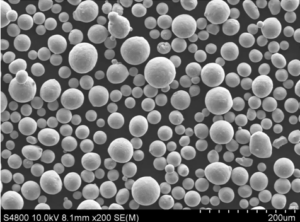
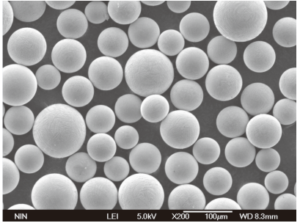
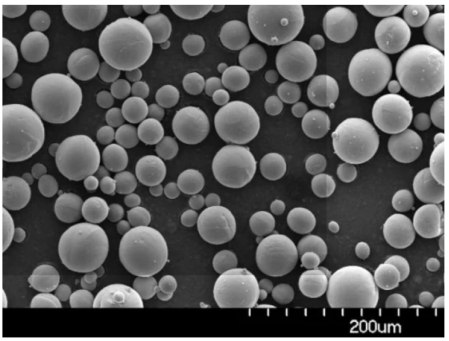
Gas atomized spherical dental CoCrMo powder is a pre-alloyed cobalt-based powder in which cobalt forms the matrix, chromium provides corrosion resistance, and molybdenum contributes strength and wear performance. In dental manufacturing, it is primarily associated with metal frameworks produced by powder bed fusion, although related particle grades may also be used in powder metallurgy or specialty coating routes. The “gas atomized” part refers to how the powder is made, while “spherical” describes the particle shape needed for smooth spreading and stable layer formation.
This material sits within the broader cobalt-chromium alloy family long used in dentistry for fixed and removable prosthetic structures. Conventional dental casting alloys established the clinical and laboratory familiarity of CoCr systems decades ago, but additive manufacturing changed the way those alloys are delivered and processed. Instead of melting a bulk ingot into a mold, AM users start from a fine spherical powder that must meet tighter requirements for flowability, oxygen control, and particle size distribution.
The dental variant of CoCrMo exists because metal AM demands a combination of alloy chemistry and powder behavior. A composition that performs well as a cast alloy may still underperform in a laser process if the powder is irregular, contaminated, or outside the optimal size range. That is why dental AM powder specifications are more than a chemistry sheet; they are a controlled manufacturing input for a highly thermal, highly repeatable process.
Why dental CoCrMo 3D printing powder is different from generic CoCr powder
Not all cobalt-chromium powders are interchangeable. Dental applications typically prioritize fine detail, thin wall sections, margin accuracy, surface quality after finishing, and predictable fit after stress relief. Those requirements often lead to narrower PSD windows and tighter cleanliness expectations than powders intended for broad industrial deposition use.
Dental laboratories also work under a different production logic than aerospace or tooling shops. Many builds contain multiple individualized parts rather than a few standardized components. That means packing density, recoating stability, and dimensional repeatability across an entire build plate are central considerations for gas atomized spherical dental CoCrMo powder.
Metallurgical characteristics that make CoCrMo useful in dental work
CoCrMo alloys are valued because they combine high strength, hardness, corrosion resistance, and good resistance to wear under oral service conditions. Chromium supports passive film formation, helping the alloy resist attack in the chemically variable oral environment. Molybdenum improves localized corrosion resistance and contributes to mechanical robustness.
That balance matters in long-span bridges, thin frameworks, and clasps that must endure repeated loading. Compared with softer dental metals, CoCrMo can support slimmer sections while retaining structural function. Compared with some alternative metal systems, it also offers a practical cost-performance profile for routine laboratory production.
Why spherical powder morphology matters
球状粒子形態 is a core requirement, not a cosmetic preference. Near-spherical particles reduce interparticle friction, improve powder spreading, and support more uniform layer thickness during recoating. Better layer consistency generally contributes to higher build stability and more predictable part density.
For terminology used across additive manufacturing, many engineers align internal specifications with [ISO additive manufacturing terminology] and broader process language from the [ASTM standards platform].
In dental AM, powder consistency often affects fit quality before any polishing wheel touches the part.
化学組成および材料グレード
The chemistry of gas atomized spherical dental CoCrMo powder typically follows the cobalt-chromium-molybdenum alloy family used for dental frameworks and medical-grade wear-resistant applications. Although exact limits differ by supplier, application, and governing standard, the alloy generally contains cobalt as the balance, chromium in the high-20% range, and molybdenum near the mid-single digits. Carbon and minor residual elements are controlled because they influence carbide formation, strength, hardness, and process behavior.
A useful purchasing distinction is the difference between alloy-family equivalence and powder-grade qualification. A dental buyer may recognize a composition window as similar to known CoCrMo standards, but AM adoption still requires powder-specific criteria such as oxygen, PSD, morphology, and lot traceability. In other words, alloy identity is necessary, but it is not sufficient.
| Element / Grade Reference | Typical Content (wt%) | Common Grade Mapping | Standard Family Context | Practical Note |
|---|---|---|---|---|
| コバルト | balance | CoCrMo dental alloy family | ASTM F75 / ISO 22674 nearest alloy context | Matrix element providing high strength and hardness |
| クロム(Cr) | 26.0–30.0 | CoCrMo | ISO / DIN dental and implant-related alloy families | Forms passive film and improves corrosion resistance |
| モリブデン (Mo) | 5.0–7.0 | CoCrMo | ASTM / ISO alloy family context | Improves strength and pitting resistance |
| カーボン(C) | typically ≤0.35 | grade-dependent | ASTM F75-type chemistry window | Affects carbide formation and hardness |
| ケイ素 (Si) | typically ≤1.0 | residual / deoxidation control | project or supplier specification | Excess can affect microstructure and processing |
| マンガン (Mn) | typically ≤1.0 | residual control | project or supplier specification | Usually controlled as a minor element |
| 鉄(Fe) | typically ≤0.75 | residual control | project or supplier specification | Kept low for alloy consistency |
| Cross-reference note | project-defined | ASTM / AMS / GB / ISO / DIN nearest analogs | not always one-to-one for AM dental powders | Powder release criteria are usually buyer-supplier specific |
Standards and grade cross-reference for dental CoCrMo powder
In practice, dental CoCrMo powder is often discussed against a cluster of adjacent standards rather than one universal AM-only material specification. Buyers may compare it with [ASTM F75 cobalt-chromium-molybdenum alloy standards] for chemistry context, with ISO dental materials frameworks such as ISO 22674 for prosthetic applications, and with implant-alloy references where corrosion and biocompatibility-related expectations shape testing logic. However, those standards do not automatically define the exact powder acceptance plan for a given AM platform.
This is especially important in dentistry because process qualification often sits at the intersection of material data, machine parameters, and laboratory workflow. A powder may be chemically acceptable under one standard family yet still require narrower oxygen or PSD limits for stable laser processing. That is why serious procurement documents define both alloy and powder condition.
Carbon and residual elements in gas atomized spherical dental CoCrMo powder
Carbon plays an outsized role in CoCrMo metallurgy because it influences carbide precipitation, which in turn affects hardness and wear behavior. Too much carbon may increase brittleness or complicate post-processing response, while too little may shift the balance of mechanical properties away from the intended dental application. For that reason, carbon is often controlled carefully even when buyers focus first on chromium and molybdenum.
Residuals such as iron, nickel, silicon, and manganese also deserve attention. Even when they stay within accepted limits, lot-to-lot variation can alter melting behavior, microstructure, or polish response. In dental AM, where thin margins and fit accuracy matter, those “minor” elements are not trivial.
Why alloy family familiarity helps qualification
Dental technicians and materials engineers already understand the performance logic of cobalt-chromium alloys from decades of casting use. That legacy helps the AM transition because clinicians and labs are not starting from a completely unfamiliar alloy family. The new challenge lies less in basic material recognition and more in controlling powder behavior so that printed parts meet the expected framework quality.
技術仕様
Technical specifications determine whether gas atomized spherical dental CoCrMo powder will spread evenly, absorb laser energy predictably, and support dense builds with fine geometric detail. In most dental laser powder bed fusion environments, the preferred feedstock is a fine spherical cut that balances powder-bed smoothness with safe, manageable flow behavior. The common purchasing mistake is to focus on chemistry while overlooking the particle and physical properties that drive daily process stability.
For dental applications, PSD is the first screening variable. Fine fractions support thin layers and small features, but they also increase surface area and can raise sensitivity to oxygen pickup or handling errors. A supplier datasheet should therefore be read as a system of interacting variables rather than a list of isolated numbers.
| パウダーグレード | PSD Range (µm) | 見かけ密度 (g/cm³) | Tap Density (g/cm³) | Hall Flow (s/50 g) | 酸素含有量 | 球形度 |
|---|---|---|---|---|---|---|
| Ultra-fine dental AM cut | 10–30 | 4.2–4.8 | 4.8–5.5 | 14–22 | typically low, controlled by spec | high to very high |
| Standard dental L-PBF cut | 15–45 | 4.3–5.0 | 4.9–5.7 | 13–20 | typically low, controlled by spec | high to very high |
| Broad dental/industrial cut | 15–53 | 4.4–5.1 | 5.0–5.8 | 12–19 | typically low, controlled by spec | high |
| Coarser AM / cladding cut | 45–105 | 4.6–5.3 | 5.2–6.0 | 11–17 | application-specific | 丸い |
| Deposition-oriented cut | 53–150 | 4.7–5.5 | 5.3–6.2 | 10–16 | application-specific | spherical to near-spherical |
PSD selection for gas atomized spherical dental CoCrMo powder
Most dental laser systems operate effectively with a 15–45 µm or 15–53 µm specification because those ranges support thin layers, detailed frameworks, and robust recoating. The finer end of the distribution helps capture small features, while the upper end contributes to packing behavior and controlled flow. Going too fine can raise oxide sensitivity and handling difficulty, while going too coarse may reduce detail resolution or impair thin-wall consistency.
The optimal range also depends on the laboratory’s machine settings, layer thickness, laser strategy, and powder-reuse protocol. A powder that performs well in one dental lab may require different parameter tuning in another if the machine architecture or shielding environment changes.
Flow, density, and recoating behavior
Powder flowability and packing are central to day-to-day repeatability. Apparent density reflects how the powder settles under minimal disturbance, tap density shows how it compacts under vibration, and Hall flow provides a simple comparative measure of discharge behavior. In a recoater-driven process, these values relate directly to how evenly the powder bed forms across the plate.
Dental parts magnify the importance of these properties because frameworks often include delicate edges and thin geometries. A recoating disturbance that might be tolerable in a bulky industrial part can create local defects or fit problems in a narrow bridge connector or clasp feature.
Oxygen and powder lifecycle control
Oxygen control is especially important in cobalt alloys intended for fine AM work. Excessive oxygen can change powder surface condition, influence melting behavior, and contribute to variability in density or surface finish. A low and stable oxygen level is usually more valuable than chasing the absolute lowest theoretical number without process discipline.
That is why dental AM users increasingly manage powder as a lifecycle input rather than a consumable. Incoming inspection, controlled storage, sieving practice, blend ratios between virgin and reused powder, and documented exposure limits all influence how the powder performs over time.
業界を横断した活用事例
Although the keyword points directly to dental use, gas atomized spherical dental CoCrMo powder also sits within a broader family of cobalt-based powders used across medical, industrial, and wear-focused applications. The dental segment remains the most natural fit for fine CoCrMo powder grades because of the alloy’s combination of strength, corrosion resistance, polishability, and geometric precision. However, understanding adjacent applications helps buyers judge whether a given powder cut is truly optimized for dental AM or merely adapted from a more general industrial grade.
| 産業 | Typical Part | Why the Alloy Is Used | AM / PM Process |
|---|---|---|---|
| Dental laboratories | crowns, bridges, copings | fine detail, strength, corrosion resistance | L-PBF |
| Prosthodontic manufacturing | removable partial denture frameworks | clasp durability and thin-section rigidity | L-PBF, casting hybrid workflows |
| 医療機器 | surgical guides, non-implant metallic fixtures | rigidity and wear resistance | L-PBF, PM |
| Industrial wear applications | small wear inserts, precision components | hardness and abrasion resistance | L-PBF, PM |
| Tooling and fixtures | high-wear small fixtures | dimensional stability and durability | L-PBF, PM |
| Research and material development | coupons and benchmark parts | process development and parameter studies | L-PBF |
Dental frameworks remain the core application
For most users, the primary use case is the production of crowns, bridges, bars, copings, and removable partial denture frameworks. These applications demand a metal that can handle mastication loads, repeated insertion and removal in some designs, and a challenging oral environment. CoCrMo meets those requirements while allowing designers and technicians to reduce bulk compared with softer, lower-strength metals.
Another advantage is that digital design pairs naturally with metal AM in dental workflows. Scanning, CAD modeling, nesting, and batch printing allow many individualized parts to be produced on a single build plate. That production logic is well matched to a material that can maintain feature integrity at relatively thin section thicknesses.
Adjacent medical and industrial uses
Some fine cobalt-chromium powders are also evaluated for small medical or technical components where wear resistance and strength are valued. However, a powder intended for dental frameworks is not automatically interchangeable with a material qualified for long-term implant use or non-dental medical regulation. Application scope should always be defined explicitly.
Comparative screening can be useful in multi-material workflows. Some users reviewing dental and medical materials also compare a [cobalt-chromium powder portfolio] with a [titanium powder catalog] or a [stainless powder selection] to weigh corrosion behavior, density, stiffness, and finishing characteristics for different part categories.
Why dental AM favors CoCrMo over some alternatives
Gold-based and noble dental alloys still have specialized roles, but CoCrMo remains widely used because it provides high mechanical performance without precious-metal cost structure. Titanium offers a different property balance and lower density, yet it can bring other processing and finishing considerations. In practical laboratory manufacturing, CoCrMo often occupies the middle ground between performance, cost discipline, and digital workflow compatibility.
製造および品質保証
Gas atomized spherical dental CoCrMo powder is typically produced by melting a controlled cobalt-chromium-molybdenum alloy and disintegrating the melt stream with inert gas. The droplets solidify rapidly into spherical or near-spherical particles, after which the powder is sieved, classified, blended if required, tested, and sealed. For dental applications, the emphasis is on shape control, fine PSD management, low contamination, and repeatable lot release.
Gas atomization is the dominant route because it offers strong scalability and good control over particle morphology for AM feedstocks. Other powder routes such as PREP or VIGA matter in the broader metal-powder field, but gas atomization remains the most commercially relevant route for fine dental CoCrMo grades.
| Production Route | Typical Strengths | Typical Limitations | Common Use Case | Relevance to Dental CoCrMo |
|---|---|---|---|---|
| 遺伝的アルゴリズム | scalable output, good spherical morphology, broad commercial use | satellites and fines must be controlled carefully | mainstream AM powders | most common route for dental CoCrMo |
| PREP | very high sphericity, low contamination potential | higher cost, less common for routine dental supply | premium reactive-alloy powders | possible but less typical for dental CoCrMo |
| ヴィーガ | controlled melting atmosphere, strong chemistry management | route economics vary by product scale | specialty alloy production | useful where melt cleanliness is prioritized |
| GA + fine classification | narrow PSD targeting for L-PBF | added classification cost | dental and fine AM powders | highly relevant for dental frameworks |
| GA + broad classification | more flexible for mixed-use AM supply | may be less optimized for delicate dental detail | general industrial powder | less ideal for precision dental work |
Why gas atomization is usually the preferred route
Gas atomization produces the morphology most users expect for consistent powder-bed spreading. In dental AM, that consistency is critical because part geometries are small, numerous, and sensitive to local defects. A powder with irregular particles, excessive satellites, or an unstable fines fraction may still print, but it often increases the burden on parameter control and post-build inspection.
The route also supports commercial traceability and lot sizing that fit dental production patterns. That matters when a laboratory or OEM wants continuity between validation builds and later routine manufacturing. Consistency across lots is often more valuable than chasing extreme specifications that are difficult to maintain in supply.
Powder QA for dental cobalt-chrome AM powder
Lot-to-lot consistency should be treated as a primary quality metric. Standard incoming checks often include chemistry verification, laser diffraction or sieve-based PSD analysis, morphology review by microscopy, oxygen testing, apparent density, tap density, and flow testing. Some users add spreadability studies and printed coupon validation when the application is tightly controlled.
Because dental parts are individualized but quality expectations are uniform, process stability matters at least as much as peak property values. A powder lot that gives slightly lower headline density but excellent repeatability may be more useful in production than a lot that prints spectacular test coupons once and inconsistently thereafter.
Post-atomization handling matters too
Even excellent powder can degrade through poor packaging, repackaging, moisture exposure, or uncontrolled recycling. Fine CoCrMo powders should be handled with a disciplined procedure that limits contamination and documents reuse ratios. Once the powder enters a validated workflow, it becomes part of the quality system rather than a simple raw material.
For broader metallurgical context, engineers often consult the [ASM materials knowledge base] and measurement guidance from [NIST materials resources] when setting internal validation plans.
なぜサプライヤーとしてTruerを選ぶべきなのか
Selecting a supplier for gas atomized spherical dental CoCrMo powder is fundamentally about process understanding. The ideal supplier does not treat dental powder as a generic cobalt alloy, but as a feedstock whose particle characteristics, classification, and packaging must align with actual AM use. That perspective becomes important when a project moves from small-batch evaluation into repeated framework production.
Truer’s relevance lies in its connection to powder-making equipment, additive processes, and spherical metal powder supply across multiple alloy families. That means discussions around CoCrMo can be framed in terms of particle preparation, platform compatibility, and manufacturing workflow rather than chemistry alone. For dental users, that process-aware approach is often more useful than a simple product label.
The company’s broader materials coverage also helps comparative material screening. Dental and medical manufacturers sometimes evaluate cobalt alloys alongside titanium, stainless, nickel, or copper systems as part of a larger digital manufacturing plan. A supplier operating across those material groups can support a more coherent specification process when part requirements evolve.
Just as important, a technically useful supplier recognizes the difference between a sample suitable for machine tuning and a lot suitable for production continuity. In dental AM, that distinction affects qualification time, remake rates, and the reliability of the final framework workflow.
ご注文ガイドとサポート
Ordering gas atomized spherical dental CoCrMo powder should begin with a clear application statement. A buyer should specify whether the powder is intended for crowns and bridges, removable partial denture frameworks, research coupons, or broader industrial use, because the best PSD and packaging format may differ. “Dental CoCrMo powder” is not yet a complete specification.
The RFQ should also identify the printing process, preferred size range, required documentation, intended recycling strategy, and target order volume. If the buyer already has machine-specific parameters, it is helpful to state the current layer thickness and any flow or density limits the powder must meet.
| 包装形態 | Typical MOQ Tier | Typical Lead Time | Sample Policy | 典型的な使用例 |
|---|---|---|---|---|
| 250 g bottle | evaluation | 1–2 weeks if stock is available | small paid sample or approved qualification sample | parameter screening |
| 500 g bottle | pilot evaluation | 1~3週間 | common starter quantity for lab trials | first dental builds |
| 1 kg入りボトル | prototype | 2~3週間 | often supplied with basic lot documentation | workflow verification |
| 5 kg sealed pack | pre-production | 3~5週間 | after technical review and PSD confirmation | repeatability studies |
| 10–20 kg drum | production | project-based | not typical as first sample | routine manufacturing |
What buyers should include in a request for quotation
The most useful RFQs include alloy designation, PSD target, intended machine type, packaging preference, documentation needs, and whether the material will be used under a validated quality procedure. If the powder is meant for dental laboratories serving clinical work, that should be stated explicitly so the supplier can align the recommendation with precision AM use rather than coarse industrial deposition.
It is also helpful to disclose whether the purchase is for benchmarking against an existing powder. Comparative trials frequently require consistent sampling size, matching documentation, and a defined evaluation schedule.
Sample strategy and technical communication
A staged qualification approach is usually the most efficient path. Buyers often begin with a small lot for parameter confirmation, then move to a pilot quantity for repeatability and finishing studies, and only later place a larger production order. That sequence reduces the risk of overcommitting before machine, powder, and post-processing variables are stabilized.
When users need clarification on PSD options, packaging, or production-scale availability, the most direct route is the [technical contact page]. Early alignment usually saves more time than post-order correction.
当社
Shanghai Truer Technology Co., Ltd. was established in 2009 and created its additive manufacturing business in 2019. The company focuses on integrating 3D printing powder-making equipment and services with metal powders used to accelerate engineering applications of additive manufacturing. Its core technologies include Selective Electron Beam Melting equipment, Plasma Rotating Electrode Process powder-making equipment, and gas atomization. The powder portfolio includes TiNi, TiTa, TiAl, TiNbZr, CoCrMo, and spherical nickel-based, cobalt-based, titanium-based, copper-based, aluminum-based, and stainless steel powders for processes including SLM, SEBM, DED, laser cladding, powder metallurgy, MIM, HIP, cold or hot spraying, welding, and coating. The company also participates in a joint innovation center for metal 3D printing with laboratories and well-known experts and serves industries such as 3C electronics, hand tools, remote control cars, medical, aerospace, and nuclear power. Additional background is available on the [company overview page].
よくある質問
Q1. Is gas atomized spherical dental CoCrMo powder only for dental 3D printing?
No. It is optimized for dental AM use, but the broader CoCrMo powder family can also serve wear-resistant industrial or technical applications. The key is whether the PSD, morphology, and documentation are tailored for fine dental laser powder bed fusion rather than general-purpose powder use.
Q2. What particle size is most common for gas atomized spherical dental CoCrMo powder?
The most common dental AM ranges are typically 15–45 µm and 15–53 µm. These ranges usually offer a practical balance between powder-bed smoothness, detail capability, and manageable flow behavior on dental laser systems.
Q3. Why is spherical dental CoCrMo powder preferred over irregular powder?
Spherical particles generally spread more evenly and pack more consistently across the build plate. That helps reduce recoating disturbances and supports stable density in thin dental frameworks, where irregular powder can create outsized quality problems.
Q4. Does gas atomized spherical dental CoCrMo powder need special storage?
Yes. It should be stored sealed, clean, and dry, with handling procedures that minimize contamination and uncontrolled exposure. Fine AM powder performance depends not only on how it is produced, but also on how it is stored, sieved, and reused in the lab.
Q5. How is dental CoCrMo powder different from implant-grade cobalt alloys?
They may belong to related cobalt-chromium material families, but they are not automatically interchangeable. Dental framework powders are usually specified around printability, fit, and prosthetic workflow, while implant-related materials may require a different validation, regulatory, and performance framework.
Q6. What should buyers verify before ordering gas atomized spherical dental CoCrMo powder?
They should confirm chemistry, PSD, oxygen level, morphology, apparent and tap density, flow behavior, packaging condition, and lot traceability. They should also make sure the powder grade is intended for their exact AM process and not simply described as a general cobalt-chrome powder.