簡単な回答
CoCrNi medium entropy alloy powder is a cobalt-chromium-nickel feedstock designed for additive manufacturing and advanced powder-processing routes. It is chosen for 3D printing when engineers need an unusual combination of strength, ductility, fracture toughness, and corrosion resistance that conventional alloys do not always deliver at the same time. In practice, CoCrNi medium entropy alloy powder is most attractive for high-performance parts, research-grade components, and demanding industrial geometries where crack tolerance, microstructural stability, and design freedom matter more than commodity-grade material cost.
What Is CoCrNi medium entropy alloy powder?
CoCrNi medium entropy alloy powder belongs to the broader family of compositionally complex alloys sometimes grouped with high-entropy alloys, but it uses three principal elements rather than the larger element sets seen in many classic HEA systems. In most technical discussions, CoCrNi is described as a medium entropy alloy because its configurational entropy is higher than that of conventional binary or ternary engineering alloys, yet lower than the five-or-more-principal-element systems that originally defined the HEA field. That classification matters because it signals a different design philosophy: instead of optimizing around one dominant base metal, the alloy is engineered around cooperative effects among cobalt, chromium, and nickel.
Why CoCrNi Medium Entropy Alloy Powder Matters
The scientific interest in CoCrNi grew from the search for metallic systems that could escape the usual trade-off between strength and toughness. Many high-strength alloys gain hardness by becoming less forgiving in service, especially under impact, thermal stress, or crack-driving loads. CoCrNi gained attention because carefully processed material can show a favorable balance of strain hardening, toughness, and ductility, making it relevant for both structural research and advanced production use.
CoCrNi Compared With Conventional Alloy Families
From an engineering standpoint, CoCrNi sits between familiar cobalt-chromium biomedical alloys, nickel-based high-temperature alloys, and stainless steels, but it is not interchangeable with any of them. It does not simply behave like CoCrMo without molybdenum, and it is not a direct replacement for Inconel-class materials in high-temperature oxidation service. Instead, CoCrNi medium entropy alloy powder is most interesting where room-temperature to moderately elevated-temperature mechanical performance, crack resistance, and corrosion behavior must all be balanced within complex geometries.
Why the Powder Form Is Important
Powder form transforms CoCrNi from a laboratory alloy concept into a manufacturing material. As a spherical feedstock, it can be used in laser powder bed fusion, selective laser melting, directed energy deposition, metal injection molding, hot isostatic pressing, and surface engineering routes. That means engineers can exploit both the alloy’s intrinsic deformation behavior and the geometric freedom of additive manufacturing, especially for lattice-enabled structures, intricate internal channels, and thin-wall parts that would be difficult to machine from wrought stock.
Medium Entropy Alloy Nomenclature in Practice
In academic literature, the alloy is often written simply as CoCrNi or equiatomic CoCrNi, although minor chemistry adjustments may be introduced for specific research goals. Industry buyers should pay attention to that detail, because the powder may be described with the same shorthand even when trace element limits, target oxygen levels, or particle size distributions differ substantially. For background on the terminology behind compositionally complex alloys, the high-entropy alloy overview is a useful orientation point, even though CoCrNi itself is more precisely categorized as a medium entropy system.
化学組成および材料グレード
The chemistry of CoCrNi medium entropy alloy powder is deceptively simple. On paper, it is dominated by cobalt, chromium, and nickel in near-equiatomic proportions, but in practice the behavior of the alloy is highly sensitive to impurities, minor deviations from target composition, and powder-surface contamination. Because this material is still emerging in industrial supply chains, chemistry control often does more than identify the alloy; it helps determine whether the final build will match the intended strength-toughness balance.
Typical CoCrNi Medium Entropy Alloy Powder Composition
Most commercial and research-oriented CoCrNi powder specifications target near-equal atomic fractions of cobalt, chromium, and nickel. When converted into weight percent, the numbers are not identical because the atomic weights of the elements differ. That is why buyers should confirm whether the supplier is defining the material in atomic percent or weight percent before reviewing certificates.
| Component / Grade Item | Typical wt% Range | ASTM Reference | AMS Reference | GB Reference | ISO / DIN Reference | 備考 |
|---|---|---|---|---|---|---|
| Co | 33–36 | No direct unified grade; customer specification typical | No direct AMS grade | No direct GB grade | No direct ISO/DIN grade | Principal matrix element in near-equiatomic CoCrNi |
| Cr | 31–34 | No direct unified grade; customer specification typical | No direct AMS grade | No direct GB grade | No direct ISO/DIN grade | Supports corrosion resistance and solid-solution strengthening |
| Ni | 31–35 | No direct unified grade; customer specification typical | No direct AMS grade | No direct GB grade | No direct ISO/DIN grade | Stabilizes FCC structure and ductility |
| Fe + Mn + Si residuals | Usually each low, often <0.5 individually by agreement | Controlled by purchase specification | Controlled by purchase specification | Controlled by purchase specification | Controlled by purchase specification | Residuals vary with melt route and raw materials |
| C, O, N, S, P | Kept low; oxygen commonly specified for AM use | Controlled by purchase specification | Controlled by purchase specification | Controlled by purchase specification | Controlled by purchase specification | Cleanliness strongly affects printability and toughness |
The most important commercial reality is that CoCrNi medium entropy alloy powder does not yet have the same globally harmonized grade map that buyers expect for 316L, Ti-6Al-4V, or H13. Procurement therefore depends on a detailed material specification agreed between supplier and customer, often supported by chemistry windows, impurity limits, and process-specific powder requirements.
Is There a Standardized Grade for CoCrNi?
Not in the conventional sense. Unlike established medical CoCr or aerospace nickel superalloys, CoCrNi medium entropy alloy powder is usually purchased as a custom or semi-custom alloy defined by nominal composition and additional quality criteria rather than by a single mature ASTM or AMS part number. That does not make the material non-industrial; it simply means technical due diligence must go deeper into chemistry, impurity control, and qualification history.
Atomic Percent Versus Weight Percent
A common source of confusion is the difference between equiatomic composition and equal weight percentages. An equiatomic CoCrNi alloy has roughly one-third of each element by atom count, but the weight percentages shift because cobalt, chromium, and nickel have different atomic masses. Engineers comparing technical data should verify which basis is being used so they do not reject acceptable material or approve mismatched material.
Why Residual Elements Matter in CoCrNi AM Powder
In research papers, CoCrNi often appears as a clean idealized composition. In manufacturing, however, oxygen, carbon, sulfur, and nitrogen can affect oxide formation, melt-pool behavior, and ductility. For low-oxygen spherical powder, this becomes especially important because the goal is not only to meet nominal chemistry, but also to preserve the alloy’s damage-tolerant behavior after printing and post-processing.
技術仕様
The technical specification of CoCrNi medium entropy alloy powder begins with chemistry, but it does not end there. For additive manufacturing, the powder must also meet requirements for morphology, size classification, density, flow, and contamination control. Because CoCrNi is often selected for high-value applications, users typically specify the powder more tightly than they would a general-purpose stainless steel feedstock.
Typical Specifications for CoCrNi Medium Entropy Alloy Powder
| Powder Class | Typical PSD Range | 見かけ密度 | タップ密度 | Hall Flow | 酸素含有量 | 球形度 |
|---|---|---|---|---|---|---|
| 高品質なLPBFグレード | 15~45 µm | 4.6–5.2 g/cm³ | 5.3~6.1 g/cm³ | 15–25 s/50 g | ≤0.08 wt% typical | High, typically ≥0.90 |
| Standard PBF grade | 15~53 µm | 4.7–5.3 g/cm³ | 5.5–6.2 g/cm³ | 14–24 s/50 g | ≤0.08 wt% typical | Spherical with low satellite level typical |
| DED / クラッディンググレード | 45~105 µm | 4.9–5.5 g/cm³ | 5.8–6.5 g/cm³ | 13–22 s/50 g | ≤0.06 wt% typical | Free-flowing spherical powder typical |
| PM / spray grade | 53~150 µm | 5.0–5.7 g/cm³ | 6.0–6.7 g/cm³ | 12–21 s/50 g | ≤0.06 wt% typical | Spherical to near-spherical typical |
These values are representative, not universal. A laser powder bed fusion system with a fine recoater blade, for example, may prefer a tighter upper cutoff and stricter flow consistency than a DED system that feeds through a coaxial nozzle. The right specification therefore depends on machine architecture and the geometry being built.
Particle Size Distribution for CoCrNi Additive Manufacturing Powder
Particle size distribution drives spreadability, packing density, laser absorption behavior, and surface finish. In powder bed fusion, overly broad size ranges can reduce consistency from layer to layer, while too many ultrafine particles may raise oxidation sensitivity and worsen powder handling. For directed energy deposition, the challenge shifts toward feeder reliability and stable catch efficiency.
Spherical Powder Morphology and Recoating Performance
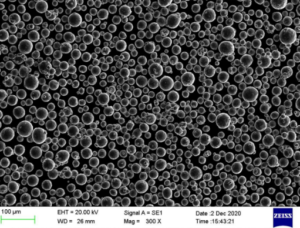
Spherical powder morphology is essential for CoCrNi because the alloy is often chosen for demanding mechanical performance, where internal porosity and local lack of fusion are unacceptable. A highly spherical morphology supports consistent flow and uniform layers, which in turn helps build density and process stability. In this material class, morphology is not a cosmetic attribute; it is part of the mechanical reliability chain.
Flowability, Density, and Layer Uniformity
Apparent density and tap density indicate how the powder packs before and after vibration, while Hall flow provides a practical measure of discharge behavior. Taken together, these properties help predict whether a powder will spread evenly, feed smoothly, and maintain repeatability through a production run. For CoCrNi medium entropy alloy powder, these metrics are especially valuable because the alloy is frequently used in small-batch, high-performance work where build failures are expensive.
Oxygen and Surface Condition
Oxygen content has an outsized impact on AM feedstock because it reflects not only melt cleanliness but also powder-surface condition. Excess oxidation can affect wetting, melt-pool stability, and the ductility of the finished part. That is why serious specifications for CoCrNi medium entropy alloy powder usually control storage method, packaging atmosphere, and reuse strategy in addition to nominal oxygen limits.
Process Fit: LPBF, SLM, DED, and Beyond
CoCrNi is usually discussed in the context of powder bed fusion, but it is not confined to that route. Directed energy deposition can be useful for larger structures, hybrid repairs, and gradient concepts, while HIP or PM consolidation may be relevant where full-density near-net-shape parts are needed without ultra-fine geometric detail. Readers comparing process categories can refer to the powder bed fusion process definition when aligning terminology across equipment vendors and research papers.
業界を横断した活用事例
CoCrNi medium entropy alloy powder is not yet a mass-market feedstock for every machine shop, but it has clear use cases where designers care about more than headline strength numbers. It is particularly relevant when structural integrity, damage tolerance, and corrosion behavior must be preserved in geometrically ambitious parts. Those conditions appear in aerospace research, cryogenic hardware development, advanced industrial tooling, energy systems, and premium wear-resistant components.
Typical Application Map
| 産業 | Typical Part | AM / PM Process | Why It Is Used |
|---|---|---|---|
| Aerospace R&D | Brackets, thin-wall structural demonstrators, cryogenic test hardware | LPBF, HIP | Combines strength, toughness, and design freedom |
| Energy and process equipment | Corrosion-exposed inserts, valve elements, flow components | LPBF, DED, PM | Balances corrosion resistance with mechanical reliability |
| Medical and bioengineering research | Prototype non-implant instruments, wear parts, custom fixtures | LPBF、PM | Useful where cobalt- and nickel-based behavior is being evaluated |
| Industrial wear systems | Nozzles, guides, high-load small components | LPBF, cladding, PM | Benefits from ductility plus surface durability |
| Academic and national-lab programs | Test coupons, lattice structures, fracture specimens | LPBF, HIP | Favored for structure-property investigations |
Aerospace and Cryogenic Structural Research
One of the most discussed strengths of CoCrNi is its excellent low-temperature mechanical behavior in published research. That has made CoCrNi medium entropy alloy powder attractive for cryogenic demonstrators, fracture mechanics studies, and structural prototypes where both strength and crack resistance matter. In such work, additive manufacturing allows the alloy to be tested in topology-optimized or lattice-enabled geometries rather than only as simple wrought samples.
Corrosion-Resistant Industrial Components
The chromium and nickel content gives CoCrNi a useful corrosion profile, though the exact performance depends on environment, surface condition, and post-processing. For chemical handling or process equipment components with moderate thermal exposure and complex internal passages, CoCrNi medium entropy alloy powder can offer a compelling alternative to more familiar materials when toughness is a key requirement. The alloy is not automatically the cheapest option, but it can be justified where downtime and fracture risk are costly.
Wear and Load-Bearing Precision Parts
Small high-load parts often fail through a mix of wear, stress concentration, and crack growth rather than simple overload. CoCrNi’s combination of ductility and work-hardening capacity can be useful in these environments, especially when part geometry contains internal fillets, lattice-backed supports, or thin transitions that benefit from additive manufacturing. This is where high-toughness AM powder becomes more meaningful than a simple tensile-strength comparison.
The most interesting value of CoCrNi is not one extreme property, but the way multiple difficult properties coexist in one alloy system.
Comparing CoCrNi With Neighboring Powder Families
Engineers rarely choose CoCrNi in isolation; they compare it with other families that already have mature supply chains. For cobalt-bearing wear and corrosion applications, cobalt-based alloy powder grades provide a useful benchmark. Where heat resistance above the normal service window of CoCrNi is the real driver, nickel alloy powder options may be more appropriate. If corrosion resistance and lower cost matter more than advanced strain hardening, stainless steel powder selections often remain the default reference point.
製造および品質保証
CoCrNi medium entropy alloy powder is typically produced by inert gas atomization or vacuum-assisted melt-and-atomization routes intended to preserve chemistry and create a spherical particle population. Because this alloy does not yet have decades of broad commercial standardization behind it, manufacturing discipline and powder characterization are especially important. Buyers should treat quality assurance as a full process chain that begins at melting and ends only after the printed or consolidated part has passed mechanical validation.
Typical QA Tests for CoCrNi Medium Entropy Alloy Powder
| QA Test | Instrument / Method | Typical Acceptance Focus | なぜ重要なのか |
|---|---|---|---|
| 化学組成 | ICP-OES, XRF, combustion analysis | Co, Cr, Ni within purchase specification; residuals controlled | Confirms alloy identity and batch consistency |
| 粒度分布 | Laser diffraction plus sieve verification | D10, D50, D90 within ordered window | Supports consistent spreading or feeder behavior |
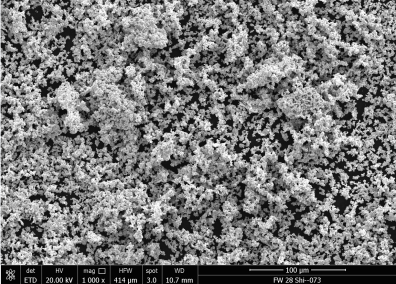
| 形状検査 | SEM and image analysis | High sphericity, limited satellites, low agglomeration | Reduces recoating and porosity risk |
| Flow and density | Hall flowmeter, apparent and tap density tests | Repeatable handling values from lot to lot | Screens production usability |
| Oxygen / nitrogen / carbon | Inert gas fusion and combustion methods | Low contamination by agreement | Protects ductility, toughness, and build stability |
This table reflects the fact that alloy identity alone is not enough. A powder can be chemically correct yet still print poorly because of size-tail issues, surface oxides, or irregular particle shape. For CoCrNi medium entropy alloy powder, those secondary factors are often decisive because the alloy is selected specifically for high-performance outcomes.
Gas Atomization, VIGA, and PREP
ガス噴霧 is the most practical production route for this powder because it can achieve scale, good sphericity, and controlled particle-size classification. Vacuum induction melting plus gas atomization is often favored when tighter chemistry control and lower contamination are required. PREP remains relevant as a reference for very high sphericity, but it is more often associated with premium reactive-alloy feedstocks and does not always offer the same commercial balance for ternary CoCrNi systems.
Lot Consistency and Traceability
In a developing alloy class, lot-to-lot consistency matters as much as single-batch performance. The buyer should expect traceability from raw materials through melting, atomization, sieving, packaging, and retained sampling. That traceability becomes especially valuable when a process window is narrow or when a program includes coupon-to-part property correlation.
Build Qualification and Post-Processing
Powder QA does not eliminate the need for build qualification. CoCrNi parts often require parameter optimization, stress relief, possible HIP depending on density targets, and a defined machining or surface-finishing route. Mechanical properties should be verified in the final condition that the part will actually see in service, not only in as-built coupons.
Standards, Terminology, and Metrology
Because CoCrNi is still an emerging commercial alloy, users often combine internal specifications with broader industry frameworks rather than relying on one mature material standard. The ASTM standards catalog is a useful starting point for test methods and general materials qualification practice, while the NIST additive manufacturing metrology resources help explain why powder characterization remains central to repeatable AM outcomes.
なぜサプライヤーとしてTruerを選ぶべきなのか
Supplier selection for CoCrNi medium entropy alloy powder should be based on whether the supplier can align powder production, characterization, and downstream process requirements with the buyer’s actual application. In this material category, the critical questions involve chemistry control, particle size options, morphology consistency, and the ability to support qualification rather than only supply nominal composition.
Within that framework, Truer’s relevance comes from its stated focus on metal AM powder-making equipment, spherical powder supply, and process coverage across SLM, SEBM, DED, laser cladding, PM, MIM, HIP, spraying, welding, and coating. Buyers reviewing supplier background can use the company background page to understand the organization’s published scope, while project-specific RFQs typically benefit from a direct discussion through the powder inquiry contact page when defining PSD, packaging, documentation, and trial quantity needs.
ご注文ガイドとサポート
Ordering CoCrNi medium entropy alloy powder starts with application clarity. Because the alloy is still less standardized than mainstream AM powders, the request should describe not only chemistry but also the intended process, final property priorities, test plan, and qualification path. A precise RFQ reduces the risk of buying technically correct powder that is poorly matched to the machine, part geometry, or acceptance protocol.
Typical Commercial Framework
| パッケージング | MOQ Tier | リードタイム | Sample Policy |
|---|---|---|---|
| 100–250 g sealed bottle | Laboratory screening | 1–2 weeks typical | Paid sample for chemistry and PSD confirmation |
| 500 g to 1 kg inert-packed can | Parameter development | 通常2~4週間 | Common for coupon builds and morphology review |
| 5 kg vacuum or argon-protected pack | Pilot qualification | 3–6 weeks typical | Suitable for repeated build trials and post-process validation |
| 20 kg+ industrial lot packaging | Ongoing program demand | 4–8 weeks typical | Retained sample and batch documentation usually agreed in advance |
These commercial ranges are illustrative rather than universal. Lead time can change depending on whether the customer requests a standard sieve cut, custom atomization planning, tighter oxygen control, or added third-party test documentation.
What a Strong RFQ Should Include
A complete RFQ should specify process route, target PSD, machine type, preferred packaging, acceptable oxygen level if relevant, and expected yearly consumption. It should also state whether the material will be used for research coupons, end-use parts, corrosion studies, or fracture-critical components. For CoCrNi medium entropy alloy powder, that context influences both the recommended powder class and the level of documentation needed.
Samples, Trials, and Documentation
Sample-stage work typically includes chemistry confirmation, PSD analysis, flow testing, and initial build trials. The next step often adds density measurement, metallography, hardness, tensile testing, and corrosion evaluation in the intended post-processed state. For critical programs, retained samples and lot-to-lot comparison data are worth requesting from the start.
当社
Shanghai Truer Technology Co., Ltd. was established in 2009 and created its additive manufacturing business in 2019. The company is focused on integrating 3D printing powder-making equipment and services with metal powders for engineering applications. Its core technologies include Selective Electron Beam Melting equipment, Plasma Rotating Electrode Process powder-making equipment, and gas atomization-related capability. The company’s published powder portfolio includes TiNi, TiTa, TiAl, TiNbZr, CoCrMo, and spherical nickel-based, cobalt-based, titanium-based, copper-based, aluminum-based, and stainless steel powders for use in SLM, SEBM, DED, laser cladding, powder metallurgy, MIM, HIP, cold or hot spraying, welding, and coating across industries such as 3C electronics, hand tools, remote control cars, medical, aerospace, and nuclear power.
よくある質問
Q1. Is CoCrNi medium entropy alloy powder suitable for laser powder bed fusion?
Yes, CoCrNi medium entropy alloy powder is well suited to laser powder bed fusion when the feedstock has controlled PSD, high sphericity, and low contamination. The alloy is especially interesting in LPBF when designers want strong, ductile parts with complex geometry and are willing to qualify a less standardized material system.
Q2. What is the typical composition of CoCrNi medium entropy alloy powder?
Most versions are near-equiatomic in cobalt, chromium, and nickel, usually expressed as roughly one-third of each element on an atomic basis. On a weight-percent basis, the exact numbers shift slightly, so buyers should verify whether the supplier is reporting atomic percent or wt%.
Q3. Does CoCrNi medium entropy alloy powder have an ASTM or AMS material grade?
Not usually as a single mature off-the-shelf designation in the way common stainless, titanium, or medical cobalt alloys do. Most procurement is done through a customer-defined or supplier-defined material specification that controls nominal Co-Cr-Ni balance, residual elements, powder morphology, and process-relevant acceptance criteria.
Q4. How does CoCrNi medium entropy alloy powder compare with CoCrMo powder?
CoCrMo has a more established supply chain and is widely recognized in wear and medical contexts, while CoCrNi is more often selected for its unusual combination of toughness, ductility, and strain hardening. They overlap in some corrosion- and cobalt-related application spaces, but they are not direct substitutes.
Q5. What particle size is common for CoCrNi medium entropy alloy powder in 3D printing?
For powder bed fusion, common ranges are 15–45 µm and 15–53 µm. Coarser cuts such as 45–105 µm are more typical for directed energy deposition or cladding, where feed reliability matters more than fine-feature resolution.
Q6. What documents should buyers request with each lot of CoCrNi medium entropy alloy powder?
At minimum, buyers should request chemical composition, particle size distribution, flow or density data, and contamination metrics such as oxygen where relevant. For qualification-focused programs, it is also sensible to ask for morphology images, packaging details, retained sample policy, and lot traceability across melting, atomization, and sieving.