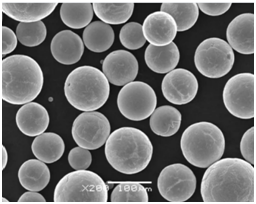
簡単な回答
CoCrMoW dental & implant powder is a cobalt-chromium-molybdenum alloy powder with a controlled tungsten addition, produced for metal additive manufacturing and related powder-processing routes used in dentistry and selected implant applications. It is chosen for 3D printing because it offers a strong balance of corrosion resistance, strength, hardness, polishability, and long-term dimensional stability, especially for crowns, bridges, partial denture frameworks, bars, and customized patient-matched components. For AM buyers, the decisive factors are chemistry control, low oxygen, spherical morphology, and a particle-size distribution matched to LPBF or other intended processes.
What Is CoCrMoW dental & implant powder?
CoCrMoW dental & implant powder belongs to the broader cobalt-base biomaterials family, but it sits at a useful intersection between dental alloy practice and medical-device metallurgy. In plain terms, it is a cobalt-chromium-molybdenum powder grade in which tungsten is added in a controlled amount to support hardness, hot strength, and microstructural stability, while chromium and molybdenum provide the corrosion resistance and passive-film behavior that make cobalt alloys so widely used in oral and biomedical environments. Cobalt-chromium alloys have long histories in both dentistry and implants, but not every dental CoCrMoW grade maps directly to an orthopedic implant standard, which is why powder specifications must be read carefully.
Why This Alloy Family Exists
Dentistry and implant manufacturing need materials that can survive repeated mechanical loading, saliva exposure, cleaning cycles, and in some cases ceramic veneering or thin-wall geometry without losing fit. Cobalt-based systems answered that need decades before metal AM became mainstream because they could deliver high hardness, corrosion resistance, and edge retention in thin sections where softer alloys might distort more easily in service. Additive manufacturing did not invent the alloy family; it simply made it possible to build more complex geometries, reduce scrap, and customize frameworks and implant-adjacent parts more efficiently.
How CoCrMoW Differs from Standard CoCrMo
The tungsten-bearing version is not just ordinary CoCrMo with a different label. In many commercial dental formulations, tungsten is introduced to fine-tune strength, hardness, and cast or print response, while still preserving the corrosion-resistant cobalt-chromium base. That makes CoCrMoW especially relevant for restorations and frameworks that need thin sections, precise margins, and a durable polished surface after finishing. The result is often a better combined profile of 耐摩耗性 and rigidity than softer non-cobalt dental choices, although the exact performance depends on composition, printing parameters, and post-processing.
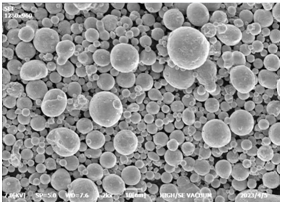
Why Powder Form Matters in Additive Manufacturing
Once this alloy is supplied as powder, the geometry ceiling changes completely. Laser powder bed fusion can produce porous structures, lattice-like retention features, undercuts, bars, implant superstructures, and other shapes that are difficult or wasteful to machine from wrought stock. That is why the powder is discussed not only as a material, but as an enabling feedstock for digital dentistry and customized medical manufacturing, using terminology formalized in ISO/ASTM 52900 vocabulary for additive manufacturing.
Dental Grade Versus Implant Grade: An Important Distinction
A critical buying point is that “dental” and “implant” are not interchangeable regulatory words, even when the metallurgy is closely related. Dental CoCrMoW powders are commonly aligned with ISO 22674 dental metallic materials, while cobalt-chromium-molybdenum powders for medical devices are addressed by specifications such as ASTM F1377 cobalt-chromium-molybdenum powder for medical devices, and broader implant materials are cross-referenced through standards like ASTM F75, ASTM F799, or ISO 5832 families. In practice, a buyer should treat CoCrMoW dental & implant powder as a category that requires an application-specific material specification, not as a single universal grade.
In medical and dental AM, powder quality matters twice: once during printing, and again during qualification.
化学組成および材料グレード
The chemistry of CoCrMoW dental & implant powder varies slightly across suppliers because dental frameworks, ceramic-bonded restorations, and implant-related parts do not all optimize the same property mix. However, most commercial grades stay within the familiar cobalt-chromium-molybdenum family and add tungsten at a modest level rather than treating W as the dominant alloying element. That means chromium generally remains high enough to maintain passivation, molybdenum supports corrosion behavior and strength, and tungsten acts as a tuning element for hardness and thermal response.
For procurement, it is usually more useful to think in terms of “grade families” than to assume one exact global equivalent exists. Dental powders may be sold against internal supplier specifications and customer prints, while implant-oriented cobalt-chromium powders may reference ASTM F1377 for powder form, ASTM F75 for cast chemistry tradition, ASTM F799 for forging-related implant chemistry, or ISO 5832 material families for surgical implants. A tungsten-bearing dental AM powder can therefore be chemically close to these standards without being a literal one-to-one equivalent.
Typical CoCrMoW Dental & Implant Powder Chemistry
| Material / Reference Family | Co (wt%) | Cr (wt%) | Mo (wt%) | W (wt%) | Typical Grade Context | ASTM / AMS / GB / ISO / DIN Cross-Reference |
|---|---|---|---|---|---|---|
| Dental CoCrMoW AM powder, standard type | バル | 24.0–28.5 | 4.0–6.5 | 2.0–6.0 | Crown, bridge, bar, RPD framework | Commonly aligned with ISO 22674 dental alloy classes; not usually a direct ASTM implant equivalent |
| Dental CoCrMoW ceramic-compatible variant | バル | 25.0–29.0 | 4.5–6.0 | 3.0–5.0 | Veneered restorations, coping structures | Supplier spec with ISO 22674 reference where applicable |
| CoCrMo medical powder family | バル | 27.0–30.0 | 5.0–7.0 | residual / limited | AM, MIM, coating, powder-based medical devices | Closest powder-form reference: ASTM F1377; typically CoCrMo rather than deliberate W-bearing dental chemistry |
| Implant cast / wrought CoCrMo family | バル | 27.0–30.0 | 5.0–7.0 | residual / limited | Surgical implant materials | ASTM F75, ASTM F799, ISO 5832-4, ISO 5832-12 as family references rather than direct dental CoCrMoW matches |
Composition Control Matters More Than the Headline Grade
For cobalt-based powders, the major alloying elements are only part of the acceptance picture. Carbon, silicon, manganese, iron, nickel, sulfur, phosphorus, nitrogen, and oxygen can all influence printability, carbide balance, corrosion performance, and polishing behavior, particularly in fine powder cuts for LPBF. A purchaser evaluating CoCrMoW dental & implant powder should therefore ask for a full chemistry sheet, not just the four headline elements.
Reading Standards Without Overstating Equivalence
This is where many material pages become careless. ASTM F75 and ASTM F799 are highly relevant if a team wants to understand the classic chemistry envelope for Co-Cr-Mo implant materials, but they are not exact shorthand for every tungsten-bearing dental powder. Similarly, ISO 22674 is essential for dental metallic materials, yet a finished medical implant may require a broader qualification path than dental classification alone. The safe technical approach is to specify the powder by actual chemistry, particle characteristics, process route, and intended use case rather than by marketing label.
Why Dental Labs and Medical OEMs Care About Tungsten
Tungsten is typically introduced to influence stiffness, hardness, and high-temperature behavior during melting and solidification, which can be useful in thin frameworks and laser-built geometries. In practical terms, that can help when the design requires slender connectors, stable bridge structures, or polished surfaces that resist deformation during finishing. The exact benefit varies by formula, but it explains why CoCrMoW remains relevant despite the availability of titanium and noble-metal alternatives.
技術仕様
Technical specifications for CoCrMoW dental & implant powder should be process-specific from the beginning. A powder cut optimized for laser powder bed fusion is rarely the same as one intended for MIM, thermal spraying, or broad-cut powder metallurgy, even if all are nominally the same alloy family. The process vocabulary, powder behavior, and build-quality implications are all part of the same AM framework described by ISO/ASTM 52900 and supported by NIST’s powder-bed-fusion research work.
Typical CoCrMoW Dental & Implant Powder Specifications
| Powder Class | Typical PSD Range | 見かけ密度 | タップ密度 | Hall Flow | 酸素含有量 | Sphericity / Morphology |
|---|---|---|---|---|---|---|
| Fine LPBF dental grade | 15~45 µm | 4.3–4.8 g/cm³ typical | 5.0–5.6 g/cm³ typical | 12–18 s/50 g typical | ≤0.10 wt% typical | Highly spherical, low satellites |
| Standard LPBF / SLM grade | 15~53 µm | 4.4–4.9 g/cm³ typical | 5.1–5.7 g/cm³ typical | 11–17 s/50 g typical | ≤0.10 wt% typical | Spherical, free-flowing |
| MIM / binder-related cut | 10–30 µm | 4.1–4.7 g/cm³ typical | 4.8–5.4 g/cm³ typical | Not always reported by Hall method | ≤0.12 wt% typical | Fine spherical powder with controlled fines |
| DED / cladding broad cut | 45~105 µm | 4.5–5.0 g/cm³ typical | 5.2–5.9 g/cm³ typical | 10–16 s/50 g typical | ≤0.12 wt% typical | 球形からほぼ球形 |
These are realistic procurement values rather than a universal standard sheet. Because machines, recoaters, shielding atmospheres, and post-processing cycles differ, the buyer should treat them as a qualification starting point and align final acceptance criteria with the machine OEM, validated build strategy, and regulatory documentation for the finished part.
CoCrMoW Dental & Implant Powder for LPBF
For LPBF, the most important powder requirements are a controlled narrow PSD, excellent spreadability, low internal porosity in the particles, and consistent chemistry from lot to lot. Dental parts are often small and margin-sensitive, so even minor powder variation can affect surface finish, edge sharpness, support removal, or post-polish fit. That is why many labs prefer a spherical AM powder cut designed specifically for fine-layer recoating rather than a generic metal powder sold for multiple uses.
Flowability, Packing, and Oxygen Control
Flow and packing behavior determine whether each layer is deposited evenly before laser exposure. Poor flow raises the risk of local lack-of-powder zones, while too many fines can change absorptivity and worsen spatter or oxidation sensitivity. In cobalt-based medical and dental powders, low-oxygen feedstock is especially important because oxide films and contamination can compromise print consistency, polish response, and downstream material performance.
Density, Surface Quality, and Finishing Implications
CoCrMoW is often chosen because it can achieve dense builds and retain crisp geometry after support removal and post-processing. In dental workflows, however, density is not the only objective. Surface roughness, internal defect population, heat-treatment response, and the predictability of polishing or veneering can matter just as much as nominal tensile values, especially in visible or patient-facing restorations. NIST’s ongoing cobalt-chrome powder-bed-fusion work underlines how process conditions and powder behavior influence the mechanical repeatability of final parts.
Post-Processing Expectations
Most printed cobalt-chromium dental parts do not go directly from printer to patient. Typical workflows include stress relief, support removal, blasting, machining of interfaces, polishing, and in some cases ceramic veneering or hot isostatic pressing depending on the application and quality plan. The specification should therefore cover the full route from powder to finished part rather than treating powder data as the only qualification step.
業界を横断した活用事例
Although the keyword is centered on dental and implant powder, the real application field is broader than crowns alone. CoCrMoW feedstocks serve dental labs, medical-device prototyping, powder-based surface engineering, and some high-wear industrial uses where cobalt alloys are valued for rigidity, corrosion resistance, and finish durability. The exact market pathway depends on whether the powder is being qualified as a dental restoration alloy, a medical-device feedstock, or a technical cobalt-based AM material with no patient contact.
Typical Applications for CoCrMoW Dental & Implant Powder
| 産業 | Typical Part | AM / PM Process | Why the Powder Is Used |
|---|---|---|---|
| Dental laboratories | Crowns, bridges, copings, partial denture frameworks | LPBF / SLM, casting-assisted digital workflows | Strength, thin-wall rigidity, corrosion resistance, polishability |
| Dental implant prosthetics | Custom abutments, bars, superstructures, implant-supported frameworks | LPBF, machining after print | Accurate fit, stiffness, customized geometry |
| 医療機器 | Patient-matched non-articulating components, porous structures, prototype implant parts | LPBF, MIM, coating routes | Biocompatibility-oriented cobalt alloy family, geometric freedom |
| Industrial wear components | Small high-wear parts, fixtures, corrosion-resistant technical hardware | LPBF, PM, cladding | Hardness, surface durability, corrosion performance |
CoCrMoW Dental & Implant Powder in Digital Dentistry
Digital dentistry is the strongest and clearest use case. Labs increasingly prefer powder-based metal printing for copings, bridges, and removable partial denture frameworks because it shortens the path from scan to finished framework and reduces dependence on wax patterns and multiple casting steps. When the powder lot, parameter set, and finishing route are stable, CoCrMoW can deliver repeatable framework geometry with a familiar cobalt-alloy performance profile.
Implant-Supported Structures and Custom Bars
The alloy is also relevant for customized bars and superstructures in implant prosthetics, where rigidity and dimensional precision matter across multiple implant interfaces. Here the material choice is less about bulk ornamentation and more about long-span stability, screw-access design freedom, and the ability to manufacture patient-specific geometry from digital data. In such cases, CoCrMoW powder competes not only with cast cobalt alloys but also with titanium AM grades, especially where weight, modulus, or imaging considerations shift the decision. A broader titanium AM powder portfolio is often reviewed alongside cobalt alloys during early material selection.
Medical and Technical Powder Uses Beyond Dentistry
Some buyers use cobalt-chromium-molybdenum powder families for prototype implants, porous sections, or surface-engineering routes rather than finished dental restorations. ASTM F1377 is especially relevant here because it explicitly covers cobalt-28Cr-6Mo powder for medical devices and states that such powders may be used in sintering, thermal spraying, metal injection molding, or additive manufacturing. That powder-focused framing is important because it separates feedstock control from the later qualification of the final device.
Comparing CoCrMoW With Alternative AM Powders
If the part demands lower density and a lower elastic modulus, titanium may be preferred. If the environment calls for cheaper general-purpose corrosion resistance with no dental or implant context, stainless may be sufficient. If the application centers on hot corrosion or turbine-side performance, nickel superalloys enter the discussion. For that reason, materials engineers often compare CoCrMoW not in isolation but against adjacent families such as cobalt alloy powder grades, stainless steel powder options, and titanium biomaterial powders during design review.
Where the Alloy Is Less Ideal
CoCrMoW is not automatically the best choice for every intraoral or implant-related component. It is relatively dense, hard to machine compared with some alternatives, and may require careful finishing to manage surface roughness after printing. In addition, if a regulatory pathway calls for a very specific wrought or powder implant standard chemistry, a tungsten-bearing dental variant may not be the simplest route. That is another reason the purchase specification should identify the intended end-use rather than stopping at the alloy family name.
製造および品質保証
In CoCrMoW dental & implant powder, manufacturing route and QA discipline are inseparable. A cobalt alloy may have the right nominal chemistry but still perform poorly in AM if particle shape, internal gas porosity, satellite content, or oxygen pickup are not controlled. For regulated or patient-facing applications, the supplier’s ability to document morphology, chemistry, and handling conditions is just as important as publishing an alloy label.
Typical QA Framework for CoCrMoW Powder
| QA Test | Typical Instrument / Method | Typical Acceptance Focus | なぜ重要なのか |
|---|---|---|---|
| 化学組成 | ICP-OES, combustion analysis | Major elements within ordered range; interstitials controlled | Confirms alloy identity and standard-family fit |
| 粒度分布 | Laser diffraction plus sieve check | Declared cut achieved; limited oversize and fines | Affects recoating, melt consistency, and detail resolution |
| 形状検査 | SEM and image analysis | Mostly spherical particles, low satellites, low agglomeration | Improves flowability and packing consistency |
| Oxygen / nitrogen testing | 不活性ガス融解 | Low and stable interstitial values by lot | Supports corrosion behavior, fusion stability, and repeatability |
| Flow and density checks | Hall flowmeter, apparent/tap density methods | Stable flow and packing window | Practical screen for printer compatibility and lot consistency |
How the Powder Is Commonly Made
Gas atomization is the most common commercial route for cobalt-chromium AM powders because it can produce spherical particles with scalable throughput and relatively good chemistry consistency. PREP can be attractive where very high sphericity and cleanliness are prioritized, although its economics and application fit depend on the target alloy, volume, and size fraction. Vacuum induction gas atomization is also relevant when chemistry cleanliness and controlled melting atmosphere are priorities. The correct route is the one that delivers stable morphology and specification compliance for the intended process window, not the one with the most impressive acronym.
Powder Reuse and Lot Management
Dental labs and AM production sites often want to recycle unused powder, but reuse must be controlled rather than assumed safe. Every exposure cycle can alter fines content, spatter contamination, and oxygen pickup, especially in highly reused LPBF ecosystems. A sound reuse protocol should define sieve practice, blend limits between virgin and recycled powder, maximum cycle counts where applicable, and lot traceability through certificates and retained samples.
Documentation Buyers Should Expect
For qualification-minded procurement, a supplier should be able to provide chemistry, PSD, flow, density, morphology, and packaging information for each lot. In medical or dental environments, many buyers also ask for statements on raw-material source control, batch numbering, storage conditions, and whether the powder was produced as pre-alloyed feedstock. When the same site handles multiple metal systems, cross-contamination prevention becomes another material point worth clarifying.
なぜサプライヤーとしてTruerを選ぶべきなのか
From a technical sourcing perspective, the reason to evaluate a supplier for CoCrMoW dental & implant powder is its understanding of powder production and downstream AM use, not just catalog breadth. A suitable supplier should be able to discuss cobalt-alloy chemistry control, atomization route, particle-size selection for SLM or related processes, and documentation needs for dental and medical customers.
Within that frame, Shanghai Truer Technology is relevant because its published capabilities include cobalt-based spherical powders, PREP powder-making equipment, gas atomization capability, and experience with end-use routes such as SLM, SEBM, DED, laser cladding, PM, MIM, and HIP. For a factual overview of its background and AM equipment orientation, the company background page provides the basic profile.
ご注文ガイドとサポート
An RFQ for CoCrMoW dental & implant powder should begin with the process route, not just the alloy name. Buyers should identify whether the powder is intended for LPBF, MIM, cladding, or another route; whether the target use is dental restoration, implant prosthetics, or technical cobalt-alloy production; and which PSD, chemistry, and certificate items are mandatory. This prevents confusion between dental material practice and stricter medical-device documentation expectations.
Typical Ordering Framework
| パッケージング | MOQ Tier | リードタイム | Sample Policy |
|---|---|---|---|
| 100–250 g sealed bottle | Lab screening | 1–2 weeks typical | Paid sample, basic COA typically available |
| 500 g to 1 kg inert-packed can | Parameter development | 2–3 weeks typical | Sample lot with PSD and chemistry data |
| 5 kg vacuum or argon-packed container | Pilot production | 3–5 weeks typical | Retained sample recommended for traceability |
| 20 kg+ industrial packaging | Ongoing manufacturing | 4–8 weeks typical | Batch approval plan typically agreed before shipment |
What to Put in the RFQ
The best RFQs include machine model, laser type, layer thickness, expected annual demand, finishing route, and whether the part is patient-contacting. For dental work, it is also helpful to state whether the part will be polished only or veneered, and whether fit-critical interfaces will be machined after printing. These details influence the most suitable powder cut far more than the alloy name alone.
Technical Support and Sampling
Small sample lots are valuable when the buyer is qualifying a new printer, parameter set, or post-processing path. Because cobalt-alloy performance is sensitive to reuse strategy, surface finishing, and heat treatment, sample qualification should include both printability trials and downstream finishing checks. Projects that need direct discussion about lot format or certificates can be routed through the technical contact channel.
当社
Shanghai Truer Technology Co., Ltd. was established in 2009 and created its additive manufacturing business in 2019. The company focuses on integrating 3D-printing powder-making equipment and services with 3D-printing powders for engineering applications. Its core technologies include Selective Electron Beam Melting equipment, Plasma Rotating Electrode Process powder-making equipment, and gas atomization-related capability. The powder portfolio includes TiNi, TiTa, TiAl, TiNbZr, CoCrMo, and spherical nickel-based, cobalt-based, titanium-based, copper-based, aluminum-based, and stainless steel powders for use in SLM, SEBM, DED, laser cladding, powder metallurgy, MIM, HIP, cold or hot spraying, welding, and coating across industries including 3C electronics, hand tools, remote control cars, medical, aerospace, and nuclear power.
よくある質問
Q1. Is CoCrMoW dental & implant powder the same as ASTM F75 powder?
Not exactly. ASTM F75 is a cast cobalt-28Cr-6Mo implant alloy specification, while many CoCrMoW dental powders intentionally include tungsten as a designed alloying element and are more often associated with dental standards or supplier-specific powder specifications. A powder may be compositionally related to F75-family materials without being a direct ASTM F75 equivalent.
Q2. Can CoCrMoW dental & implant powder be used for laser powder bed fusion?
Yes. The alloy family is widely compatible with LPBF when the powder has the correct PSD, high sphericity, stable chemistry, and controlled oxygen. For small dental geometries, a fine powder cut and a validated print parameter set are usually more important than broad generic claims about the alloy.
Q3. Why is tungsten added to CoCrMo dental powder?
Tungsten is generally added to tune hardness, rigidity, and thermal behavior during processing. In practical dental use, that can support thin-wall strength, dimensional stability, and durable polished surfaces, although the exact effect depends on the full alloy formula and the print-plus-post-process route.
Q4. Is CoCrMoW powder suitable for all implant applications?
No. Suitability depends on the final chemistry, manufacturing route, regulatory pathway, and intended anatomical use. A dental CoCrMoW powder may be appropriate for implant-supported prosthetic structures, but a surgical implant program may instead require a more specific cobalt-chromium-molybdenum material family reference such as ASTM F1377, ASTM F799, or ISO 5832.
Q5. What particle size is typical for CoCrMoW dental 3D printing powder?
A common LPBF range is 15–45 µm or 15–53 µm, because those cuts usually balance layer spreading, detail resolution, and stable melting behavior for dental-sized parts. Exact acceptance ranges still depend on the printer platform, layer thickness, and the supplier’s validated production route.
Q6. What documents should a buyer request with each powder lot?
At minimum, request full chemistry, PSD, oxygen or interstitial data, and the packaging condition. For more controlled dental or medical programs, it is also wise to request morphology information, lot number traceability, retained-sample practice, and any applicable reference to dental or medical material standards used in the specification.
Learn more:
- ISO/ASTM 52900:2021 – Additive manufacturing — General principles — Fundamentals and vocabulary
- コバルト・クロム
- ISO 22674:2016 – Dentistry — Metallic materials for fixed and removable restorations and appliances
- ISO 22674:2022 – Dentistry — Metallic materials for fixed and removable restorations and appliances
- F1377 Standard Specification for Cobalt-28Chromium-6Molybdenum Powder for Medical Devices (UNS R30075, UNS R31537, and UNS R31538)
- F75 Standard Specification for Cobalt-28 Chromium-6 Molybdenum Alloy Castings and Casting Alloy for Surgical Implants (UNS R30075)
- Powder Bed Fusion | NIST
- Additive Manufacturing Powder Metrology Laboratory | NIST
- Interlaboratory mechanical property study for Cobalt-Chromium alloy Made by Laser Powder-Bed-Fusion Additive Manufacturing | NIST