簡単な回答
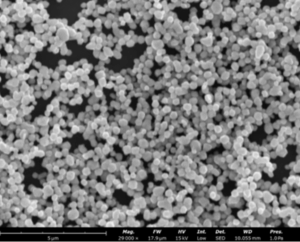
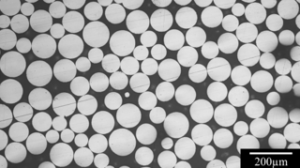
FeNi50 軟磁性粉末 is the powder-metallurgy form of 50 percent nickel-iron permalloy, the alloy that occupies the practical middle ground of the Ni-Fe magnetic system: saturation induction of 1.5-1.6 T, roughly double that of high-nickel permalloys, combined with initial permeability of 5,000-10,000 and coercivity of 5-20 A/m. Gas-atomized spherical powder is supplied in 15-45 um cuts for LPBF, 0-25 um for MIM, and insulated fractions for pressed powder cores, serving transformer laminations replacements, relay and solenoid cores, magnetic shielding, current sensors, and inductor cores at power and audio frequencies. Final magnetic performance requires a full hydrogen anneal after consolidation, which should be treated as an integral part of the manufacturing route.
| プロパティ | 価値 |
|---|---|
| 合金システム | 50Ni-50Fe permalloy (Alloy 4750 / 1J50 class) |
| 密度 | 8.2 g/cm3 |
| 代表的な粉末粒径(LPBF) | 15~45 µm |
| Typical Powder Size (MIM/cores) | 0-25 um |
| 飽和誘導 | 1.5-1.6 T |
| Initial Permeability | 5,000-10,000 |
| 保磁力(焼鈍後) | 5-20 A/m |
| キュリー温度 | ~500 C |
| 主な利点 | Best induction-permeability balance in the permalloy family |
FeNi50軟磁性粉末とは何か、およびその材料としての利点
FeNi50 軟磁性粉末 は~に属する 軟磁性粉末 family and replicates the chemistry of the 50 percent nickel permalloys known commercially as Hipernik, Alloy 4750, or 1J50 in Chinese standards. The composition sits at a deliberate compromise point in the nickel-iron system: nickel content high enough to keep the alloy FCC, ductile, and magnetically soft, but low enough to preserve the high saturation induction that falls off steeply as nickel rises toward the 78-80 percent of molybdenum permalloy.
In powder form, the alloy’s benefits for engineering programs include:
- Balanced magnetic profile. Saturation induction near 1.5-1.6 T with permeability in the thousands makes the alloy the permalloy of choice when both flux-carrying capacity and low magnetizing current matter, as in transformer and relay cores.
- Low core loss at power frequencies. Hysteresis loss is low thanks to small coercivity, and the alloy’s resistivity, roughly twice that of pure iron, limits eddy loss in solid and powder-consolidated cores at 50-400 Hz.
- Good ductility and processability. The single-phase FCC structure prints, molds, and sinters without cracking, and consolidated parts machine and stamp readily before final annealing.
- Square-loop availability. With appropriate annealing practice, the alloy develops a square hysteresis loop that suits magnetic amplifiers, bistable relays, and switching cores.
- Powder-route design freedom. Additive manufacturing and MIM produce integrated magnetic circuits, shaped pole pieces, and miniaturized cores that laminated sheet cannot form economically at complex geometry.
The designation varies by market: the same alloy appears as Hipernik and Alloy 4750 in Western registers, 1J50 in Chinese standards, and 50H or 50N in Russian and European documents. Chemistries across these names are close but not identical, particularly in manganese and silicon residuals, so purchase specifications should state the nickel window and interstitial limits explicitly rather than relying on the trade name.
The trade-offs are honest ones: permeability is an order of magnitude below molybdenum permalloy, corrosion resistance is modest, and the alloy is magnetostrictive enough that heavy mechanical stress degrades its magnetic performance until relieved by annealing.
化学組成基準および元素の用途説明
The composition is essentially a binary nickel-iron system with tight impurity control, because every interstitial element subtracts directly from magnetic softness.
FeNi50の化学組成
| エレメント | Min (wt%) | Max (wt%) | 役割 |
|---|---|---|---|
| Ni | 49.0 | 51.0 | Sets the induction-permeability balance and Curie point |
| Fe | バランス | バランス | Carries the magnetic induction; completes the FCC matrix |
| ムン | – | 0.60 | Deoxidizer residual; limited to protect permeability |
| Si | – | 0.30 | Deoxidizer residual; minor resistivity contribution |
| C | – | 0.03 | Interstitial limit; excess raises coercivity sharply |
| P | – | 0.02 | Impurity limit; grain-boundary pinning control |
| S | – | 0.02 | Impurity limit; inclusion and domain-wall pinning control |
| 銅 | – | 0.20 | Incidental; affects ordering behavior during anneal |
| O | – | 0.03 | Powder-quality limit; oxides pin domain walls |
The nickel level defines the alloy’s position in the permalloy family. At 50 percent, the alloy sits below the anisotropy-zero point near 78 percent nickel, so it does not chase ultimate permeability; instead it keeps the higher magnetization of the iron-rich compositions while remaining fully austenitic and soft. Each half-percent of nickel shift moves both saturation and permeability measurably, so premium lots are melted to +/- 0.3 percent nickel tolerance.
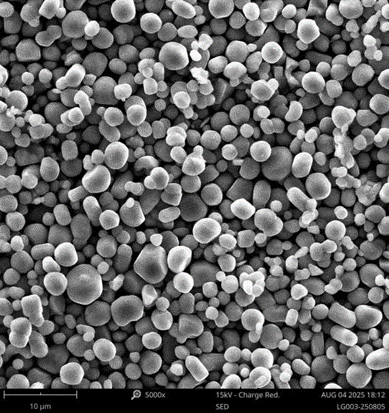
For powder buyers, carbon and oxygen are the certification figures that matter beyond the headline chemistry. Both pin domain walls and raise coercivity in the consolidated part, and magnetic-critical programs should specify incoming oxygen at or below 300 ppm with carbon below 0.03 percent, verified lot by lot on the certificate of analysis rather than assumed from grade names.
A practical specification structure for this alloy fixes four numbers: the nickel range, oxygen, carbon, and the PSD targets, and references the balance of the window to the governing national standard. This keeps procurement documents short, directly auditable, and tied to the parameters that actually move magnetic performance, which matters more in permalloy procurement than in structural alloy procurement because the functional penalty for off-spec interstitials is immediate and large.
標準試験温度における物理的および機械的特性
The data below reflect fully annealed reference material at standard test temperature (23 +/- 5 C), with powder-consolidated values depending on densification and annealing practice.
主要物件
| プロパティ | 価値 | 単位 |
|---|---|---|
| 密度 | 8.2 | g/cm3 |
| 溶解範囲 | 1425-1450 | C |
| 熱伝導率(RT) | 18-22 | W・m・K |
| 熱膨張係数 | 9-10 x 10-6 | /K |
| 電気抵抗率 | 0.40-0.45 | uOhm.m |
| キュリー温度 | ~500 | C |
| 飽和誘導 | 1.5-1.6 | T |
| Initial Permeability | 5,000-10,000 | – |
| Maximum Permeability | 50,000-100,000 | – |
| 保磁力(焼鈍後) | 5-20 | A/m |
| 降伏強さ(焼きなまし) | 180-280 | MPa |
| Tensile Strength (annealed) | 480-580 | MPa |
| 伸び(焼鈍後) | 25-35 | % |
| 硬度(焼なまし) | 120-160 | HV |
The magnetic data carry the usual qualification: they are post-anneal figures. A full softening anneal at 1050-1200 C in pure dry hydrogen, followed by controlled cooling, develops the permeability and coercivity quoted, while as-printed or as-sintered material delivers a fraction of these values. The anneal is therefore part of the manufacturing route, and any cost comparison of processing routes should include it.
The square-loop capability deserves mention for designers of magnetic amplifiers and latching relays: annealing in a longitudinal magnetic field or with specific cooling practice aligns the domain structure and raises the remanence ratio toward 0.9, converting the same chemistry into a switching material. Mechanically, the alloy is soft and ductile, which favors MIM feedstock and powder-core pressing, and its Curie point near 500 C gives a wider thermal margin than high-nickel permalloys for components that run warm.
Stress sensitivity is the property most often underestimated in application. The alloy’s magnetostriction is small but not zero, and clamping, press-fitting, or winding tension applied after the final anneal measurably degrades permeability and raises core loss. Good design practice therefore completes all mechanical operations before the final anneal, mounts finished cores with compliant rather than rigid clamping, and treats any post-anneal machining as a process deviation requiring re-annealing.
粒度分布の許容範囲および入手可能な供給グレード一覧
FeNi50 powder is supplied in process-matched fractions with certified size-distribution tolerances, and in an insulated grade for pressed powder cores.
利用可能な仕様
| パラメータ | 標準/値 |
|---|---|
| 粒子径分布(LPBF) | 15~45 µm、15~53 µm |
| 粒子径分布(MIM) | 0-25 um, D90 <= 25 um |
| Particle Size Distribution (powder cores) | 45-150 um (insulated) |
| Particle Size Distribution (press-sinter) | 0~45 μm |
| 球形度 | >= 0.90 (GA) |
| 見かけ密度 | >= 4.2 g/cm³ |
| タップ密度 | >= 5.0 g/cm³ |
| ホールの流量 | <= 18 秒/50g |
| 酸素含有量 | <= 300 ppm (premium), <= 500 ppm (standard) |
| PSDの許容誤差 | ロットごとにD10/D50/D90の認証を取得 |
| グレード・オプション | Standard magnetic grade; high-purity low-O/C grade; insulated powder-core grade on request |
| Magnetic Certification | Reference-ring permeability and core loss data on request |
| パッケージング | 真空密封、アルゴンガス充填、1~50 kg |
The insulated powder-core grade serves the high-flux powder-core market, where dielectric-coated particles pressed to shape give distributed-gap cores with soft saturation behavior and good DC bias performance. These cores compete with Sendust and High-Flux (50Ni-50Fe) commercial products in solar inverter and PFC inductor duty, and coating quality is as decisive as chemistry in their final loss figures.
Storage and reuse follow standard practice: containers open under dry inert conditions, recycled LPBF powder is refreshed with 30-50 percent virgin material per cycle, and oxygen is re-verified periodically, since surface oxidation directly erodes the permeability the alloy is purchased for.
製造プロセス:噴霧化のスクリーニングおよび熱処理
Production begins with electrolytic nickel and carbonyl iron melted under vacuum induction, with melt practice controlled to hit the +/- 0.3 percent nickel window that magnetic consistency demands. The melt is converted by ガスアトマイズ法(GA) under argon, producing spherical particles that solidify without phase transformation in the single-phase FCC system. Because the alloy contains no volatile or highly reactive additions, chemistry transfer from melt to powder is faithful, and well-run campaigns hold the nickel window across the entire atomization lot rather than merely at its average.
The manufacturing sequence that follows determines functional quality:
- 分類 by sieving and air separation isolates the specified size fractions, with the sub-10 um fraction limited in core grades to control insulation-layer thickness distribution.
- 表面処理 under hydrogen or forming gas reduces atomization-formed surface oxides, improving both sinterability and the post-anneal magnetic response.
- Insulation coating for powder-core grades applies and cures the dielectric layer under tightly controlled coverage and thickness.
- 流量および密度の検証 confirms Hall flow rate, apparent density, and tap density values.
- 化学分析 by ICP-OES and inert gas fusion certifies the nickel content and all interstitial limits per lot.
- Magnetic reference testing on premium lots presses, sinters, and anneals reference rings to verify permeability and core loss before final release.
- 不活性包装 in argon-flushed, vacuum-sealed containers protects conditioned surfaces through storage and international transport.
Heat treatment after consolidation completes the route: components receive the full hydrogen anneal, with the cooling rate through the ordering range set to develop either the standard round-loop or the square-loop magnetic state depending on the target application. Buyers should confirm that their annealing capacity matches the alloy’s requirements, since the hydrogen atmosphere and the controlled cooling are both necessary to reach datasheet properties. PREP production is available for programs requiring crucible-free cleanliness, though GA quality suffices for most applications.
業界別用途:医療、航空宇宙、発電
FeNi50 powder serves industries that exploit its induction-permeability balance. Sector context is available on the アプリケーション ページを参照されたい。
Power generation and distribution. High-flux powder cores for solar inverter inductors, PFC chokes, and UPS magnetics are the volume application, where the alloy’s 1.5 T-class saturation supports compact designs at high DC bias. Printed and MIM-produced flux concentrators and shaped cores for wireless power transfer are growth uses as charging systems miniaturize, and distributed-gap pressed cores from insulated powder continue to win designs against ferrite where temperature stability and flux capacity are both constrained.
Aerospace and defense. Relay and solenoid cores, magnetic amplifier elements, and actuator magnetics use the alloy’s square-loop availability and reliable 400 Hz performance. Printed magnetic circuits consolidate pole pieces, return paths, and mounting features into single components, reducing assembly interfaces in weight-critical avionics and eliminating the stacking tolerances of laminated assemblies.
Medical devices. Electromagnetic actuators in infusion and surgical equipment, sensor cores in diagnostic instruments, and telemetry components use MIM-produced alloy elements at medical volumes, with the purity documentation regulated markets require. The alloy’s higher induction relative to high-nickel permalloys suits the compact actuator designs these devices favor.
Industrial sensing and instrumentation. Current transformers, residual-current sensors, and proximity elements use the alloy where measurement linearity and adequate permeability matter more than ultimate softness, and where its thermal margin over high-nickel grades supports warmer operating environments such as motor-terminal boxes and switchgear interiors.
Automotive electrification. Onboard charger magnetics, DC-DC converter cores, and current-sensing elements in 400- and 800-volt architectures are active qualification areas, with powder cores and MIM parts tested against the automotive temperature and vibration envelope. The alloy’s thermal margin over high-nickel permalloys is a practical advantage in under-hood and charge-port environments where component temperatures regularly exceed 120 C.
Across these industries, the adoption pattern is consistent: magnetic characterization of consolidated coupons first, then prototype components measured against the target core-loss and permeability budget, then volume production once lot-level reference-ring data prove stable. Suppliers who provide that magnetic reference data with each lot shorten the qualification cycle meaningfully, because incoming inspection verifies functional quality without consolidating trial parts.
他のグレードとの比較および代替合金システムの選択肢
Selection around FeNi50 typically benchmarks it against high-nickel molybdenum permalloy, against silicon iron, against Sendust for powder cores, and against FeCo alloys for maximum induction.
FeNi50 vs Alternative Soft Magnetic Materials
| プロパティ | FeNi50 | FeNiMo (Moly Permalloy) | Silicon Iron (3% Si) | Sendust (FeSiAl) | FeCo50 |
|---|---|---|---|---|---|
| 密度(g/cm³) | 8.2 | 8.7 | 7.65 | 6.9 | 8.1 |
| Saturation Induction (T) | 1.5-1.6 | 0.75-0.9 | 2.0 | 1.0 | 2.3-2.4 |
| Initial Permeability | 5,000-10,000 | 50,000-100,000 | 500-2,000 | 20,000-30,000 | 1,000-5,000 |
| Coercivity (A/m) | 5-20 | 2-5 | 30-60 | 5-15 | 30-100 |
| Resistivity (uOhm.m) | 0.40-0.45 | 0.55-0.62 | 0.48 | 0.80 | 0.40 |
| Curie Temperature (C) | ~500 | 400-460 | ~740 | ~500 | ~950 |
| 相対コスト | 中~高 | 高い | 低い | ミディアム | 非常に高い |
Against molybdenum permalloy, FeNi50 trades an order of magnitude of permeability for roughly double the saturation induction, so the two split the market into precision-sensing and flux-carrying duty respectively. Against silicon iron, it offers far lower coercivity and better high-frequency behavior at higher cost and lower induction. Against Sendust in powder cores, it carries higher flux density at similar loss, which is why High-Flux cores command their premium in compact inductor designs. Against FeCo alloys, it concedes the absolute induction crown but costs a fraction as much and processes far more forgivingly.
The selection rule follows the duty: flux-carrying cores and actuators at power frequency favor FeNi50; weak-signal sensing favors molybdenum permalloy; maximum induction favors FeCo; and cost-driven, low-frequency duty still favors silicon iron. It is also worth noting that all five materials in the table are available as qualified powder grades from the same supply base, so mixed programs, such as a FeNi50 core paired with a molybdenum permalloy sensor element, can be sourced with consistent documentation and a single qualification relationship.
当社
上海Truer Technology Co., Ltd 中国を拠点とする積層造形サプライヤーであり、PREP粉末製造装置と高品質な球状金属粉末を統合しています。2009年に設立された同社は、以下の両方を提供しており、 ガスアトマイズ法(GA) そして PREP ニッケル合金、チタン合金、アルミニウム合金、ステンレス鋼、コバルト合金、銅合金、高エントロピー合金、および特殊材料にわたる製造能力。.
Truer社は、航空宇宙、医療用インプラント、石油・ガス、自動車などの業界向けに、カスタム合金の開発、小ロットの試作、および量産サービスを提供しています。同社は、一流の研究機関と提携し、金属3Dプリンティングに関する共同イノベーションセンターを運営しています。.
For inquiries about FeNi50 soft magnetic powder or other metal powder requirements, チームにお問い合わせください.
よくある質問
Q1:FeNi50軟磁性粉末の一般的な粒度分布はどのようなものですか? A: LPBF uses 15-45 um or 15-53 um cuts, MIM uses fine fractions with D90 at or below 25 um, and insulated powder-core grades use 45-150 um distributions. Every production lot ships with certified D10, D50, and D90 data.
Q2:FeNi50粉末は、SLMシステムとEBMシステムの両方で使用できますか? A: Yes. The single-phase FCC alloy prints without cracking on both laser and electron beam platforms, and parameter development is straightforward. A full hydrogen anneal after consolidation is essential regardless of process, since as-built magnetic properties are far below the annealed datasheet figures.
Q3:FeNi50粉末にはどのような認証が付いていますか? A: Standard documentation covers nickel content, the full interstitial window, PSD data, flow rate, and density values per lot. Magnetic-critical programs can add pressed-and-annealed reference-ring data verifying permeability and core loss for the specific production lot.
Q4:FeNi50粉末の注文における最小発注数量(MOQ)はどれくらいですか? A: Development quantities of 1-5 kg are available for LPBF parameter work and core prototyping, which typically covers initial magnetic characterization as well. Production volumes are supplied in 25-50 kg argon-flushed, vacuum-sealed containers, with insulated core grades quoted against annual volumes.
Q5: Can the composition of FeNi50 be customized? A: Yes. Nickel content can be positioned within the 49-51 percent window to tune the induction-permeability balance, and small molybdenum or copper additions are available for programs moving toward higher-permeability variants. Custom melts start with trial atomization batches of 20-50 kg before commitment to campaign volumes.
Q6:FeNi50粉末の注文における一般的なリードタイムはどのくらいですか? A: Standard grades in stock fractions usually ship within one to two weeks of order confirmation. High-purity and insulated grades typically require four to six weeks including conditioning, coating, and reference testing, with custom chemistries at six to eight weeks.