Réponse rapide
Inconel 718 nickel alloy powder is a precipitation-hardenable nickel-chromium superalloy powder used in additive manufacturing for parts that must retain strength, fatigue resistance, and oxidation performance at elevated temperatures. It is usually the right choice for AM parts when the design requires a proven balance of printability, weldability, post-heat-treatment strength, and service reliability in aerospace, energy, motorsport, and high-performance industrial environments. Its best fit is complex, high-value components where heat resistance and mechanical integrity matter more than raw material cost or low-density lightweighting.
What Is Inconel 718 nickel alloy powder?
Inconel 718 nickel alloy powder belongs to the broader family of nickel-based superalloys developed for demanding thermal and mechanical environments. The alloy is best known in wrought and cast forms, but its powder form has become one of the most important feedstocks in metal additive manufacturing because it combines robust processability with a highly engineered strengthening mechanism. In AM, that balance matters: some high-temperature alloys perform well in service but are difficult to print, while others print easily but lose performance under heat and cyclic loading.
The key metallurgical feature of Inconel 718 is that it is a precipitation-hardenable superalloy. Its strength comes primarily from gamma double-prime (\gamma”) and gamma-prime (\gamma’) precipitates formed during post-build heat treatment, while niobium and molybdenum contribute solid-solution and precipitation effects. That makes the alloy especially valuable in parts that see elevated temperature, pressure, and vibration rather than only static room-temperature loads.
Historically, Inconel 718 became widely used because it offers a more forgiving fabrication window than some higher-temperature nickel superalloys. In the powder era, that same advantage carried into laser powder bed fusion, electron beam processes, directed energy deposition, and some powder metallurgy routes. Engineers value it because the alloy can support intricate internal channels, weight-reduced geometries, and part consolidation without abandoning a well-documented material system already familiar to aerospace and energy quality teams.
For readers new to the terminology, the broader Inconel alloy family is a group of nickel-based heat- and corrosion-resistant materials rather than one single chemistry. Within that family, 718 stands out for its combination of manufacturability, crack resistance relative to more highly strengthened superalloys, and strong data history in both conventional and additive routes.
In additive manufacturing, alloy selection is never just about maximum strength; it is about strength that can be printed, heat treated, inspected, and repeated reliably.
Another practical reason this powder remains popular is that it bridges prototyping and production more smoothly than many specialty alloys. It is used not only for demonstration builds but for flight-adjacent hardware, tooling, fixtures, energy hardware, repair programs, and qualification-driven industrial parts. That broad acceptance is one reason Inconel 718 nickel alloy powder appears so often in AM material portfolios.
Chemical Composition and Material Grade
Standard Chemistry Window for Inconel 718 Nickel Alloy Powder
The nominal chemistry of Inconel 718 is well established, but powder buyers should still confirm the actual certificate window because AM feedstock quality depends on both elemental range and contamination control. Nickel is the base element, chromium provides oxidation and corrosion resistance, iron moderates cost and contributes to matrix balance, and niobium plus molybdenum drive high-temperature strengthening. Aluminum and titanium are present in smaller but highly important amounts because they support precipitation during heat treatment.
| Element / Grade Ref. | Typical Composition (wt.%) | UNS / Common Grade | ASTM Cross-Reference | AMS Cross-Reference | GB Cross-Reference | ISO Cross-Reference | DIN / EN Cross-Reference |
|---|---|---|---|---|---|---|---|
| Ni | 50.0–55.0 | UNS N07718 | ASTM F3055 / ASTM B637 chemistry basis | AMS 5662 / 5663 / 5832 family references | GH4169 equivalent family | Supplier specification or UNS-aligned | 2.4668 / NiCr19Fe19Nb5Mo3 |
| Cr | 17.0–21.0 | UNS N07718 | ASTM F3055 / ASTM B637 | AMS 5662 / 5663 / 5832 | GH4169 | Supplier specification or UNS-aligned | 2.4668 |
| Fe | balance | UNS N07718 | ASTM F3055 / ASTM B637 | AMS 5662 / 5663 / 5832 | GH4169 | Supplier specification or UNS-aligned | 2.4668 |
| Nb + Ta | 4.75–5.50 | UNS N07718 | ASTM F3055 / ASTM B637 | AMS 5662 / 5663 / 5832 | GH4169 | Supplier specification or UNS-aligned | 2.4668 |
| Mo | 2.80–3.30 | UNS N07718 | ASTM F3055 / ASTM B637 | AMS 5662 / 5663 / 5832 | GH4169 | Supplier specification or UNS-aligned | 2.4668 |
| Ti | 0.65–1.15 | UNS N07718 | ASTM F3055 / ASTM B637 | AMS 5662 / 5663 / 5832 | GH4169 | Supplier specification or UNS-aligned | 2.4668 |
| Al | 0.20–0.80 | UNS N07718 | ASTM F3055 / ASTM B637 | AMS 5662 / 5663 / 5832 | GH4169 | Supplier specification or UNS-aligned | 2.4668 |
| Minor / residual controls | C, Mn, Si, P, S, Co, B within spec | UNS N07718 | ASTM F3055 / ASTM B637 | AMS family limits apply by form | GH4169 aligned controls | Supplier specification | 2.4668 aligned controls |
The table above reflects the widely accepted composition framework used across wrought, cast, and powder supply discussions. For AM procurement, the most relevant documents are usually product-form-specific rather than generic alloy names. That is why buyers should distinguish carefully between composition equivalence and full specification equivalence.
Grade Cross-Reference: Chemistry Is Similar, Product Form Is Not
A common procurement mistake is to treat every 718 standard as fully interchangeable. In practice, ASTM, AMS, GB, and DIN/EN references may describe the same alloy family while applying to different product forms, testing expectations, and acceptance criteria. A wrought bar standard, a forging spec, and a powder-bed-fusion specification can all point to N07718 chemistry but still differ in microstructure, inspection, and delivery condition.
For additive manufacturing parts, the most relevant external benchmark is the ASTM standards catalog because it includes specifications tied to AM material and process qualification. For terminology, process planning, and quality system alignment, many teams also use the ISO additive manufacturing standards platform when translating requirements across regions and supply chains.
Why Inconel 718 Remains the Baseline AM Superalloy
Among nickel superalloys, 718 is often the first qualification route because it is familiar, extensively studied, and more forgiving than many crack-sensitive high-gamma-prime alternatives. It does not deliver the absolute highest service temperature in the nickel superalloy universe, but it gives a practical balance of strength, processability, repairability, and documentation. That is why it remains the baseline comparison point whenever engineers evaluate newer AM nickel alloys.
Spécifications techniques
Typical Inconel 718 Powder Property Targets
For additive manufacturing, powder performance depends heavily on size distribution, flow behavior, morphology, gas content, and cleanliness. Most commercial Inconel 718 nickel alloy powder for laser powder bed fusion uses fine, tightly controlled size cuts, while directed energy deposition and hot isostatic pressing may use coarser distributions. Exact targets vary by machine platform, recoater design, layer thickness, and whether the powder is intended for virgin use only or for managed reuse programs.
| Powder Grade / Use Case | Typical PSD | Densité apparente | Densité du robinet | Hall Flow | Teneur en oxygène | Sphéricité |
|---|---|---|---|---|---|---|
| Fine LPBF grade | 15 à 45 µm | 4.3–4.9 g/cm³ | 4.8–5.5 g/cm³ | 14–20 s/50 g | 200–500 ppm typical | High, near-spherical |
| Standard LPBF grade | 15–53 µm | 4.2–4.8 g/cm³ | 4.8–5.4 g/cm³ | 14–21 s/50 g | 200–600 ppm typical | High, low satellite content |
| EBM / broader-bed grade | 45–105 µm | 4.4–5.0 g/cm³ | 5.0–5.7 g/cm³ | 13–19 s/50 g | 250–700 ppm typical | Spherical to near-spherical |
| DED / cladding grade | 53–150 µm | 4.5–5.2 g/cm³ | 5.1–5.8 g/cm³ | 12–18 s/50 g | 250–800 ppm typical | Good flow-oriented morphology |
These values are typical commercial ranges rather than universal mandatory limits. Machine OEMs and end users frequently tighten one or more of these parameters based on part criticality, reuse strategy, or internal qualification history.
Why Spherical Powder Matters
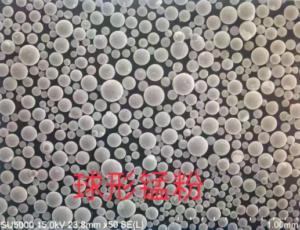
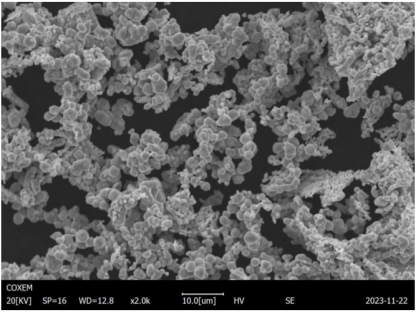
For recoating stability and consistent layer packing, morphologie sphérique is one of the most important practical features of Inconel 718 powder. High sphericity generally improves flow, reduces drag during spreading, and helps maintain repeatable powder-bed density across large build areas. Low satellite content is also useful because excessive satellites can reduce flow consistency, increase apparent interparticle friction, and complicate reuse behavior.
Particle Size Distribution and Process Fit
Finer powder fractions are usually chosen for thinner layers and higher-detail LPBF builds, while broader or coarser cuts may suit higher-throughput or directed-energy systems. The trade-off is that very fine powder can improve detail and packing but may increase sensitivity to oxygen pickup, handling losses, and safety controls. For production work, PSD is not chosen in isolation; it is selected together with layer thickness, laser power, scan strategy, and post-processing route.
Oxygen, Nitrogen, and Surface Condition
Gas content matters because oxygen and nitrogen can influence inclusions, surface oxides, and the consistency of final mechanical properties. In nickel superalloy AM, powder cleanliness is often discussed together with morphology, since a visually spherical powder can still underperform if contamination is poorly controlled. Many qualification programs therefore treat chemistry, oxygen, moisture management, and reuse history as a linked system rather than separate checkpoints.
Applications Across Industries
Where Inconel 718 Nickel Alloy Powder Performs Best
Inconel 718 nickel alloy powder is chosen most often for parts that combine geometric complexity with demanding service conditions. The alloy is especially useful when the part must survive elevated temperature, cyclic stress, and corrosive or oxidizing exposure while also benefiting from AM-enabled features such as internal cooling, thin walls, lattices, or integrated assemblies.
| L'industrie | Typical Part | Performance Driver | AM / PM Process |
|---|---|---|---|
| Aérospatiale | Brackets, ducts, engine-adjacent hardware, housings | Strength, fatigue resistance, oxidation resistance | LPBF, EBM, DED |
| Énergie et électricité | Turbomachinery components, seals, burner hardware | Heat resistance and creep-adjacent performance | LPBF, DED, HIP-assisted routes |
| Pétrole et gaz | Downhole tools, valve elements, corrosion-exposed hardware | Corrosion resistance with high mechanical reliability | LPBF, DED, PM |
| Motorsports and turbo systems | Turbo parts, manifolds, heat shields, test hardware | Thermal cycling and rapid design iteration | LPBF, DED |
| Tooling and industrial manufacturing | Hot tooling inserts, fixtures, high-heat jigs | Dimensional stability and service life at heat | LPBF, MIM, HIP |
| Nuclear and advanced research | Prototype thermal hardware, test coupons, specialized components | High-integrity metallurgy and traceability | LPBF, DED, PM |
Aerospace and Turbomachinery
Aerospace remains the most visible sector because Inconel 718 is already embedded in established design and certification cultures. AM allows internal passageways, part consolidation, and mass reduction without forcing a switch to a completely unfamiliar alloy system. Where qualification paths are conservative, a known material with a large technical data history is often preferred over a theoretically better but less documented alternative.
Energy, Oil and Gas, and Industrial Heat Service
In power-generation and process industries, the alloy is often selected for hardware that must resist a combination of heat, pressure, and environmental attack. Its value increases when conventional machining of a complex shape would be costly or when lead times for forgings are long. In these sectors, high-temperature strength must be paired with inspectability and repair planning, not just nominal tensile values.
Comparative Material Selection
Not every hot-environment AM part should use 718. Titanium alloys may be better where density reduction is critical, stainless steels may be preferred for lower-cost corrosion service, and copper alloys dominate where thermal conductivity matters more than hot strength. Teams benchmarking these alternatives often review a nickel superalloy powder range, compare it with a titanium alloy powder lineup, and keep stainless steel spherical powders in the shortlist for less severe thermal duty.
Manufacturing and Quality Assurance
How Inconel 718 Nickel Alloy Powder Is Made
Most AM-grade Inconel 718 powder is produced by atomization routes designed to yield spherical particles with low contamination. Gas atomization is the standard high-throughput route, vacuum induction gas atomization offers tighter melt environment control, and plasma rotating electrode processing is used where exceptional cleanliness and morphology are prioritized, though usually at different economic trade-offs. The manufacturing route affects not just particle shape, but also residual oxygen, satellite population, internal porosity, and lot-to-lot consistency.
| Production Route | Typical Strengths | Typical Limitations | Best-Fit Powder Use | Common Acceptance Focus |
|---|---|---|---|---|
| GA (Gas Atomization) | Scalable output, good sphericality, broad commercial availability | More satellites possible than premium routes | General LPBF, DED, PM feedstock | PSD, flow, oxygen, morphology |
| VIGA (Vacuum Induction Gas Atomization) | Better melt cleanliness and chemistry control | Higher cost than standard GA | Premium LPBF and qualification-driven powder | Low contamination, tighter chemistry |
| PREP (Plasma Rotating Electrode Process) | Very high sphericity, very clean particles, low satellites | Lower throughput, often higher cost | Specialized high-end AM powder | Morphology and inclusion control |
| Plasma atomization / specialty route | Excellent sphericality in some systems | Route-specific economics and availability | Niche advanced applications | Particle uniformity and gas content |
| Reconditioned / blended route | Can support cost optimization in managed systems | Requires strict validation | Controlled internal reuse programs only | Reuse data and contamination trend control |
Incoming and In-Process QA for Spherical AM Powder
A robust qualification plan usually includes chemistry, PSD, apparent density, tap density, Hall flow, oxygen and nitrogen, morphology imaging, and traceability by heat and batch. For critical builds, end users often add reuse-trend monitoring, cross-lot comparison, and test coupons built from the actual production machine settings. In other words, the powder certificate starts the quality discussion; it does not finish it.
Many teams use the NIST additive manufacturing research portal as a general benchmark for how metrology, feedstock control, and process validation fit together in AM. That is especially relevant for Inconel 718 because mechanical performance is shaped by the entire chain: powder quality, build parameters, stress relief, HIP if used, and final aging treatment.
Heat Treatment and Mechanical Consistency
Inconel 718 is rarely judged in the as-built state alone. The alloy’s final performance usually depends on stress relief, solution treatment or homogenization where required, and aging cycles that develop the desired precipitation structure. This is one reason supplier and customer specifications often reference not only powder data but also the targeted post-build property condition.
Documentation Buyers Should Request
For production procurement, lot-to-lot consistency is more important than one exceptionally good sample batch. A serious data package may include certificate of analysis, PSD report, flow and density data, SEM morphology images, oxygen and nitrogen results, storage and packaging details, and, when relevant, reuse guidance or prior print benchmark data. If the application is flight-adjacent or qualification-driven, retained samples and agreed change-control procedures are often just as important as nominal chemistry.
Why Choose Truer as Your Supplier
For Inconel 718 nickel alloy powder, supplier choice should be based on technical scope, process understanding, and documentation discipline rather than catalog claims alone. A useful supplier can explain the link between atomization route, particle characteristics, AM process window, and downstream post-treatment rather than discussing the powder only as a commodity metal.
Truer is relevant in this context because its published capabilities span powder-making equipment, gas atomization, PREP-related technology, and end-use processes such as SLM, SEBM, DED, laser cladding, powder metallurgy, and spraying. That wider process view is useful when a customer needs to compare not only powder chemistry but also how the feedstock will behave in different manufacturing routes or qualification programs.
Another practical factor is application breadth. Inconel 718 often sits alongside cobalt, titanium, stainless, and copper alloys during early material down-selection, especially when designers are trading off heat resistance, density, and corrosion behavior. A supplier already active across those neighboring material families is often better positioned to discuss when 718 is the correct baseline and when another alloy family is more appropriate.
Ordering Guide and Support
Information to Include in an RFQ
An effective RFQ for Inconel 718 powder should specify the intended process, target PSD, morphology preference, chemistry standard, packaging format, and whether the material is for R&D, qualification, or serial production. It should also state whether post-build requirements include HIP, aging, machining allowance, or specific mechanical property targets. The more clearly these conditions are defined, the easier it is to match the powder lot to the actual production route.
| Format d'emballage | Typical MOQ Tier | Typical Lead Time | Sample Policy |
|---|---|---|---|
| 500 g lab bottle | Screening and machine setup | 1–2 weeks if stocked | Small paid sample commonly available |
| 1 kg sealed container | Développement des processus | 1-3 semaines | Usually supplied with basic COA |
| 5 kg vacuum-packed can | Extended parameter trials | 2–4 weeks | Sample may be credited to later bulk order |
| 10–25 kg industrial lot | Pilot production and qualification | 3–6 weeks | Data package typically requested before shipment |
| Reserved batch program | Repeat or regulated production | By agreement | Retained sample and batch lock by agreement |
Sampling, Documentation, and Technical Support
For a critical alloy like 718, sample evaluation should not stop at flowability and visual morphology. Buyers usually need chemistry, gas analysis, PSD, and at least one machine-specific print trial before approving a production batch. When project requirements need to be aligned in advance, the most direct route is the powder inquiry contact page, where technical and commercial details can be defined together.
Notre entreprise
Shanghai Truer Technology Co., Ltd. was established in 2009 and created its additive manufacturing business in 2019. The company focuses on integrating 3D printing powder-making equipment and services with metal powders for engineering applications. Its technical scope includes selective electron beam melting equipment, plasma rotating electrode process powder-making equipment, and gas atomization-related capabilities, together with support for SLM, SEBM, DED, laser cladding, powder metallurgy, MIM, HIP, cold or hot spraying, welding, and coating. The powder portfolio includes TiNi, TiTa, TiAl, TiNbZr, CoCrMo, as well as nickel-based, cobalt-based, titanium-based, copper-based, aluminum-based, and stainless steel spherical metal powders. The company also participates in a joint innovation center for metal 3D printing with laboratories and external experts, serving industries such as 3C electronics, hand tools, remote control cars, medical, aerospace, and nuclear power.
FAQ
Q1. Is Inconel 718 nickel alloy powder mainly used for LPBF or for other AM processes too?
It is most commonly associated with laser powder bed fusion, but it is also used in electron beam processes, directed energy deposition, and some powder metallurgy or HIP-based routes. The ideal powder size distribution changes with the process, so buyers should specify the intended machine and build strategy before ordering.
Q2. What particle size is typical for Inconel 718 nickel alloy powder?
For LPBF, common commercial ranges are 15–45 µm and 15–53 µm. Coarser distributions such as 45–105 µm or 53–150 µm are more typical for EBM, DED, or cladding-style applications where larger particles and different delivery mechanics are acceptable.
Q3. Why is Inconel 718 easier to qualify than some other nickel superalloys?
It has a long industrial history, a broad technical data base, and a comparatively forgiving balance of printability and post-heat-treatment performance. Many higher-temperature superalloys can outperform 718 in narrow service windows, but they may be more crack-sensitive, harder to process, or less mature in additive qualification programs.
Q4. Does Inconel 718 nickel alloy powder require heat treatment after printing?
In most production cases, yes. The alloy is usually stress relieved and then aged, with or without additional solution or homogenization steps, because its final strength depends on precipitation hardening rather than on the as-built condition alone.
Q5. How important is oxygen content in Inconel 718 AM powder?
It is very important because elevated oxygen can affect oxide population, powder reuse behavior, and final part consistency. Oxygen should be reviewed together with morphology, gas atomization quality, handling conditions, and the user’s reuse policy rather than as an isolated number.
Q6. Is Inconel 718 nickel alloy powder always the best choice for hot parts?
No. It is a strong general-purpose choice for many high-value AM parts, but not always the best one. If lower density, higher thermal conductivity, lower cost, or more extreme service temperature is the main requirement, titanium, copper, stainless, or other nickel superalloys may be better matched to the application.