إجابة سريعة
CoCrW dental & implant powder is a cobalt-chromium-tungsten alloy powder used in metal additive manufacturing for dental frameworks, implant-related components, and other medical-grade parts that require high strength, wear resistance, corrosion resistance, and biocompatibility. It is the right choice for 3D printing when a manufacturer needs precise, thin-walled geometries with reliable mechanical performance after processing. In practice, it is widely selected for crowns, bridges, removable partial denture frameworks, and specialized implant hardware where dimensional accuracy and long-term oral-environment stability are both critical.
What Is CoCrW dental & implant powder?
CoCrW dental & implant powder is part of the broader cobalt-based alloy family used in medical and dental manufacturing. The name is straightforward: cobalt provides the base matrix, chromium contributes corrosion resistance through passive film formation, and tungsten supports strength and wear behavior. Depending on the exact grade, small amounts of molybdenum, silicon, manganese, iron, carbon, or nitrogen may also appear to tune processing and final properties.
Within dental manufacturing, CoCrW alloys occupy a specific niche between noble-metal dental alloys and titanium-based systems. Gold-based restorations offer excellent corrosion behavior and established clinical use, but they are expensive and mechanically different. Titanium is highly biocompatible and common in implants, yet cobalt-chromium-tungsten remains preferred for many dental prosthetic frameworks because it combines stiffness, abrasion resistance, castability traditions, and modern powder-bed printability in one material platform.
The phrase “dental & implant powder” also deserves clarification. Not every cobalt-chromium powder is automatically appropriate for oral or medical use. Powder intended for dental and implant-related applications is generally expected to meet tighter controls for chemistry, cleanliness, particle morphology, traceability, and downstream validation. In metal AM, those requirements extend beyond the alloy itself to include process controls, post-processing, and documentation that support regulated manufacturing.
Historically, cobalt-chromium alloys became deeply established in dentistry through casting routes for partial denture frameworks and fixed restorations. Additive manufacturing did not replace that metallurgical foundation; it modernized it. Laser powder bed fusion, in particular, enabled dental labs and medical manufacturers to move from wax patterns and investment casting toward digital design, nested production, and repeatable thin-section builds.
A key reason the alloy remains relevant is elastic modulus. Compared with many titanium alloys, cobalt-chromium systems are stiffer, which can be advantageous in long-span bridges, slender frameworks, and parts that must resist deformation during function. At the same time, the alloy’s chromium-rich passive layer helps it tolerate the complex corrosive conditions of the oral cavity, where chloride-bearing saliva, fluctuating pH, and food-related chemistry all matter.
In dental additive manufacturing, material choice is not only about strength; it is about how well a printed geometry survives years of cyclic loading, polishing, and oral exposure.
Another useful distinction is between CoCrMo and CoCrW terminology. Some suppliers and users refer broadly to cobalt-chromium dental powders even when one grade is tungsten-bearing and another is molybdenum-bearing. In dental procurement, that shorthand can create confusion. The buyer should confirm whether the target chemistry is truly a tungsten-bearing CoCrW alloy, a CoCrMo alloy used in similar indications, or a supplier-specific cobalt-chromium formulation qualified for dental and implant workflows.
Chemical Composition and Material Grade
CoCrW Dental & Implant Powder Chemistry Basics
The most important elements in CoCrW dental & implant powder are cobalt, chromium, and tungsten, but the balance between them determines the alloy’s behavior in processing and service. Chromium is essential for passivation. Tungsten generally improves strength and wear resistance, while carbon must be kept under control because it influences carbide formation, hardness, and possible brittleness if the alloy chemistry and thermal cycle are not well managed.
For dental AM, chemistry targets are often shaped by legacy dental alloy standards, implant alloy references, and internal quality specifications. That is why buyers should not assume that a cobalt-chromium powder sold for industrial wear parts is suitable for regulated dental or implant-related use without a proper grade declaration.
Composition and Grade Cross-Reference
The table below summarizes representative chemistry windows and how buyers typically cross-reference material grades. Exact designation can vary by product form, region, and whether the powder is intended for dentistry, orthopedic applications, or general AM use.
| Alloy / Commercial Type | Typical Composition (wt.%) | ASTM / F-Standard Reference | AMS Reference | GB / China Reference | ISO Reference | DIN / EN Reference |
|---|---|---|---|---|---|---|
| Dental CoCrW alloy powder | Co balance; Cr 24–30; W 7–10; Mo 0–5; Si ≤2; Mn ≤1; C controlled | Often aligned through supplier declaration to dental/medical cobalt alloy chemistry expectations rather than a single universal powder ASTM number | No common dedicated AMS dental powder designation | Supplier or enterprise specification | Often evaluated against dental alloy requirements such as ISO 22674, depending on end use | Frequently compared with dental CoCr alloy classes used in Europe |
| CoCrMo medical AM powder | Co balance; Cr 26–30; Mo 5–7; W low or none; C controlled | Commonly associated with [ASTM F75 cobalt alloy specification] for cast alloy chemistry context | AMS references depend on wrought or specialty product form | Supplier specification | Used for comparison against implant and surgical alloy practice | Compared with EN cobalt-chromium-molybdenum alloy families |
| Tungsten-bearing dental framework alloy | Co balance; Cr 25–29; W 8–10; Mo 2–5; Fe, Ni low; C low | Customer drawing or powder specification | Not typically AMS-controlled in dental lab sourcing | Supplier specification | Often cross-checked against [ISO 22674 dental metallic materials] by intended prosthetic class | Often mapped to dental prosthetic alloy categories |
| Medical-grade cobalt alloy powder for AM | Co balance; Cr 25–30; W or Mo varies by grade; trace elements tightly controlled | Qualification often relies on internal AM specification plus chemistry certificate | Not usually ordered by AMS number in dental practice | Supplier specification | Process and part validation commonly sit beside [ISO/ASTM 52900 terminology] for AM definitions | Supplier specification |
This overview shows why grade language must be handled carefully. A dental laboratory may ask for CoCrW powder because that is the established commercial term in its workflow, while a medical manufacturer may trace the alloy back to a more formal chemistry family or validation standard. Those are related but not identical procurement paths.
Why Grade Clarity Matters in Medical and Dental AM
In regulated or semi-regulated manufacturing, the powder certificate is only one layer of conformity. The final part is also affected by machine platform, scan strategy, heat treatment, support removal, polishing, and cleaning. That is why medical-grade traceability should include batch identity, chemical analysis, particle-size data, and process history rather than relying on alloy name alone.
CoCrW Versus CoCrMo in Practice
From a buyer’s perspective, CoCrW and CoCrMo can overlap in use cases, especially in dental frameworks. The practical difference often comes down to the property balance targeted by the manufacturer and the qualification history of the specific part family. A well-defined dental specification should state whether tungsten is a primary strengthening addition, whether molybdenum is present as a secondary element, and what post-build route was validated.
المواصفات الفنية
Typical Powder Characteristics for CoCrW Dental & Implant Powder
Powder performance for dental AM depends heavily on flowability, particle shape, and consistency from lot to lot. Laser powder bed fusion systems used by dental labs and contract manufacturers generally favor fine, highly spherical powder with predictable spreading behavior, because small prosthetic parts are sensitive to recoating defects and contour instability.
| Powder Use Case | Typical PSD | الكثافة الظاهرة | كثافة الحنفية | Hall Flow | محتوى الأكسجين | الكروية |
|---|---|---|---|---|---|---|
| Fine dental LPBF grade | 10–30 µm | 4.2–4.8 g/cm³ | 5.0–5.8 g/cm³ | 16–24 s/50 g | 300–800 ppm typical | High, near-spherical |
| Standard dental AM powder | 15–45 µm | 4.3–4.9 g/cm³ | 5.1–5.9 g/cm³ | 15–22 s/50 g | 300–900 ppm typical | High, low satellite content |
| Broader medical AM powder | 15–53 µm | 4.2–4.8 g/cm³ | 5.0–5.8 g/cm³ | 15–23 s/50 g | 300–1000 ppm typical | Spherical to near-spherical |
| DED / cladding cobalt alloy grade | 45–105 µm | 4.4–5.0 g/cm³ | 5.2–6.0 g/cm³ | 14–21 s/50 g | 400–1200 ppm typical | Spherical, process-stable |
These values are typical commercial ranges rather than universal fixed limits. Exact acceptance windows depend on machine type, validated build parameters, and whether the powder is intended for crowns and bridges, removable frameworks, or non-dental cobalt AM applications.
Particle Size Distribution for Dental 3D Printing Powder
Fine particle-size distributions help achieve thin layers and better detail resolution in occlusal anatomy, margins, clasp structures, and lattice-like support interfaces. That said, excessively fine powder may become harder to handle safely and can show less forgiving flow behavior if humidity control is poor. A balanced PSD is therefore a process decision, not just a numerical target.
Flow, Spreadability, and Build Consistency
من أجل spherical dental AM powder, consistent layer deposition is critical because small defects can translate directly into misfit margins, rough internal surfaces, or extra finishing time. Apparent density and Hall flow are not complete descriptors of printability, but they remain useful screening metrics for incoming inspection. Many advanced users complement them with microscopy, image analysis, and machine-side spreading trials.
Oxygen and Surface Condition
Cobalt-chromium alloys are less oxygen-sensitive than titanium in some handling respects, yet surface chemistry still matters. Elevated oxygen or contamination can influence melt behavior, inclusion content, and surface finish. In dental and implant-related manufacturing, that becomes especially important because the final part often undergoes polishing, porcelain bonding, or contact with biological environments where consistency matters more than nominal strength alone.
Printed Part Properties Depend on More Than Powder
Even excellent powder will not guarantee the same result across all machines. Scan strategy, laser energy density, hatch spacing, layer thickness, stress-relief treatment, and support removal all affect density and microstructure. In dental AM, fit accuracy and surface quality are often commercially as important as tensile data, which means powder selection must be aligned with the whole validated workflow.
Applications Across Industries
Where CoCrW Dental & Implant Powder Is Used
The strongest demand for CoCrW dental & implant powder comes from dental laboratories, medical device manufacturing, and specialized prototyping environments. The alloy is especially suited to parts that combine thin-wall geometry, functional wear resistance, and the need for corrosion stability in oral or body-adjacent service.
| الصناعة | Typical Part | Service Driver | AM / PM Process |
|---|---|---|---|
| Dental laboratories | Crowns, bridges, copings | Precision fit, strength, porcelain support | LPBF, PM |
| Removable prosthetics | Partial denture frameworks, clasps, connectors | High stiffness, fatigue resistance, polishability | LPBF, casting-feed powder comparison, PM |
| Medical manufacturing | Implant instruments, surgical guides with metal interfaces, specialized implant hardware | Strength, corrosion resistance, cleanability | LPBF, MIM |
| Research and university labs | Material coupons, framework prototypes, design validation parts | Process development and benchmarking | LPBF, PM |
| Contract manufacturing | High-mix dental batches, customized restorative structures | Repeatability at scale | LPBF |
| Surface engineering and repair | Cobalt-based wear/corrosion overlays for tools or medical-adjacent hardware | Hardness and wear support | DED, laser cladding |
Dental Restorations and Prosthetic Frameworks
This is the most established application area. CoCrW powder is widely associated with fixed and removable prosthetic structures because the alloy can support thin sections, retain stiffness over long spans, and tolerate polishing and intraoral service. Dental labs value the ability to print multiple individualized parts in one build while maintaining predictable nesting and repeatability.
Implant-Related Components and Surgical Hardware
For implant-related manufacturing, the word “implant” must be interpreted carefully. Some components are long-term implanted parts, while others are temporary instruments, abutment-adjacent pieces, scan-body systems, or ancillary medical hardware. Qualification requirements differ across those categories, so the powder specification must match the intended regulatory pathway and end-use exposure.
Broader Medical and Engineering Use
Although the keyword is dental and implant focused, cobalt-chromium-tungsten powder also appears in non-dental settings that value wear resistance and corrosion behavior. In those cases, the same spherical powder engineering used for medical AM can translate into tooling, precision industrial components, and specialized prototypes. For buyers comparing materials, a broader [cobalt alloy powder range] often sits alongside [titanium powder grades] for implant-led applications and [stainless steel powder options] for lower-cost prototyping routes.
Why AM Fits CoCrW Parts So Well
Additive manufacturing is particularly effective when a part is customized, geometry-dense, or produced in many individualized variations. Dental restorations and framework components match that pattern exactly. Digital workflow, scan-based design, and nested LPBF production reduce manual wax-up steps and help standardize output across repeated cases.
Manufacturing and Quality Assurance
How CoCrW Dental & Implant Powder Is Commonly Produced
For dental and implant-related powder, the manufacturing route shapes the morphology, cleanliness, and consistency of the feedstock. Gas atomization is common because it can produce spherical powder efficiently at industrial scale. Vacuum-assisted or controlled-atmosphere approaches are often preferred when contamination control and chemistry stability are especially important.
| Production / QA Focus | Typical Method or Instrument | What It Checks | Typical Acceptance Direction |
|---|---|---|---|
| التركيب الكيميائي | ICP-OES, combustion analysis, elemental analyzers | Co, Cr, W, Mo, C, O, N, S and trace elements | Within declared alloy window and impurity limits |
| توزيع حجم الجسيمات | Laser diffraction or sieve analysis | D10, D50, D90 or cut-range compliance | Matches ordered PSD, low oversize and fines drift |
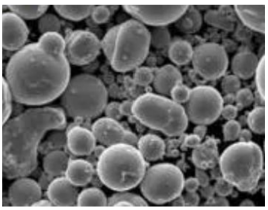
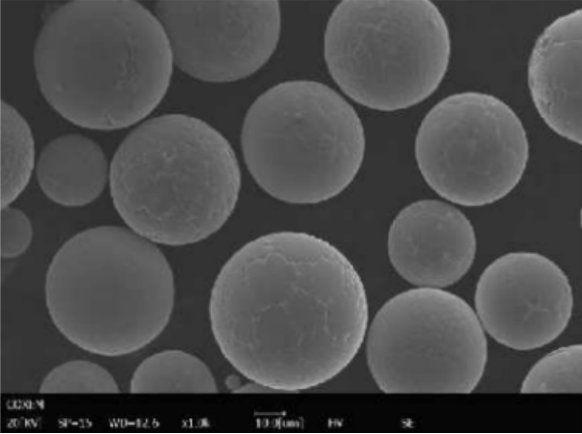
| Morphology and satellites | SEM or optical image analysis | Sphericity, satellites, surface condition | Predominantly spherical, limited agglomeration |
| Flow and bulk behavior | Hall flowmeter, apparent and tap density tools | Spreadability and packing consistency | Stable flow and density in validated range |
| Cleanliness and reuse trend | Lot review, powder aging data, contamination checks | Reuse suitability and batch stability | Controlled drift over validated reuse cycles |
Quality Risks Specific to Dental AM Powder
Dental AM parts are small, detailed, and economically sensitive to rework. That means even subtle powder issues can produce oversized margins, poor clasp flexibility, surface roughness, or failed support interfaces. A powder that prints adequately for general industrial coupons may still be unsuitable for dental production if it lacks the consistency needed for dense nesting and thin-wall reliability.
Build Validation Must Extend Beyond Powder COA
A certificate of analysis is necessary, but it does not certify a finished prosthesis. Dental and implant-related components should be validated through the complete process chain, including print orientation, support strategy, heat treatment, removal, finishing, and cleaning. For general AM definitions and process language, many quality teams rely on the [NIST additive manufacturing materials program] and related terminology from international standards bodies.
Porcelain Bonding, Finishing, and Surface Integrity
In dental frameworks, the alloy’s role does not end when the build plate leaves the machine. Surface roughness, oxide behavior, and finishing response can influence polishing time and, in porcelain-fused systems, the quality of the downstream ceramic bond. That is why powder-to-part consistency matters more than isolated test coupons printed under idealized conditions.
Reuse, Sieving, and Powder Lifecycle Control
Powder reuse is common in dental AM because the parts are small and the business model rewards material efficiency. However, reuse protocols must be disciplined. Repeated thermal exposure, sieving history, and contamination drift can change flow and oxidation behavior over time, so a validated reuse window is essential for stable production.
Why Choose Truer as Your Supplier
When evaluating a supplier for CoCrW dental & implant powder, the main questions are whether the supplier can control spherical powder characteristics, whether it understands AM process differences, and whether it can support traceable batch supply rather than offering a generic cobalt alloy. That is more important than marketing language, especially when dental or medical documentation is involved.
Truer is relevant in this context because its disclosed capabilities include gas atomization, PREP-related technology, and additive manufacturing process coverage spanning SLM, SEBM, DED, laser cladding, and powder metallurgy routes. Even though dental LPBF is the primary use case for this alloy, broader process knowledge matters because qualification, repair, prototyping, and scale-up often cross over between powder routes and end-use sectors.
Another practical advantage is portfolio breadth. Buyers comparing cobalt-chromium dental powders often also assess titanium, stainless, or nickel materials for adjacent parts or other product lines. A supplier active across [nickel-based metal powder products], cobalt systems, titanium systems, and stainless powder families can support those parallel evaluations more coherently than a single-alloy vendor.
Ordering Guide and Support
Information to Include in a CoCrW Dental & Implant Powder RFQ
A strong RFQ should specify the intended part family, machine type, target PSD, required documentation level, and whether the powder will be used for parameter development, production validation, or routine batch manufacturing. If implant-related use is planned, the buyer should also define whether the part is long-term implanted, temporary, or tooling-adjacent, because those categories can require different qualification depth.
| Packaging Format | Typical MOQ Tier | Typical Lead Time | Sample Policy |
|---|---|---|---|
| 250 g trial bottle | Early screening and lab evaluation | 1–2 weeks if available | Paid sample, limited data package |
| 500 g dental trial pack | Parameter tuning and benchmark builds | 1-3 أسابيع | Often supplied with basic chemistry and PSD report |
| 1 kg sealed canister | Extended case validation | 2–4 أسابيع | Sample lot may convert into later order |
| 5 kg production support pack | Pilot or recurring dental production | 3-5 أسابيع | Retained sample often available on request |
| 10–25 kg batch supply | Contract manufacturing or multi-machine production | 4-6 أسابيع | Batch reservation and traceability review by agreement |
Sample Testing Strategy
For this alloy, sample approval should include both powder characterization and actual printed part checks. Labs typically review chemistry, flow, and morphology first, then print test frameworks or coupons to verify density, fit behavior, finishing response, and if relevant, bond performance in downstream ceramic workflows. That approach is more useful than selecting a powder by nominal chemistry alone.
Documentation and Communication
Technical support is most effective when the buyer provides the intended machine platform, layer thickness, and end-use category up front. If a project needs batch-level discussion, sample coordination, or process-fit review, the [powder inquiry and contact page] is the practical place to define those requirements before ordering.
شركتنا
Shanghai Truer Technology Co., Ltd. was established in 2009 and created its additive manufacturing business in 2019. The company works on integrating 3D printing powder-making equipment and services with metal powders for engineering applications. Its technical scope includes selective electron beam melting equipment, plasma rotating electrode process powder-making equipment, and gas atomization-related capabilities, together with support for SLM, SEBM, DED, laser cladding, powder metallurgy, MIM, HIP, cold or hot spraying, welding, and coating. The powder portfolio includes TiNi, TiTa, TiAl, TiNbZr, CoCrMo, as well as nickel-based, cobalt-based, titanium-based, copper-based, aluminum-based, and stainless steel spherical metal powders. The company also participates in a joint innovation center for metal 3D printing with laboratories and external experts, serving industries such as 3C electronics, hand tools, remote control cars, medical, aerospace, and nuclear power. Company background and capability context are outlined on the [Truer company profile page].
التعليمات
Q1. Is CoCrW dental & implant powder biocompatible enough for oral applications?
It is commonly used in dental manufacturing because cobalt-chromium alloy systems have a long clinical and technical history in oral prosthetics. However, actual suitability depends on the exact grade, manufacturing route, surface finish, and regulatory validation of the finished part rather than the alloy name alone.
Q2. What is the difference between CoCrW dental powder and CoCrMo powder?
The main difference is the strengthening chemistry. CoCrW uses tungsten as a key alloying element, while CoCrMo relies more heavily on molybdenum; both belong to cobalt-chromium alloy families, but their property balance and qualification history can differ. Buyers should verify the exact chemistry requested by the dental workflow or validated part file.
Q3. What particle size is best for CoCrW dental & implant powder in LPBF systems?
For many dental laser powder bed fusion systems, fine cuts such as 10–30 µm or 15–45 µm are typical. The best choice depends on layer thickness, recoater behavior, machine settings, and the level of detail required in crowns, bridges, and removable framework structures.
Q4. Can CoCrW dental & implant powder be used for permanent implants?
It can be used in implant-related manufacturing, but the answer depends on the exact part type and regulatory pathway. Some applications involve long-term implanted components, while others involve temporary, adjacent, or instrumental parts; each category requires its own validation and documentation standard.
Q5. Does CoCrW dental & implant powder require heat treatment after printing?
In most production workflows, yes. Stress relief or other post-print thermal steps are commonly used to manage residual stress, support removal behavior, and microstructural consistency. The exact cycle should be validated for the machine, geometry, and end-use indication.
Q6. Is CoCrW powder better than titanium for all dental and implant applications?
No. Cobalt-chromium-tungsten alloys are often preferred for stiff prosthetic frameworks and wear-resistant dental structures, while titanium remains highly important for many implant-focused and lightweight medical uses. Material selection should be based on geometry, clinical function, post-processing route, and the validated manufacturing standard for the part.