Respuesta rápida
spherical IN939 powder is a nickel-based superalloy powder developed for additive manufacturing and other powder-processing routes that require strong high-temperature performance. It is chosen for 3D printing parts that must withstand oxidation, hot corrosion, and long exposure to elevated temperatures better than more general nickel alloys. In practice, spherical IN939 powder is most relevant for turbine-related hardware, combustor-zone parts, repair builds, and industrial components where powder flow, dense deposition, and thermal stability directly affect service life.
What Is spherical IN939 powder?
Spherical IN939 powder is the powder form of Inconel 939, often abbreviated as IN939, a precipitation-strengthened nickel-based superalloy used in demanding thermal environments. The alloy is known in gas turbine and hot-section engineering because it combines oxidation resistance, hot-corrosion resistance, and useful creep strength at elevated temperature. As a powder, it becomes suitable for additive manufacturing, laser cladding, powder metallurgy, and selected repair workflows where feedstock consistency is critical.
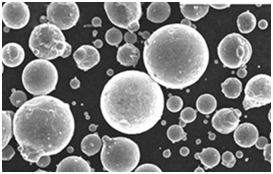
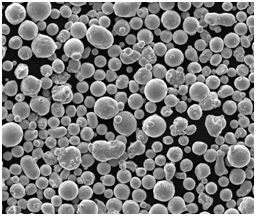
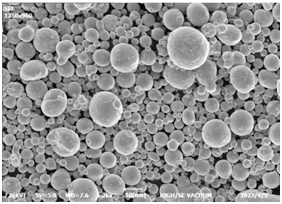
The phrase “spherical” refers to particle morphology rather than alloy chemistry. In powder-based manufacturing, particle shape affects how the material spreads, packs, and flows through hoppers or feeders. A more spherical powder typically gives better layer uniformity in powder bed systems and more stable delivery in directed energy deposition. That is why morphology is treated as a processing variable, not just a descriptive label.
IN939 belongs to a family of nickel superalloys strengthened by gamma-prime precipitation. Unlike lower-strength nickel grades that are selected primarily for corrosion resistance, this alloy exists to retain useful mechanical properties under heat and stress. Chromium supports oxidation and hot-corrosion resistance, while cobalt, tungsten, tantalum, titanium, and aluminum contribute to the strength and stability needed in aggressive service conditions.
For additive manufacturing engineers, spherical IN939 powder occupies a higher-performance niche than general-purpose nickel powders. The alloy is attractive when service temperature drives material selection, but it is also less forgiving during process development. Crack control, thermal history, heat treatment, and feedstock quality all matter more than they might for simpler alloys.
A useful reference point for process language is the [ISO/ASTM 52900 terminology for additive manufacturing], which frames how powder-based AM is discussed across industries. In that context, spherical IN939 powder is not just a raw material; it is part of a controlled manufacturing system that includes powder characteristics, machine parameters, atmosphere control, and post-processing.
Why IN939 matters in the superalloy category
IN939 has long been associated with hot-section applications where metal temperature, oxidation, and mechanical loading occur together. In such environments, choosing an alloy is not only about room-temperature strength or corrosion resistance in isolation. It is about preserving geometry, resisting microstructural degradation, and surviving repeated thermal exposure without unacceptable loss of performance.
That is why IN939 remains relevant in powder form. Additive manufacturing makes it possible to create complex geometry, restore high-value parts, or build localized features without relying exclusively on conventional casting routes. For repair and advanced manufacturing programs, spherical IN939 powder brings the alloy’s established high-temperature pedigree into more flexible production workflows.
How spherical IN939 powder differs from other AM powders
Not all nickel-based powders serve the same purpose. IN939 is generally specified when the operating environment is hotter and more severe than what corrosion-focused grades are designed to handle. Compared with easier-to-process nickel alloys, it offers stronger elevated-temperature capability but also demands tighter control of oxygen, morphology, particle size distribution, and thermal processing.
The contrast becomes clearer when compared with unrelated AM powder families. Titanium powders target lightweight structural performance, copper alloys are favored for thermal or electrical conductivity, and cobalt systems often address wear and corrosion in a different way. By comparison, spherical IN939 powder is selected primarily for thermal endurance in aggressive gas-path or heat-exposed conditions.
Where the powder form is especially useful
Spherical IN939 powder is practical in laser powder bed fusion, directed energy deposition, laser cladding, and some powder metallurgy development work. It is especially relevant where the finished part or repaired zone must maintain integrity under heat rather than merely achieve near-net shape. This is why users in aerospace, industrial turbines, energy systems, and maintenance repair programs often assess the alloy.
For procurement teams comparing multiple nickel feedstocks, a broader [nickel alloy powder portfolio] helps place IN939 in context. It shows where high-temperature superalloys differ from more general nickel materials and why powder specification for IN939 usually emphasizes morphology, contamination control, and process matching.
Composición química y calidad del material
The performance of spherical IN939 powder comes from its chemistry. In nickel superalloys, small changes in alloying additions can significantly affect gamma-prime formation, hot-corrosion resistance, oxidation behavior, and crack sensitivity during processing. That makes composition control one of the first checkpoints in powder qualification.
Typical composition and grade cross-reference
| Element / Grade Reference | Typical wt.% | Metallurgical Function | Cross-Reference Note |
|---|---|---|---|
| Níquel (Ni) | Saldo | Matrix phase | Base of the alloy system |
| Cromo (Cr) | 22.0–23.0 | Oxidation and hot-corrosion resistance | Characteristic high-Cr superalloy addition |
| Cobalto (Co) | 18.0–19.0 | Matrix stability and hot strength | Important for elevated-temperature capability |
| Tungsteno (W) | 1.8–2.3 | Solid-solution strengthening | Supports hot strength and creep resistance |
| Molibdeno (Mo) | 0.4–0.9 | Secondary strengthening | Lower than in some other nickel alloys |
| Tántalo (Ta) | 1.2–1.8 | Gamma-prime support | Helps retain strength at temperature |
| Aluminio (Al) | 1.7–2.0 | Gamma-prime former | Essential to precipitation hardening |
| Titanio (Ti) | 3.3–3.9 | Gamma-prime former | Major contributor to strengthening |
| Niobio (Nb) | 0.6–1.2 | Supplemental strengthening | Controlled addition |
| Carbono (C) | 0.10–0.18 | Carbide formation | Influences grain-boundary behavior |
| Boro (B) | 0.005–0.02 | Grain-boundary strengthening | Minor but highly influential element |
| Circonio (Zr) | 0.03–0.08 | Grain-boundary conditioning | Tight control preferred |
| Hierro (Fe) | ≤1.0 typical | Residual / controlled element | Usually kept low |
| Silicio (Si) | ≤0.5 typical | Elemento residual | Controlled impurity level |
| Manganeso (Mn) | ≤0.5 typical | Elemento residual | Controlled impurity level |
| ASTM / AMS / GB / ISO / DIN | - | Usually supplied to producer or buyer specification | No single universal AM powder standard covers every delivery |
The table above reflects widely recognized nominal chemistry windows used in industry discussions of IN939. For AM powders, however, the nominal alloy composition is only part of the specification. The usable material is defined by chemistry plus particle size, morphology, cleanliness, and documentation.
Composition control in spherical IN939 powder
The chemistry of spherical IN939 powder is built around gamma-prime strengthening, which is the key reason the alloy performs well in high-temperature service. Aluminum and titanium form the precipitate phase responsible for much of the alloy’s strength retention under heat. Cobalt, tungsten, tantalum, and niobium further reinforce the system, while chromium helps protect the material from oxidation and hot corrosion.
This chemistry also explains why the alloy can be more demanding to print or deposit than simpler nickel materials. The same features that improve hot strength can make process optimization narrower. As a result, composition must be kept within a stable range not only for bulk properties but also for repeatable AM behavior.
Grade naming and real-world procurement
IN939 is commonly recognized by alloy name in technical discussions, but powder purchasing often relies on supplier technical specifications or project-defined requirements rather than a single all-purpose powder standard. That is normal in metal AM. A well-known wrought or cast alloy may have broad metallurgical recognition even when its powder form is sold under tighter, application-specific qualification rules.
For critical parts, engineering teams usually define the full purchase language themselves. That language may include chemistry windows, maximum gas levels, PSD range, test methods, packaging atmosphere, and certificate requirements. In that sense, the “grade” of spherical IN939 powder is often the combination of alloy identity and powder-performance envelope.
Why trace impurities matter
Trace oxygen, nitrogen, moisture exposure, and nonmetallic contamination can have outsized effects in advanced powder applications. Even when the bulk alloy chemistry looks acceptable, surface contamination may alter melting behavior or increase defect risk. This is especially relevant for high-performance nickel powders intended for dense AM parts or repair work in safety-critical environments.
Because of that, the chemistry discussion should never be separated from powder handling and packaging. An alloy as capable as IN939 still depends on disciplined feedstock control to deliver useful results in the machine.
Especificaciones técnicas
Technical specifications determine whether spherical IN939 powder behaves consistently in production. The alloy may be correct on a chemistry certificate, but if the particle size distribution, flow behavior, or surface condition is poor, the part-building process can become unstable. This is why powder specs are treated as process-enabling data rather than simple catalog values.
Typical technical specification for spherical IN939 powder
| Parámetro | 15–53 µm | 45-105 µm | 53–150 µm | Typical Comment |
|---|---|---|---|---|
| Aplicación típica | LPBF / fine-feature AM | DED / laser cladding | DED / larger deposition | Process dependent |
| D10 | 15–20 µm | 45–55 µm | 53–65 µm | Laser diffraction typical |
| D50 | 28–35 µm | 68–80 µm | 88–105 µm | Median particle size typical |
| D90 | 48–53 µm | 100–105 µm | 145–150 µm | Upper cut control |
| Densidad aparente | 4.5–5.1 g/cm³ | 4.7–5.3 g/cm³ | 4.8–5.4 g/cm³ | Morphology dependent |
| Densidad del grifo | 5,0–5,8 g/cm³ | 5.2–5.9 g/cm³ | 5.3–6.0 g/cm³ | Packing behavior typical |
| Flujo Hall | 13–20 s/50 g | 11–18 s/50 g | 10–17 s/50 g | Typical for well-formed spherical powder |
| Contenido en oxígeno | ≤0.03 wt.% typical | ≤0.03 wt.% typical | ≤0.04 wt.% typical | Final limit by agreement |
| Contenido en nitrógeno | ≤0.02 wt.% typical | ≤0.02 wt.% typical | ≤0.02 wt.% typical | Low gas pickup preferred |
| Esfericidad | ≥0.93 typical | ≥0.93 typical | ≥0.93 typical | Image-analysis basis |
| Satellite content | Low typical | Low typical | Low typical | Important for process consistency |
| Moisture condition | Dry sealed pack | Dry sealed pack | Dry sealed pack | Storage discipline required |
These values are representative rather than universal. The exact specification for a commercial lot of spherical IN939 powder depends on the production route, the classification cut, the intended process, and the buyer’s acceptance criteria. Still, the ranges above reflect the kind of industrial targets that engineers commonly expect for high-quality AM feedstock.
Spherical powder behavior in additive manufacturing
spherical powder morphology affects more than flowability numbers on a data sheet. In powder bed systems, better roundness supports smoother recoating and more uniform layer packing. In feeder-based processes, it improves conveyance stability, which helps reduce pulsing, nozzle blockage, and erratic deposition tracks.
This is why powder evaluation should combine PSD data with microscopy, density measurements, and flow testing. A powder can meet a nominal size window yet still perform poorly if it has excessive satellites or too many irregular particles. For spherical IN939 powder, morphology is inseparable from process reliability.
Choosing the right PSD for the process
Finer size cuts such as 15–53 µm are generally used in laser powder bed fusion because thin layers and recoater behavior favor smaller particles. Coarser cuts such as 45–105 µm or 53–150 µm are more typical in directed energy deposition and laser cladding because feeder transport and melt-pool capture respond differently than a powder bed does.
The correct choice depends on machine architecture, laser power, build strategy, and desired deposition rate. Buyers should therefore specify the intended manufacturing route at the inquiry stage. Ordering by alloy name alone is rarely sufficient for advanced superalloy powder.
Why oxygen and flow metrics matter
low oxygen content helps preserve predictable melting and reduces the risk of contamination-related issues in dense AM parts. Flow behavior matters for a more practical reason: poor flow leads directly to inconsistent powder layers or unstable feeder output. When those issues occur, it is easy to blame machine settings even though the root cause may be the powder.
Apparent density and tap density also deserve attention because they indicate how the powder packs before melting. Stable packing tends to support more uniform energy absorption and reduced variation in part density. For engineers comparing other metal systems, a broader [stainless steel powder selection] shows how the same powder metrics are used across different alloy families, even though superalloys usually demand tighter contamination control.
Aplicaciones en distintos sectores
Spherical IN939 powder is not a universal solution for every AM part. It is selected when the thermal duty of the component is severe enough to justify a high-performance nickel superalloy. The best applications are those where oxidation resistance, hot corrosion resistance, and retained strength at elevated temperature translate directly into operational value.
Typical applications for spherical IN939 powder
| Industria | Typical Part | AM / PM Process | Why the Alloy Is Selected |
|---|---|---|---|
| Aeroespacial | Combustor hardware, shrouds, hot-section brackets | LPBF, DED, repair cladding | Resistencia a altas temperaturas y a la oxidación |
| Turbinas de gas industriales | Vanes, seal features, transition components | DED, laser cladding | Hot corrosion resistance and thermal durability |
| Generación de energía | Burner parts, high-heat fixtures, thermal housings | DED, PM | Stability in hot gas environments |
| Maintenance and repair | Tip rebuilds, dimensional restoration, local reinforcement | DED, cladding | Material compatibility for high-value parts |
| Energy equipment | Heat-resistant structural zones | AM and PM development | Retained properties at service temperature |
| Research and qualification labs | Coupons, parameter studies, benchmark builds | LPBF, DED | Superalloy process-window development |
The strongest application case is in turbine-related environments. There, material selection is driven less by convenience and more by the need to survive repeated heat exposure without rapid loss of strength or surface degradation. In such use cases, spherical IN939 powder offers a combination of alloy pedigree and manufacturing flexibility.
Aerospace and turbine hot-section use
Aerospace programs often look at IN939 where combustor or hot-section components experience prolonged thermal exposure. Additive manufacturing can support prototype geometry, spare-part strategies, or localized repair approaches that would be slower or more expensive through conventional routes alone. The same logic applies in industrial gas turbines, where repair and uptime economics can justify the use of advanced deposition powders.
The alloy is especially relevant when thermal margins are narrow. If a part must keep its function under repeated cycling, alloy selection becomes inseparable from lifecycle planning. Spherical IN939 powder is therefore often evaluated not just as a material, but as part of a maintenance or qualification strategy.
Repair and feature addition
One of the most practical uses for spherical IN939 powder is in directed energy deposition or laser cladding for component restoration. Instead of replacing an entire high-value part, manufacturers may rebuild a worn edge, restore dimensions, or add material to a localized high-heat region. That can reduce waste while preserving compatibility with the base component.
Feature addition is another useful path. Cooling-adjacent features, reinforcement zones, or design modifications can sometimes be introduced with AM or cladding methods where conventional machining or casting changes would be more complex. The powder route gives engineers more flexibility, provided that heat treatment and metallurgical compatibility are addressed.
In high-temperature AM, the powder is not simply a consumable; it is part of the component’s final performance envelope.
When another alloy family may be better
Not every harsh service environment points to IN939. Wear-dominant conditions without sustained heat may lean toward [cobalt-based alloy powders] instead. Lightweight structures may push designers toward [titanium alloy powder grades], and conductivity-driven applications belong more naturally to copper systems.
This comparison matters because spherical IN939 powder is a specialist material. It offers real value where heat resistance is central, but it should be selected because the service environment demands it, not because it is merely available.
Fabricación y control de calidad
How spherical IN939 powder is made has a direct influence on how it performs. Powder production route affects morphology, satellite content, chemistry control, and contamination risk. In nickel superalloys, those differences can be significant enough to change AM process stability and final-part outcomes.
Powder-making routes relevant to IN939
| Production Route | Typical Particle Shape | Relative Cleanliness | Main Advantage | Main Limitation |
|---|---|---|---|---|
| Gas Atomization (GA) | Esférico a casi esférico | Good with inert control | Scalable, commercially practical, widely used | Satellite level depends on process control |
| Proceso de electrodo rotatorio de plasma (PREP) | Muy esférica | Muy alta | Excellent morphology and low contamination | Higher cost and different yield profile |
| Vacuum Induction Gas Atomization (VIGA) | Esférica | Muy buena | Strong chemistry control with vacuum melting | Equipment-intensive production route |
| Plasma-based specialty routes | Spherical refined fractions | Alta | Useful for premium feedstock tailoring | Narrower availability and higher cost |
Gas atomization is common because it balances volume capability with good morphology. For many AM and cladding applications, a well-controlled GA route produces spherical IN939 powder with the flow and size consistency needed for industrial use. PREP is often discussed when especially high sphericity and cleanliness are priorities, while VIGA can offer stronger melt-quality control for sensitive high-performance alloys.
Why route selection matters
Different powder-making routes generate different particle surfaces, internal porosity tendencies, and satellite profiles. Those differences may appear subtle during inspection but can become important in powder spreading, feeder transport, or melt behavior. For a demanding superalloy such as IN939, route selection is not an academic detail.
A buyer qualifying powder for repair cladding may prioritize consistent feeder behavior and clean chemistry. A buyer preparing LPBF coupon trials may focus more heavily on fine-cut yield, spreadability, and low oxygen. In both cases, the production route influences whether the powder can meet the intended use without excessive downstream screening or reclassification.
Quality assurance points that should be defined
A meaningful quality package for spherical IN939 powder usually includes chemistry, particle size distribution, morphology review, apparent density, tap density, flowability, and gas content. Many buyers also request certificate traceability to heat and lot. For critical work, retained samples and packaging-atmosphere controls may be added.
The language used in specifications often aligns with recognized technical frameworks such as the [ASTM materials standards platform] and broader materials references like the [NIST materials data resources]. These sources do not replace part qualification, but they help standardize how tests and acceptance terms are written.
From powder quality to part quality
A stable powder supports a stable process, and a stable process is more likely to produce predictable microstructure and density. When lot-to-lot variability is high, the machine may appear inconsistent even when parameters are held constant. This is one reason advanced AM users treat incoming powder inspection as part of process control rather than only as receiving paperwork.
For IN939 specifically, quality assurance is closely tied to risk management. The hotter and more demanding the final application, the more valuable tight powder control becomes. Feedstock variability that is tolerable in low-temperature parts may be unacceptable in turbine-related service.
¿Por qué elegir a Truer como proveedor?
Selecting a supplier for spherical IN939 powder involves more than checking whether the alloy is listed in a catalog. The supplier should understand particle morphology, size classification, powder-production routes, and the way different AM processes use nickel superalloys. For a thermally demanding alloy, these factors are often more important than a nominal chemistry line alone.
Truer’s relevance in this context comes from its combination of powder activity and equipment background. Its involvement with gas atomization, PREP-related powder-making equipment, and additive manufacturing processes provides a practical basis for discussing how a powder should be specified for SLM, SEBM, DED, or cladding use. A concise [company background profile] outlines that technical scope.
The supplier decision also benefits from portfolio breadth. Teams evaluating IN939 often compare it with other nickel grades or with different alloy systems before locking a final material choice. Access to multiple spherical metal powder families makes those comparisons more practical and more technically grounded.
Guía de pedidos y asistencia
Ordering spherical IN939 powder should start with the intended process route and end-use environment. A request for quotation is most useful when it includes the target PSD, machine type, application category, and the level of quality documentation required. That approach avoids the common problem of ordering the correct alloy in the wrong powder format.
Typical packaging and ordering framework
| Packaging Format | MOQ Tier | Typical Lead Time | Sample Policy |
|---|---|---|---|
| 500 g bottle | Laboratory screening | 1–2 weeks if stock exists | Paid sample commonly available |
| Botella de 1 kg | Initial AM parameter trials | 1–3 weeks typical | Same-lot documentation may be available |
| Lata sellada de 5 kg | Development build campaigns | 2–4 weeks typical | Additional test items by agreement |
| 10 kg drum | Pilot-scale qualification | 3–5 weeks typical | Reserved sample may be negotiated |
| bidón de 25 kg | Production planning or repair use | 3–6 weeks typical | COA and traceability per order |
| Custom inert packaging | Export or moisture-sensitive programs | By agreement | Project-specific terms |
A staged qualification path is usually the most efficient. First, confirm powder handling and machine compatibility. Second, validate coupon density, defect tendency, and post-heat-treatment response. Third, freeze the powder specification before moving into pilot or production lots.
Information buyers should provide
A technically complete inquiry for spherical IN939 powder should state whether the powder is for LPBF, DED, laser cladding, PM, or repair work. It should also identify preferred PSD, expected order quantity, packaging format, and any limits on oxygen, moisture exposure, or certification. If the application is qualification-sensitive, that should be stated early.
This matters because support requirements vary widely by use case. A lab-scale parameter study may only need a small trial lot and a basic certificate. A repair or production program may need more detailed lot traceability, retained samples, and shipping controls. For direct project discussion, the most practical route is the [technical contact page].
Nuestra compañía
Shanghai Truer Technology Co., Ltd. was established in 2009 and created its additive manufacturing business in 2019. The company integrates 3D printing powder-making equipment and services with metal powders for engineering applications of additive manufacturing. Its core technologies include Selective Electron Beam Melting equipment and Plasma Rotating Electrode Process powder-making equipment, with gas atomization also relevant to powder production. The powder portfolio includes TiNi, TiTa, TiAl, TiNbZr, CoCrMo, as well as nickel-based, cobalt-based, titanium-based, copper-based, aluminum-based, and stainless steel spherical metal powders. The company also participates in a joint innovation center for metal 3D printing with laboratories and experts, and serves processes including SLM, SEBM, DED, laser cladding, PM, MIM, HIP, cold or hot spraying, and welding or coating for industries such as 3C electronics, hand tools, remote control cars, medical, aerospace, and nuclear power.
Preguntas más frecuentes
Q1. Is spherical IN939 powder mainly used for LPBF or DED?
It can be used in both, but the preferred particle size distribution depends on the process. Fine powder is generally more suitable for LPBF, while coarser cuts are typically selected for DED and laser cladding.
Q2. Why is IN939 selected instead of Inconel 625 or similar nickel alloys?
The main reason is elevated-temperature capability. IN939 is designed for hotter, more mechanically demanding environments where oxidation resistance, hot-corrosion resistance, and retained strength matter more than easy processability.
Q3. Does spherical IN939 powder require strict storage conditions?
Yes. Like most high-performance AM powders, it should be stored dry, sealed, and protected from contamination and unnecessary atmospheric exposure. Moisture pickup and oxidation can reduce consistency during processing.
Q4. Can spherical IN939 powder be reused after a build?
In some workflows it can, but only under controlled recycling rules. Screening, blending strategy, oxygen monitoring, and checks for PSD drift should be defined before reused powder is returned to critical applications.
Q5. Is spherical IN939 powder suitable for repair applications?
Yes, repair and restoration are among its most practical uses. It is often considered for directed energy deposition or laser cladding where a high-temperature superalloy is needed to rebuild or reinforce localized regions of a valuable component.
Q6. What documents should buyers request when ordering spherical IN939 powder?
At minimum, most buyers request a certificate of analysis covering chemistry, PSD, oxygen, and key physical properties. More demanding programs may also require morphology data, traceability by heat and lot, retained samples, and application-specific acceptance criteria.