Respuesta rápida
Spherical AlSi10Mg aluminum powder is a lightweight aluminum-silicon-magnesium feedstock designed for powder-based manufacturing, especially metal 3D printing. It is widely chosen because it offers strong printability, low part weight, and good post-build mechanical performance in a single material system. For engineers and buyers, that makes it a practical option for thin-wall parts, lattice structures, housings, brackets, and thermally functional components where mass reduction, repeatable flow, and stable build quality are more important than ultra-high-temperature capability.
What Is spherical AlSi10Mg aluminum powder?
Spherical AlSi10Mg aluminum powder is a pre-alloyed metal powder made from an aluminum alloy containing roughly 10% silicon and a smaller magnesium addition. In additive manufacturing, it is used primarily as a feedstock for laser-based processes because its chemistry supports relatively stable melting and its spherical morphology supports even powder spreading. The alloy sits within the broader Al-Si-Mg family, which is known for balancing castability, corrosion resistance, strength-to-weight ratio, and manufacturability.
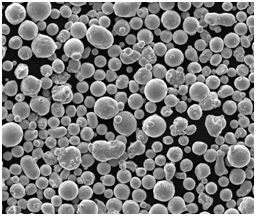
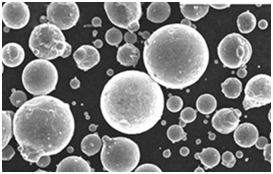
The name itself describes both the alloy and the physical form. “AlSi10Mg” refers to the alloy chemistry, while “spherical” refers to the particle shape required for efficient powder handling. A spherical particle is not just visually uniform; it generally reduces friction between particles, improves bed packing, and supports more predictable layer deposition. In metal AM, those traits can affect recoating quality, porosity risk, and lot-to-lot consistency.
Historically, AlSi10Mg became one of the standard aluminum alloys in additive manufacturing because it adapted well to the realities of powder bed fusion. Many high-strength wrought aluminum alloys can be more crack-sensitive when processed by laser melting. AlSi10Mg, by contrast, is usually more forgiving because the silicon content improves cast-like solidification behavior and reduces hot-cracking tendency relative to some alternative aluminum grades.
That is why the alloy is often treated as a workhorse material rather than a niche powder. It supports a wide range of applications, from functional prototypes to serial parts, especially where geometry drives value. Internal channels, consolidated assemblies, lattice reinforcement, and topology-optimized structures are all easier to justify when paired with an alloy that is relatively well understood in metal 3D printing.
The term also matters from a procurement perspective. Buyers are not simply ordering an aluminum chemistry; they are ordering a powder system whose performance depends on particle size distribution, oxygen content, morphology, and packaging integrity. A chemically correct alloy that flows poorly or carries excessive satellites may still underperform in production.
Compared with pure aluminum, AlSi10Mg generally offers better strength and easier processing, though at lower electrical and thermal conductivity. Compared with AlSi12, it often provides a slightly different balance of ductility, strength, and age-hardening response. Compared with titanium or stainless steel, it is far lighter but less suitable for extreme loads, high service temperatures, or aggressive wear conditions. The language used in ISO/ASTM 52900 terminology helps place this powder within the broader framework of additive manufacturing feedstocks and processes.
Why spherical powder matters in AM
Particle shape directly influences how the powder behaves before any melting occurs. In powder bed fusion, the recoater must spread thin layers repeatedly without streaking, clumping, or leaving density gradients across the build plane. More spherical particles typically improve that behavior and make parameter windows easier to hold in production.
This is especially important for aluminum powders because their surface chemistry and low density can make poor flow more noticeable than in some heavier alloys. The value of AlSi10Mg is therefore not only the alloy composition, but also the combination of composition and morphology.
How AlSi10Mg fits within aluminum AM feedstocks
AlSi10Mg is often the first aluminum powder qualified by companies entering metal additive manufacturing. It occupies a practical middle ground: lighter than steel-based AM materials, easier to process than many high-strength aluminum alternatives, and more structurally capable than pure aluminum. For many engineering teams, that balance reduces the number of unknowns during qualification.
In portfolio comparisons, it often sits beside materials available in a broader aluminum powder product range. Those comparisons usually focus on crack resistance, strength, density, heat-treatment response, and the economics of printing lightweight parts at scale.
In aluminum additive manufacturing, powder shape is not a secondary detail; it is one of the main determinants of part consistency.
Why the printed material is not the same as cast stock
Although AlSi10Mg is familiar from casting-related alloy families, a printed part has a different thermal history from a conventionally cast component. Rapid solidification in additive manufacturing creates a fine microstructure, often with a refined silicon network that contributes to useful as-built properties. Heat treatment can then alter that microstructure and shift strength, hardness, and elongation.
That distinction matters when engineers compare data sheets. A cast alloy reference may help identify the chemistry family, but AM performance still depends on machine parameters, scan strategy, powder condition, and post-build processing.
Composición química y calidad del material
The core chemistry of AlSi10Mg is straightforward, but the interpretation is not. Aluminum is the balance element, silicon typically makes up the largest alloying addition, and magnesium is added in a smaller amount to support precipitation strengthening and mechanical stability after processing. In powder purchasing, however, the nominal chemistry range is only the starting point.
Real AM performance depends on how tightly the chemistry is held, how clean the melt is before atomization, and how effectively trace elements are controlled. Silicon affects fluidity and solidification behavior, magnesium affects age-hardening response, and residual elements such as iron, copper, or zinc can influence ductility and corrosion behavior. For that reason, high-value AM users rarely accept chemistry statements without lot-specific analysis.
| Material / Reference | Al (wt%) | Si (wt%) | Mg (wt%) | Other Elements (Typical Limits) | Grade Cross-Reference / Notes |
|---|---|---|---|---|---|
| AlSi10Mg AM powder, typical | Saldo | 9.0–11.0 | 0.20–0.45 | Fe, Cu, Mn, Zn, Ti controlled to supplier spec | Common AM chemistry window based on Al-Si-Mg family practice |
| EN cast-alloy analog | Saldo | 9.0–11.0 | 0.20–0.45 | Residuals controlled by applicable EN chemistry limits | Often compared with EN AC-AlSi10Mg family references |
| ASTM cast chemistry analog | Saldo | about 9.0–11.0 | about 0.20–0.45 | Fe and other residuals limited by alloy designation | Used as a chemistry reference, not a full AM powder spec |
| GB aluminum alloy analog | Saldo | typical AlSi10Mg range | typical Mg range | Controlled per applicable GB alloy table | Chinese grade mapping may be project-specific |
| Custom AM-qualified lot | Saldo | purchaser-defined | purchaser-defined | Includes oxygen and contamination controls | Internal specification linked to machine qualification |
Chemistry control in spherical AlSi10Mg aluminum powder
The reason chemistry matters so much is that AlSi10Mg is valued for consistency. If silicon content drifts, the melt pool behavior and solidification characteristics can shift enough to affect density or surface quality. If magnesium drifts, the alloy may respond differently to thermal treatment, even if the build appears visually acceptable.
In production settings, chemistry is therefore tied to process capability. A technically in-range alloy is not necessarily the same as a production-stable alloy. That distinction becomes important when serial parts must meet the same mechanical targets across many lots.
Material grade references and their limitations
Grade cross-references are helpful, but they do not replace a powder specification. Standards and alloy designations usually define chemistry families, while the AM buyer also needs information on particle size distribution, morphology, cleanliness, and storage condition. Those details are not secondary; they are often the difference between a stable build and a failed one.
Procurement teams often consult ASTM additive manufacturing standards when building incoming material requirements. Even so, the final acceptance logic usually remains project-specific because machine type, layer thickness, and post-processing route vary from one application to another.
Why trace elements deserve attention
Trace elements do not dominate the chemistry sheet, but they can influence performance disproportionately. Excess iron may reduce ductility, copper can affect corrosion behavior, and uncontrolled contamination may shift both powder flow and final part quality. For safety-critical or qualification-heavy applications, that is why buyers often require more than one test method or more than one retained sample per batch.
This also explains why AlSi10Mg powder certificates should be read as a package. Chemistry, PSD, oxygen, and morphology tell a fuller story together than any single number can on its own.
Especificaciones técnicas
Technical specifications translate metallurgical quality into handling behavior. For spherical AlSi10Mg aluminum powder, the most relevant parameters usually include particle size distribution, apparent density, tap density, flow performance, oxygen level, and morphology. These data help determine how the powder will spread, how it will pack into layers, and how stable the process window is likely to be.
For aluminum AM, PSD is especially important because finer powders can improve detail resolution but also increase surface area and oxidation sensitivity. Coarser cuts may flow more easily in some feed systems, yet be less suitable for thin powder layers or fine surface requirements. Buyers should therefore interpret size data in relation to the intended machine and process, not in isolation.
| Powder Class | PSD Range (µm) | Densidad aparente (g/cm³) | Tap Density (g/cm³) | Hall Flow (s/50 g) | Contenido de oxígeno | Sphericity / Morphology |
|---|---|---|---|---|---|---|
| Fine L-PBF grade | 15–53 | 1.30–1.50 | 1.45–1.68 | 14–22 | typically low, supplier-defined | Highly spherical, low satellites |
| Standard L-PBF grade | 20–63 | 1.35–1.58 | 1.50–1.72 | 13–20 | typically low, supplier-defined | Spherical with controlled fines |
| Broad-process grade | 20–75 | 1.35–1.60 | 1.52–1.75 | 12–20 | application-specific | Esférico a casi esférico |
| DED / calidad de revestimiento | 45–105 | 1.42–1.68 | 1.58–1.82 | 11–18 | application-specific | Spherical, feeder-friendly |
| Coarse deposition grade | 53–150 | 1.45–1.70 | 1.60–1.85 | 10–17 | application-specific | Spherical, broad cut |
Particle size strategy for AlSi10Mg AM powder
Most laser powder bed fusion systems work well with size cuts such as 15–53 µm or 20–63 µm. These ranges usually support thin layers, fine detail, and relatively predictable melting. Broader or coarser distributions are more common in directed energy deposition or laser cladding, where feed stability and melt pool volume take precedence over very fine geometric resolution.
Machine architecture also matters. A recoater blade system may react differently to fines loading than a roller-based system, and inert gas circulation can influence how light aluminum particles behave during a build. As a result, the “best” PSD is usually the one validated on the specific equipment, not the one that looks most attractive on a certificate.
Flowability, packing, and powder-bed behavior
Powder flowability is a critical production variable. Apparent density helps estimate loose packing, tap density indicates compaction behavior, and Hall flow provides a quick measure of discharge performance. While none of these metrics can predict build quality alone, together they offer useful screening data for lot release and incoming inspection.
Morphology often explains why two powders with similar chemistry behave differently. Highly spherical particles with limited agglomerates generally produce more uniform layers, while irregular shapes or excessive attached satellites can increase friction and reduce spreadability.
Oxygen and cleanliness in aluminum feedstocks
Aluminum powders naturally form oxide films on their surfaces, so oxygen control is central to reliable AM performance. The issue is not that oxygen can be eliminated entirely, but that it must be controlled within a validated range. Excessive oxidation can alter flow, reduce fusion consistency, and affect the final mechanical profile of printed parts.
Handling practices after delivery matter as well. Sealed packaging, low-humidity storage, controlled reuse, and disciplined sieving all help preserve the as-delivered powder condition. Supplemental background on aluminum alloy behavior and designation is also widely available through the AlSi10Mg alloy overview, though qualification decisions should still be based on process-specific test data.
Aplicaciones en distintos sectores
Spherical AlSi10Mg aluminum powder is used where weight reduction and geometric freedom create measurable engineering value. The alloy supports complex shapes that would be difficult or uneconomical to produce by machining, forging, or casting in low volumes. In additive manufacturing, that usually means internal channels, thin walls, part consolidation, and topology-optimized load paths.
Its application range is broader than aerospace alone. Automotive, electronics, robotics, industrial equipment, medical devices, and tooling all use AlSi10Mg when the goal is to remove mass without giving up functional stiffness or manufacturability. The business case becomes strongest when geometry-driven performance offsets the added process complexity of metal printing.
| Industria | Typical Part | Primary Value Driver | AM / PM Process |
|---|---|---|---|
| Aeroespacial | Brackets, housings, air-management parts | Weight reduction and part consolidation | L-PBF, DED |
| Automoción y deportes de motor | Mounts, manifolds, cooling parts | Lightweighting and rapid iteration | L-PBF, DED |
| Robotics and automation | End effectors, grippers, arm components | Lower moving mass and faster motion response | L-PBF, PM |
| Electronics and 3C | Frames, heat-management parts, shells | Low mass with moderate thermal utility | L-PBF, PM |
| Medical and lab equipment | Fixtures, supports, instrument structures | Complex low-volume geometry | L-PBF |
| Tooling and industrial equipment | Jigs, fixtures, prototype tools, inserts | Design flexibility and shorter lead cycles | L-PBF, DED, PM |
Lightweight structural parts made with spherical powder
The clearest use case for AlSi10Mg is structural lightweighting. Brackets, housings, and support structures benefit because the alloy is far lighter than steel-based AM materials while still offering practical mechanical performance. In moving systems, reducing component mass can improve responsiveness, reduce inertia, and lower actuator demand.
This is where geometry amplifies material value. A topology-optimized aluminum part may outperform a heavier conventionally produced design because additive manufacturing removes unnecessary mass while retaining load paths.
Thermal and multifunctional components
AlSi10Mg is not the highest-conductivity aluminum powder family, but it still performs well in many moderate thermal-management applications. Heat sinks, electronic enclosures, battery-adjacent structures, and instrument housings can all benefit from its combination of low density, corrosion resistance, and design freedom. AM makes it possible to combine fins, mounting features, passages, and structural reinforcement into a single printed component.
Engineers often compare it against alternatives such as copper alloy powder grades for thermal performance or titanium alloys for higher specific strength. The right selection depends on whether the project prioritizes conductivity, strength retention, weight, or total manufacturing cost.
From prototypes to repeatable production
One of the reasons AlSi10Mg remains so widely used is that it works across multiple product-development stages. Teams may begin with prototypes, move into functional validation builds, and later qualify the same material family for limited production. That continuity reduces risk and simplifies the learning curve for design and processing.
It also helps explain why this powder remains relevant despite the arrival of newer aluminum AM alloys. A mature, well-characterized material often has more value in industry than a newer alloy with a narrower process window or a shorter qualification history.
Fabricación y control de calidad
The most common industrial route for producing spherical AlSi10Mg aluminum powder is gas atomization. In that process, a molten alloy stream is disintegrated by high-velocity inert gas and rapidly solidifies into fine droplets. After atomization, the powder is collected, sieved, classified, sampled, tested, and sealed for shipment.
For aluminum powders, the details of this route matter significantly. Melt cleanliness, atomization atmosphere, classification accuracy, and powder transfer discipline all influence the final feedstock quality. A powder that is nominally spherical but poorly controlled in fines, contamination, or oxygen may still perform inconsistently in additive manufacturing.
| QA Test / Production Factor | Typical Instrument or Method | What It Confirms | Typical Acceptance Approach | Relevance to AM |
|---|---|---|---|---|
| Composición química | ICP-OES, XRF, wet chemistry | Alloy identity and residual control | Within agreed chemistry window | Supports predictable metallurgy |
| Distribución granulométrica | Difracción láser, análisis granulométrico | D10, D50, D90 and cut compliance | Within ordered PSD range | Affects spreading and melting |
| Morfología de las partículas | Optical analysis, SEM | Sphericity, satellites, agglomerates | Predominantly spherical morphology | Supports recoating consistency |
| Density and flow tests | Hall funnel, density cup, tap tester | Handling and packing behavior | Within supplier or buyer target | Screens production stability |
| Oxygen and contamination | ONH analyzer, visual cleanliness checks | Surface oxidation and foreign matter | Low oxygen, clean lot release | Protects final part quality |
Why gas atomization suits AlSi10Mg powder production
Gas atomization is widely used because it can produce large volumes of spherical aluminum powder with good industrial consistency. For AlSi10Mg, that means a practical balance among morphology, throughput, and commercial scalability. The route is well aligned with how the alloy is used in real AM production environments, where stable supply matters as much as laboratory purity.
Other routes such as PREP and VIGA have their own roles in powder manufacturing, especially for certain high-value or specialty materials. But for mainstream aluminum AM feedstock, gas atomization is generally the most relevant route when cost, supply continuity, and morphology control must all be considered.
Lot release and traceability for additive manufacturing powder
A robust QA program includes more than one-time inspection. Each production lot should have unique identification, associated test reports, and retained samples where applicable. Traceability becomes essential when a user needs to investigate shifts in density, roughness, mechanical properties, or powder reuse behavior across a production campaign.
The most useful lot documentation links lab data to expected process performance. Chemistry, PSD, flow, density, and oxygen results should be interpretable in the context of the intended AM process, not just presented as disconnected numbers.
Powder handling after shipment
Coherencia entre lotes can be lost if post-delivery handling is poor. Aluminum powder should remain sealed until use, protected from ambient humidity, and managed through a documented reuse and sieving procedure. Recycled powder streams should be monitored for fines buildup, oxygen drift, and contamination before being blended back into production.
For qualified programs, good internal powder management is almost as important as the original atomization route. A well-made feedstock can still underperform if storage and handling are treated as minor operational details.
¿Por qué elegir a Truer como proveedor?
Supplier selection for spherical AlSi10Mg aluminum powder is not only about price or nominal chemistry. The more important question is whether the supplier understands powder as both a material and a process enabler. In additive manufacturing, that means controlling composition, morphology, size classification, and packaging with the downstream application in mind.
Truer’s relevance in this area comes from its position at the intersection of powder-making equipment and metal additive manufacturing practice. That context matters because AlSi10Mg is usually purchased for real engineering use, not just laboratory curiosity. Discussions around particle size, flow, post-processing, and application fit tend to be more useful when the supplier has practical familiarity with multiple AM routes and powder preparation technologies.
This broader context is also helpful when projects compare aluminum with other metal systems. Some applications may begin with AlSi10Mg, then evaluate titanium for higher specific strength or stainless steel for different corrosion and toughness requirements. In those cases, a wider titanium alloy powder portfolio or stainless portfolio can help buyers compare feedstock families under one documentation style.
From a sourcing perspective, the key differentiator is often process-aware powder control. If a supplier can maintain stable PSD, morphology, and cleanliness from batch to batch, the main advantages of AlSi10Mg are preserved. If not, the alloy’s reputation for reliable printability can quickly disappear in production.
Guía de pedidos y asistencia
Ordering spherical AlSi10Mg aluminum powder should begin with the intended process, not just the alloy name. A request for quotation should state whether the powder is for laser powder bed fusion, directed energy deposition, powder metallurgy, or another powder-based route. The target particle size range depends heavily on that choice.
The buyer should also indicate part type, expected density targets, wall thickness range, and post-processing plan. A material intended for stress-relieved prototype parts may not require the same acceptance logic as a powder intended for serial production components with fixed mechanical-property requirements. Clear application context reduces the risk of ordering a nominally correct but operationally unsuitable powder cut.
| Packaging Format | Typical MOQ Tier | Typical Lead Time | Sample Policy | Uso común |
|---|---|---|---|---|
| 500 g bottle | Evaluation tier | 1–2 weeks if available | Paid or approved screening sample | Parameter development |
| Botella de 1 kg | Prototype tier | 1-3 semanas | Common first-step sample size | Test coupons and small builds |
| 5 kg sealed container | Pilot tier | 2-4 semanas | Usually after initial review | Repeatability studies |
| 10–25 kg drum | Pre-production tier | 3–6 weeks depending on spec | Supplied after technical alignment | Lot-based validation |
| Custom bulk package | Production tier | Project-based | Not typical for first contact | Ongoing manufacturing programs |
Information to include in an RFQ
A useful inquiry typically includes the alloy name, required PSD range, preferred packaging size, annual demand estimate, and process type. Buyers may also specify oxygen limits, documentation requirements, morphology expectations, and whether retained samples are required. If the material will be used in a regulated or highly qualified environment, that context should be stated upfront.
Technical alignment early in the process usually shortens later qualification time. It helps the supplier match not only the chemistry and PSD, but also the packaging and documentation to the actual program.
Qualification support and sample strategy
Most organizations benefit from a staged qualification path: evaluation sample, pilot batch, then production lot. That sequence allows the engineering team to verify print density, mechanical response, machining behavior, and powder reuse performance before increasing volume. It also makes it easier to identify whether a problem comes from powder, parameters, or post-processing.
When a custom specification or nonstandard size cut is needed, direct communication through the powder sourcing contact page is usually the most efficient starting point. Clear requirements on the first inquiry often reduce rework in later commercial and technical discussions.
Nuestra compañía
Shanghai Truer Technology Co., Ltd. was established in 2009 and created its additive manufacturing business in 2019. The company focuses on integrating 3D printing powder-making equipment and services with metal powders used to accelerate engineering applications of additive manufacturing. Its core technologies include Selective Electron Beam Melting equipment, Plasma Rotating Electrode Process powder-making equipment, and gas atomization. The powder portfolio includes TiNi, TiTa, TiAl, TiNbZr, CoCrMo, as well as spherical nickel-based, cobalt-based, titanium-based, copper-based, aluminum-based, and stainless steel powders for processes such as SLM, SEBM, DED, laser cladding, powder metallurgy, MIM, HIP, cold or hot spraying, welding, and coating. The company also participates in a joint innovation center for metal 3D printing with laboratories and industry experts, and serves sectors including 3C electronics, hand tools, remote control cars, medical, aerospace, and nuclear power. Additional factual company information is available in the Truer corporate overview.
Preguntas más frecuentes
Q1. Is spherical AlSi10Mg aluminum powder a good choice for lightweight structural parts?
Yes. It is one of the most established aluminum feedstocks for lightweight structural AM because it combines low density with stable processability and useful mechanical properties after post-processing. It is especially suitable for brackets, housings, frames, and optimized support structures.
Q2. What particle size is usually used for spherical AlSi10Mg aluminum powder in laser powder bed fusion?
Common ranges include 15–53 µm and 20–63 µm. The best option depends on layer thickness, machine design, feature size, and how the powder is managed during reuse. Qualification should always be tied to the specific printing system.
Q3. Why is spherical morphology so important for AlSi10Mg powder?
Spherical particles generally flow more consistently, spread more evenly, and pack more predictably than irregular particles. In practical AM production, that helps reduce recoating problems and supports more uniform melting from layer to layer.
Q4. Can spherical AlSi10Mg aluminum powder be used outside of 3D printing?
Yes. Although it is best known for additive manufacturing, certain particle size cuts can also be relevant to powder metallurgy, laser cladding, and related powder-fed processes. The appropriate size distribution and quality criteria depend on the specific manufacturing route.
Q5. How does AlSi10Mg compare with titanium or stainless steel powder for AM?
AlSi10Mg is much lighter and often easier to justify when the design goal is mass reduction with moderate structural performance. Titanium is generally preferred for higher specific strength or more demanding corrosion environments, while stainless steel is often chosen for toughness, corrosion resistance, or broader cost-driven industrial use.
Q6. What should buyers request on a data sheet for spherical AlSi10Mg aluminum powder?
They should request chemistry, particle size distribution, apparent density, tap density, flow data, oxygen condition, morphology information, packaging details, and lot traceability. For production use, it is also important to clarify whether the data represent a one-time test result or a controlled lot-release standard.