Respuesta rápida
6061 aluminum alloy powder is a heat-treatable aluminum-magnesium-silicon powder used in additive manufacturing, powder metallurgy, and related powder-fed processes. It is chosen for 3D printing when engineers need low density, good corrosion resistance, practical machinability, and a familiar structural aluminum grade that fits lightweight part design. In the right process window, 6061 aluminum alloy powder can support functional prototypes, fixtures, brackets, housings, and industrial components where balanced performance matters more than extreme high-temperature strength or maximum hardness.
What Is 6061 aluminum alloy powder?
6061 aluminum alloy powder is the particulate form of the well-known 6061 wrought aluminum alloy family, adapted for powder-based manufacturing routes rather than plate, bar, extrusion, or billet processing. Metallurgically, it belongs to the 6xxx series, where magnesium and silicon are the principal alloying elements. Those additions give the alloy its familiar precipitation-hardening response and help explain why 6061 has remained one of the most widely recognized engineering aluminum grades in global manufacturing.
In powder form, the alloy serves a different purpose than conventional mill product. Instead of being selected mainly for saw-cutting, machining, welding, and forming from stock shapes, it is designed to flow, spread, feed, and consolidate in processes such as laser powder bed fusion, directed energy deposition, powder metallurgy, and spray-based applications. That shift in form changes the technical priorities. Powder users care not only about chemistry, but also about particle shape, size distribution, oxygen level, apparent density, and packaging integrity.
The term 6061 aluminum alloy powder is often used interchangeably with Al6061 powder, 6061 AM powder, or 6061 aluminum powder feedstock. In practice, those labels point to the same alloy family, but not necessarily to the same product specification. One supplier may offer a fine fraction for laser powder bed fusion, while another may provide a coarser cut for DED, hot spraying, or general powder metallurgy. The alloy name remains constant, but the feedstock design changes according to the intended process.
Historically, 6061 occupies a middle ground that makes it attractive to engineers. It is not the strongest aluminum alloy family, nor the easiest powder-bed-fusion aluminum to process, yet it offers a balanced profile that designers understand well. That familiarity is a major reason why 6061 continues to draw attention in additive manufacturing research and production development. Teams that already design around conventional 6061 often prefer to investigate a powder form of the same grade before moving to a less familiar chemistry.
Another reason the material matters is its relationship to downstream manufacturing. Printed or consolidated parts made from 6061 aluminum alloy powder are often expected to undergo machining, drilling, threading, surface finishing, or joining in ways that fit normal workshop practice. A material with a known engineering reputation reduces uncertainty during those secondary steps, even when the additive process itself still requires qualification.
From a terminology standpoint, industry references such as ISO additive manufacturing standards help separate the alloy designation from the manufacturing process. That distinction is essential. Saying a part is made from 6061 aluminum alloy powder identifies the feedstock family, but it does not fully describe the production route, the particle-size class, the build parameters, or the post-treatment condition. Serious buyers and process engineers therefore specify the powder with much more detail than the alloy name alone.
Composición química y calidad del material
The chemistry of 6061 is centered on aluminum with magnesium and silicon as the primary strengthening additions, supported by controlled levels of copper and chromium. This combination gives the alloy its characteristic balance of strength, corrosion resistance, and workability. When the alloy is supplied as powder, those same elemental limits still define the material family, but users also pay close attention to contamination control, especially for oxygen, moisture exposure, and residual inclusions.
For procurement, it is important to understand that composition and product qualification are related but separate issues. A powder can match 6061 chemistry and still perform poorly in additive manufacturing if the morphology is irregular, the fines content is excessive, or the surface condition is unstable. That is why buyers should treat composition as the first checkpoint rather than the entire specification.
6061 Aluminum Alloy Powder Chemistry
Magnesium and silicon are the most important alloying elements in the 6xxx system because they support precipitation hardening through magnesium-silicide-based strengthening behavior. Copper appears at lower levels than in many 2xxx alloys, while chromium is used in a controlled range associated with the classic 6061 alloy family. The remaining elements are typically present as residuals within standard limits.
Grade Designation and Cross-Reference
Cross-referencing 6061 across ASTM, AMS, GB, ISO, and DIN frameworks requires care because many formal standards were written for wrought products rather than additive manufacturing powder. In commercial powder supply, it is common to state that the chemistry aligns with the 6061 alloy family while listing powder-specific properties separately. That approach is technically reasonable, provided the supplier clearly distinguishes alloy designation from powder qualification data.
| Element or Grade Item | Typical Composition or Reference | ASTM Context | AMS Context | GB Context | ISO / DIN Context |
|---|---|---|---|---|---|
| Aluminio (Al) | Saldo | 6061 chemistry family | Aerospace alloy family reference | Comparable 6061 mapping practice | AlMg1SiCu family context |
| Silicio (Si) | 0.40–0.80 wt% | Standard 6061 range | Same alloy family | Comparable range typical | Equivalent chemistry logic |
| Hierro (Fe) | ≤ 0.70 wt% | Residual limit typical | Same | Same | Same |
| Cobre (Cu) | 0.15–0.40 wt% | Standard 6061 range | Same alloy family | Same | Same |
| Manganeso (Mn) | ≤ 0.15 wt% | Residual limit typical | Same | Same | Same |
| Magnesio (Mg) | 0.80–1.20 wt% | Standard 6061 range | Same alloy family | Same | Same |
| Cromo (Cr) | 0.04–0.35 wt% | Standard 6061 range | Same alloy family | Same | Same |
| Zinc (Zn) | ≤ 0.25 wt% | Residual limit typical | Same | Same | Same |
| Titanio (Ti) | ≤ 0.15 wt% | Residual limit typical | Same | Same | Same |
| Other elements | Small residual limits typical | Buyer-defined for powder use | Buyer-defined | Buyer-defined | Buyer-defined |
Although buyers often ask for a universal grade equivalency, the more useful question is whether the supplier reports chemistry in a way that supports lot-level traceability. Melt chemistry, powder chemistry, and post-sieving chemistry can differ slightly in reporting emphasis, especially when fine particle fractions are involved. A complete certificate should identify the lot number, the analytical method, and the date of testing so that powder data can be tied to process qualification records.
Where standards language is required, procurement teams often consult ASTM materials standards resources to align internal specifications with recognized terminology. That is helpful, but it does not replace powder-specific data such as morphology, PSD, or oxygen content. In additive manufacturing, the gap between “correct alloy” and “correct feedstock” is where many sourcing problems begin.
Especificaciones técnicas
Technical specification for 6061 aluminum alloy powder is built around powder behavior rather than chemistry alone. Once the alloy family is established, the decisive questions become: how does the powder spread, how fast does it flow, how densely does it pack, and how consistent are those values from lot to lot? Those practical variables influence recoating, feeding, melt stability, and final part repeatability across builds.
Particle Size Distribution for 6061 AM Powder
Particle size distribution is one of the most important buying criteria for this material. Fine cuts such as (15\text{–}45\ \mu m) or (15\text{–}53\ \mu m) are common where thin layers and good bed packing are required, especially in laser powder bed systems. Coarser fractions such as (45\text{–}105\ \mu m) and (53\text{–}150\ \mu m) are more often selected for DED, thermal spray, or some broader PM applications where feed behavior and deposition style differ from powder bed fusion.
Powder Flow, Density, and Morphology
Flowability, apparent density, and tap density are foundational indicators of how a lot will behave during handling and processing. Fine fractions usually show lower bulk density and slower Hall flow than coarse fractions, even when both are high quality. Because of that, specification limits should always be interpreted together, not as isolated values.
Oxygen Content and Powder Condition
Aluminum forms a stable oxide layer naturally, so oxygen-related quality control is especially important for 6061 powder. The practical goal is not to eliminate oxide, which is impossible, but to control it tightly enough that the powder remains consistent in the intended process. Storage, transport, and resealing practices matter as much as laboratory analysis once the powder leaves the production line.
| Specification Item | Fine Powder Grade | Standard AM Grade | Coarse Process Grade | Notas |
|---|---|---|---|---|
| Distribución granulométrica | 15–45 µm typical | 15–53 µm typical | 45–105 µm or 53–150 µm typical | Selected by machine and process |
| Densidad aparente | 1.20–1.40 g/cm³ typical | 1.25–1.50 g/cm³ typical | 1.35–1.60 g/cm³ typical | Influenced by PSD and morphology |
| Densidad del grifo | 1.45–1.70 g/cm³ typical | 1.50–1.80 g/cm³ typical | 1.60–1.90 g/cm³ typical | Indicates packing response |
| Flujo Hall | 16–30 s/50 g typical | 14–25 s/50 g typical | 12–22 s/50 g typical | Fine powders may flow slower |
| Contenido en oxígeno | Supplier-controlled, low typical | Supplier-controlled, low typical | Supplier-controlled, low typical | Limit set by application risk |
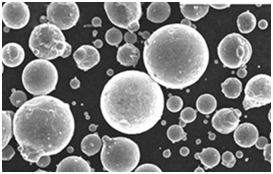
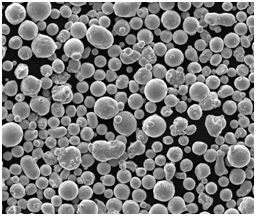
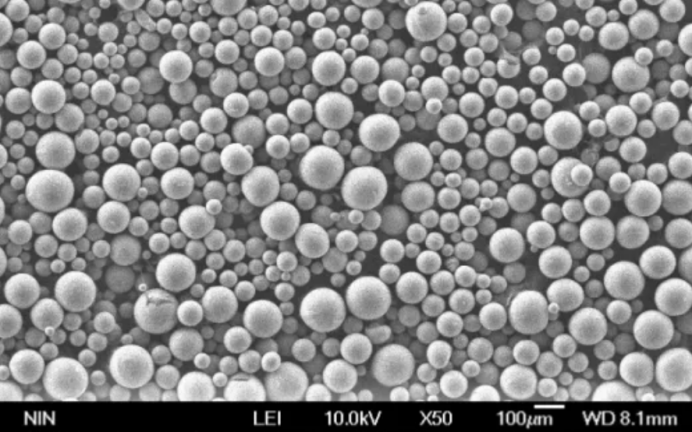
| Esfericidad | High, near-spherical typical | High, near-spherical typical | High, near-spherical typical | Usually assessed by image analysis |
These figures should be read as representative commercial ranges rather than universal pass-fail limits. Different test methods can produce different results for the same powder lot. Laser diffraction, sieve analysis, microscopy, and dynamic image analysis each tell part of the story, so sophisticated users make sure supplier data are comparable before using them in side-by-side evaluations.
The most useful technical takeaway is that distribución granulométrica and morphology drive much of the real-world handling behavior. A nominally correct 6061 chemistry is only valuable if the powder spreads and feeds predictably under the intended operating conditions. That is why powder data sheets for AM applications increasingly look like process documents rather than simple alloy certificates.
For material selection, engineers often compare aluminum against other powder families even before finalizing geometry. A part that starts in 6061 may later migrate to steel for wear resistance or to titanium for higher specific strength. Reviewing the broader aluminum powder product range alongside alternative metal systems can help place 6061 in the right design context.
Aplicaciones en distintos sectores
6061 aluminum alloy powder is used where lightweight design, acceptable structural performance, and familiar aluminum behavior are more important than extreme high-temperature capability. It tends to be most attractive in parts that still need machining, threading, fastening, or assembly after the additive or powder-consolidation step. In those settings, the material aligns well with established engineering habits.
Aerospace and Transport Hardware
In aerospace and transport-related programs, the alloy is typically evaluated for brackets, housings, mounting features, support hardware, and development components outside the hottest service zones. Its low density and known engineering background make it relevant for weight-sensitive designs. Qualification effort remains important, but the alloy’s familiarity helps when comparing printed parts with conventionally made aluminum hardware.
Tooling, Fixtures, and Production Aids
Factory tooling is one of the clearest use cases for 6061 aluminum alloy powder. Custom jigs, end-effectors, assembly fixtures, and low-mass handling tools benefit from additive manufacturing because they are geometry-driven rather than volume-driven. Engineers also value the fact that finishing operations can often follow standard aluminum shop practices.
Electronics, Consumer Products, and R&D
The alloy is equally relevant in electronics housings, lightweight frames, prototype enclosures, and laboratory development work. In research settings, it often functions as a benchmark aluminum system for parameter studies or comparative trials. That role is strengthened by its connection to a widely understood commercial alloy family rather than a niche composition.
| Industria | Typical Part | Main Material Driver | AM / PM Process |
|---|---|---|---|
| Aeroespacial | Brackets, housings, support hardware | Low mass with known alloy family | LPBF, DED, PM |
| Automotive / Motorsport | Prototype mounts, covers, fixtures | Rapid iteration and lightweight design | LPBF, PM |
| 3C Electronics | Frames, enclosures, assembly tooling | Corrosion resistance and machinability | LPBF, PM |
| Equipamiento industrial | Grippers, jigs, machine accessories | General engineering familiarity | LPBF, PM, cold spray |
| Productos de consumo | RC parts, sports hardware, custom components | Weight reduction and design flexibility | LPBF, PM |
| Research and Education | Coupons, demonstrators, parameter studies | Recognized baseline alloy | LPBF, PM |
This does not mean 6061 is the best choice for every aluminum application. Some AM programs prefer higher-silicon aluminum powders because they are more established in certain powder bed fusion workflows. Others move away from aluminum entirely when temperature capability, wear resistance, or conductivity becomes the dominant requirement.
The most effective selection process compares the material against the part environment, not against marketing claims. If heat resistance dominates, nickel alloys may enter the discussion. If biocompatibility or higher specific strength matters, a titanium alloy powder selection may be more appropriate. If the operating condition is abrasive or mechanically severe, a denser material family may outperform aluminum despite the weight penalty.
Fabricación y control de calidad
The route used to make 6061 aluminum alloy powder is a major determinant of final powder quality. Shape, satellite level, internal cleanliness, and PSD stability all originate in how the material is melted, atomized, collected, sieved, and packaged. For AM and PM users, powder quality is therefore a controlled manufacturing outcome rather than a simple commodity attribute.
Gas Atomization for 6061 Aluminum Alloy Powder
Gas atomization is the principal commercial route for producing spherical 6061 aluminum alloy powder. In this process, molten alloy is broken into droplets by high-velocity inert gas, and those droplets solidify rapidly into powder particles. The method is widely used because it offers scalable production, high sphericity, and practical flexibility in powder classification.
PREP, VIGA, and Route Comparison
PREP and VIGA are also relevant terms in the metal powder market, though they are not interchangeable with standard gas atomization. PREP is well known for delivering very spherical particles in premium applications, while VIGA combines vacuum induction melting with inert gas atomization to improve control of chemistry and cleanliness. For 6061, standard gas atomization is usually the reference route, but the broader comparison remains useful when assessing supplier capabilities and cost structure.
Powder QA and Lot Release
A robust release plan typically includes chemistry verification, particle-size analysis, morphology review, flow testing, apparent density, tap density, and packaging inspection. For more demanding applications, suppliers may also provide oxygen measurement, SEM imaging, retained samples, and traceability records. Buyers should evaluate the control plan as carefully as they evaluate the data themselves.
Consistent powder quality is the first process parameter in metal additive manufacturing.
| Atributo | Gas Atomization (GA) | VIGA | DEBERES | Por qué es importante |
|---|---|---|---|---|
| Typical particle shape | Spherical with some satellites possible | Spherical with high cleanliness control | Very spherical, low satellites typical | Influences flow and bed quality |
| Commercial throughput | Alta | Media a alta | Lower for mainstream volume | Affects supply continuity |
| Atmosphere control | Inert gas standard | Vacuum melt plus inert atomization | Highly controlled premium route | Supports low contamination |
| PSD flexibility | Broad and practical | Broad and tightly controlled | Controlled, often premium-oriented | Must fit target process |
| Relative cost position | Usually most economical | Mid to premium | Premium | Impacts project ROI |
| Common use logic | General AM, PM, spray supply | Specialty lots with tighter control | Morphology-critical premium lots | Selection depends on risk profile |
Packaging is part of quality assurance, especially for aluminum powders. Poorly sealed containers, excessive handling, or undefined repackaging practices can undermine otherwise good feedstock by changing moisture exposure and contamination risk. That is why experienced buyers ask not only for data sheets, but also for packaging format, storage recommendations, and lot-handling procedures.
External technical references are useful when building or auditing internal qualification plans. NIST engineering measurement resources are valuable for thinking about test repeatability and metrology discipline, while Guía sobre materiales de ASM International helps frame the broader metallurgy and processing logic behind aluminum alloys. Those references do not replace supplier data, but they improve the quality of the questions buyers ask.
¿Por qué elegir a Truer como proveedor?
Choosing a supplier for 6061 aluminum alloy powder should depend on whether that supplier can match alloy, PSD, documentation, and process route to the intended application. For AM feedstock, buyers need more than a catalog description. They need clarity on particle-size tailoring, lot consistency, production method, packaging, and the relationship between powder properties and downstream manufacturing behavior.
Truer is relevant in that context because its AM activities connect powder-making equipment, powder supply, and end-process understanding. Its technical background includes gas atomization, PREP powder-making equipment, and Selective Electron Beam Melting equipment, with practical relevance to SLM, SEBM, DED, laser cladding, PM, MIM, HIP, and spraying processes. That ecosystem matters because 6061 aluminum alloy powder is rarely purchased as an abstract material; it is purchased for a defined manufacturing workflow.
Another useful factor is portfolio breadth. Engineers qualifying 6061 often compare it with stainless, copper, cobalt, nickel, or titanium feedstocks before choosing a final material family. A supplier with a broader process and material viewpoint can support more realistic evaluation sequences. Truer’s manufacturing background and product scope are outlined in its company background overview, which helps explain how aluminum powder fits within a wider metal AM supply environment.
For procurement teams, the decisive criterion is usually process-specific powder control. Can the supplier provide the requested size cut? Can test data be linked to a specific lot? Can pilot orders and repeat orders follow the same release logic? Those are the practical questions that matter more than generalized sales language.
Guía de pedidos y asistencia
Ordering 6061 aluminum alloy powder successfully begins with a well-defined application brief. The supplier should know the intended process, target PSD, quantity, packaging preference, and documentation requirements before quotation. If the powder is being used for qualification, the request should also state the machine type, layer thickness range, and whether powder reuse will be part of the study.
Information to Include in an RFQ
A good RFQ should identify the process route, the preferred particle-size range, the estimated annual demand, the shipping destination, and any special testing or certification requirements. If the part is safety-critical, regulated, or tied to a formal validation plan, that should be stated at the beginning rather than later in negotiations. Complete information improves both the technical accuracy and the comparability of quotes.
Sample Quantities and Production Planning
Small samples are useful for preliminary screening, but they should be representative of the production logic the supplier intends to maintain later. Pilot lots are then used to bridge the gap between coupon printing and stable repeat manufacturing. That sequence helps convert early parameter work into a more credible supply plan.
Packaging and Documentation Expectations
Powder packaging should match the scale and sensitivity of the project. Fine aluminum powder for AM generally requires robust, sealed containers with clear lot labeling and storage instructions. Documentation should specify chemistry, PSD, and the basic physical property set agreed during procurement.
| Packaging Format | Typical MOQ Tier | Typical Lead Time | Sample Policy |
|---|---|---|---|
| 500 g bottle | Lab-scale screening | 1–3 weeks typical if available | Paid sample often possible |
| Botella de 1 kg | Feasibility testing | 1–3 weeks typical | Traceable sample lot preferred |
| 5 kg bottle | Extended development | 2–4 weeks typical | Commonly supplied with standard test data |
| 10 kg bottle | Pilot production | 2–5 weeks typical | Suitable for build and finishing trials |
| bidón de 25 kg | Regular procurement | 3–6 weeks typical | Lot reservation may be discussed |
Lead time depends on stock status, sieving requirements, testing scope, and export packaging needs. Requests for SEM imagery, tailored PSD windows, or additional oxygen reporting can add time even when the base alloy is already available. For technical and commercial coordination on samples, data requirements, and repeat-order planning, buyers can use the Página de contacto para consultas técnicas to define the request in process-specific terms.
Nuestra compañía
Shanghai Truer Technology Co., Ltd. was established in 2009 and created its additive manufacturing business in 2019. The company focuses on integrating 3D printing powder-making equipment and services with metal powders for engineering applications of additive manufacturing. Its core technologies include Selective Electron Beam Melting equipment, Plasma Rotating Electrode Process powder-making equipment, and gas atomization. The company supplies TiNi, TiTa, TiAl, TiNbZr, CoCrMo, and nickel-based, cobalt-based, titanium-based, copper-based, aluminum-based, and stainless steel spherical metal powders for SLM, SEBM, DED, laser cladding, powder metallurgy, MIM, HIP, cold and hot spraying, welding, and coating in sectors including 3C electronics, hand tools, remote control cars, medical, aerospace, and nuclear power.
Preguntas más frecuentes
Q1. Is 6061 aluminum alloy powder good for metal 3D printing?
It can be, provided the powder properties and machine parameters are matched carefully to the process. Engineers choose it when they want a familiar heat-treatable aluminum family with low density, workable corrosion resistance, and practical post-machining behavior. However, successful use still depends on qualification, not on alloy name alone.
Q2. What particle sizes are common for 6061 aluminum alloy powder?
For powder bed applications, (15\text{–}45\ \mu m) and (15\text{–}53\ \mu m) are common commercial ranges. Coarser cuts such as (45\text{–}105\ \mu m) or (53\text{–}150\ \mu m) are more typical for DED, spraying, or some powder metallurgy workflows. The correct range depends on how the powder will be spread or fed.
Q3. Why is spherical 6061 aluminum powder preferred over irregular powder?
Spherical particles usually show better flowability, more uniform packing, and more stable recoating behavior than irregular particles. Those characteristics are especially important in additive manufacturing because inconsistent powder handling can translate into inconsistent part quality. In short, near-spherical morphology improves process control.
Q4. How does 6061 aluminum alloy powder compare with AlSi10Mg?
6061 is often considered when users want closer alignment with the conventional 6xxx engineering ecosystem and expected shop-floor finishing behavior. AlSi10Mg is commonly favored in many established powder bed fusion programs because its chemistry is widely associated with easier printability. The better material depends on whether the project prioritizes alloy familiarity, process maturity, or final property balance.
Q5. Can 6061 aluminum alloy powder be used outside additive manufacturing?
Yes. Depending on PSD and quality level, it can be used in powder metallurgy, certain spray processes, and other powder-fed applications. The same alloy family can therefore support several manufacturing routes, provided the powder specification is matched to the process rather than treated as universal.
Q6. What should buyers ask for when sourcing 6061 aluminum alloy powder?
At minimum, buyers should request chemistry, PSD, lot identification, and packaging information. For more demanding work, they should also ask for flow data, apparent density, tap density, oxygen reporting, and morphology evidence. That documentation supports lot traceability and helps connect procurement data to machine qualification records.