Respuesta rápida
dental CoCrMo alloy powder is a cobalt-chromium-molybdenum metal feedstock engineered for additive manufacturing of dental frameworks, crowns, bridges, bars, and partial denture components. It is widely chosen for 3D printing because it offers high strength, corrosion resistance, biocompatibility, and reliable powder-bed processing in one material system. For dental labs and manufacturers, that combination supports thin yet durable restorations, repeatable fit, and efficient digital production compared with many conventional cast routes.
What Is dental CoCrMo alloy powder?
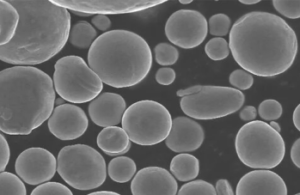
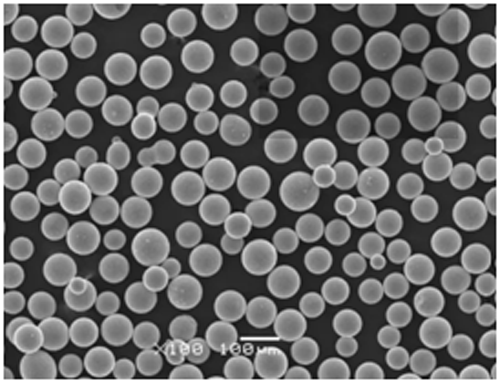
Dental CoCrMo alloy powder is a pre-alloyed cobalt-based powder designed for manufacturing dental restorations and appliances through metal additive manufacturing, especially laser powder bed fusion. The alloy family is built around cobalt as the matrix, chromium for corrosion resistance, and molybdenum for strengthening and microstructural stability. In dental use, the powder is generally supplied in spherical form with controlled chemistry and particle size so it can spread evenly, melt predictably, and produce consistent part density.
The name “CoCrMo” is often used broadly, but in dental practice it refers to a narrower functional class of cobalt-chromium-molybdenum alloys suitable for oral environments and fine-feature fabrication. That distinction matters because not every industrial cobalt alloy is appropriate for dental applications. Wear-resistant hardfacing grades, for example, may share cobalt and chromium but differ significantly in carbon level, microstructure, and intended service conditions.
Dental CoCrMo occupies an important position between precious-metal dental alloys and alternative base-metal systems. Historically, cobalt-chromium alloys gained acceptance in dentistry because they provided high rigidity, corrosion resistance, and acceptable biological performance without the cost structure associated with gold-based restorative materials. Additive manufacturing expanded their utility further by allowing digitally designed dental parts to be built directly from powder, reducing tooling dependence and enabling complex geometries that are harder to reproduce consistently by casting.
How dental CoCrMo alloy powder differs from generic CoCr powder
Not all cobalt-chromium powder should be treated as equivalent. Dental grades are typically optimized around the needs of prosthetic and restorative fabrication: thin sections, high stiffness, fine detail reproduction, smooth surface finishing response, and compatibility with established dental workflows. That means chemistry limits, oxygen control, morphology, and powder cleanliness carry more importance than the alloy shorthand alone may suggest.
A generic cobalt alloy intended for industrial wear parts can tolerate specification features that would be undesirable in dental manufacturing. Elevated carbon, inconsistent particle shape, or a broad and unstable size distribution may still work in another market, yet create poor build quality, excessive roughness, or inconsistent fit for dental frames. In practice, the word “dental” in dental CoCrMo alloy powder is not a marketing adjective; it signals a different application standard.
Why cobalt-chromium-molybdenum remains important in dentistry
Cobalt provides the structural backbone of the alloy, chromium promotes the passive oxide film that supports corrosion resistance, and molybdenum improves strength and contributes to pitting resistance. In combination, they create a material that can support slender geometries with a high elastic modulus relative to many alternative dental metals. That is especially important in removable partial denture frameworks and bridge structures where rigidity and long-term dimensional stability matter.
At the same time, dental CoCrMo powder works well within the digital manufacturing model used by many dental labs. CAD design, nesting, build preparation, laser melting, heat treatment, support removal, and finishing can all be integrated into a traceable workflow. The alloy therefore persists not only because of its metallurgy, but because it aligns with the economics and precision expectations of modern dental manufacturing.
The role of standards and terminology
In regulated and quality-driven environments, material terminology should be consistent. Many users align their process language with [ISO/ASTM additive manufacturing terminology], while alloy and dentistry-specific requirements are often discussed in relation to [ISO 22674 dental metallic materials]. Those references do not replace supplier specifications, but they provide a common framework for discussing intended use, product form, and acceptance logic.
In dental AM, the alloy name is only the first checkpoint; powder behavior and process control decide whether the final fit is predictable.
Composición química y calidad del material
Dental CoCrMo alloy powder is defined by a cobalt-chromium-molybdenum balance rather than a single universal formulation. Across the market, exact chemistry windows may vary slightly by manufacturer and intended dental classification, but the underlying logic is stable: chromium is high enough to support corrosion resistance, molybdenum is present for strengthening and environmental performance, and carbon plus residual elements are controlled to avoid brittle behavior or excessive variation in print response.
For additive manufacturing users, chemistry should be interpreted together with the delivery condition. A powder lot can meet the nominal Co-Cr-Mo composition range and still perform poorly if oxygen is elevated, if particles are highly irregular, or if contamination enters during atomization or repackaging. That is why dental labs that scale beyond prototype work usually specify chemistry, morphology, particle size distribution, and certification requirements as one package.
| Element / Grade Reference | Typical Content (wt%) | Dental CoCrMo Grade Context | Standard Cross-Reference | Practical Significance |
|---|---|---|---|---|
| Cobalto (Co) | balance | cobalt-based matrix | ASTM F75 / ISO 22674 family context | provides strength, rigidity, and high-temperature stability during melting |
| Cromo (Cr) | 26.0–30.0 | high-Cr dental CoCrMo alloy | ASTM F75 / DIN dental CoCr analogs | forms passive oxide layer for corrosion resistance |
| Molibdeno (Mo) | 5.0–7.0 | CoCrMo strengthening addition | ASTM F75 / ISO 22674 family context | improves strength and pitting resistance |
| Carbono (C) | typically ≤0.35, often lower for AM-focused grades | carbon-controlled dental alloy | supplier and application specific | affects carbide formation, hardness, and ductility balance |
| Silicon / Manganese / Iron / Residuals | controlled minor additions and residuals | process-dependent limits | GB / ISO / DIN / ASTM comparison only | excessive residuals can affect printability and consistency |
Composition control in dental CoCrMo alloy powder
The broad composition window of cobalt-chromium-molybdenum alloys does not mean every chemistry behaves identically in additive manufacturing. Carbon content, for example, can influence carbide formation and therefore hardness, ductility, and polishing response. Dental AM producers often prefer tighter internal control than the minimum alloy-family definition because they need predictable fit and consistent finishing behavior across many small, detailed parts.
Chromium and molybdenum also need to remain stable from lot to lot. If either drifts meaningfully within an already broad allowance, corrosion performance and mechanical response can shift enough to matter in dental validation work. That risk becomes more visible when a lab builds the same restoration geometry over many months and expects nearly identical post-processing outcomes.
Grade mapping and standards awareness
There is no single global standard that perfectly captures every practical requirement of dental CoCrMo alloy powder in additive manufacturing. Users therefore rely on a mix of alloy-family references, dentistry standards, and supplier-level specifications. In conversation, ASTM F75 is commonly cited because it covers cobalt-28 chromium-6 molybdenum cast alloy for surgical implants, and it provides a familiar chemistry reference point through the broader [ASTM F75 cobalt-chromium-molybdenum alloy framework]. However, implant material references should not be assumed to equal a finished dental powder specification.
For dentistry-specific product classification, ISO 22674 is frequently more relevant because it addresses metallic materials for fixed and removable restorations and appliances. Yet even that standard does not by itself define every AM powder characteristic. The result is a layered approach: alloy-family chemistry from recognized standards, then AM-specific powder controls added through the purchase specification.
Residual elements, nickel concerns, and powder cleanliness
Dental customers often pay close attention to residual nickel and other unintended elements. Even if present only at low levels, these can become purchasing concerns because end users and dental labs may wish to minimize unnecessary compositional ambiguity. A well-documented dental CoCrMo powder specification therefore usually includes not only target chemistry but also limits on residual elements and contamination risks introduced during melting, atomization, screening, and packaging.
Powder cleanliness matters because dental parts are small and surface-sensitive. Fine contamination can alter melting behavior, support adhesion, and post-build finishing. In a high-precision environment, chemistry and cleanliness are inseparable parts of the material definition.
Especificaciones técnicas
Technical specification review is where many buyers separate a generic cobalt alloy powder from a dental-ready feedstock. Particle size distribution, apparent density, tap density, Hall flow, oxygen level, and sphericity directly affect powder spreading and melt-pool consistency. In dental AM, those variables are especially important because build jobs often include many thin features and multiple small components nested together on one plate.
Most dental CoCrMo work is performed by laser powder bed fusion, so the powder must suit thin layers and controlled recoating. Compared with coarser industrial deposition powders, dental AM grades usually emphasize narrower size distributions and strong flow consistency. The goal is not just to melt the alloy, but to do so repeatably at the scale of crowns, bridges, frameworks, and bars.
| Tipo de polvo | PSD Range (µm) | Densidad aparente (g/cm³) | Tap Density (g/cm³) | Hall Flow (s/50 g) | Contenido de oxígeno | Esfericidad |
|---|---|---|---|---|---|---|
| Fine dental L-PBF cut | 10–30 | 4.1–4.6 | 4.8–5.4 | 14–22 | typically low, per supplier spec | high |
| Standard dental AM powder | 15–45 | 4.2–4.8 | 4.9–5.6 | 13–20 | typically low, per supplier spec | high to very high |
| Broad dental production cut | 15–53 | 4.3–4.9 | 5.0–5.7 | 12–19 | typically low, per supplier spec | high |
| Coarser process-development cut | 20–63 | 4.4–5.0 | 5.1–5.8 | 12–18 | controlled, application-specific | esférica |
| DED / cladding CoCrMo cut | 45–105 | 4.6–5.2 | 5.3–6.0 | 11–17 | controlled, application-specific | spherical to near-spherical |
Particle size selection for dental CoCrMo alloy powder
The most common PSD windows for dental laser powder bed fusion sit in the fine-to-medium range, often around 15–45 µm or 15–53 µm. These cuts generally support thin layer deposition, good detail resolution, and reliable packing on small geometries. Very fine powder may improve edge definition in some cases, but it also increases surface area and can raise handling sensitivity, especially with regard to oxidation and powder recycling discipline.
A dental lab should therefore match the PSD to the machine platform, recoater type, validated parameter set, and surface-finish expectations. The “best” range is not universal; it is the one that delivers dense parts and repeatable fit inside the lab’s actual process window.
Flow, spreadability, and layer quality
Spherical AM powder is central to dental build reliability. Near-spherical particles reduce interlocking, improve spreadability, and help produce uniform powder layers, which is essential when a build contains dozens or hundreds of small parts. Apparent density and tap density provide insight into how the powder packs, while Hall flow offers a practical indicator of discharge behavior.
These values should be read together rather than in isolation. A powder with acceptable flow but high oxygen, or a good chemistry report but poor morphology, may still produce unstable printing behavior. Dental AM rewards balance more than any single “headline” specification.
Oxygen, reuse, and lot management
Oxygen control is an ongoing process issue, not just a certificate value. Repeated reuse, aggressive handling, or poor storage can shift powder condition enough to influence surface quality and melting consistency. Since dental builds often depend on dimensional precision and clean margins, labs commonly monitor sieve fractions, recycle ratios, and lot blending procedures more closely than in less demanding applications.
NIST has published useful background on [metal powder characterization methods] relevant to cobalt-chrome AM feedstocks. While those resources are metrology-oriented rather than dental-specific, they are helpful for understanding why density, morphology, composition, and powder surface condition matter so much in production.
Aplicaciones en distintos sectores
Although the phrase “dental CoCrMo alloy powder” is narrowly associated with dentistry, the underlying cobalt-chromium-molybdenum system has a broader industrial footprint. Within dentistry, it is used for fixed and removable restorations, implant-supported suprastructures, and specialized laboratory components. Outside dentistry, related CoCrMo powder systems appear in medical, wear-resistant, and engineering applications where corrosion resistance and mechanical integrity are important.
For SEO and purchasing purposes, however, the most relevant question is how the dental grade performs in actual restorative workflows. Its value comes from enabling thin, rigid, digitally produced components that can be built repeatedly with controlled geometry and then finished through familiar dental laboratory operations.
| Industria | Typical Part | Why CoCrMo Is Used | AM / PM Process |
|---|---|---|---|
| Dental laboratories | crowns and bridge frameworks | rigidity, corrosion resistance, digital fit control | SLM / L-PBF |
| Removable prosthetics | partial denture frameworks and clasps | high elastic modulus and thin-section capability | SLM / L-PBF |
| Implant prosthetics | bars, abutment-linked suprastructures | strength and geometry customization | SLM / L-PBF |
| Productos sanitarios | custom support components and metal fixtures | cobalt alloy durability and sterilization compatibility | L-PBF, PM |
| Industrial prototyping | small high-strength metal parts | fine-feature capability and strong mechanical response | L-PBF |
| R&D materials programs | benchmark cobalt alloy coupons | mature AM data availability | L-PBF, PM |
Fixed restorations and bridge structures
Dental CoCrMo alloy powder is widely used for crown and bridge frameworks where dimensional stability and strength are required without excessive bulk. AM enables individualized coping thickness, connector design, and margin control directly from digital scans and CAD files. This is one reason the material became standard in many digital dental workflows.
For bridge structures in particular, the alloy’s rigidity can be advantageous. Thin sections can still maintain structural support, which helps conserve space for veneering ceramic or finishing strategy depending on the final restoration design.
Removable partial denture frameworks
This is one of the most established use cases for CoCrMo in dentistry. Partial denture frameworks require a high modulus, durable clasps, and geometrically complex forms that traditionally demanded significant casting skill. Additive manufacturing allows those shapes to be built from a digital design with less dependence on wax-up variability and mold behavior.
The alloy’s long-standing role in removable dentistry also gives technicians confidence in downstream handling. Polishing, fit adjustment, and clinical familiarity are often better understood than they are with more experimental AM metals.
Implant-supported and lab-side applications
Dental CoCrMo powder is also used for implant bars, custom suprastructures, and certain specialized laboratory tools or fixtures. In these cases, the strength-to-section relationship and design flexibility of additive manufacturing are often more important than material novelty. Precision interfaces still require careful validation, but the material has enough industry history to make that work practical.
In broader alloy selection exercises, engineers may compare dental cobalt alloys with a [cobalt alloy powder lineup], a [titanium powder portfolio], or a [stainless powder range] depending on stiffness, corrosion, weight, and downstream finishing requirements. For dental structures where rigidity and thin-wall behavior are priorities, CoCrMo often remains the baseline comparator.
Fabricación y control de calidad
Most dental CoCrMo alloy powder used in additive manufacturing is produced by inert gas atomization. In that process, a melted alloy stream is disintegrated into droplets, which solidify into fine particles and are later classified into the desired size range. The success of the final powder depends not only on the atomization event itself, but also on melt cleanliness, atmosphere control, sieving, blending, inspection, and packaging discipline.
Dental applications place special emphasis on repeatability because a single build may include numerous patient-specific parts. A visually small variation in powder condition can translate into support instability, rougher surfaces, or dimensional shifts that become significant at the restoration scale. This is why dental powder buyers often scrutinize lot-release methods more closely than buyers in lower-precision AM segments.
| QA Test or Production Route | Typical Method / Instrument | What It Verifies | Typical Acceptance Logic | Importance for Dental CoCrMo |
|---|---|---|---|---|
| Composición química | ICP-OES / combustion analysis | alloy identity and residual control | within specified chemistry window | confirms dental-grade material consistency |
| Distribución granulométrica | laser diffraction / sieve check | fines and coarse fraction balance | within target PSD range | affects layer thickness and detail reproduction |
| Morphology and satellites | SEM or image analysis | shape, surface condition, agglomerates | high sphericity, low abnormal particle content | supports smooth recoating and stable flow |
| Flow and density | Hall flowmeter, apparent and tap density tests | handling and packing behavior | within internal control band | screens lot-to-lot printability shifts |
| Oxygen / contamination | inert-gas fusion and cleanliness review | oxidation and foreign matter control | below agreed powder limits | critical for reproducible dental builds |
Why gas atomization dominates dental CoCrMo powder supply
Gas atomization is the main commercial route because it provides a scalable way to produce spherical cobalt-alloy powders with the size fractions needed for powder bed fusion. It is particularly well suited to dental markets where the demand is for relatively fine powder, consistent flow, and stable chemistry over repeated production runs. Alternative routes such as PREP can produce very high-quality powder, but they are less commonly associated with mainstream dental CoCrMo supply volumes.
That does not mean atomization route is the only quality factor. Classification discipline, oversize removal, fine control, and packaging integrity are just as important. A theoretically good atomized batch can still become a poor dental AM powder if those downstream steps are weak.
Lot release and dental traceability
Coherencia entre lotes matters more than isolated peak performance. Dental labs usually need the next shipment to behave like the previous validated lot, not just to look acceptable on paper. As a result, serious suppliers maintain lot-level documentation for chemistry, particle size distribution, flow, density, and related checks before release.
In addition, many users retain a sample of each incoming lot and compare printing behavior against historical benchmarks. That practice is especially useful in dental production because restoration geometries are small enough that process shifts can appear first as fit drift or surface-finish variation rather than catastrophic build failure.
Powder reuse and post-delivery discipline
Quality assurance continues after delivery. Cobalt-based powders can usually tolerate structured reuse programs, but only if sieving, storage, blending ratios, and contamination control are documented. A powder may be qualified at receipt and still fail in practice if the lab mixes lots unpredictably or exposes material to poor housekeeping conditions.
Because AM powder metrology is an active field, dental manufacturers often study broader reference material on powder behavior when refining internal SOPs. Truer’s relevance in this area is its combination of powder-making equipment knowledge and involvement with AM process chains, which makes discussion of qualification details more grounded in manufacturing reality than in chemistry labels alone.
¿Por qué elegir a Truer como proveedor?
For dental CoCrMo alloy powder, supplier selection should be based on process understanding, documentation quality, and the ability to support a controlled transition from evaluation to stable production. A technically suitable supplier should understand how cobalt-alloy chemistry, atomization, particle classification, and AM process demands interact in a dental environment where fit and reproducibility are critical.
Truer’s position is tied to its activity across powder-making equipment and AM-related materials rather than a single isolated product category. That matters because powder users often need practical discussion about size range selection, lot consistency, and the connection between feedstock characteristics and actual manufacturing routes such as SLM, DED, or related processes. For cobalt-alloy buyers, this kind of process literacy can be more useful than broad claims about nominal material properties.
Another relevant factor is portfolio breadth. A company working across cobalt-based, titanium-based, nickel-based, copper-based, aluminum-based, and stainless powder systems can better support comparative material selection during development. In the dental field, that matters when a lab or device manufacturer is benchmarking CoCrMo against other metal options for stiffness, weight, or finishing behavior.
The final practical issue is support structure. Powder qualification usually begins with sample assessment, then moves through parameter optimization, pilot builds, and only later reaches routine purchasing. A supplier that can support those phases with clear technical communication is typically easier to integrate into a formal quality workflow.
Guía de pedidos y asistencia
Ordering dental CoCrMo alloy powder efficiently starts with defining the intended process and restoration type. A request for “CoCrMo dental powder” is often too broad to quote accurately because the best PSD and packaging format depend on whether the user is printing bridges, partial denture frameworks, implant bars, or conducting machine-parameter trials. The quote stage should therefore include the AM platform, target particle size distribution, documentation requirements, and expected annual consumption.
Buyers should also clarify whether the order is for qualification, pilot production, or routine manufacturing. Small test quantities often prioritize flexibility and speed, while larger orders require tighter delivery planning, traceability, and stable lot-release expectations. For dental users, those differences are not administrative details; they directly affect whether the powder integrates smoothly into validation workflows.
| Packaging Format | Typical MOQ Tier | Typical Lead Time | Sample Policy | Suitable Ordering Stage |
|---|---|---|---|---|
| 500 g sealed bottle | evaluation | 1–2 weeks if stock is available | small paid or approved sample | parameter screening |
| Botella de 1 kg | prototype | 1-3 semanas | common first-order quantity | test builds and benchmark parts |
| 5 kg pack | pilot | 2-4 semanas | usually after technical review | repeatability and process tuning |
| 10 kg to 25 kg drum | pre-production | 3–6 weeks depending on specification | supplied after alignment on documentation | validation and batch manufacturing |
| custom bulk packaging | production | project-based | not typical as first sample | steady serial supply |
Information to include in an RFQ
An effective RFQ for dental CoCrMo powder should state the machine type, preferred PSD, intended application, requested certificates, packaging format, and estimated usage. It is also useful to note whether the powder will enter a reuse cycle and whether the buyer needs support for first-article qualification, since that can influence recommended supply strategy.
Dental buyers may additionally request information on polishing behavior, surface condition, and lot traceability because those concerns affect both lab productivity and final restoration quality. Clear specification at the beginning usually reduces the number of qualification loops later.
Sample qualification and technical communication
A staged approach is common. Users often begin with a small lot for parameter verification, then order a pilot batch to evaluate repeatability across multiple build jobs before moving to larger production volumes. This structure helps identify whether any observed variation comes from the machine, the post-processing route, or the powder itself.
When detailed quotation or project-specific discussion is needed, the most direct route is the [technical contact page]. Early communication about the machine platform and dental part category usually makes the evaluation process faster and more precise.
Nuestra compañía
Shanghai Truer Technology Co., Ltd. was established in 2009 and launched its additive manufacturing business in 2019. The company focuses on integrating 3D printing powder-making equipment and related services with spherical metal powders used in engineering applications of additive manufacturing. Its core technologies include Selective Electron Beam Melting equipment, Plasma Rotating Electrode Process powder-making equipment, and gas atomization. The powder portfolio includes TiNi, TiTa, TiAl, TiNbZr, CoCrMo, and nickel-based, cobalt-based, titanium-based, copper-based, aluminum-based, and stainless steel powders for processes such as SLM, SEBM, DED, laser cladding, powder metallurgy, MIM, HIP, cold or hot spraying, welding, and coating. The company also participates in a joint innovation center for metal 3D printing with laboratories and experts and serves industries including 3C electronics, hand tools, remote control cars, medical, aerospace, and nuclear power. Additional background is available on the [company profile page].
Preguntas más frecuentes
Q1. Is dental CoCrMo alloy powder biocompatible enough for dental restorations?
Dental CoCrMo alloys are widely used for restorations and appliances because cobalt-chromium-molybdenum systems offer strong corrosion resistance and a long record of dental use. However, suitability still depends on the exact alloy specification, manufacturing route, finishing condition, and the clinical application being targeted.
Q2. What particle size is most common for dental CoCrMo alloy powder?
For laser powder bed fusion in dental applications, fine to medium ranges such as 15–45 µm or 15–53 µm are common. These ranges generally support thin layers, fine detail, and stable recoating for crowns, bridges, and partial denture frameworks.
Q3. Why is dental CoCrMo alloy powder preferred over cast CoCr in some workflows?
Additive manufacturing can reduce variability associated with wax patterns, investment behavior, and casting shrinkage management. It also allows digital nesting, repeatable framework design, and efficient production of multiple patient-specific parts in one build.
Q4. Can dental CoCrMo alloy powder be used outside dental applications?
Yes, related CoCrMo alloy powders are also used in medical, research, and engineering applications where strength and corrosion resistance are needed. Even so, a dental-optimized grade should not automatically be substituted into another application without reviewing the chemistry, carbon level, powder specification, and process requirements.
Q5. What quality documents should buyers request for dental CoCrMo alloy powder?
Buyers commonly request certificates for chemistry, particle size distribution, and sometimes oxygen or flow-related data, depending on the validation level. For ongoing production, it is also useful to confirm lot traceability, packaging condition, and whether values shown are typical data or formal release criteria.
Q6. Does dental CoCrMo alloy powder work only with SLM systems?
It is most commonly associated with SLM or laser powder bed fusion in the dental market, but related cobalt-alloy powders can also be prepared for other powder-based processes. The key point is that the PSD, morphology, and process window must be matched to the intended manufacturing route rather than assumed to transfer directly.